Plastic is here to stay. How we dispose of it, however, needs to change. This is the problem that has occupied Miranda Wang ever since she visited the Vancouver South waste transfer station as a high school student. There, standing in front of a mountain of non-recyclable trash, she realized just how much plastic was ending up in the landfill. A little over a decade later, Wang has found an innovative way to keep plastic out of the waste stream by transforming it into something useful. This year, with the help of the Rolex Perpetual Planet Initiative and the Rolex Awards for Enterprise, she’s tantalizingly close to achieving her goal.
“Today we are producing over 400 million tons per year of plastic waste, and the majority of it is being made from Virgin fossil fuel resources,” Wang explains. “By 2050, this number is going to more than double to over 1 billion tons. And this is not something that we can simply policy away. We cannot just simply say we’re going to be able to eliminate plastic from our lives.” Instead, Wang and her company, Novoloop, have developed a system to transform polyethylene waste (think potato chip bags and other plastic packaging) into higher-grade plastics that can be sold for a profit. It gets very science-y, but the process returns low-grade plastic to its chemical building blocks that can then be reformed into higher-value materials (ie, mattresses and car seats). Not only does this system keep these plastics out of the landfill, but it also turns them into an economically viable resource.


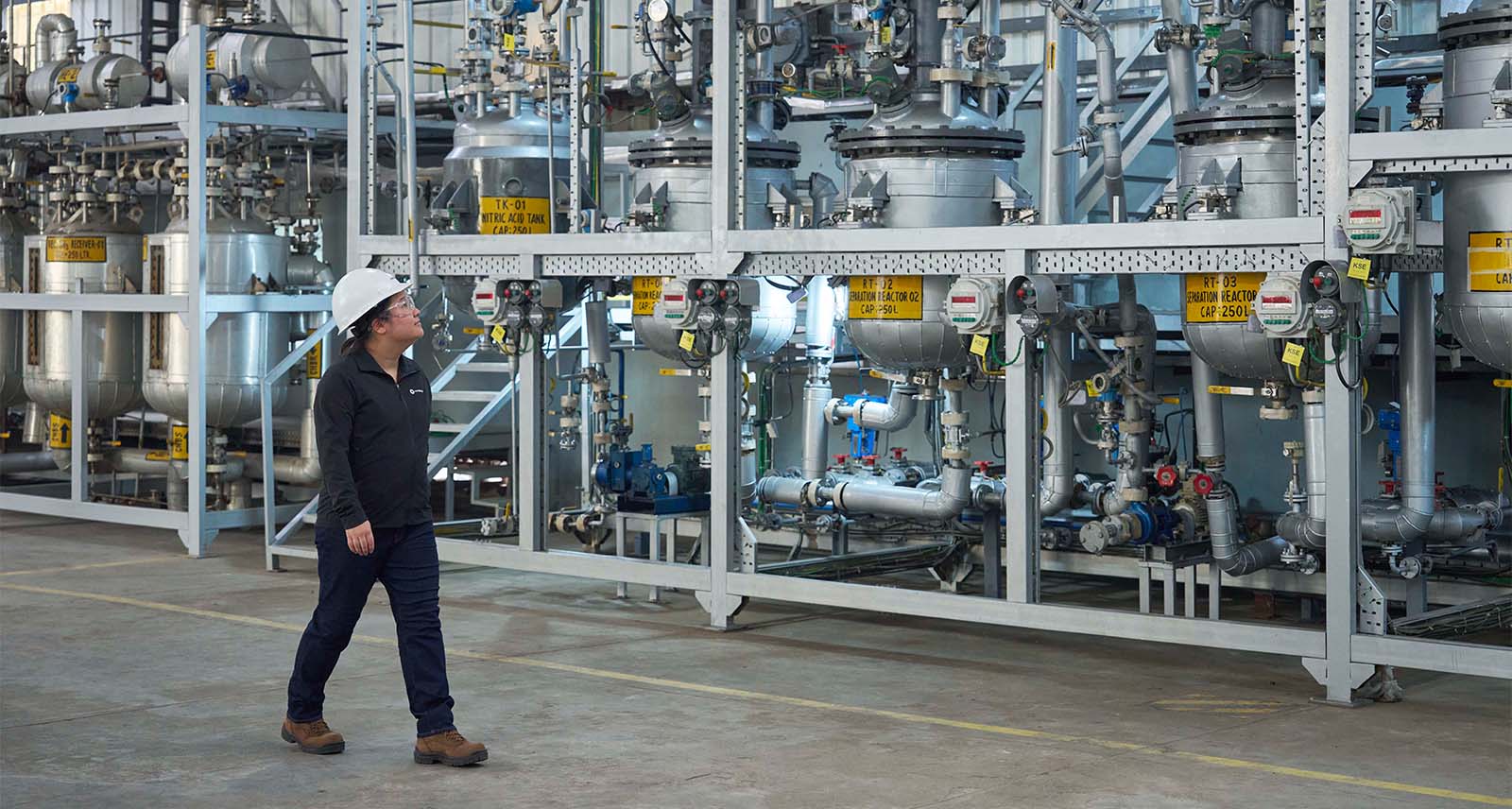
With the help of Rolex, Novoloop designed and built its first demonstration plant in Surat, India, and is currently in the process of designing its first commercial facility. “We have a technology that takes in plastic waste, and we are making sustainable products,” says Wang. “But what’s more important is that we can make a pretty big slice of what the current chemical industry produces, and that market is currently existing at around $130 billion per year.” Wang believes that Novoloop won’t simply succeed on the merits of providing a more sustainable alternative to fossil fuels; instead, she intends to offer something as good or better than what currently exists at a more competitive price. “The process that we have created has roughly half the number of steps compared to the current value chain from fossil fuel resources, which means that there’s less energy input overall, and less waste generated,” she says. “It also allows us to make economically competitive products at a smaller scale.”
Buoyed by the success of its Surat demonstration plant, Novoloop is working to open a facility that can process 10,000 tons of polyethylene waste per year, keeping 40,000 tons of CO2 out of the atmosphere in the process. By 2030, Wang hopes to convert up to 175,000 tonnes of plastic waste, reducing up to 800,000 tonnes of CO2 each year. “I think the challenge of plastics is not just a technical issue, it’s reflective of all these attitudes in society and the industry,” Wang says. “But at the end of the day, what we need are new pathways to convert these hard-to-recycle materials into useful and economical things.”
Learn more about the Rolex Laureate online.