
D’You Know What I Mean? is a column on style and culture where writer Ben Kriz weighs in on taste, trends, and what it all means.
Every spring at Augusta National, attendees of The Masters are not allowed to bring phones onto the grounds. The rule applies to everyone: players, caddies, staff, patrons, celebrities, and VIPs alike. There’s no texting, no social media, photos, no absent-mindedly checking your phone while the best players in the world tee off in front of you. You simply leave your phone in the car and watch the golf.
Everyone is engaged because everyone is operating under the same conditions. Scottie Scheffler has said Augusta National’s cell phone ban creates “very peaceful” conditions for golfers, while other pros have noted that the crowds feel more attentive and present than at any other tournament.


It’s a presence that is so rare today. And you know what happens when something becomes rare, don’t you? It becomes luxurious.
There was a time, not very long ago, when constant connectivity signalled relevance. Being reachable at all hours suggested you were important, busy, needed. Now, the opposite seems true. There’s a growing appetite for friction.
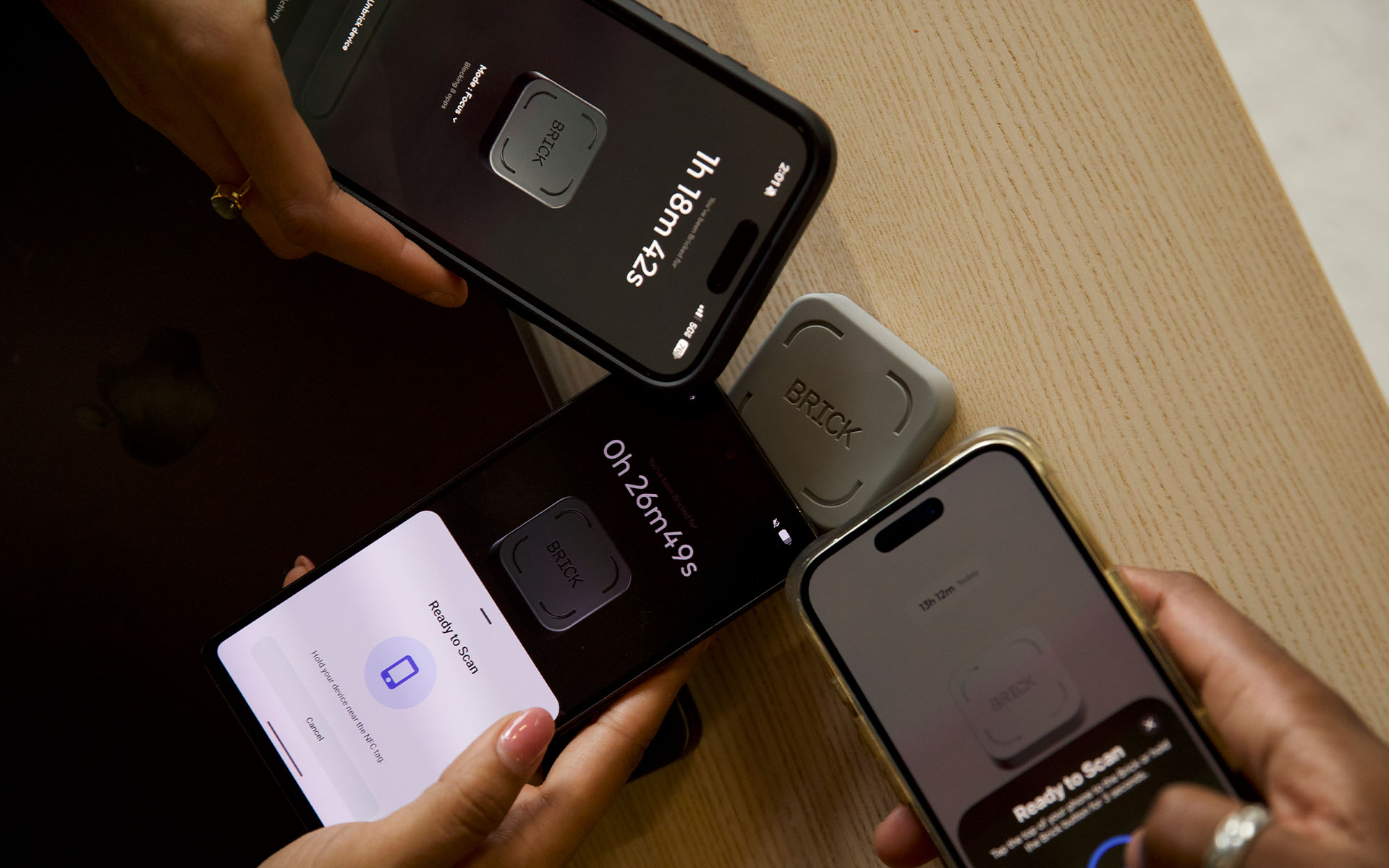
I know this because I recently bought a Brick.
If you haven’t encountered one yet, the Brick is a small plastic square that blocks distracting apps on your phone until you physically tap the device again to unlock them. Which usually means an embarrassing walk across your apartment to unlock it. (The Brick has a magnet on the back, making your refrigerator a perfect place to keep it.) The key difference between this and various screen time apps is that it introduces a physical barrier. It’s not simply flicking off your screen time controls in a moment of weakness.

I bought one because I found myself slipping into a scrolling trance more often than I’d like to admit. I work in media, and being online is sort of part of the deal. And I’m sorry, but I will never fully log off Twitter (I refuse to call it X). The jokes are still too good, despite all its other problems. Remember when you used to “go on the computer”? Now, to quote the president: “everything’s computer.”
During the week, I’ve set my phone to ‘Brick’ almost everything from 9:30 p.m. until the morning. Other times, I’ll leave the house with only the essentials available: calls, texts, maps, the camera, banking apps, and a few other practical things.
I’ve noticed small changes. I’ll see how long I can go in the morning without un-Bricking it. At the gym, I stop scrolling between sets. When I’m waiting for coffee, I’m no longer standing there head-down. I recently kept my phone Bricked for an entire weekend, and while I wasn’t instantly aware of every breaking story or narrative unfolding online, I also didn’t particularly miss them. I read the paper in the morning. I went out for dinner. I went for a bike ride. My brain felt a bit calmer. It was so nice, I might even make this a weekly weekend ritual.

Still, the results have been mixed. It’s really only as effective as you wish it to be. I’ve been in the middle of a scroll-sesh at home, my phone bricks, and I immediately march to the fridge and unbrick it, and the phone stays unblocked for the rest of the night.
People are buying Bricks and other devices like it because they suspect the better version of themselves exists somewhere on the other side of distraction. The version that reads books before bed. The version that can tolerate ten seconds of silence. Sort of like Moleskin notebooks, vinyl records or film cameras, the Brick is convincing because it’s a physical manifestation of an aspirational lifestyle.
Of course, it’s all fairly ridiculous that we have spent two decades optimizing our lives around our devices only to arrive at the point where we are now paying for the privilege to make them less useful.

I don’t particularly want to become one of those people who move to a cabin and throw their iPhone into a lake. I don’t want to disappear completely from the internet. I still want my group chats, YouTube videos, and perfectly timed tweets. I just occasionally want a few hours where none of that can reach me.
Whether products like the Brick represent a meaningful cultural shift or are simply an accessory for people whose brains have been melted by the internet remains to be seen, but a little plastic square is probably not going to save us. Still, I’ve found that occasionally putting even a small amount of distance between myself and my phone can make the world feel slightly less noisy. And that’s a start.
FEATURE PHOTO COURTESY OF BRICK.