There’s a more honest kind of luxury that doesn’t announce itself. It doesn’t need to.
It doesn’t rely on spectacle or statement pieces that demand attention the moment you walk into a room. Instead, it reveals itself slowly — in the way a sofa supports you at the end of a long day, or how a table draws people together without needing to become the focal point.
That’s the space Flexform has long occupied. And with its 2026 indoor collection, the Italian brand is leaning further into that philosophy. This is furniture designed not just to be seen, but to be lived with: pieces that shape the rhythm of everyday life via proportion, material, and restraint.
Really, it’s about balance. Generous dimensions are tempered by measured proportions. Surfaces feel tactile and warm without tipping into clumsy excess. Craftsmanship is evident, but never showy.
It’s a confidence rooted in process — the kind that comes from decades of refining how things are made, not just how they look.
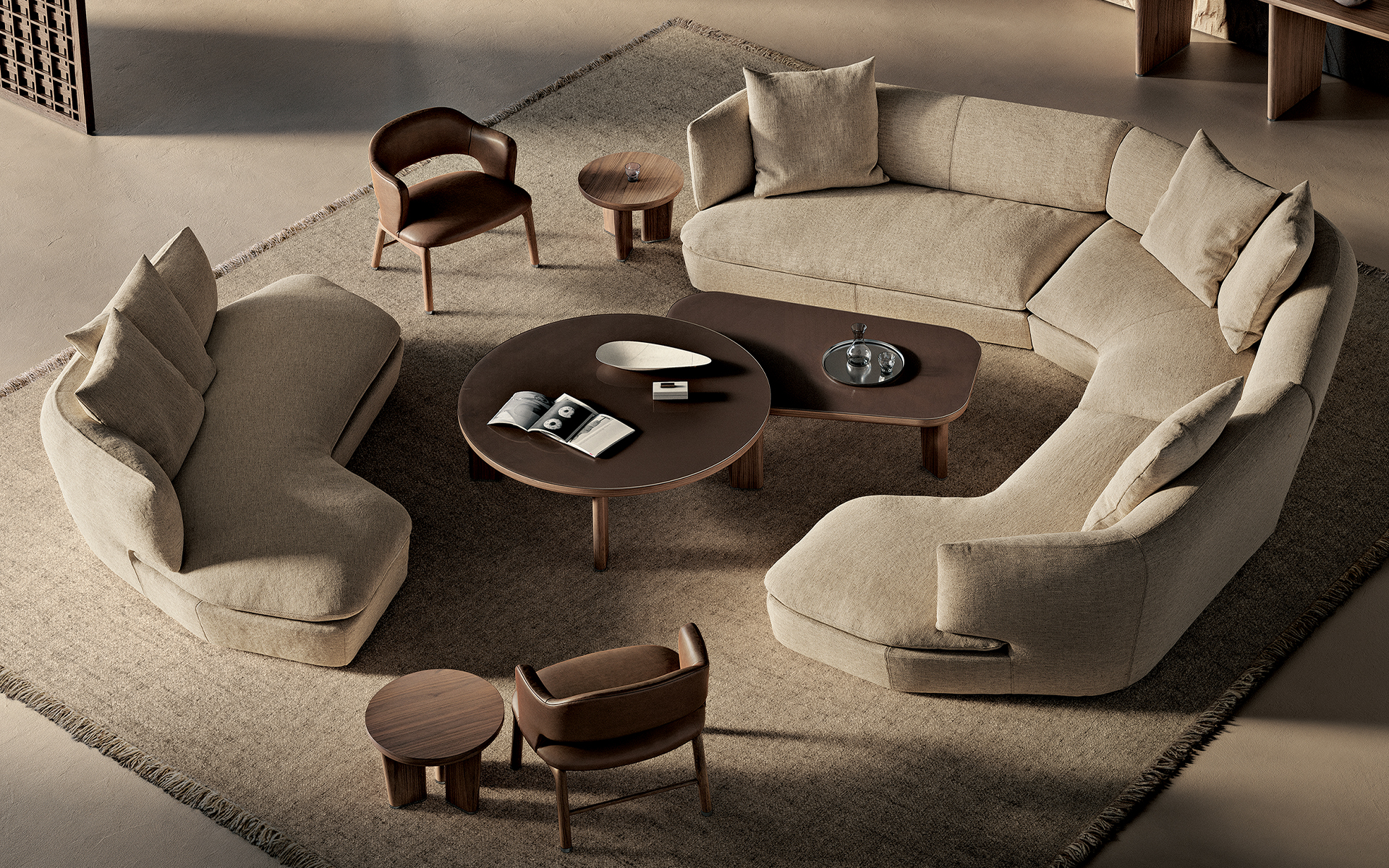
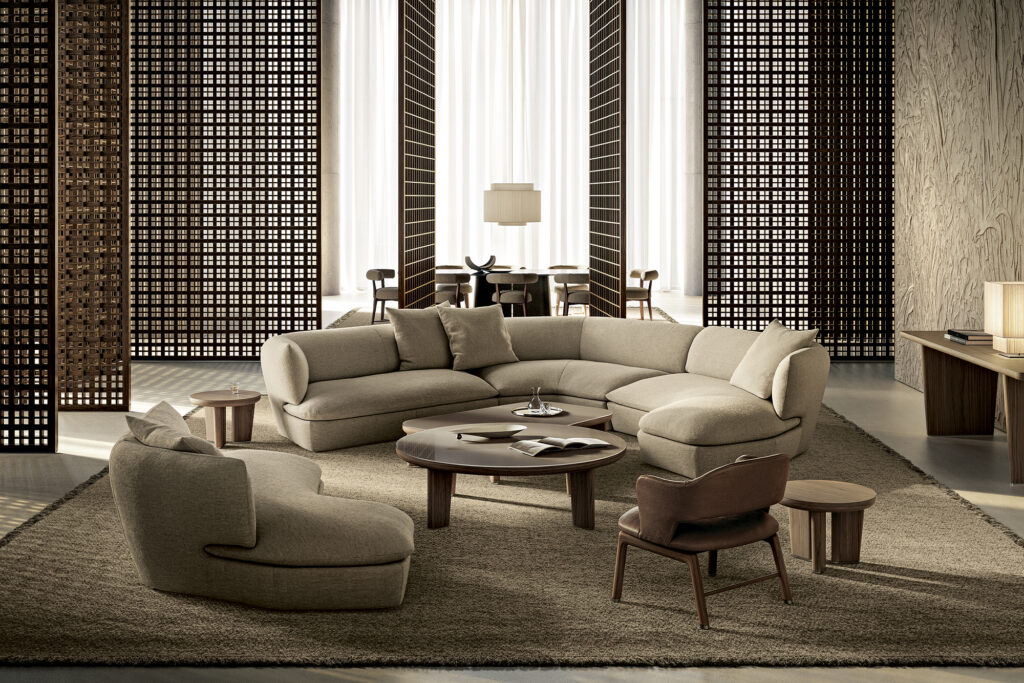
That sensibility is perhaps most apparent in the Quincy sofa, designed by Antonio Citterio. While many contemporary sofas lean into sharp lines or modular rigidity, Quincy takes a softer approach. Its silhouette is defined by organic curves that create a sense of flow that reshapes the space around it. The structure forms a continuous shell, featuring down-filled cushions that prioritize comfort without sacrificing form.
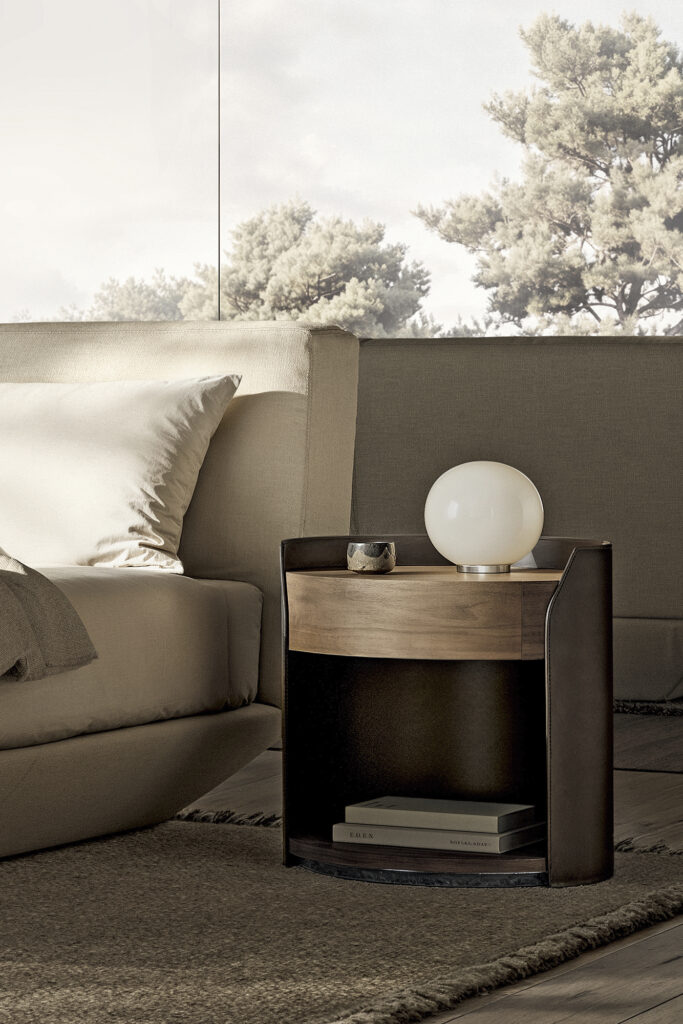
It’s a subtle shift, but an important one. As living spaces become more fluid — less formal, more adaptable — the role of the sofa must evolve, too. Quincy does that, offering configurations that can expand, contract, or reorient depending on how a room is used. It’s about creating a space that responds to how people actually live.
That same balance carries through to the Tara table collection created by Sebastian Herkner. At first glance, the concrete base feels monolithic — solid, grounded, almost architectural. But look closer, and the details begin to soften that impression. Concave curves catch the light, while back-painted glass introduces a sense of levity, creating a tension between weight and transparency. The result is a piece that anchors a room without overpowering it. It’s sculptural, but not precious, designed to exist as part of the environment rather than above it.
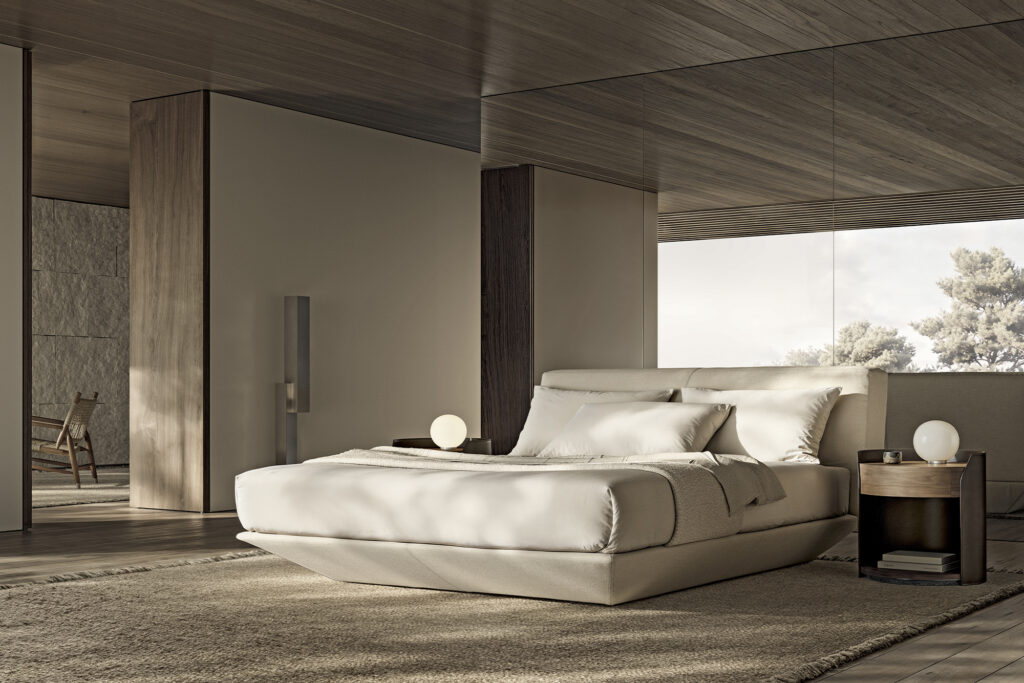
Across the collection, materials are explored in interesting ways. For example, the Louise series by Patrick Norguet pairs cowhide with glass, balancing texture and sheen in pieces that feel simultaneously grounded and suspended. Nightstands and tables appear almost weightless, pared back to the essentials while still maintaining a strong visual identity.
In the bedroom, the Loungescape bed extends the philosophy. Its raked base narrows toward the floor, reducing visual weight and giving the structure a sense of lift. The modular upholstered headboard echoes the soft geometry of the collection, reinforcing a consistent design vocabulary across different rooms.
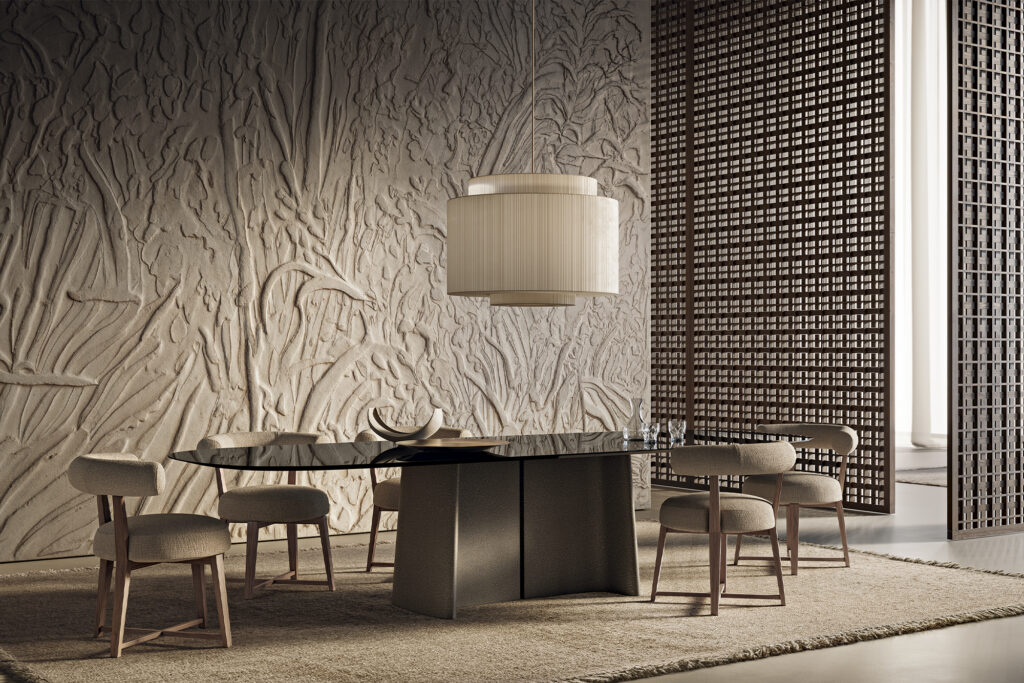
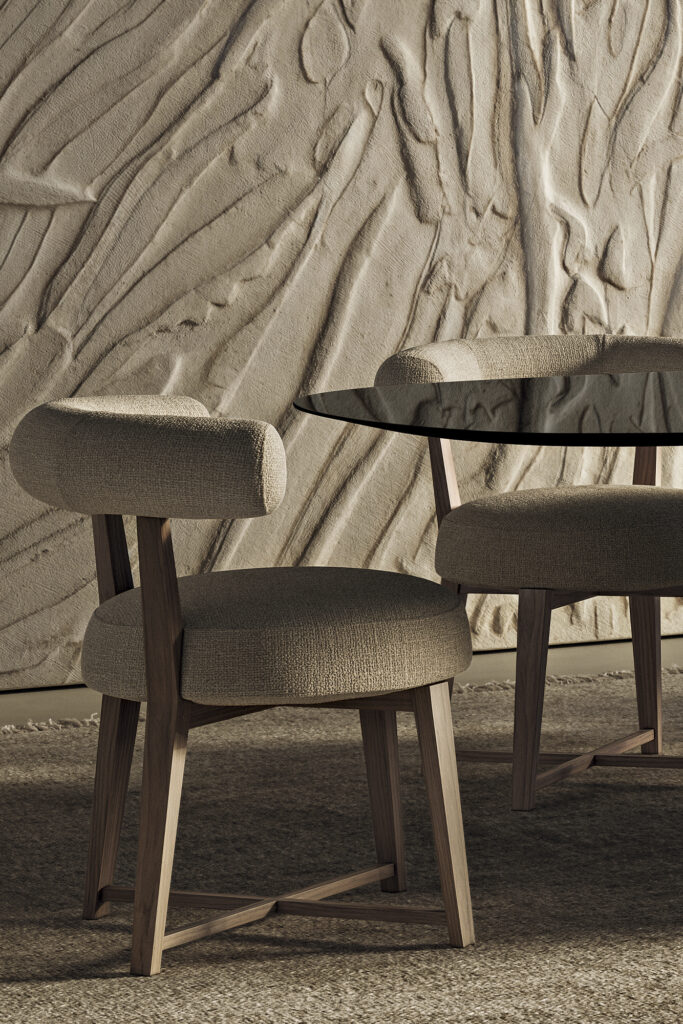
Even smaller pieces carry that same intent. The Justine armchair distills the idea of comfort into a more compact form, pairing a cylindrical upholstered backrest with a solid wood base that grounds it physically and visually. Designed by Antonio Citterio, it’s a study in proportion and precision — a reminder that, when executed well, simplicity rarely feels basic.
Taken together, the collection isn’t about redefining interiors in a dramatic way. Instead, it’s about refining them — stripping away excess and focusing on the elements that actually shape how a space feels over time. There’s an emphasis on permanence, in the idea that well-made objects can adapt, evolve, and remain relevant as life changes around them.
Because the real test of quality isn’t how it looks on day one. It’s how it holds up to everything that comes after.