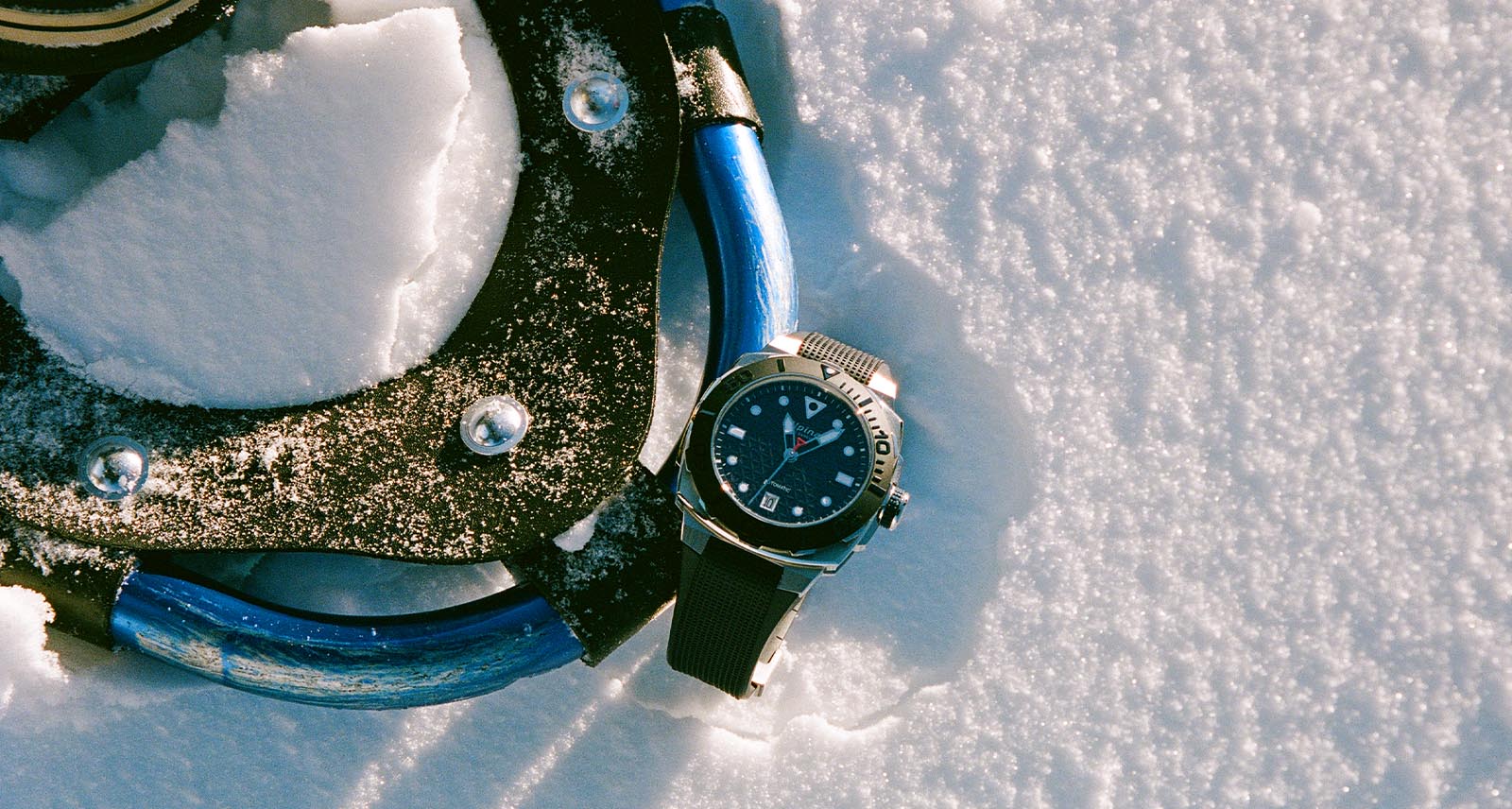
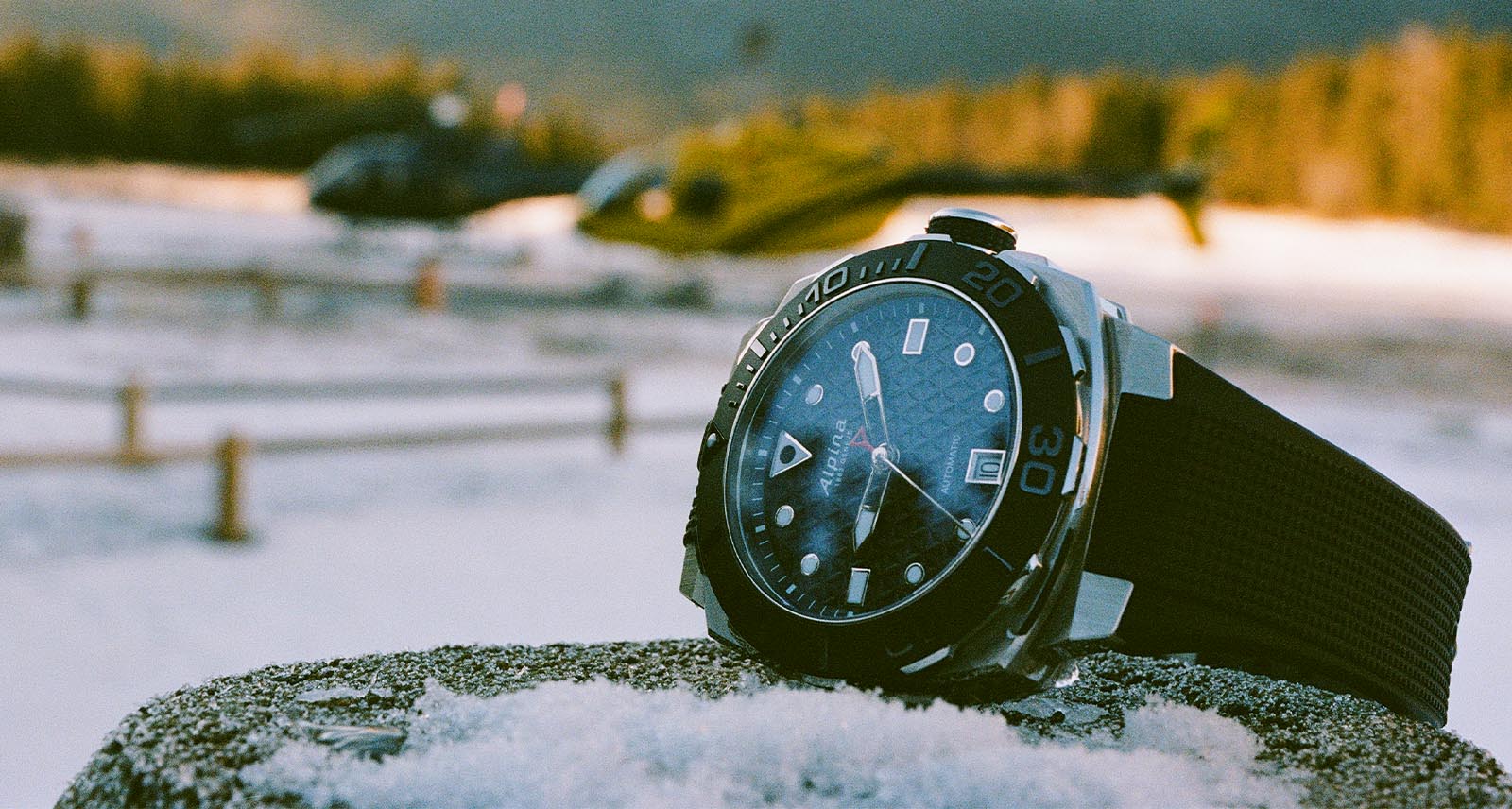
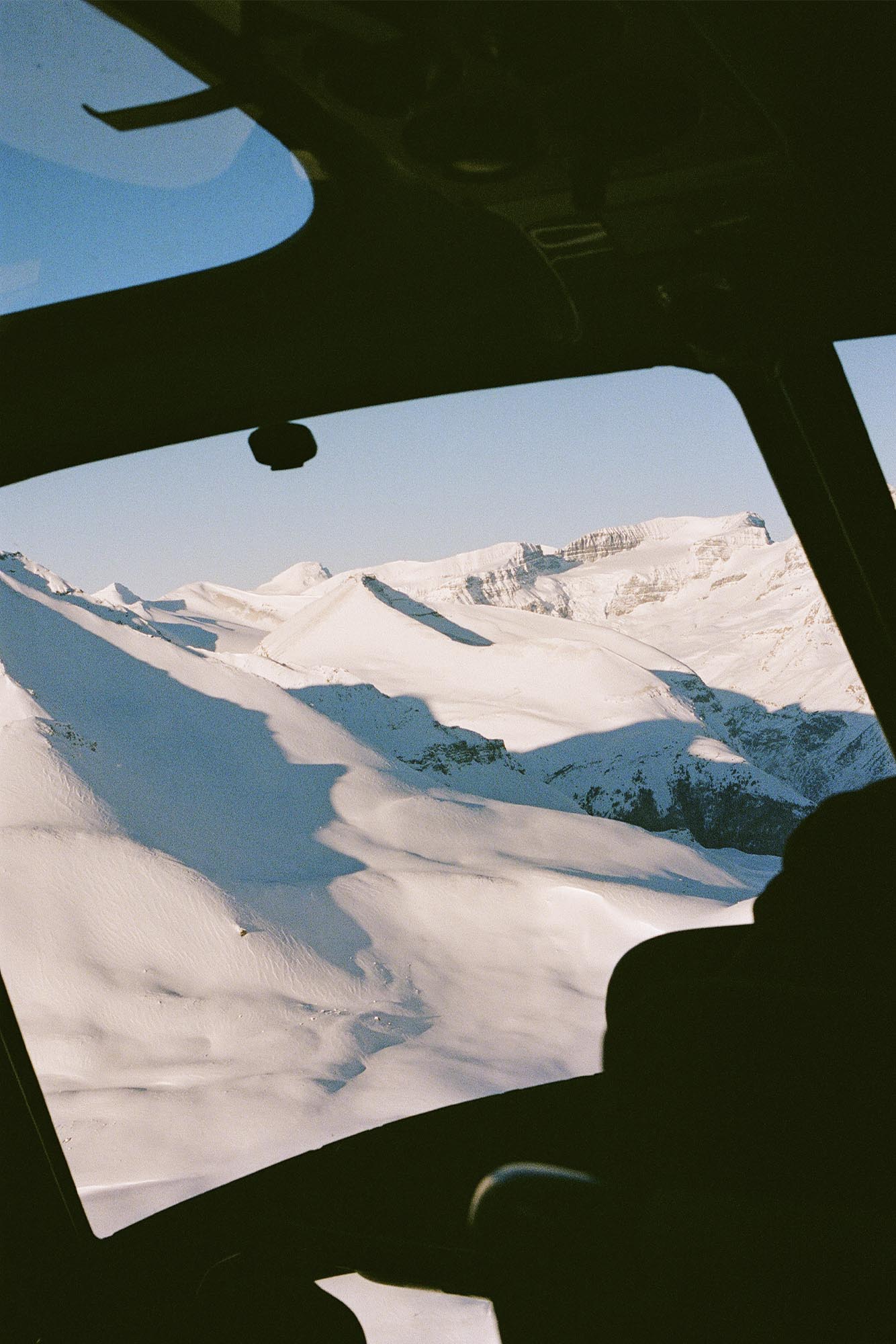
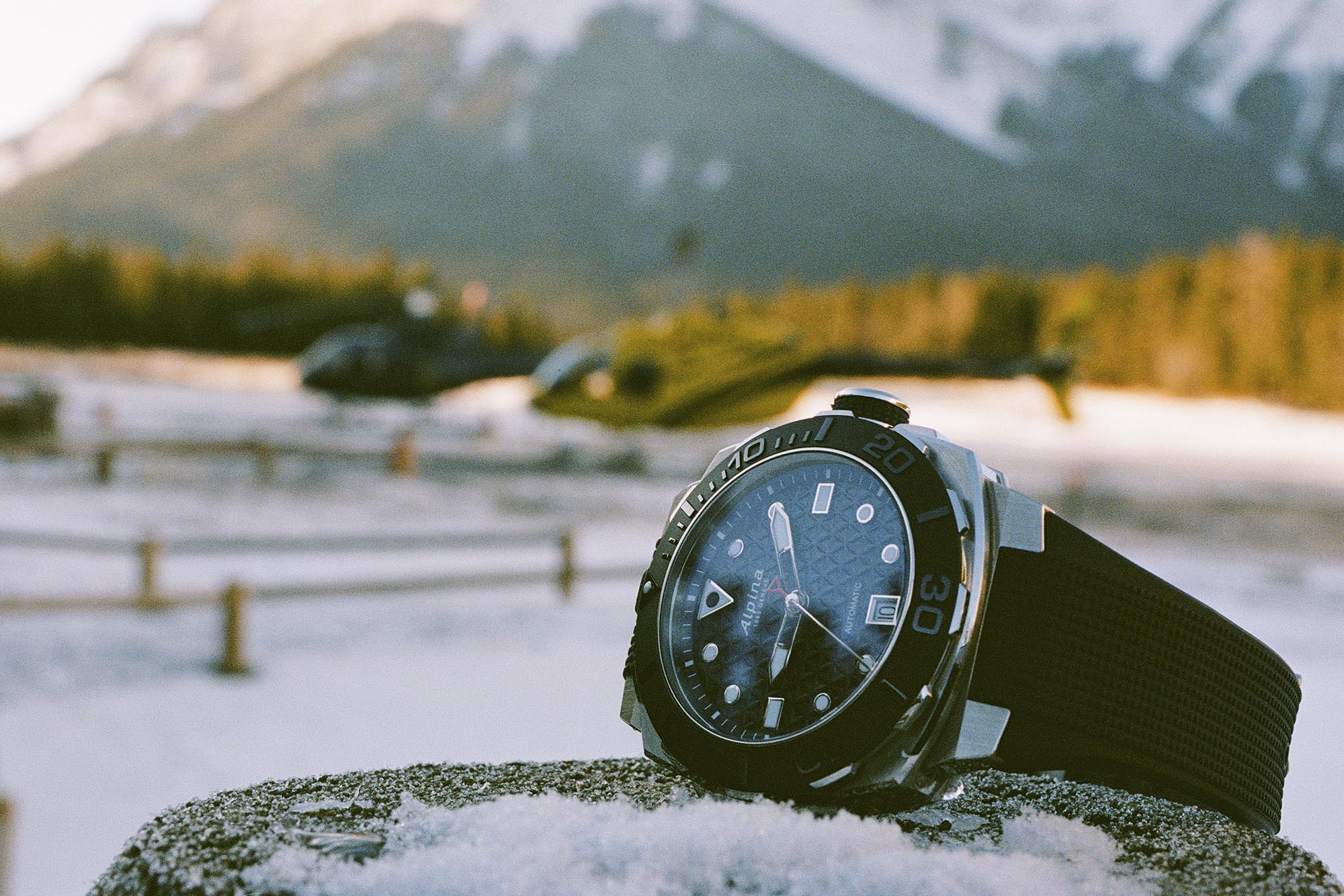
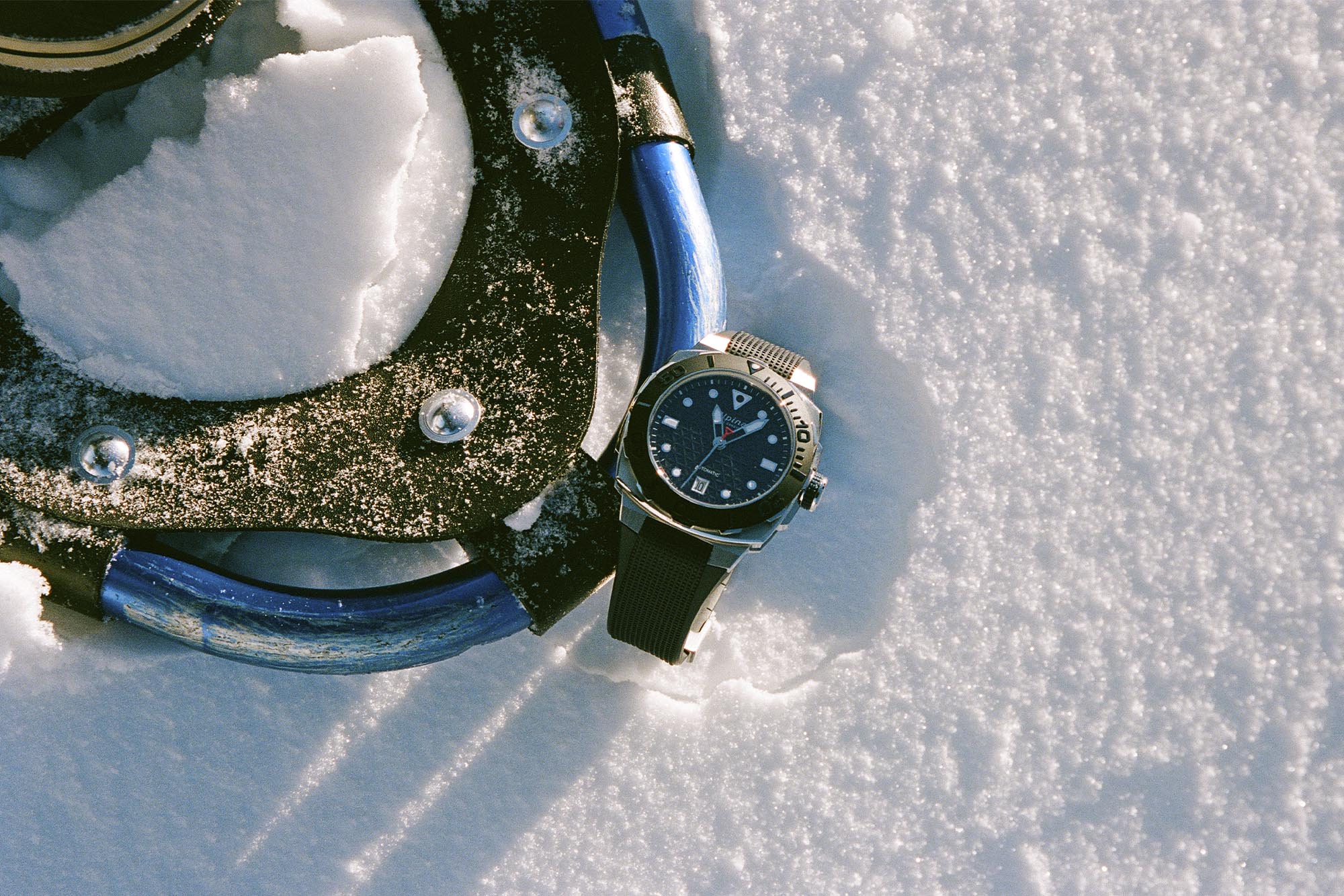
A memorable adventure is inevitably the by-product of something unforeseen, and in the case of our recent travels with Alpina Watches, the first curveball came quickly. “We are beginning our descent into Calgary. The temperature is -32°C, with overcast skies and light wind,” our pilot’s gritty voice echoed through the cabin. Maybe it was an omen, but we didn’t give it much heed at the time. This wasn’t our first rodeo with Alpina. Travelling to Kicking Horse Mountain Resort for the Freeride World Tour — the renowned ski and snowboard competition that Alpina sponsors — had become a regular occurrence. That said, this year was different. After launching the Alpiner Extreme and Seastrong Diver Extreme with the utmost ruggedness and survivability in mind, Alpina built our plans around testing these watches in conditions and situations better suited to true alpinists and adventurers than to a few writers and editors whose ruggedness is mostly cosplay.
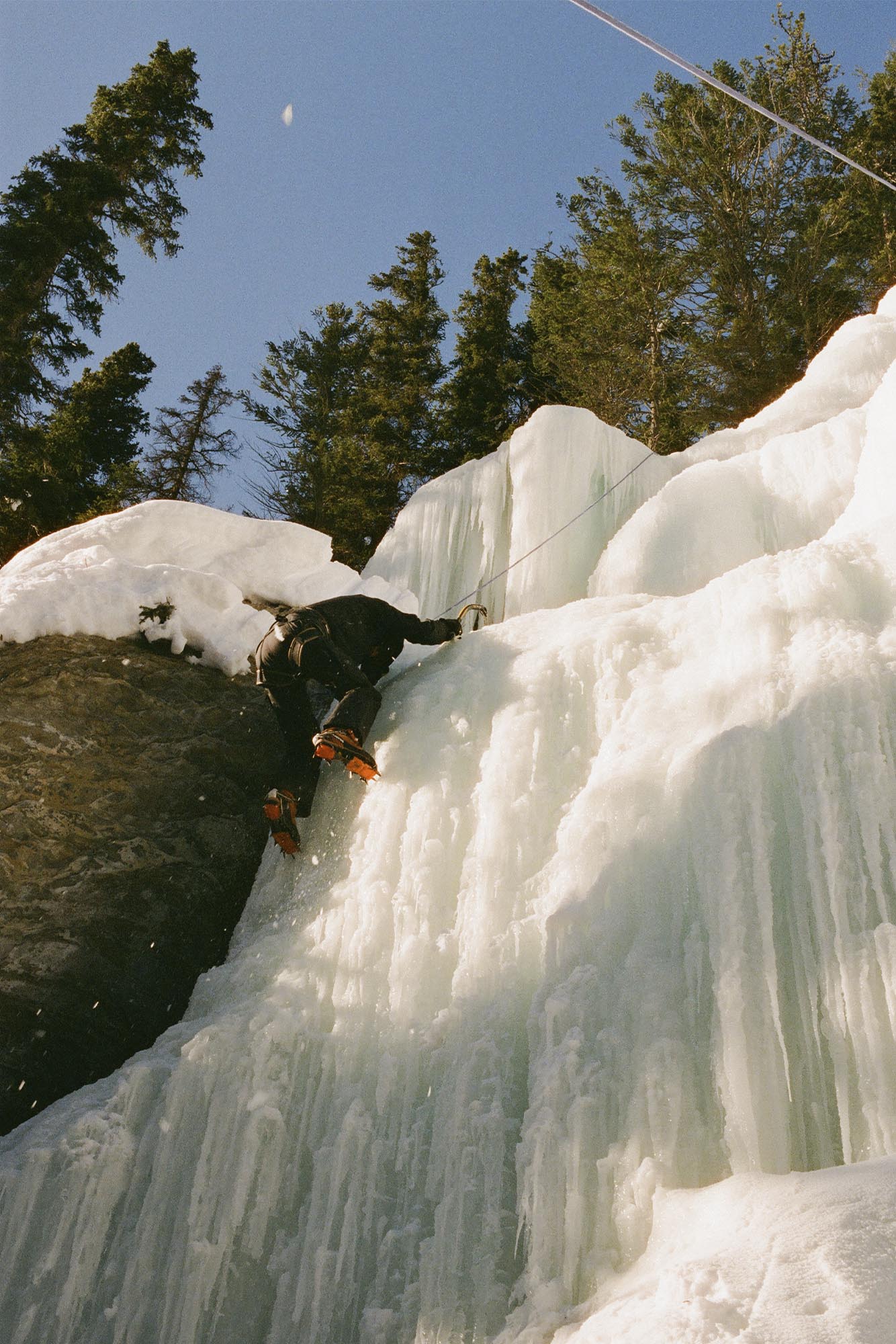
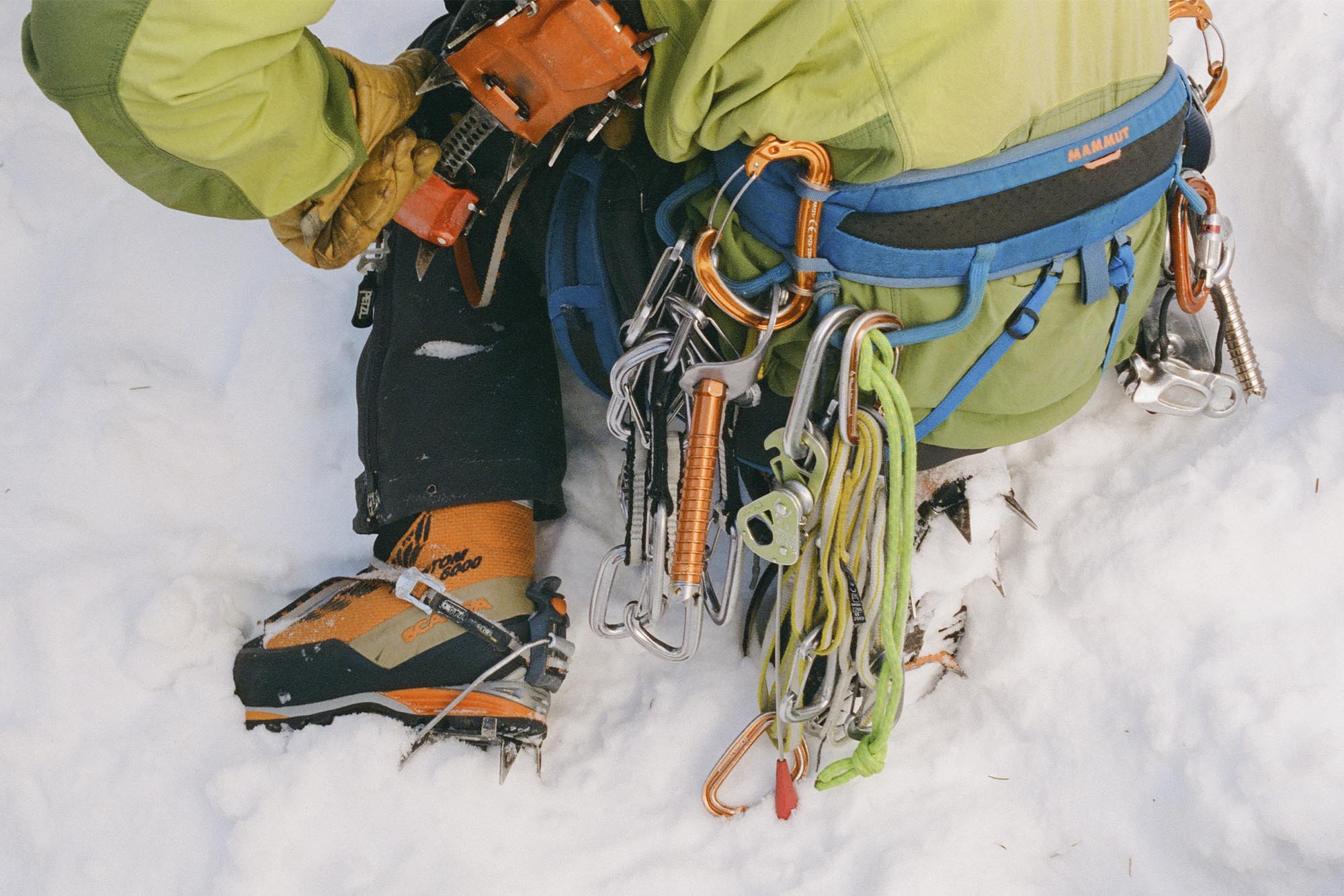
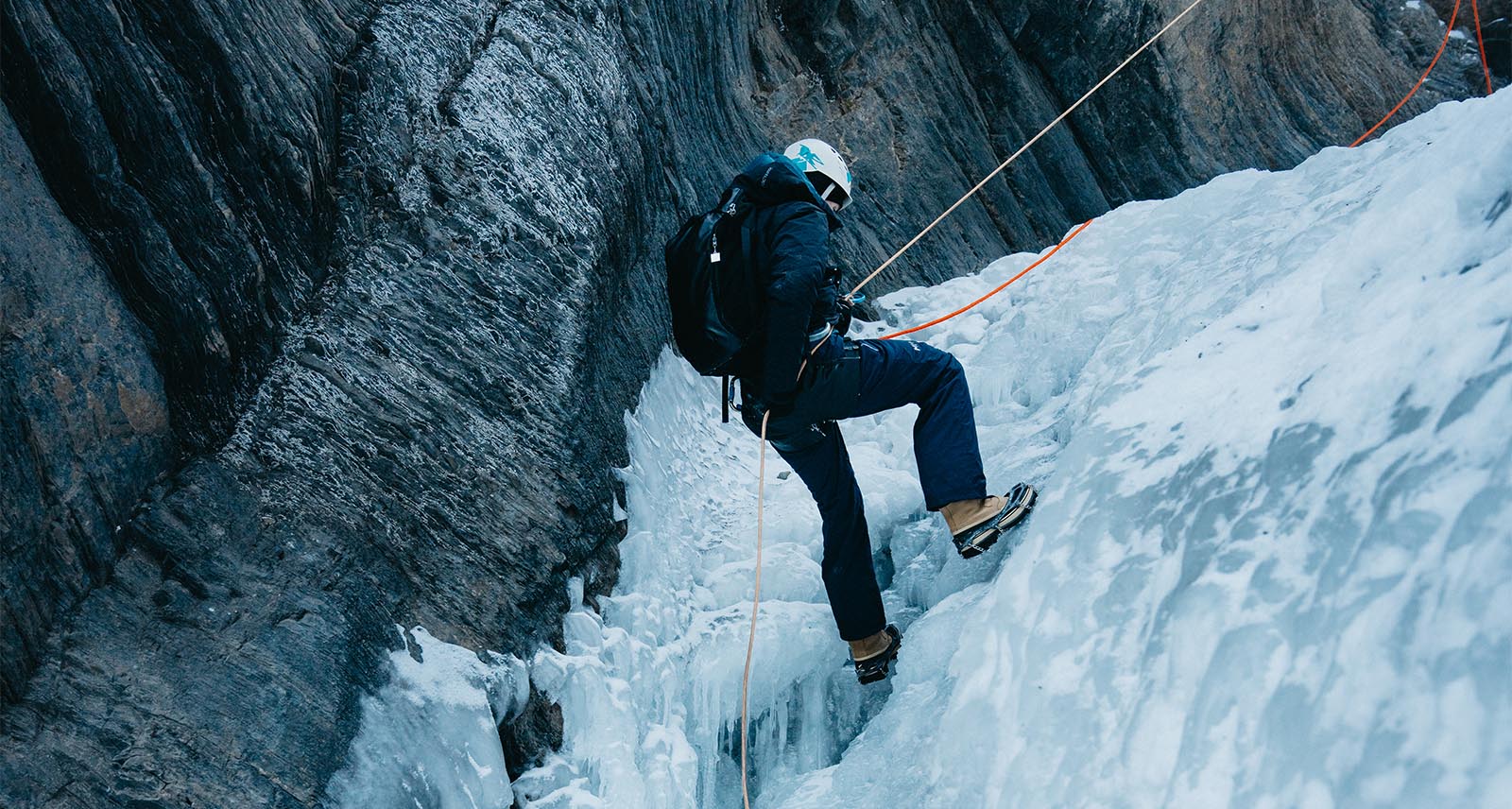
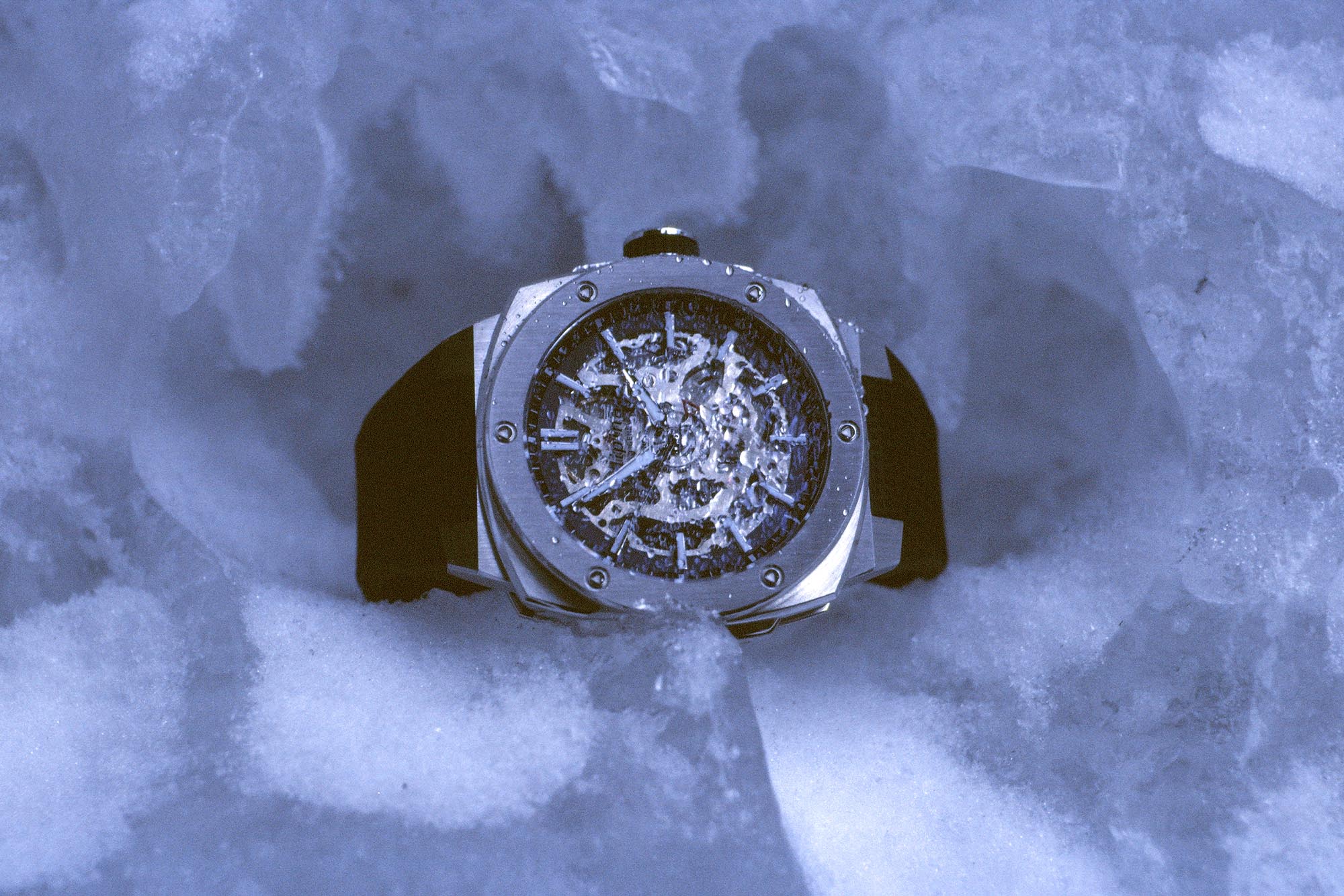
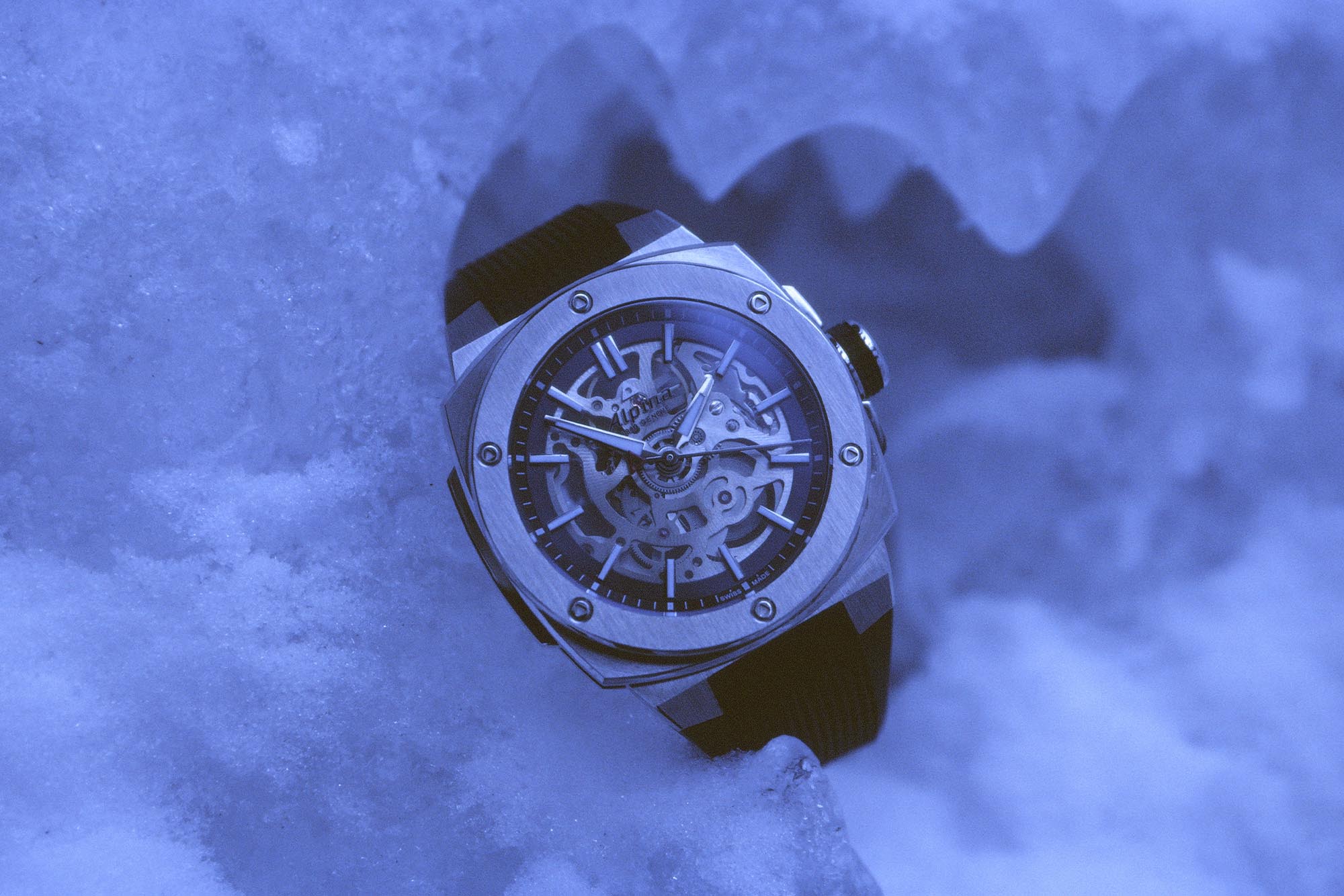
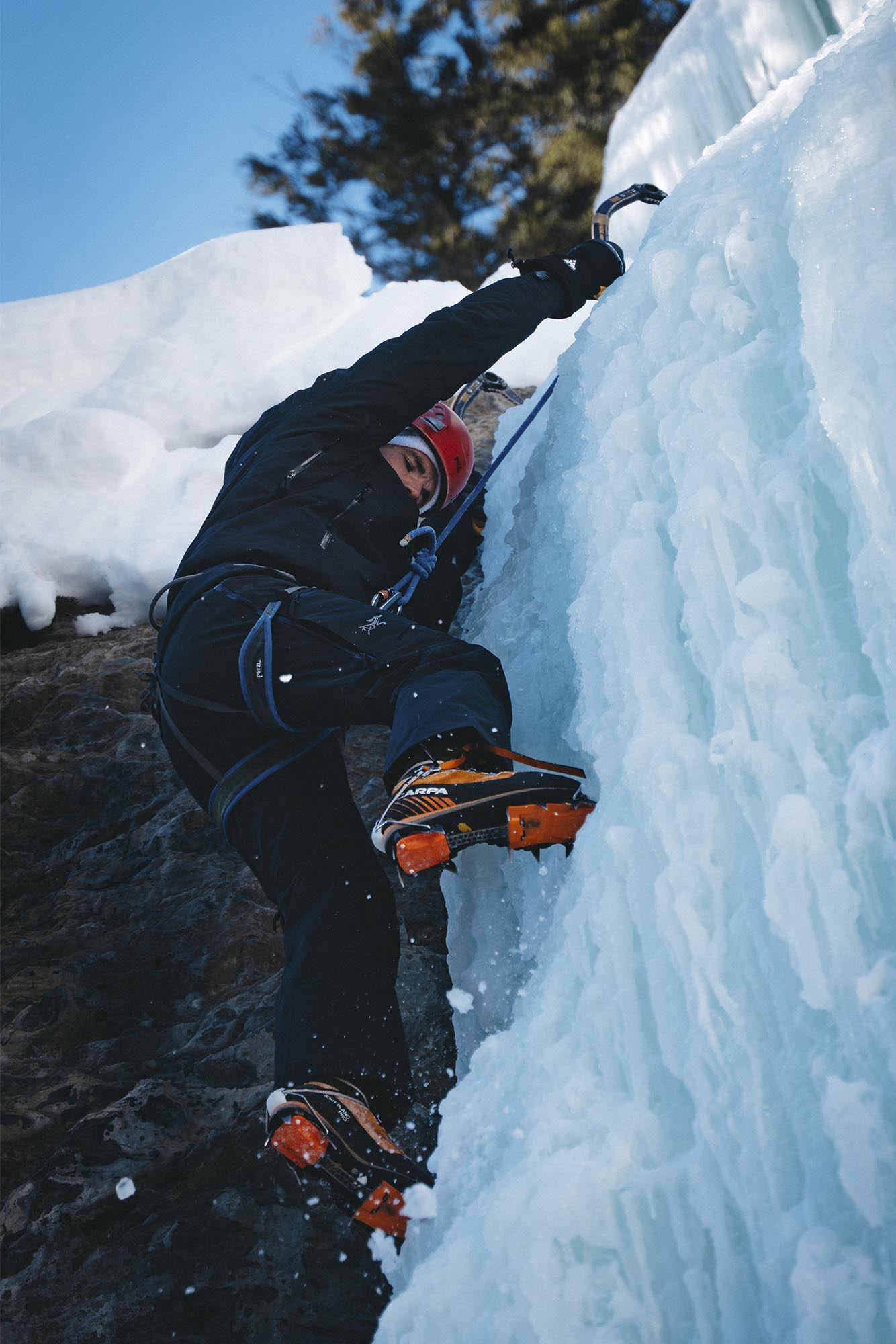
On our first morning, a chill cut through the air that most would deem grounds to stay the hell inside. Instead, we were off to meet our guides and learn the ins and outs of ice climbing on a wall called Waterworks in Yoho National Park. Equal parts brutal, freezing, and rewarding, a lengthy hike up knee-deep snow led to learning how to effectively wield a pair of ice axes — a process known for inducing its fair share of swearing before providing a suitable anchor to scale the next few inches of our 70-foot ascent. One by one we swung, kicked, and pulled our way to the peak, watching our respective timekeepers ticking away; we may have been on the edge of survival, but the cold and vibration of the climb wasn’t phasing these watches in the least.
The next two days provided a necessary moment of recovery as the year’s Freeride competition unfolded. Those of us more battered by the cold took time to warm and recover before taking to the slopes. Kicking Horse is one of Canada’s most underrated mountainous regions, thus any tenderness of extremities was eventually ignored for the sake of perfect powder.
Alpina Takes SHARP Into the Canadian Rockies
Photo by Justin Mastine-Frost.

Alpina Takes SHARP Into the Canadian Rockies
Photo by Justin Mastine-Frost.
Alpina Takes SHARP Into the Canadian Rockies
Photo by Justin Mastine-Frost.
Alpina Takes SHARP Into the Canadian Rockies
Photo by Justin Mastine-Frost.
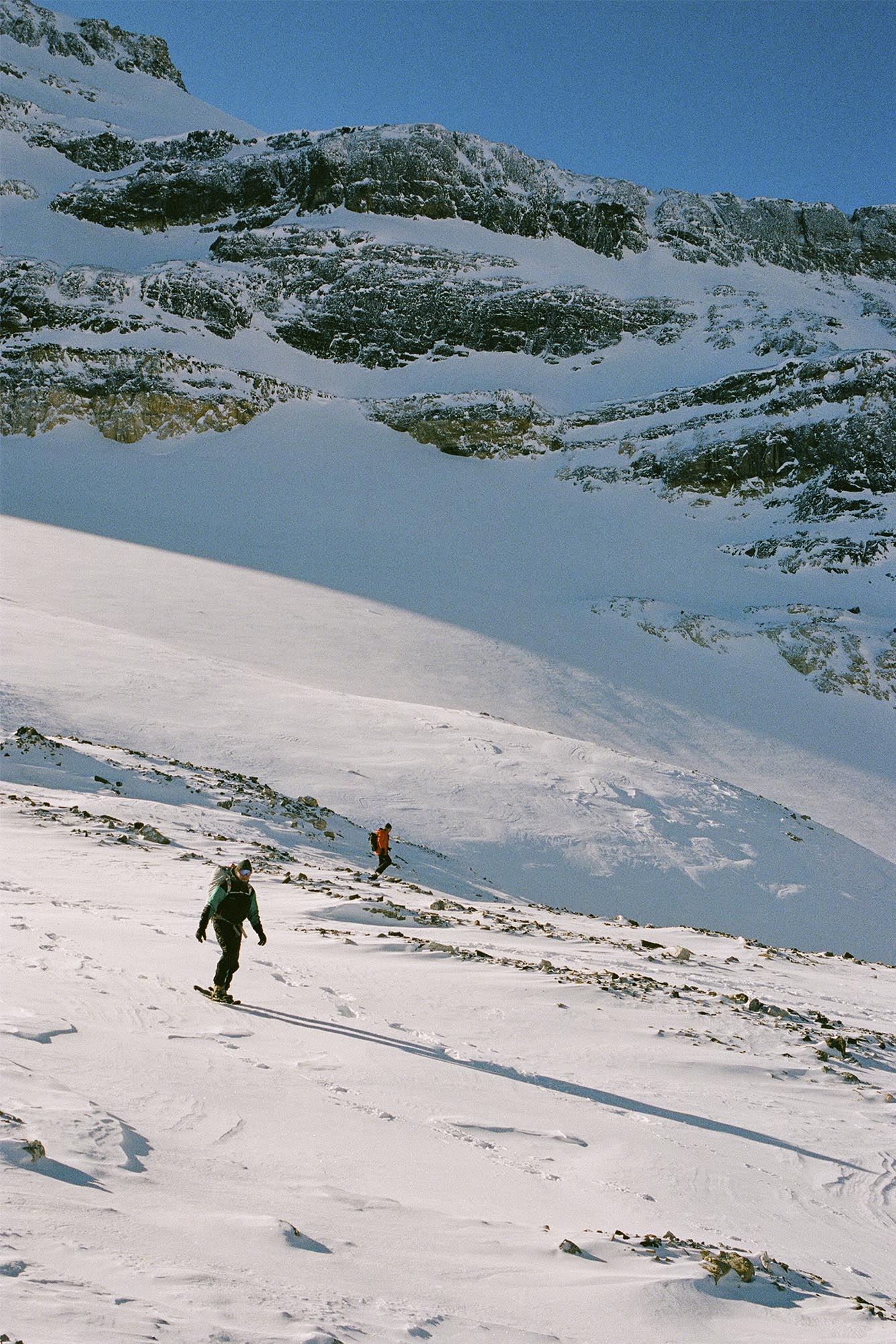
The Cline River Canyon and Abraham Lake awaited us next, situated along the picturesque Icefields Parkway. Surrounded by dramatic mountain peaks, this was the perfect base for our final two ventures: snowshoeing across a high mountain glacier, and a final alpine experience rappelling down frozen waterfalls. In contrast to our first day, landing on a mountain peak beside a glacier at 10,000 feet and throwing on snowshoes was a walk in the park.
However, our return to harnesses and rope proved daunting enough to trim our adventuring party from six to just myself and our photographer. Even I second-guessed it, but a photographer needs a subject, and I was running on a fuel blend of caffeine and spite. We agreed to extremes, and I didn’t come this far to collapse before the finish line with our watches still running flawlessly.
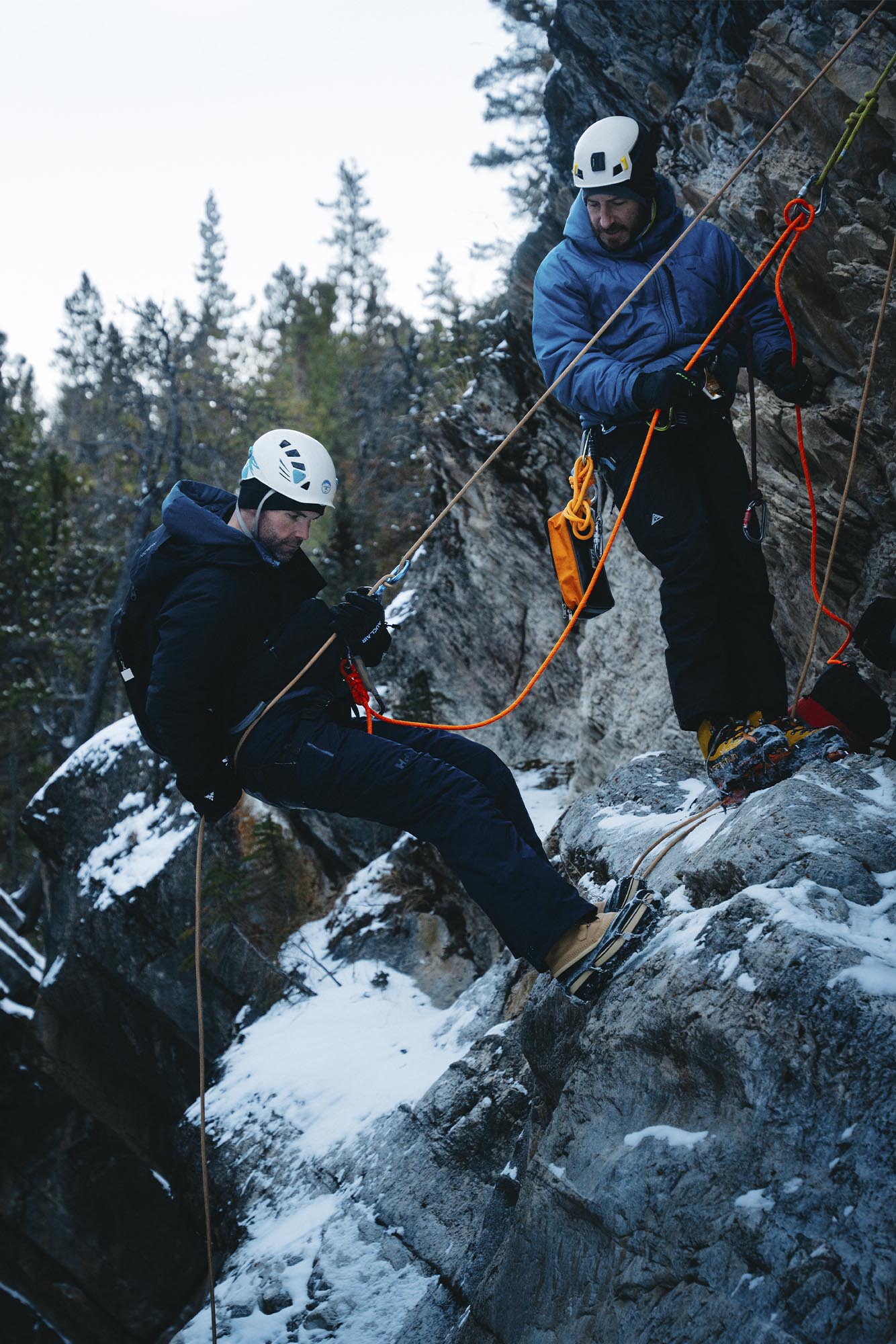
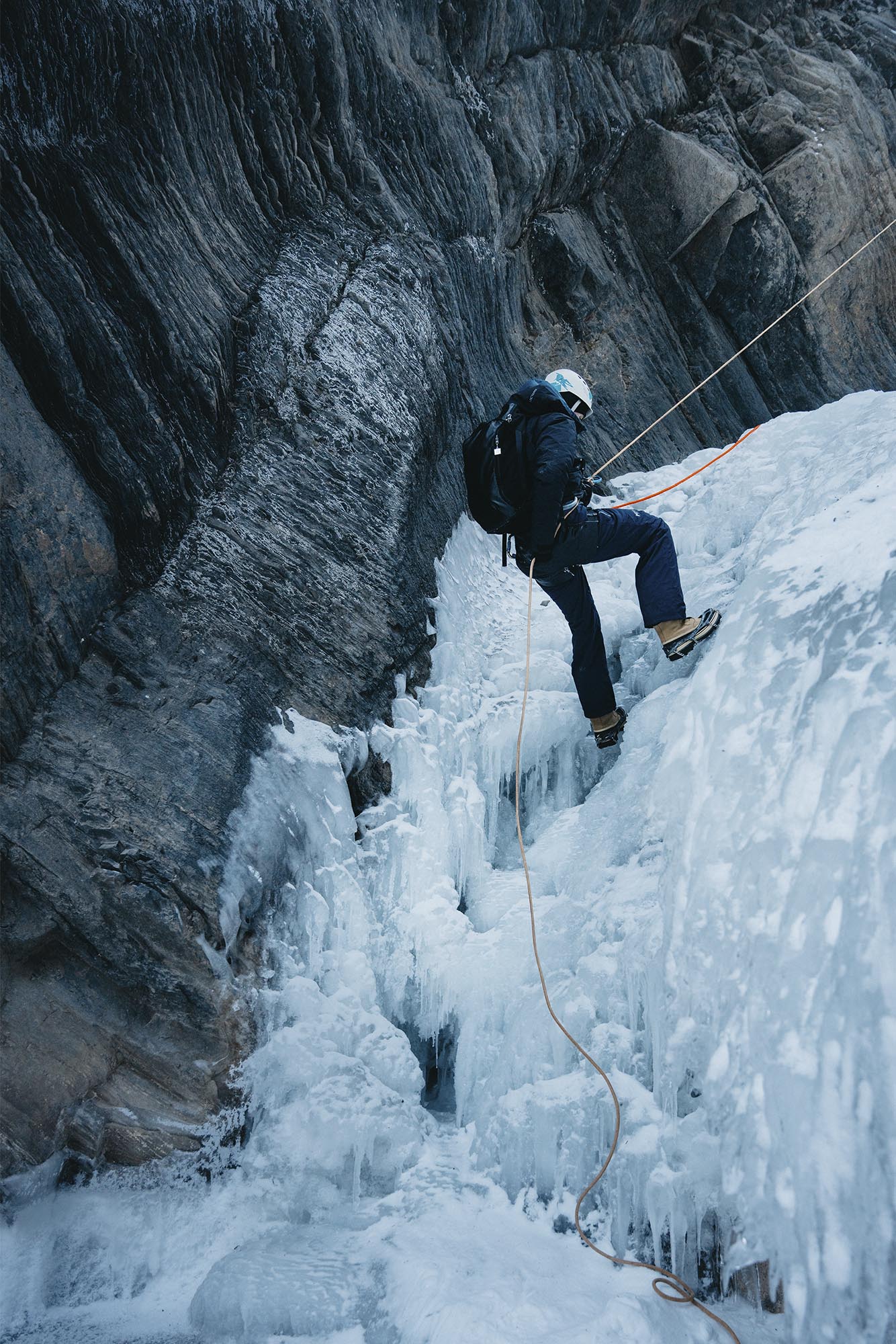
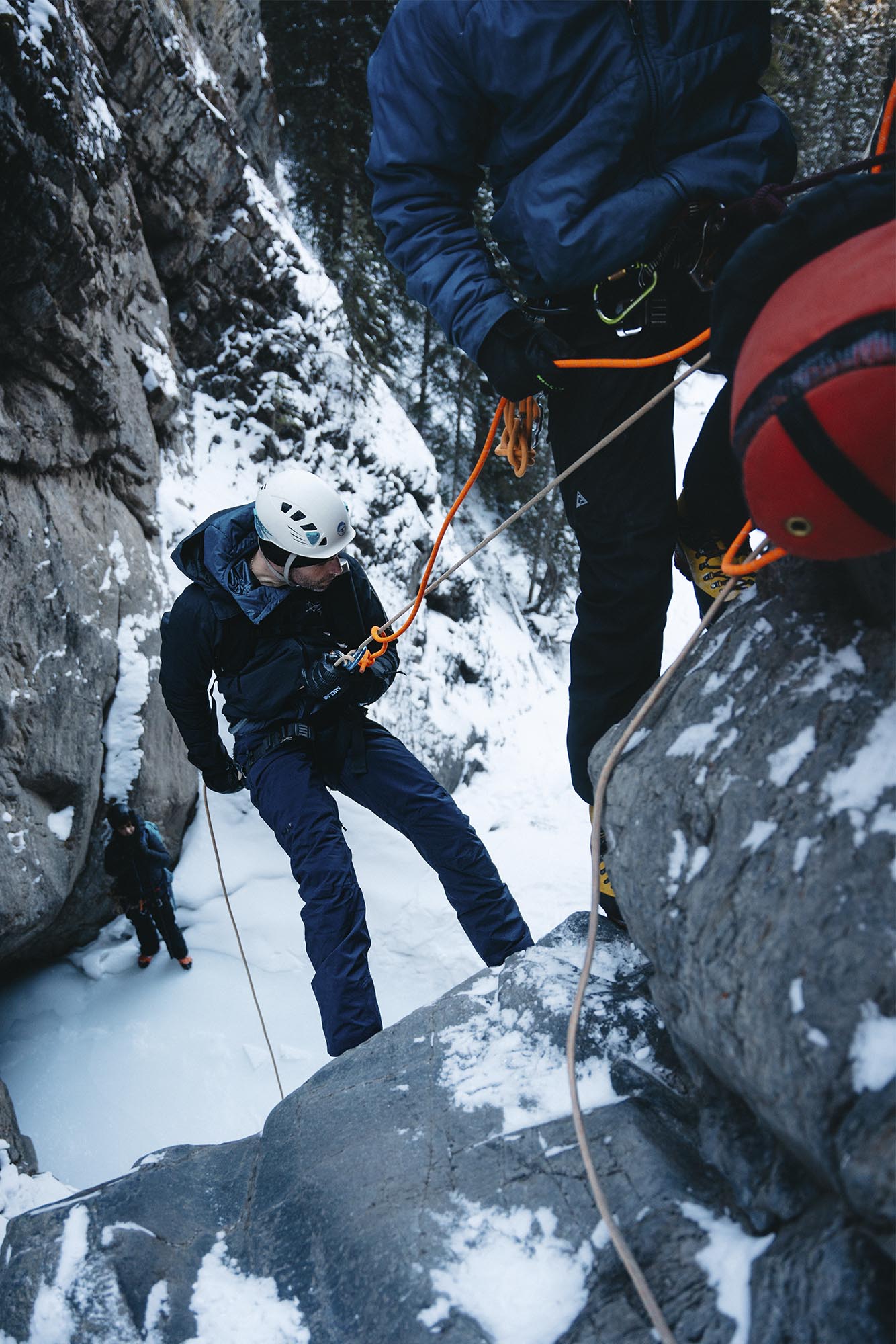
This last push proved to be worth every step, every ache, every hour and day of recovery that followed. Temperatures had “warmed” to -20°C, and with only four of us on ropes (us and our two guides) our pace kept us from significant stagnation. Only the clicks of carabiners and the crunch of ice under crampons broke the silence of our isolated canyon. We were remote beyond the remoteness urbanites know, the motions of the descent were becoming second nature, and anything outside our tools and my camera dropped from consciousness. This was as “in the moment” as I could get, and I was loving every minute of it. Unfortunately, my trusty Alpina (and the setting sun) made it clear that the time for extreme adventure was over for now.
Featured photos by Justin Mastine-Frost & Ed Rhee.