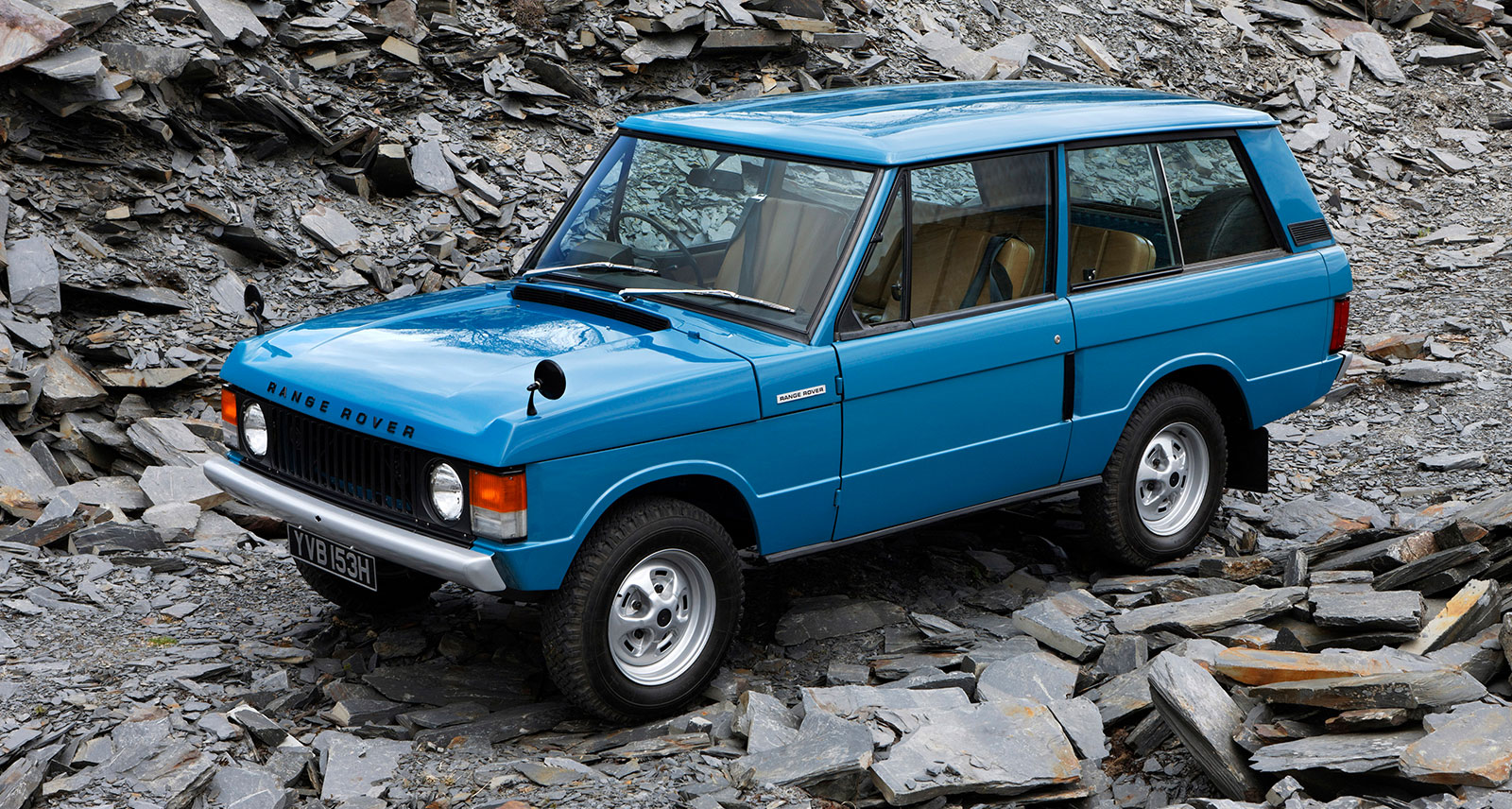
Going where others have not requires doing what others have not — or could not. That’s why any worthwhile adventure demands innovation. As the old proverb goes, necessity is the mother of invention. It’s a lesson that has been at the very core of Range Rover’s success since its earliest days and — perhaps more impressively — one that continues to propel the brand into the 21st century. Even after 55 years of success, Range Rover shows no signs of resting on its laurels.
Don’t just take our word for it. As proof, we’d like to offer this (abridged and condensed) timeline of groundbreaking inventions, accolades and ingenious ideas, all pioneered by Range Rover and its parent Land Rover.
1948
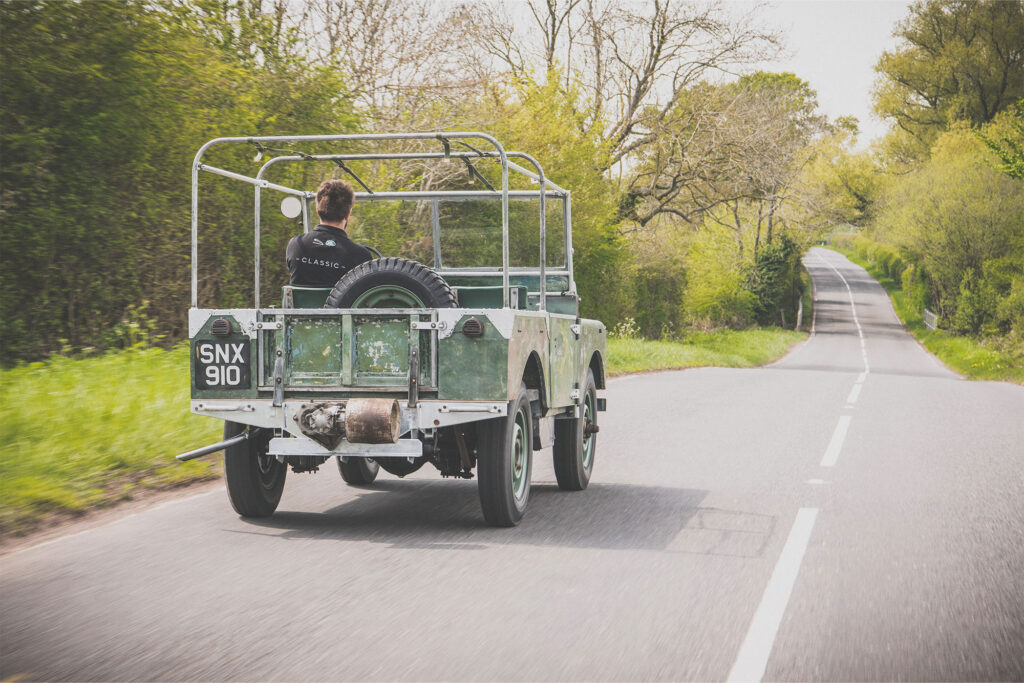
Aircraft-grade aluminum body panels: Due to post-war steel rationing, engineers used lightweight, corrosion-resistant aluminum from aircraft manufacturing for the body panels of the original Land Rover. The decision proved visionary. It paved the way for the brand’s continued leadership in lightweight aluminum construction, a position it arguably still holds today.
1970
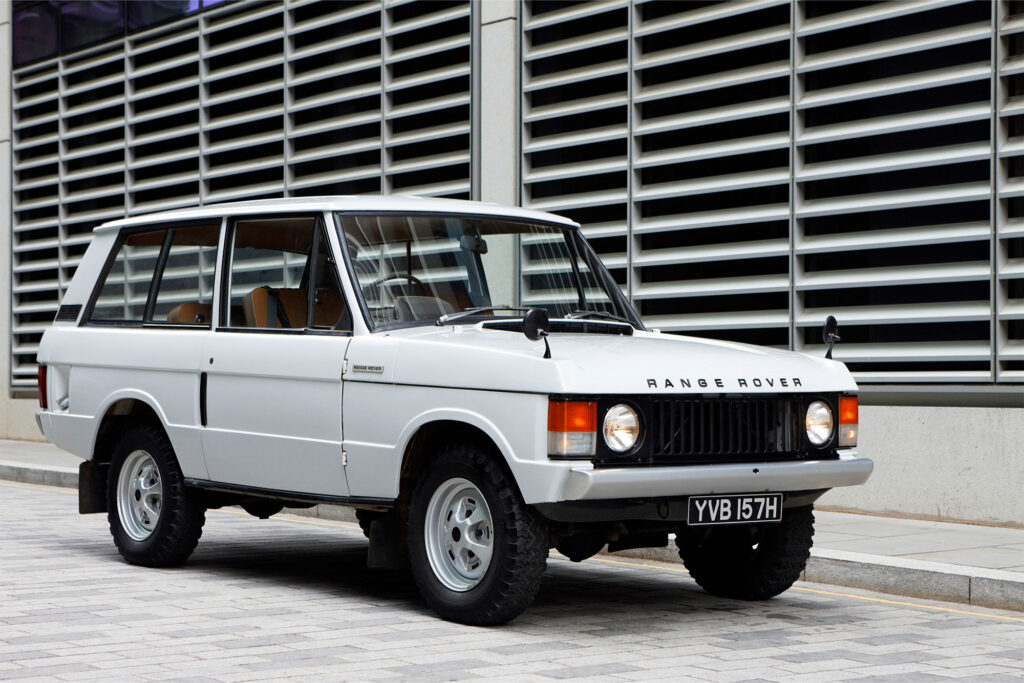
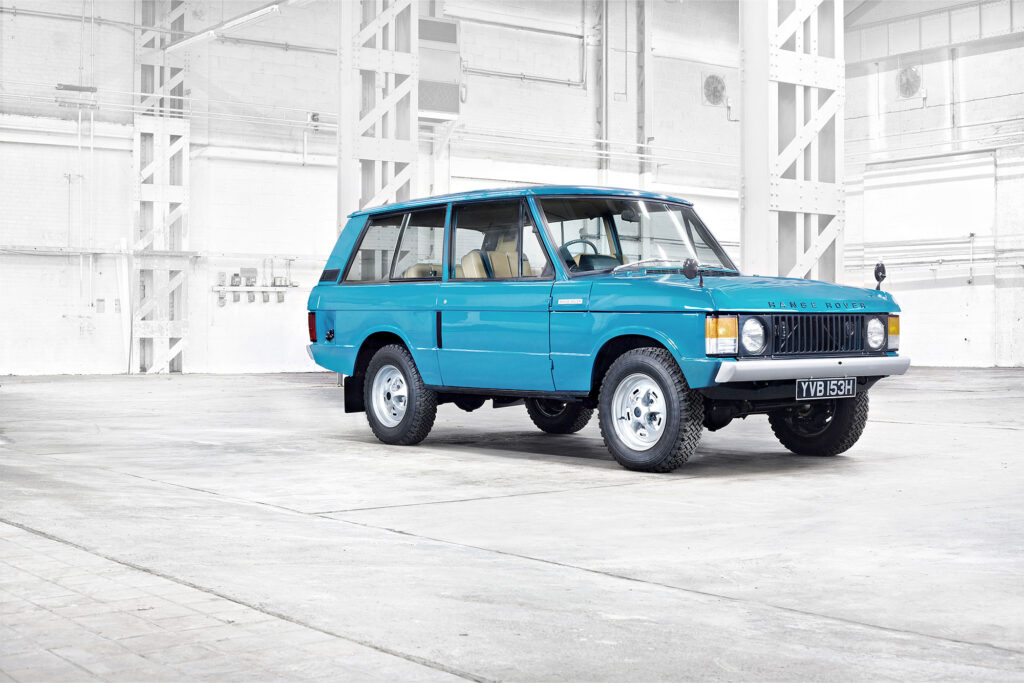
Permanent four-wheel drive: Unlike earlier 4x4s with selectable systems, the original Range Rover featured full-time 4WD as standard. Drivers could simply get in and go – a small luxury that clearly separated Range Rover from its more agricultural rivals.
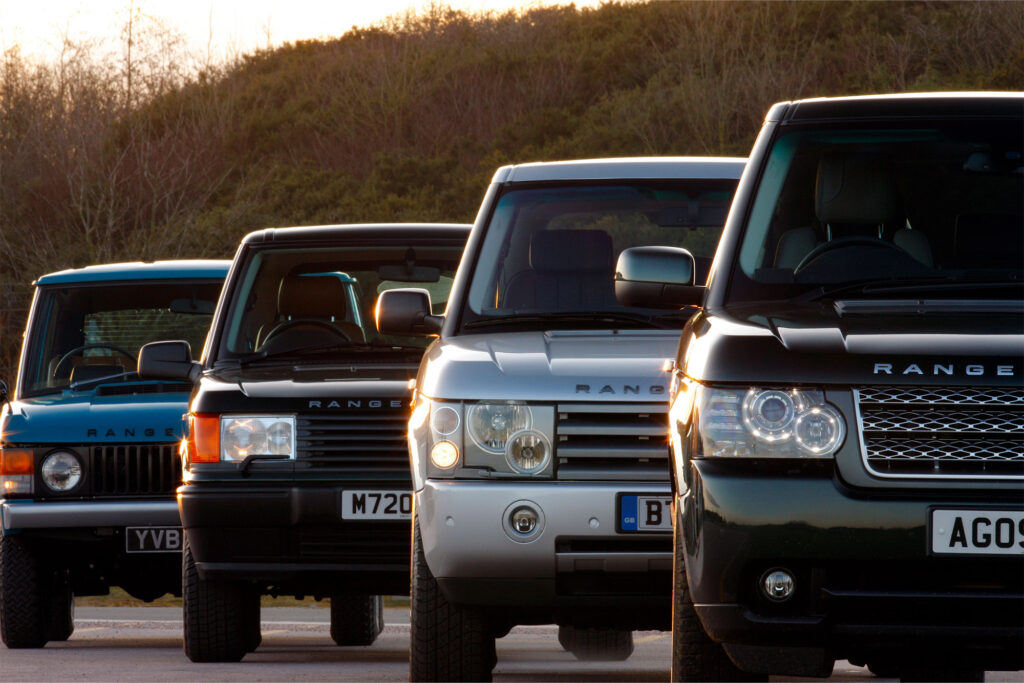
Clamshell hood, split tailgate: Few design elements have aged as gracefully as these two. Introduced in 1970, both features remain part of the Range Rover design language today. The clamshell hood creates a clean front end with tighter shut-lines, while the split tailgate makes loading and unloading easier. Together, they reflect the depth of thought that helped make the original Range Rover an instant icon.
1971
First vehicle exhibited at the Louvre Museum: Speaking of icons, the original Range Rover was so good it was almost instantly recognized as “an exemplary work of industrial design” by the curators at the Louvre Museum in Paris. If that’s not a flex, we don’t know what is.
1989
First 4×4 with anti-lock brakes (ABS): Range Rover became the world’s first four-wheel drive vehicle to offer ABS, at a time when most 4x4s were still utilitarian tools rather than luxury machines. Since most of us grew up in a world where every vehicle has ABS we take it for granted. But you really wouldn’t want to drive a car without it, especially in treacherously slippery Canadian winters. ABS was a game-changer.
1992
First 4×4 with electronic traction control (ETC): It’s another feature drivers take for granted these days, but traction control is one of those technologies that has helped to make driving so much easier and safer. The Range Rover Classic was the world’s first 4×4 to be fitted with electronic traction control (ETC), giving drivers greater confidence both on- and off-road.
First 4×4 with automatic electronic air suspension: It’s hard to believe Range Rover was on the air-suspension trail way back in the early 1990s. Even today the majority of SUVs still use conventional coil springs. The beauty of air suspension is that it allows a big, heavy SUV to drive with the comfort and finesse of a luxury sedan, while maintaining off-road capability. The adjustable nature of air suspension also allows a vehicle to raise up to clear large rocks or hunker down for improved highway fuel economy. It also levels loads and reduces body roll. Decades of refinement later, air suspension remains a key reason the Range Rover is among the most comfortable vehicles on the road at any price.
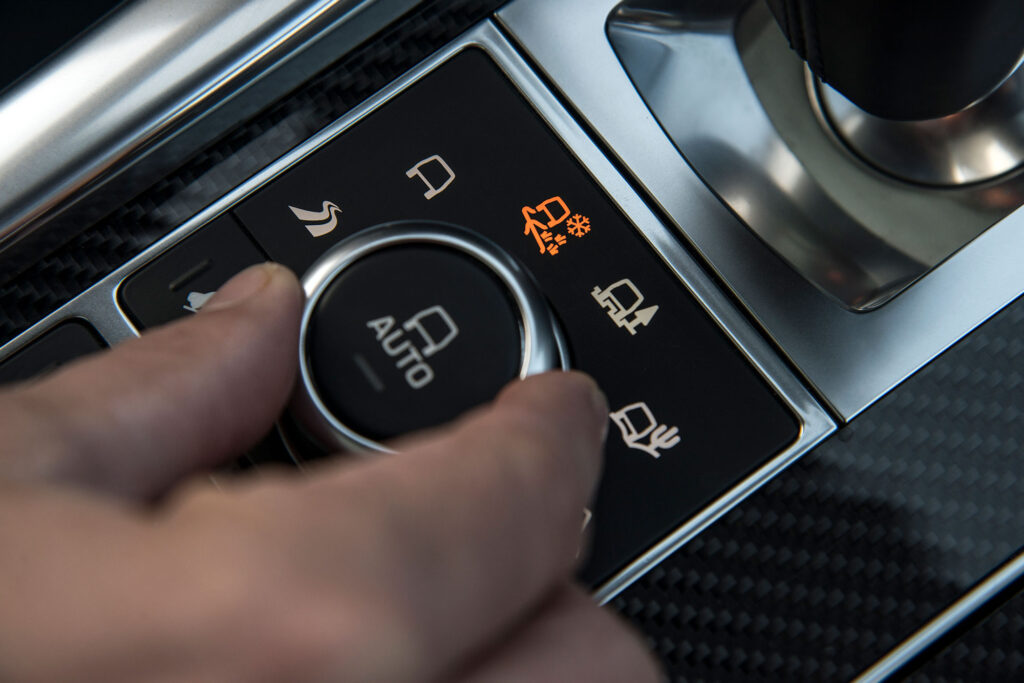
Range Rover Terrain Response
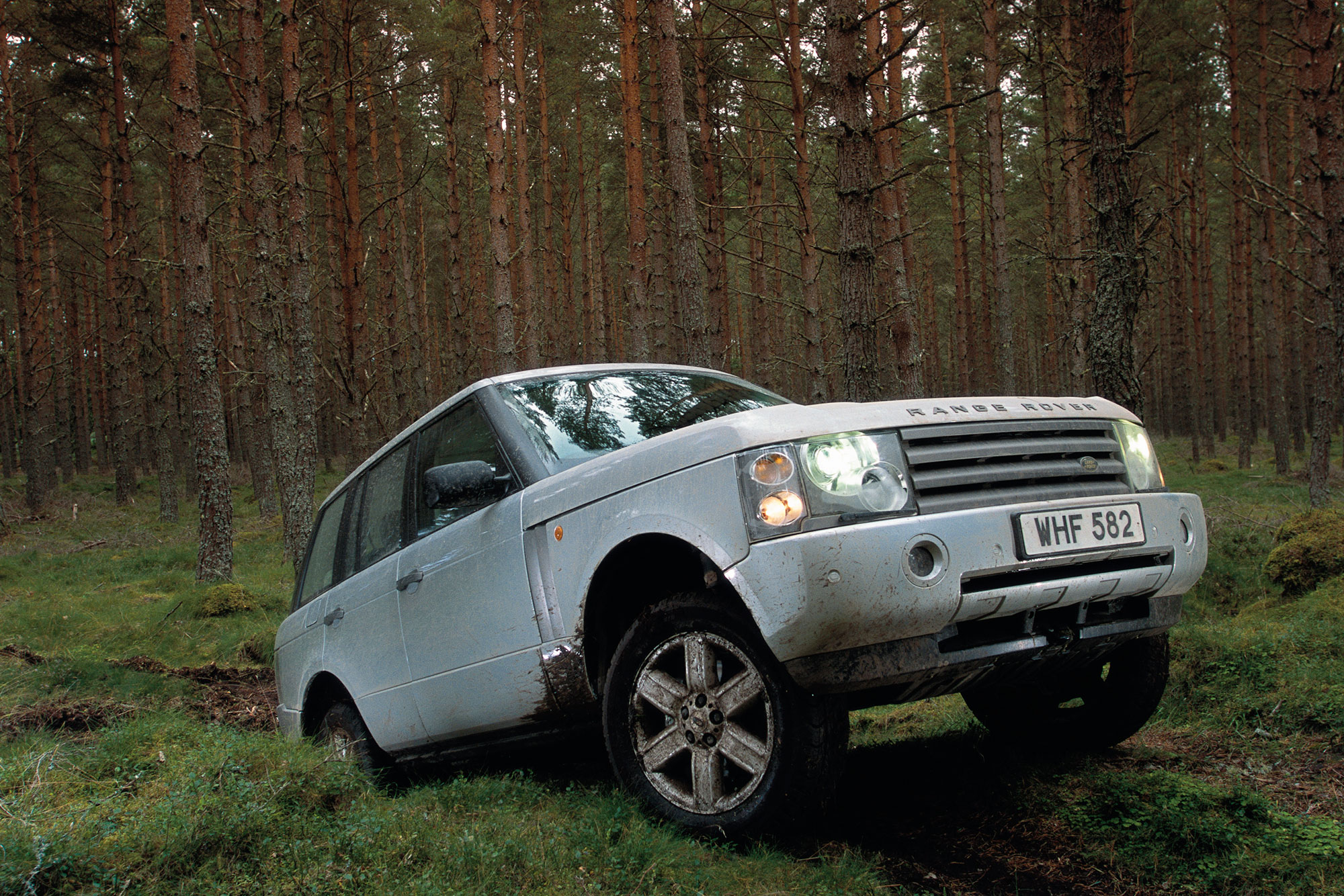
Terrain Response made advanced off-road driving intuitive

Range Rover Terrain Response
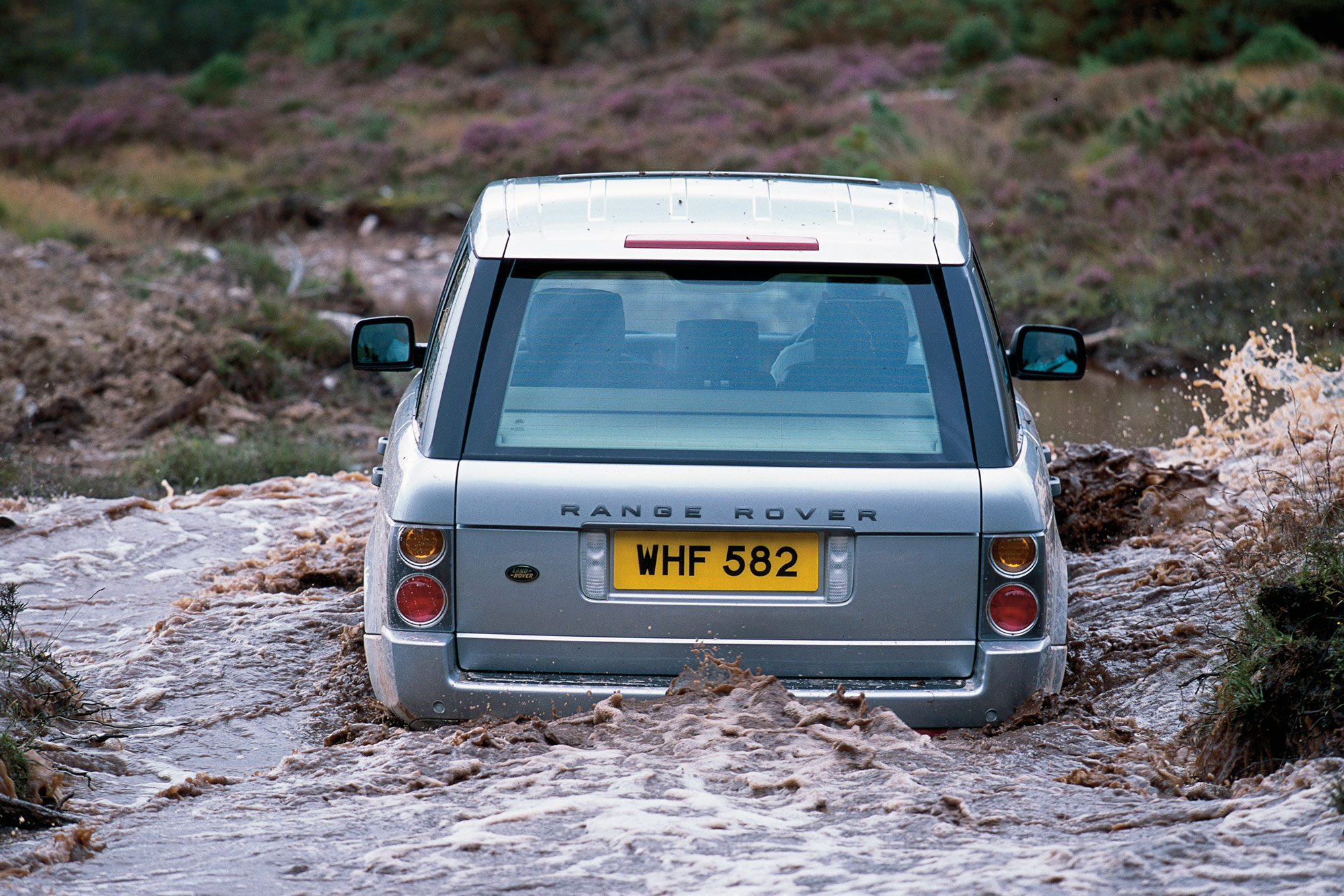
Terrain Response made advanced off-road driving intuitive
Range Rover Terrain Response
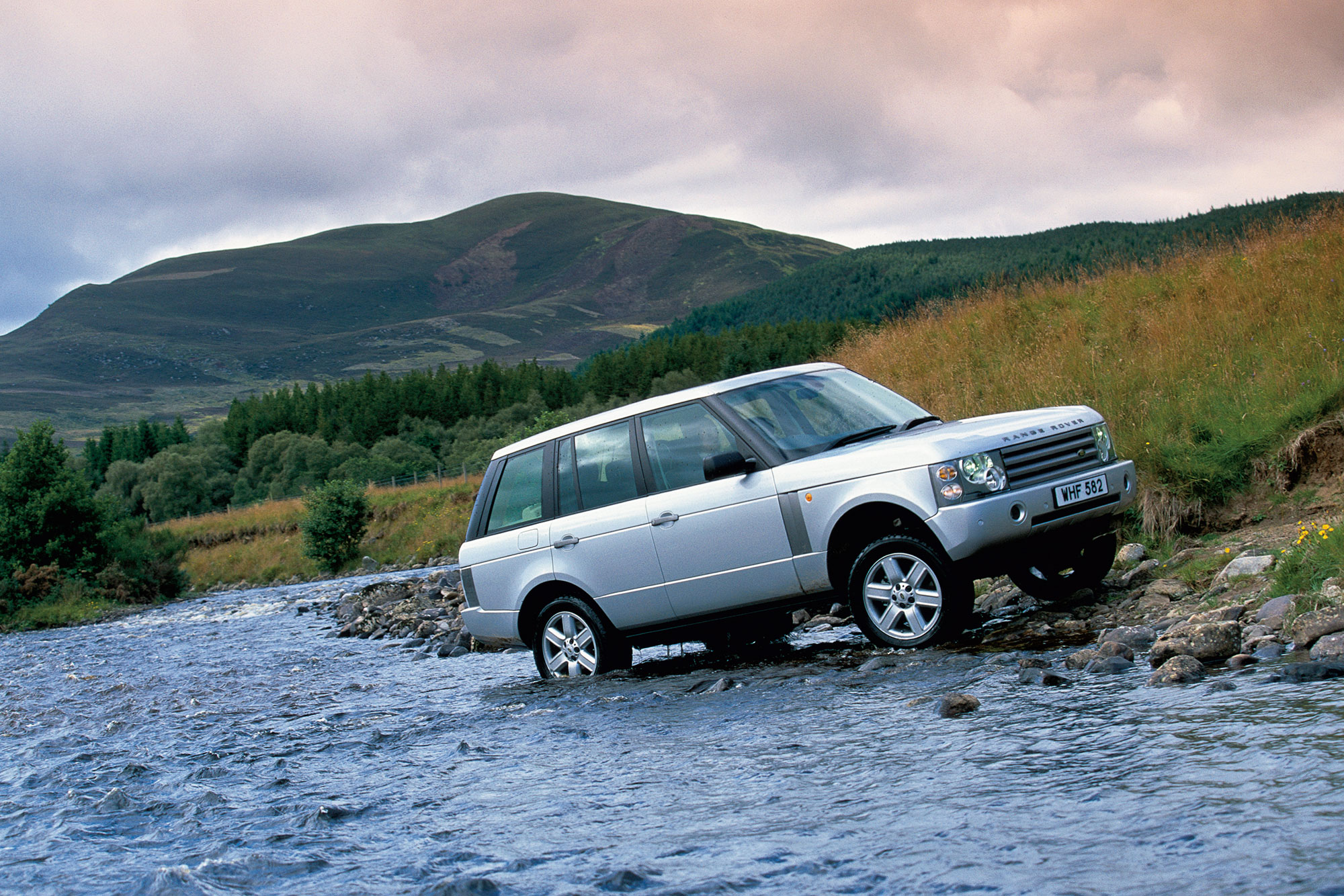
Terrain Response made advanced off-road driving intuitive
2006
Terrain response: In the same way that ABS, ETC and permanent 4WD simplified driving, Terrain Response transformed off-roading. No expertise required. Select gravel, snow and ice, mud or sand and the vehicle optimizes itself accordingly. It was yet another example of Land Rover engineers putting drivers first while redefining expectations for luxury SUVs.
2012
First all-aluminium SUV: The fourth-generation Range Rover, which still looks great today, featured a revolutionary all-aluminium monocoque structure, reducing weight by up to 420 kilograms compared to its predecessor. For the uninitiated, yes, 420 kilograms is a lot. It’s the sort of different you can feel when turning into a corner or riding over a pothole. It was also an early example of Range Rover’s push for fuel efficiency. Making an all-aluminium SUV was a huge investment in R&D and tooling, but the payoff was undeniable.
2013
Auto Terrain Response: This is Terrain Response, but smarter. Instead of having to turn a knob when hitting a gravel road or a muddy patch, drivers simply had to… do nothing. Just keep driving. Auto Terrain Response can figure out what sort of surface the vehicle is on and adjust the vehicle’s setup accordingly. If you see a theme here – making drivers’ lives easier through high-tech innovation – well, yes, exactly.
2019
ClearSight Ground View: Thanks to a clever use of cameras and software, drivers could finally see if they were about to run aground on a huge rock while driving off-road. (It also works brilliantly in parking lots with high curbs, just saying.) The system uses cameras in the front grille and door mirrors to project a 180-degree virtual view of the terrain beneath and in front of the vehicle. By offering drivers a view through the hood, blind spots are reduced and – we’d bet – minor accidents along with them. Simply brilliant.
2026
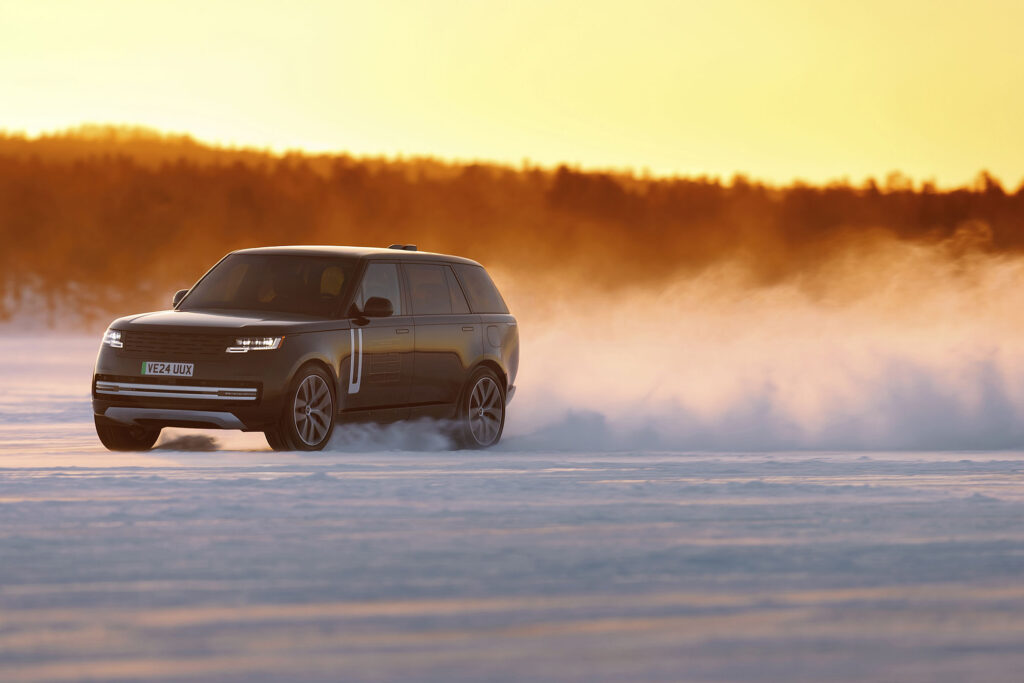
Range Rover Electric: Exactly what it sounds like – and exactly what you’d expect. Range Rover’s first all-electric model arrives this year, intentionally familiar in form. The designers knew not to mess with a good thing, but taking out the combustion engine and fitting a rugged battery pack was no easy task.
As vehicle engineering director Matt Becker, who is something of a legendary figure in the automotive community, explained, “delivering both [capability and refinement] in an electric vehicle in a way that doesn’t diminish the vehicle in other areas is incredibly challenging. By increasing its torsional stiffness and improving its responses, we’ve been able to maintain a customary Range Rover driving experience that feels familiar.” All that work so drivers won’t even notice how much has changed.
There are more inventions and world-firsts we could’ve included here, of course, but the point is clear: Range Rover is always innovating so that your life, your commute, your adventure might become just a little bit more enjoyable. Frankly, we can’t wait to see what Range Rover comes up with in its next 55 years.