
For decades, luxury has justified its carbon footprint by pointing to the longevity of its high-quality materials and timeless designs. Sure, the concept of goods being ‘made to last’ is responsible by definition; it eschews the allure of fast fashion. Yet while that argument still holds, it’s no longer sufficient. Today, we’re concerned with the origins of an object: What was it before it reached you? Where were its materials sourced? Across industries — automotive, fashion, horology, and furniture design — a new generation of luxury brands has found that the richest materials come not from mines or fields, but from the recycling bin. But, as proven by the five brands below, this vision does not compromise quality; instead, the brands set new standards on how we can and will perceive luxury in the future — a future that must be circular and sustainable.
POLESTAR: An Eco-Friendly Automotive



Learn More
There is more to Polestar’s ‘Scandi-chic’ — a common descriptor of Polestar among those who know its Volvo roots — than meets the eye. Sitting comfortably and sustainably is not usual these days, thanks to supple, ventilated leather. Still, Polestar plays a different game. In fact, the yarn for Polestar 4’s optional interior upholstery is made from 89% recycled PET waste, offering a premium knitted fabric already established in fashion and footwear. This detail alone says something about how the sensible, tech-forward EV brand is thinking. Performance is not just about energy at the (virtual) tailpipe, but about every surface you touch. The cabin of the sleek Polestar 5, a 4-door GT, is equipped with Amplitex — an unusual flax-based composite — alongside recycled PET textiles and materials recovered from discarded fishing nets. And, since 2020, Polestar has reduced its carbon footprint per vehicle sold by 24.7%, driven in part by sourcing low-carbon aluminum and using 100% renewable electricity across its manufacturing operations in China. This is a company that publishes full life-cycle assessments on each model, setting new standards for material transparency that challenge the rest of the auto industry.
PRADA RE-NYLON: A Circular Archive
Learn More
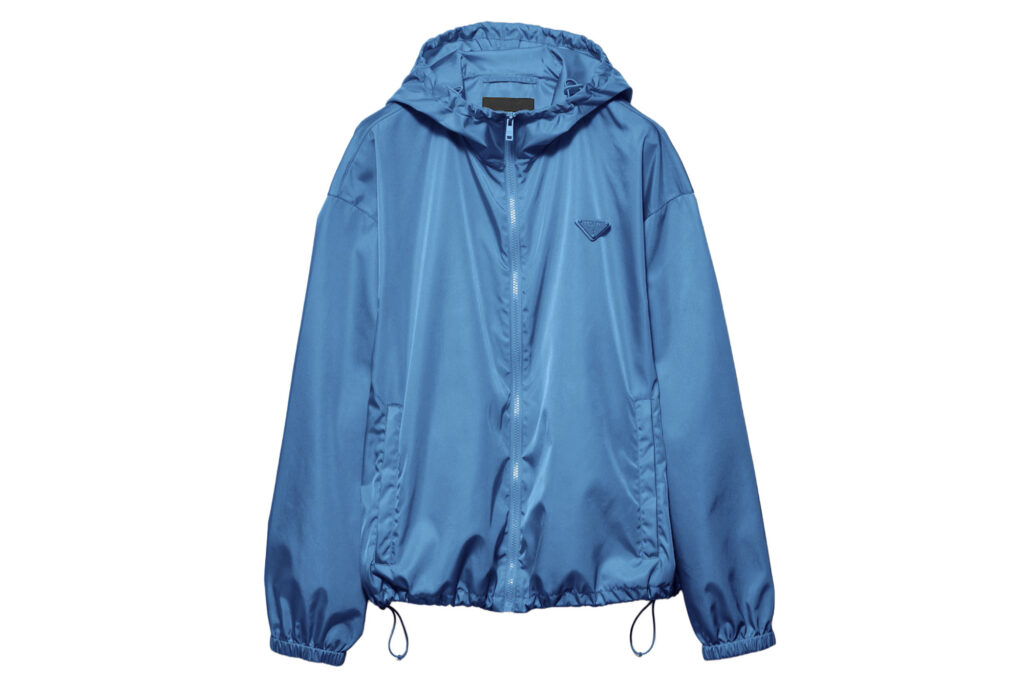
Prada Re-Nylon is made of ECONYL, a regenerated nylon yarn made with discarded plastic collected from landfills and oceans. The latest collection, a collaboration with SEA BEYOND, comes in fresh blues. Using materials like fishing nets, industrial waste, and even carpets, it can be recycled an indefinite number of times without losing quality. Launched in 2019 as a capsule of six bag silhouettes, the project has since expanded to include ready-to-wear, accessories, and footwear. Today, all Prada virgin nylon has been converted to regenerated nylon; that’s a real, radical commitment from a house that built its identity on luxury and quality materials. This jacket comes with an oversized, light silhouette, and is a perfect take on quality over boast, its Prada logo tonal and quiet with no need to shout its credentials out loud. The Re-Nylon program funds the SEA BEYOND initiative in partnership with UNESCO, tying the supply chain directly to ocean literacy education. This nylon carries its own story — and the latest collection has its profits shared with the SEA BEYOND initiative.
ID GENÈVE: The Green Thumb of Swiss Watchmaking

Learn More
Watchmaking is (justifiably) seen as a traditional — if not old-fashioned — industry in which luxury means craftsmanship rather than innovation. Sustainability has reared its unavoidable head, however, and been embraced by brands like Chopard with its part-recycled steel. At the forefront of sustainable horology? A small brand called ID Genève. It creates Swiss-made luxury watches from 100% recycled stainless steel melted in a solar furnace, resulting in a carbon footprint 165 times smaller than that of standard stainless steel. Founded in 2020 by a watchmaker, a designer, and an entrepreneur, the Geneva brand frames itself as genuinely circular — a big ask in this industry. By using materials already in circulation, ID Geneve attempts to close the consumption loop. The Circular C collection pushes further with a dial and bezel crafted from 100% recycled carbon fibre. This is sourced from wind turbine manufacturing waste and features a self-healing composite technology from EPFL spin-off CompPair. To further raise the bar, ID Genève published an impact report in 2025, which showed that just 8.6% of the brand’s materials come from virgin sources. And, if you must ask a rhetorical question — yes, the brand founders’ stated ambition is to reach zero.
MATER: Danish Design from What the World Left Behind
Learn More
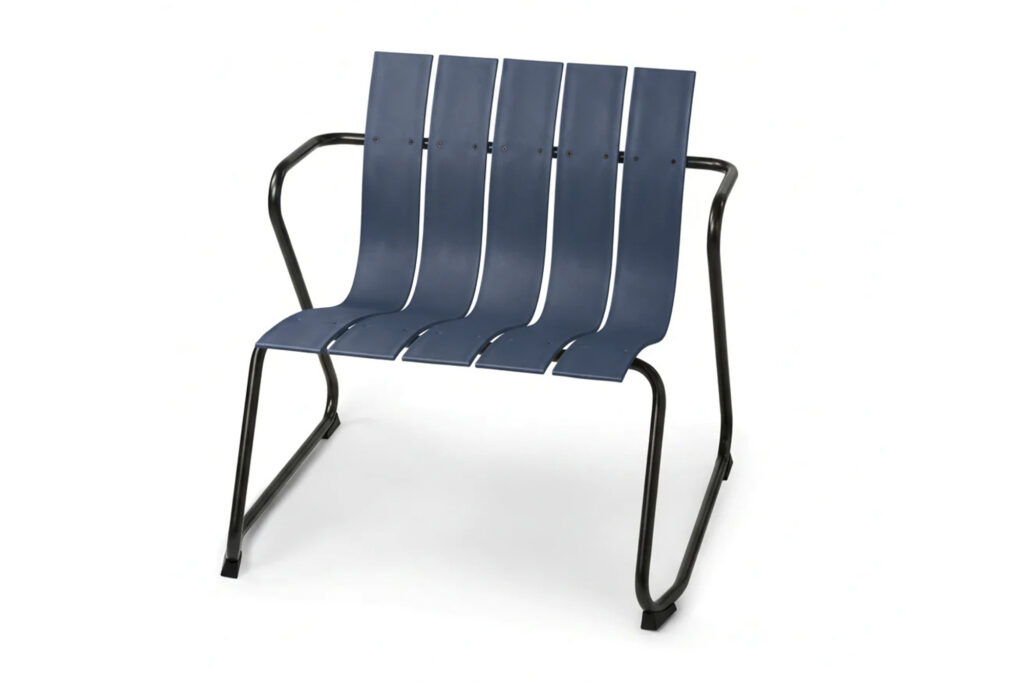
Founded in Copenhagen in 2006, Mater transforms waste materials into furniture with cutting-edge production technology. The Ocean Lounge Chair, designed by Jorgen and Nanna Ditzel, is a prime example. The waste streams are genuinely unexpected, coming from sources like recycled coffee bean shells, old Carlsberg beer kegs, and ocean plastic waste. Each product carries its material origin as part of its identity. If you are into Scandi-cool, you might have recognized the designers as legacy names; in fact, the Ocean Collection is a reissue of a 1955 Nanna Ditzel chair. It is made from recovered fishing nets and recycled hard plastics. Each chair removes more than two full pounds of plastic waste from the ocean. The same logic extends to the brand’s pendant lights and table lamps: all are LED-equipped and built from reclaimed or post-consumer materials. The name Mater, which is Latin for mother, is more design brief than tagline. Everything the Danish brand makes is accounted for, from source to eventual disassembly (the latter being equally important to close the circle, and often ignored).
KOIO: Sneakers Reimagined from the Ground Up

Learn More
Koio, also known as Koio Collective, launched the world’s first fully-regenerative luxury sneaker: meet the Capri Regenerative. This first sneaker design had Koio sourcing its leather upper from regenerative farms in the Swiss Alps, where grazing cattle actively restore Alpine ecosystems and sequester carbon back into the soil. Each Koio shoe is handmade in Tuscany using Zeolite-tanned, full-grain regenerative leather, which is a mineral-based process that replaces the chrome, aldehyde and heavy metals of conventional tanning. Sneakers from the brand also feature biodegradable soles and insoles made from corn, wool, and kenaf. Before leaving the factory, each pair passes through the hands of 42 master craftsmen. The result is a sneaker that earns the word ‘luxury’ on every level, with unique material provenance, a genuinely sustainable manufacturing process, and quality that brings longevity — proving that luxury is a lot more than a price tag and a big logo.
FEATURE PHOTO COURTESY OF ID GENÈVE.