I love international soccer. It’s how I got into the game twenty years ago, and ever since, watching soccer while travelling has become one of my favourite ways to understand a place. I’ve seen games at every level in Mexico, Japan, Italy, Scotland, and too many others to mention.
For the 2018 World Cup, I realized a dream and flew to Moscow to see three matches between there and St. Petersburg. The games themselves were incredible, but what I remember most happened around the city. Iranian supporters wandering Red Square. Brazilians taking over bars. Icelanders doing Viking chants in the metro. The Russians, meanwhile, were warm, curious and welcoming. (“Sidney Crosby!” one Muscovite shouted when he found out I was Canadian.) Friends who travelled deeper into places like Nizhny Novgorod and Samara, places that never see tourists, came back saying the same thing. It was a useful reminder that people are not their governments.
The World Cup is still my favourite sporting event. I’m as cynical as anyone in the months beforehand. This year’s tournament almost tested that cynicism. The lead-up was dominated by FIFA’s usual corruption, and the U.S. government’s open hostility toward many travelling supporters. It felt like the joy was being squeezed out of it all.
But as soon as the first ball was kicked, I’m semi-ashamed to say that all faded into the background for me. But I wasn’t alone — Scotland’s Tartan Army had taken over Boston, drinking pubs dry, singing at Red Sox games, and putting traffic pylons on every statue they saw. France was rallying around Kylian Mbappé, and Japanese supporters were discovering that yes, everything is bigger in Texas. Koreans and Mexicans spent the better part of a week partying together before their teams met.
Toronto had a lot to live up to.
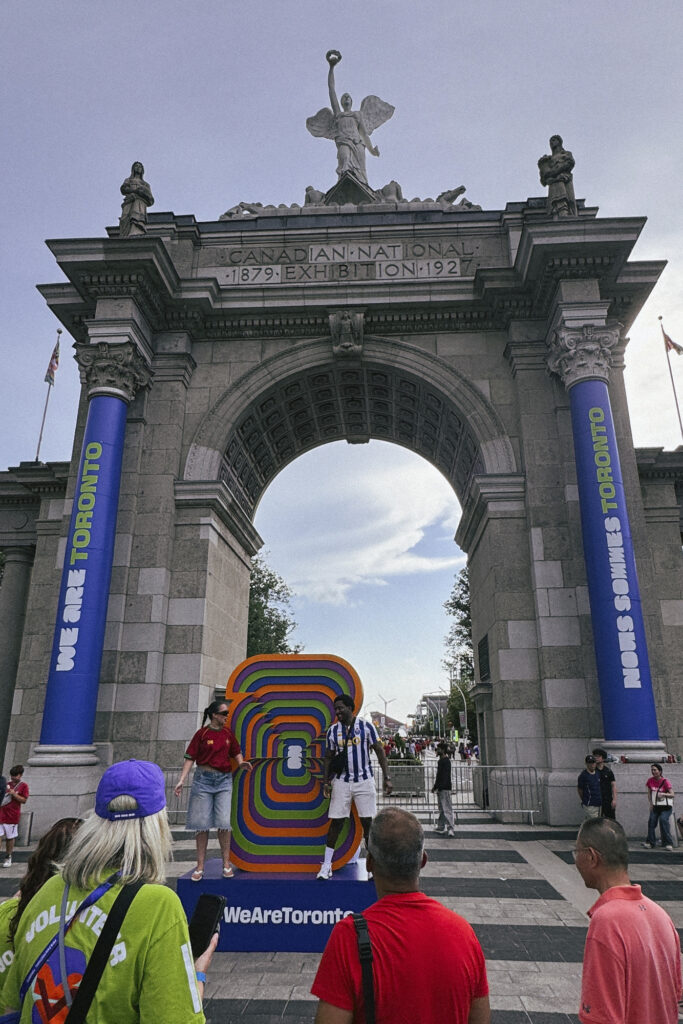
Since I now live in a host city, I obviously didn’t need to travel; but, I wanted to experience as much of it as I could: afternoon matches in Egyptian cafés, English pubs, Portuguese sports bars — even Adidas’ more corporate watch party downtown was a great place to watch with fans from around the world. A few blocks from my apartment, I watched an estimated 10,000 Iraq supporters march to the stadium.
I loved watching the city come alive, but I wanted to be part of it. So I packed an overnight bag, ordered an Uber and checked into a hotel twenty minutes from home before taking in the round of 32 knockout match between Croatia and Portugal.
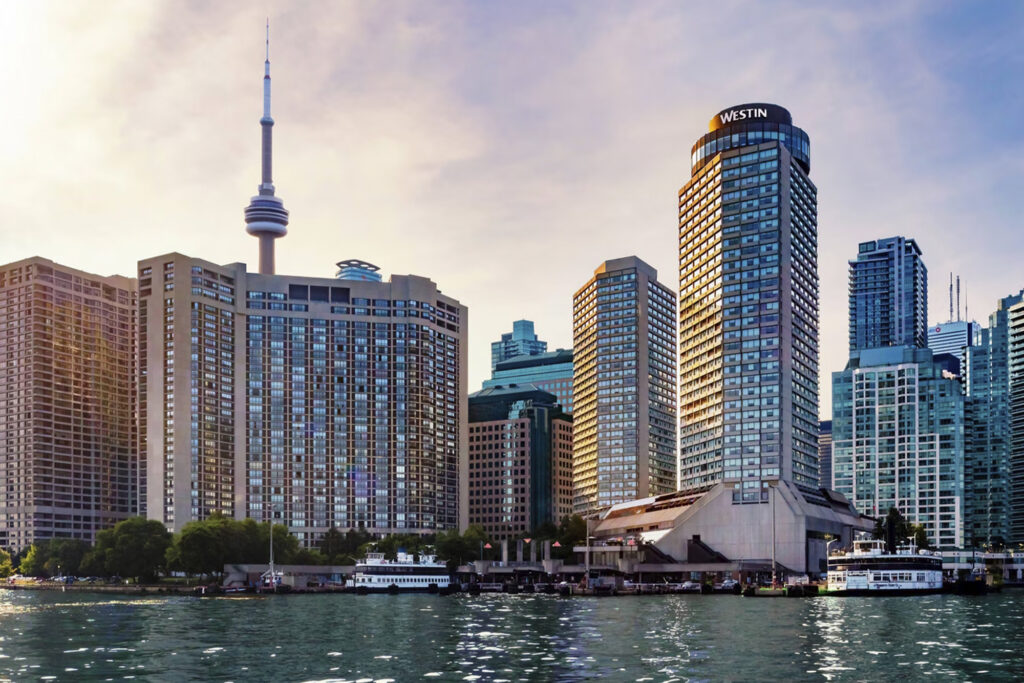
For the next twenty-four hours, I was going to see Toronto the way a visitor would. My home for the night was the Westin Harbour Castle, perched on the harbourfront just south of downtown. Within a few minutes of checking in it was obvious the tournament had found its way there too. Croatia shirts in the elevators. Families in Portugal shirts in the lobby. Match coverage on every television.
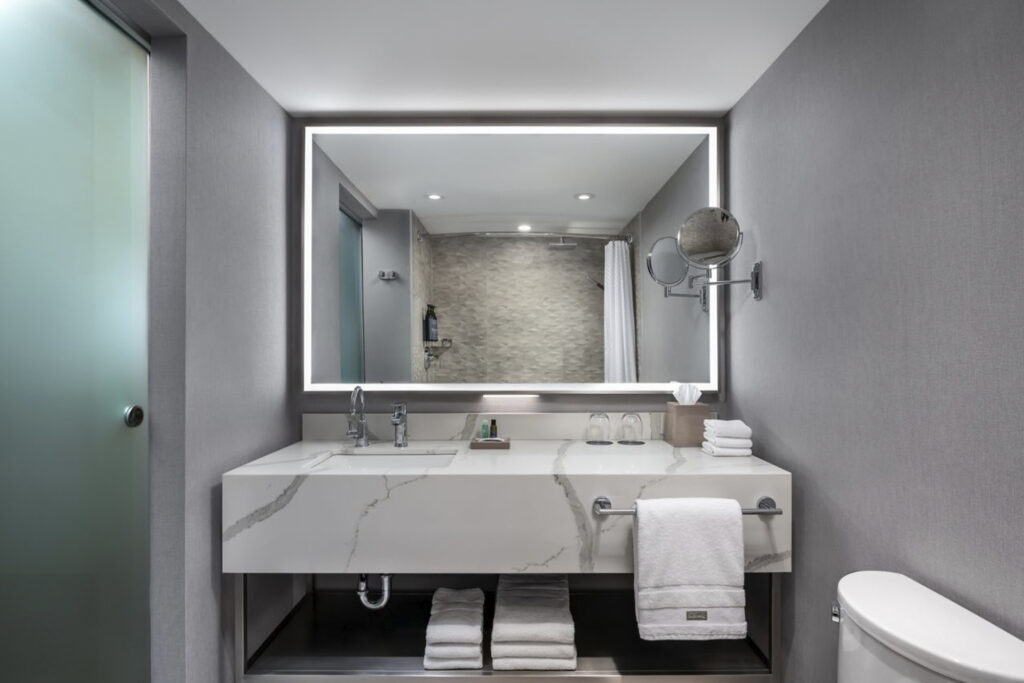
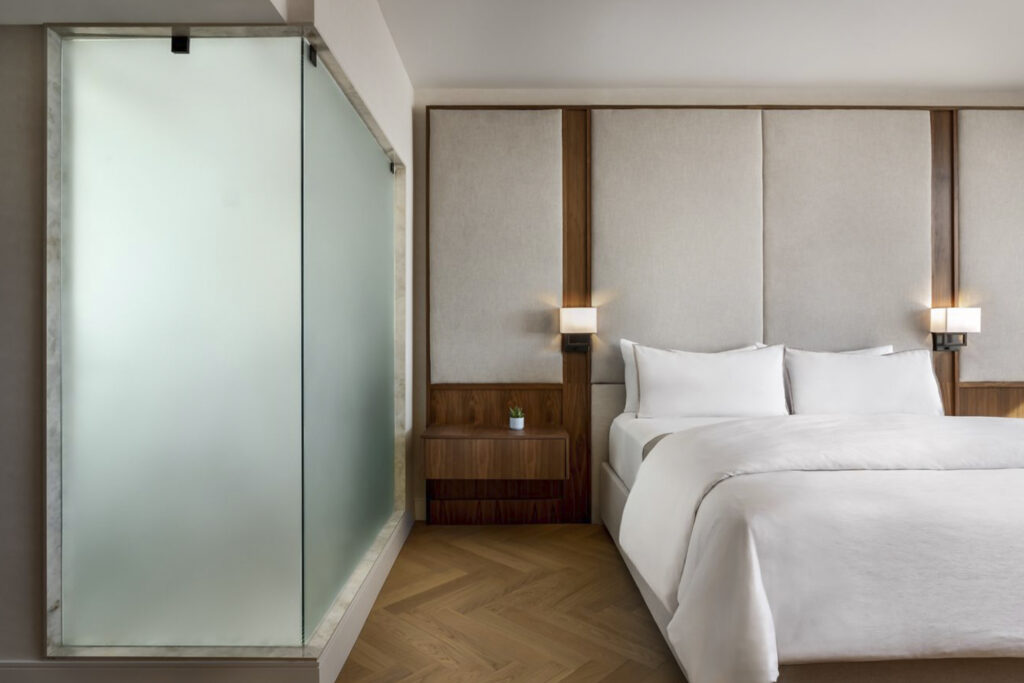
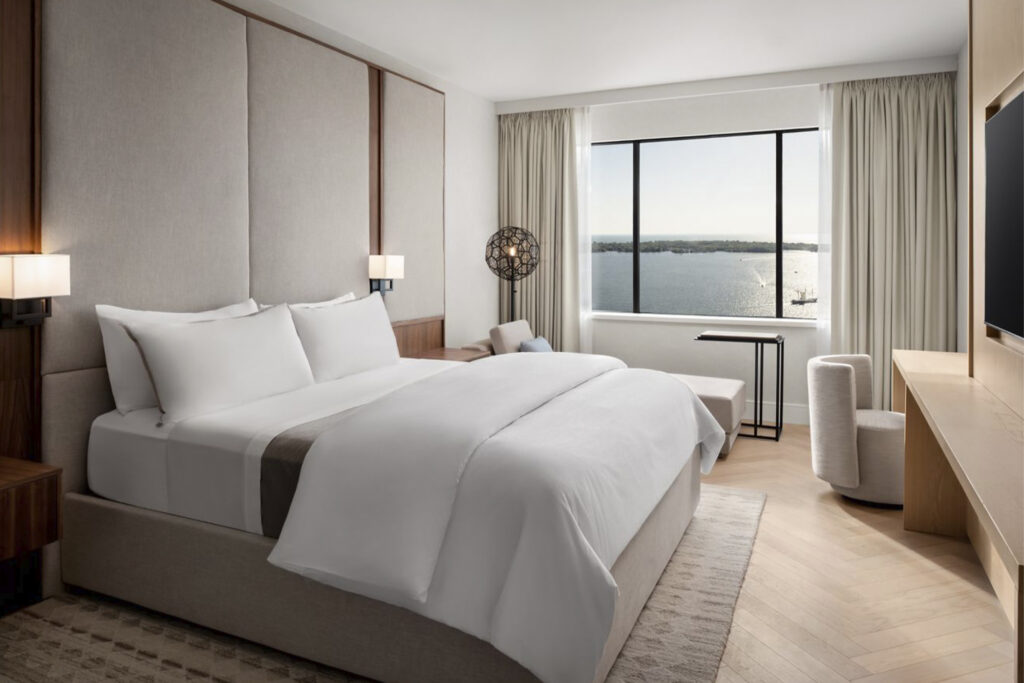
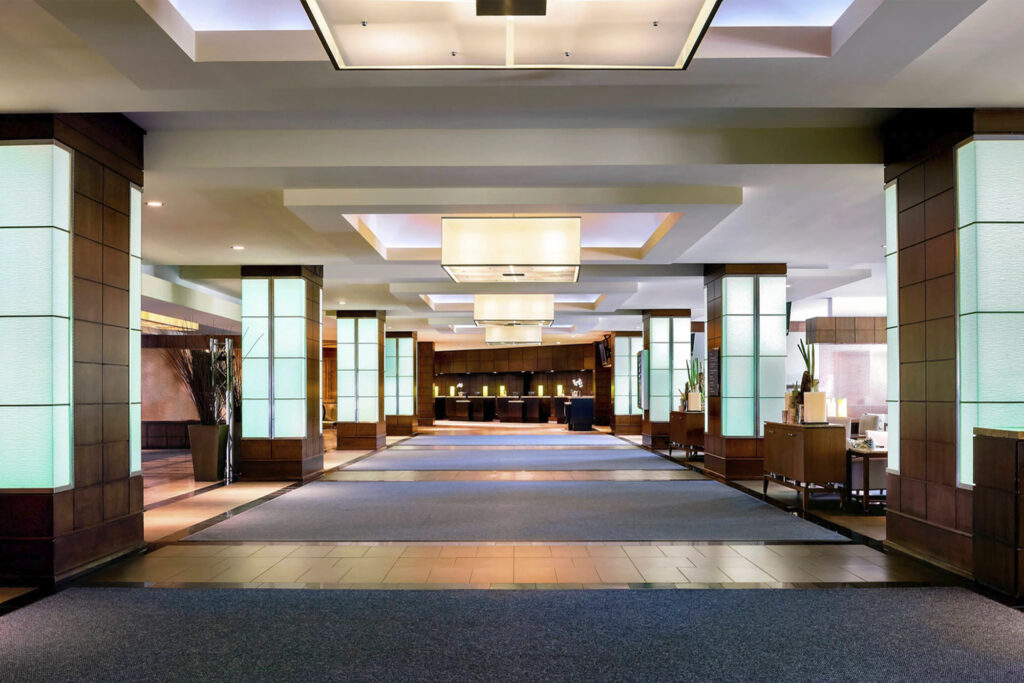
I’d only been to the hotel once before for a beautiful dinner on the top floor at the Michelin-starred Don Alfonso. Unfortunately, there wasn’t time for that this time, but from the corner room, ferries crossed to the Islands while Porter planes skimmed the lake toward Billy Bishop. It’s a view that reminded me that Toronto is actually a pretty spectacular city. I spent an hour in the hotel’s excellent pool and steam room, which was a perfect reset before heading to the crowds, then headed downstairs and joined the handful of Croatian supporters at the lobby bar, which had become its own little fan zone, complete with a World Cup menu. ( I went for the excellent South American Empanadas, when in Rome.)
I was now a tourist in my own city.
One of the Harbour Castle’s biggest advantages is that you can simply walk most places downtown, including to the stadium. The walk to Toronto Stadium (née BMO Field) was half the fun. Portuguese supporters far outnumbered Croatian supporters, singing and chanting their way down Queens Quay, trying to get a rise out of passersby.
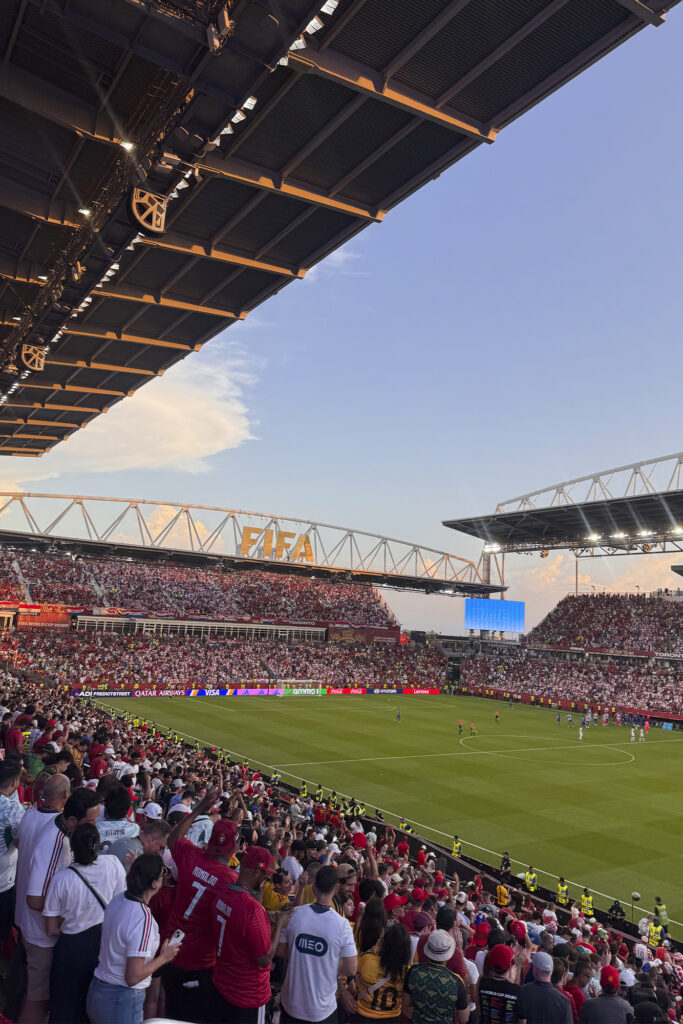
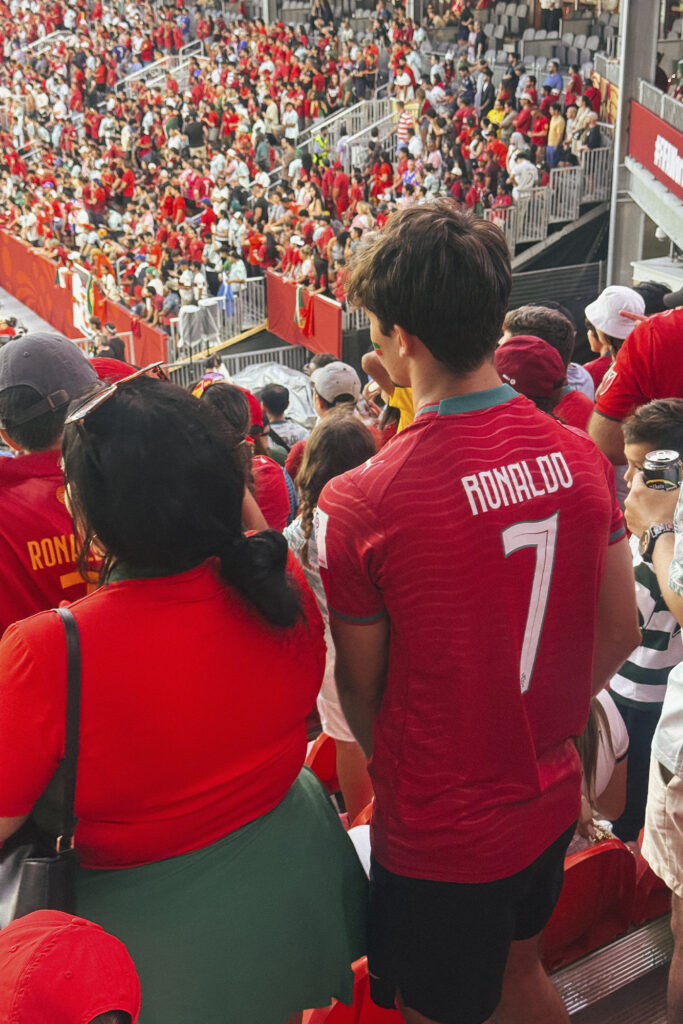
Toronto is home to one of the world’s largest Portuguese diasporas — more than 240,000 people — as well as a sizeable Croatian community of around 100,000. The match-up was made for the city.
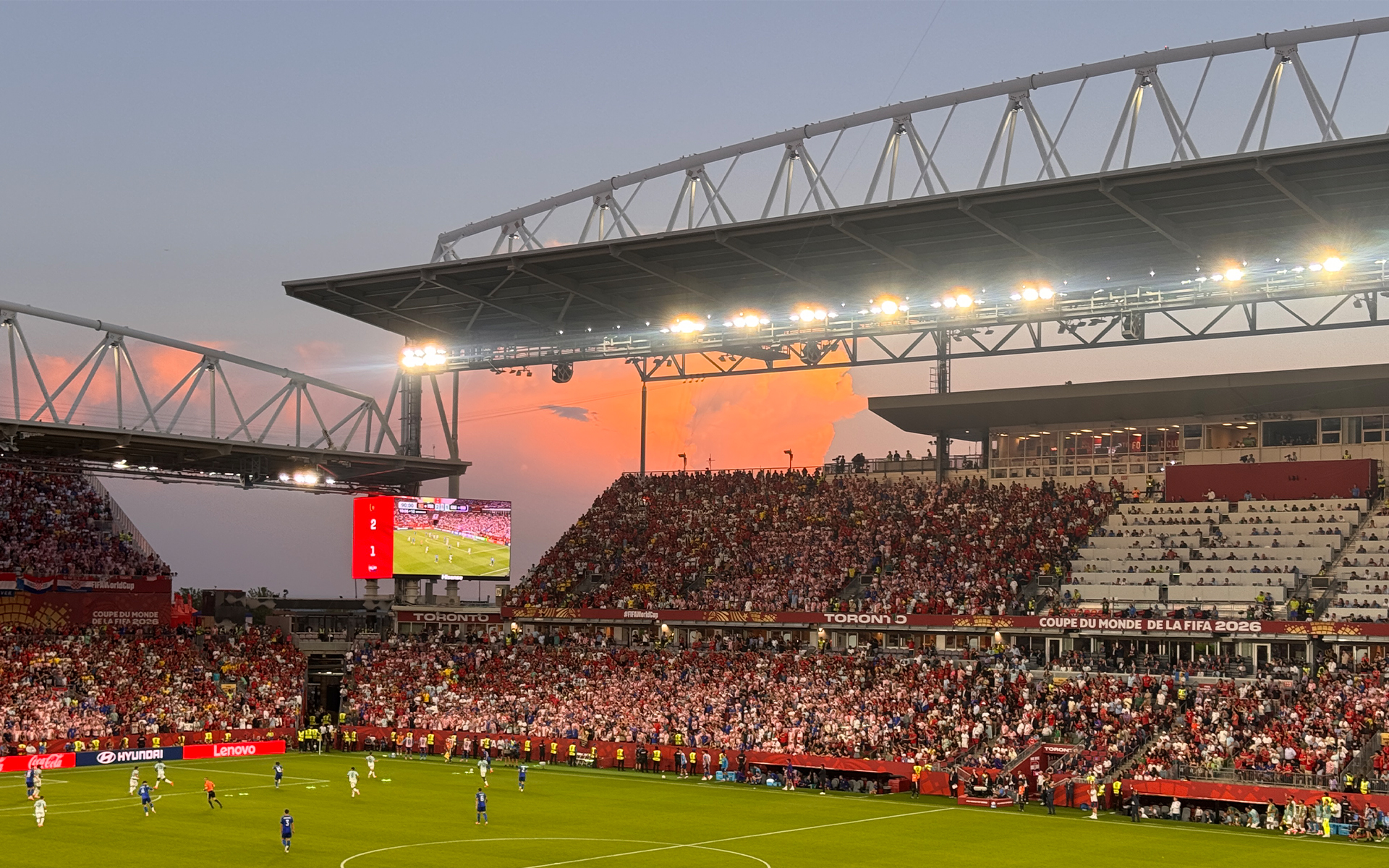
The stadium itself caught plenty of criticism before the tournament for being the smallest venue at the World Cup and the need for temporary stands, but standing inside it, it was perfect. It’s one of the few purpose-built football stadiums in the competition, and the steep, close-to-the-pitch stands kept fans on top of the action.
And it more than delivered with VAR drama, Ronaldo scoring from the penalty spot, and thirty thousand people yelling “SUIII”, in a way that literally gave me chills (and I wasn’t even cheering for Portugal).
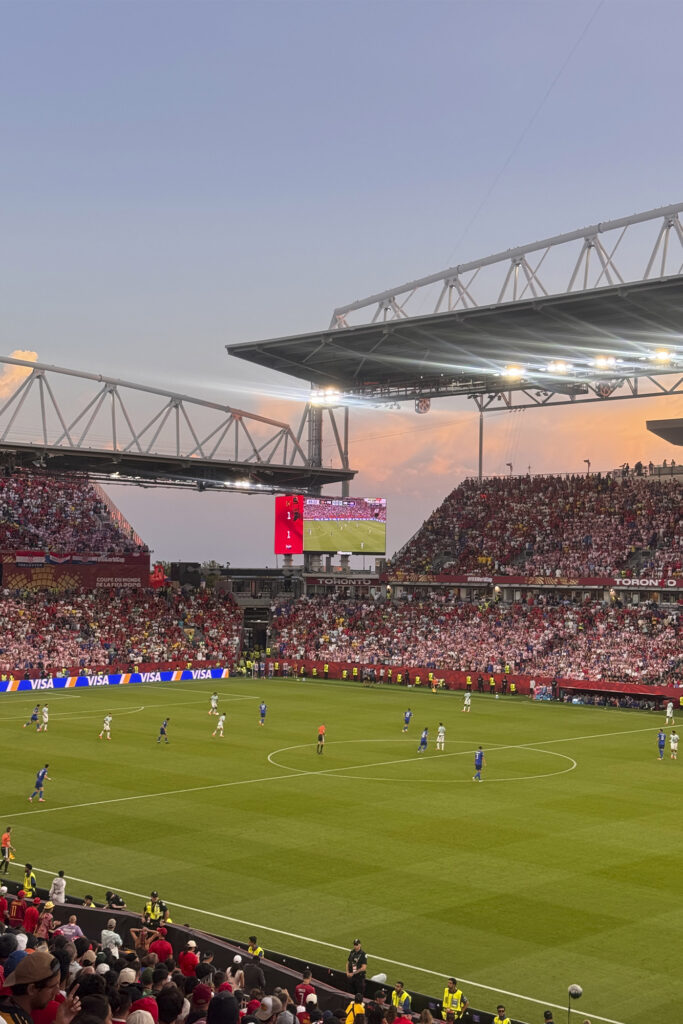
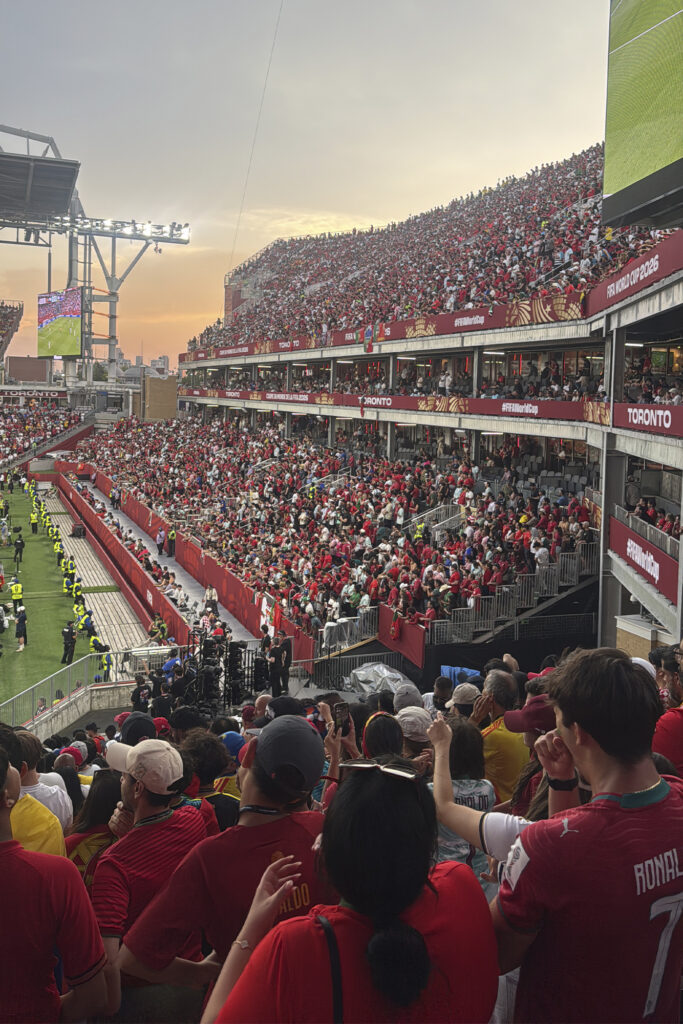
After a thrilling win for the Portuguese, their manager Roberto Martínez said it was “a shame” Toronto wasn’t hosting more matches because the atmosphere had been so good. It was hard to disagree. Little Portugal spilled into the streets: flags waved from car windows as fireworks cracked overhead; patios stayed packed well into the early hours. Ronaldo thanked the fans from the balcony of the team’s downtown hotel. It was about as close to Lisbon as Toronto is ever likely to get. Even on the other side of town, back at the Harbour Castle after the match, the lobby was still buzzing.
I’d always assumed that travelling was what made these tournaments memorable. But it’s really about what happens when thousands of people from different corners of the world show up to celebrate something in common. I’ve found that feeling on the other side of the world, and this time I found it again at home.
The author was hosted by Marriott for the purposes of reporting this story.
FEATURE PHOTO BY BEN KRIZ.