In an unassuming industrial building just outside of Los Angeles, the world’s first commercial space station is taking shape.
A white capsule with a pair of solar array wings and a sleek, futuristic interior, Vast’s Haven-1 is designed to accommodate both professional astronauts and private space tourists when it launches next year. If all goes to plan, Haven-1 will host four two-week crewed missions over the next three years before it’s succeeded by Haven-2, a continuously crewed, multi-module successor to the International Space Station. The four astronauts who will take part in Haven-1’s first mission won’t just be part of a historic event; they’ll also have the opportunity to wear IWC’s newest pilot’s watch, the Pilot’s Venturer Vertical Drive.
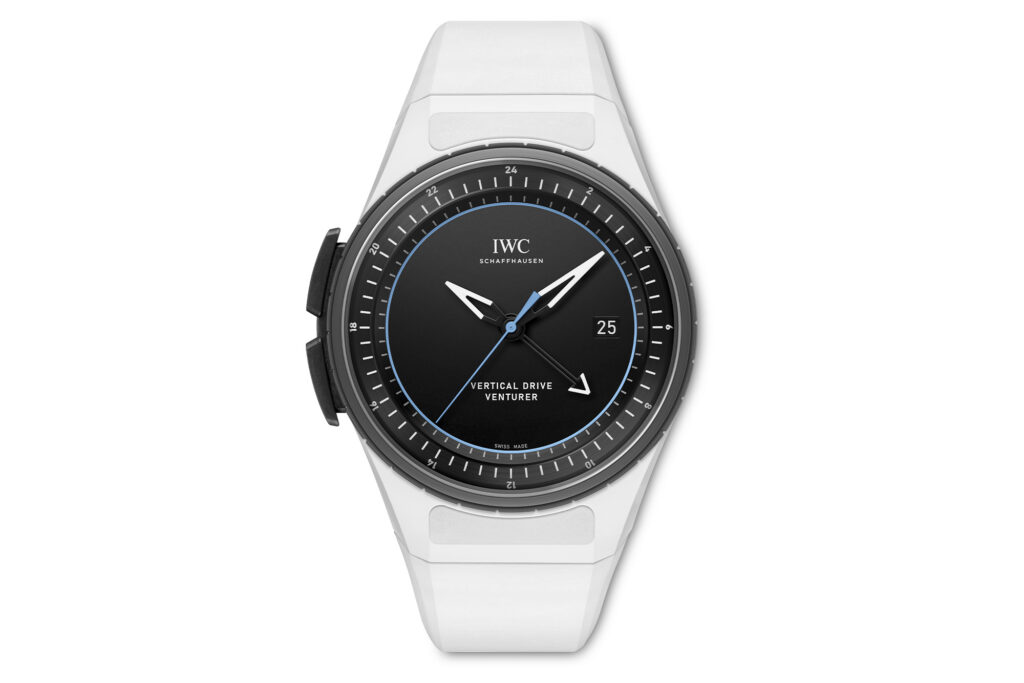
Unveiled at Watches and Wonders in Geneva earlier this year, with a minimalist dial and a streamlined case and bracelet, the Pilot’s Venturer Vertical Drive looks like just the kind of thing one might wear on a 21st-century space mission, and it ought to. Designed in collaboration with Vast and its astronauts, this is the first watch IWC has ever designed from scratch to meet the demands of human spaceflight.
The International Watch Company, better known as IWC Schaffhausen, has been a major player in pilot’s watches for nearly a century, with innovations like the 1936 Special Watch for Pilots and the 1940s Pilot’s Watch Mark 11. These watches created the template for the genre with their oversized numerals and large winding crowns. The brand has continued to innovate via more modern pieces like the Pilot’s Watch XPL Shock Absorber, an avant-garde creation with a protective spring made from Bulk Metallic Glass, and the Pilot’s Watch Chronograph Top Gun 41 Ceratanium, with a case made from an alloy of ceramic and titanium.
“Every single detail of this watch has been single-mindedly optimized for the unique requirements of human spaceflight and timekeeping in space.”Chris Grainger-Herr, CEO of IWC Schaffhausen
As a successor to these, the Pilot’s Venturer Vertical Drive raises the bar in both technology and aesthetics. “When our engineering division XPL developed the Pilot’s Venturer Vertical Drive, they did not simply adapt an existing watch design for use in space. They took a blank sheet of paper and worked to define from scratch what a tool watch for astronauts would have to offer in terms of functionality, ease of operation, time display, and material execution,” says Chris Grainger-Herr, CEO of IWC Schaffhausen. “Every single detail of this watch has been single-mindedly optimized for the unique requirements of human spaceflight and timekeeping in space.”
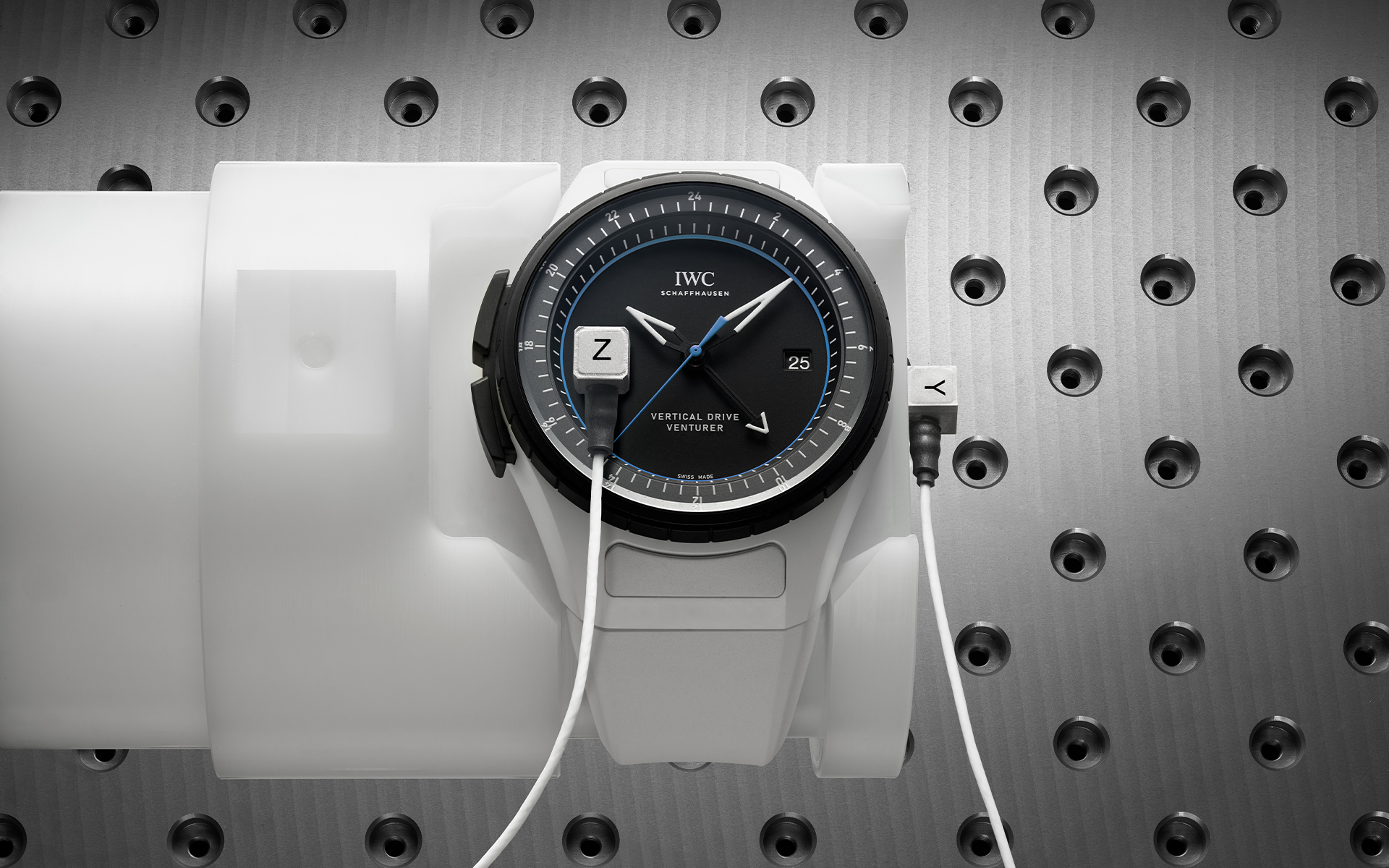
Creating such a watch required rethinking a lot of the conventional wisdom of timepiece design, but this was a challenge that IWC’s XPL team was eager to take on. When a rocket launches, for instance, engines generate vibrations and acceleration forces of up to 4 g on the bodies (and timepieces) inside. Once in orbit, the space station will complete a full loop around the Earth roughly every 90 minutes, meaning the astronauts aboard Haven-1 will experience as many as 16 sunrises and sunsets in a single 24-hour period. Outside the station, temperatures swing from more than 100 degrees Celsius in direct sunlight to minus 150 degrees in the shade. The design also needed to account for vacuum, radiation, and microgravity, all of which can hinder the precision of a mechanical watch.
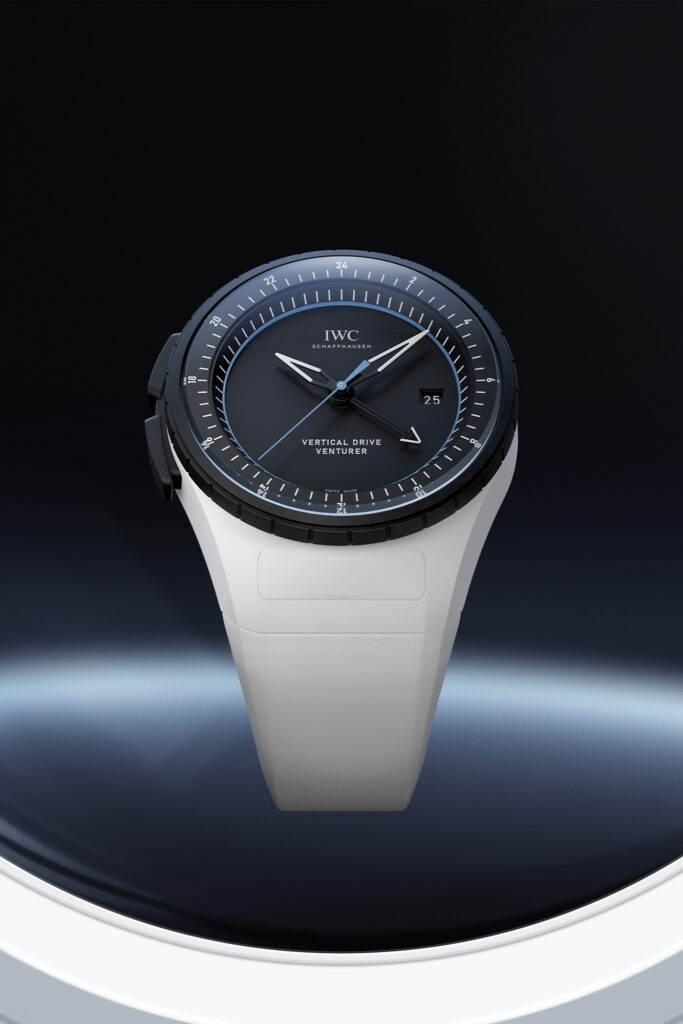
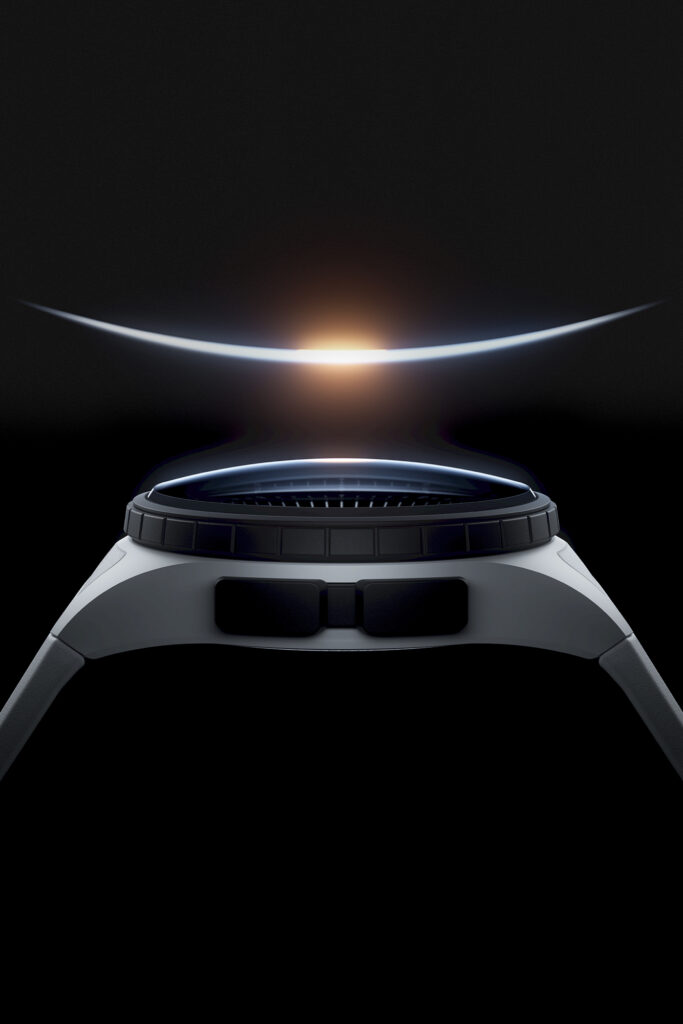
To meet these demands, IWC created a case made from white zirconium oxide ceramic, a material nearly as hard as diamond, and fitted it with a rotating bezel and case back crafted from Ceratanium, a material that combines the lightness and strength of titanium with the hardness and scratch resistance of ceramic.
The Pilot’s Venturer Vertical Drive also forgoes a conventional winding crown in favour of a rotating bezel system — all the easier to wind and set the watch while wearing heavy spacesuit gloves. A rocker switch on the side of the case, meanwhile, allows the wearer to toggle between functions, including winding the movement and setting the time. The minimalist dial displays mission time (GMT or UTC) on a 24-hour scale along the outer edge, with central hour and minute hands that can be set to display home time for any location on Earth. This is a handy feature for travellers crossing time zones on planet Earth, but — as the pioneering astronauts aboard Haven-1 will soon discover — it takes on a whole new significance in space.
FEATURE IMAGE COURTESY OF IWC.