For decades, the sporting world has operated under a convenient, if increasingly fragile, binary: there are “clean” athletes, and then there are dopers. It’s a narrative that the International Olympic Committee (IOC) guards with religious fervour, even as the headlines continue to tell a different story. But in May 2026, the inaugural Enhanced Games in Las Vegas will attempt to collapse that binary entirely. Backed by Silicon Valley venture capital and a “Human 2.0” philosophy, the Games aren’t just permitting performance-enhancing drugs (PEDs) — they’re centring them as a catalyst for scientific progress.
If you’re looking for the face of this radical departure, you’ll find it in Boady Santavy. The two-time Olympian is the first Canadian and first weightlifter to sign on, and for him, the decision was less about seeking a shortcut and more about escaping a “natural” system he describes as fundamentally broken.


“I’ve competed in a sport that’s historically been kind of dirty,” Santavy says over Zoom from Abu Dhabi, where he’s been training. “I’ve done it 100 per cent natural my entire life, and I’ve lost medals to people who have ended up later on testing positive.” For Santavy, the Enhanced Games represent a shift toward transparency. Instead of dodging testers in the shadows, he’s working with a medical commission focused on legal and supervised protocols. “I get to make history and do things that I’ve only dreamed of,” he says, eyeing the “all-time great numbers” he believes are finally within reach.
While the doping label usually carries a stigma of back-alley deals and health risks, the Enhanced Games are rebranding it as clinical innovation. Dr. Michael Sagner, a member of the Games’ Scientific and Medical Advisory Commission and an expert in longevity at King’s College London, sees the current Olympic model as an exercise in futility.
“Whilst the aim of an enhancement-free Olympics is a noble one, it is not and has never been true,” Sagner said in 2024 after U.S. President Joe Biden expressed “deep concern” about the launch of the Enhanced Games. He argues that the IOC’s testing is “ineffective and full of loopholes,” largely because it lacks baseline data on how elite athletes actually react to enhancements. By bringing PEDs into a supervised environment, Sagner believes the Games can generate data that eventually benefits more than just the 100-metre dash. “The Enhanced Games will create this unique data which will benefit longevity science in general,” he notes, pointing to how these compounds could eventually combat age-related frailty in the general population.

But for many athletes, the science is secondary to the financial security. The Enhanced Games are aggressively targeting the IOC’s amateurism roots by offering $250,000 first-place prizes and million-dollar bonuses for world records. For an athlete like Santavy — who had to navigate recovery from Tommy John surgery with cut funding before the Paris Olympics — the financial appeal is obvious. “The financial part of this is amazing,” he admits, though he maintains that his “strong love for the sport” is what drives the 2026 goal.
Whether the Enhanced Games will be the future of professional sports or a one-off Vegas spectacle remains to be seen. But as Santavy prepares to step onto the platform in May, he isn’t worried about the spirit of sport or traditional filters. He’s looking for the numbers. “I’m very happy — the happiest I’ve probably ever been,” he says. In a world obsessed with optimization, maybe we’re just finally getting the competition we deserve.
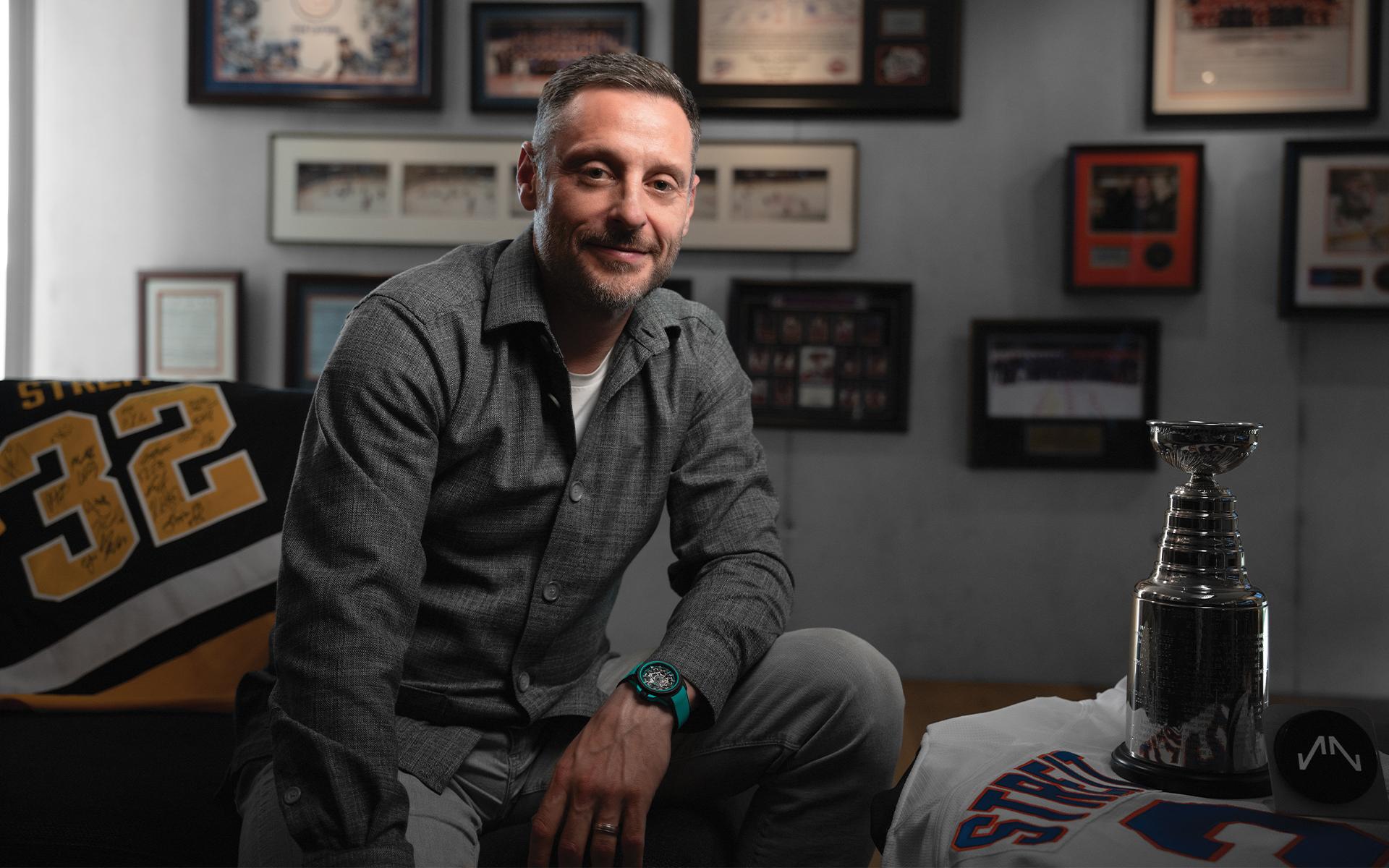
FEATURE PHOTO: BOADY SANTAVY, COURTESY OF THE ENHANCED GAMES.