
D’You Know What I Mean? is a column on style and culture where writer Ben Kriz weighs in on taste, trends, and what it all means.
There was a time when blowing up the spot was an actual social offence. If someone brought you to an after-hours club, an unmarked bar or some party in a warehouse, you were expected to exercise a little discretion. Sure, tell a friend, maybe. But, bring the wrong crowd or broadcast the address too widely, and you might not be invited back.
Of course, knowing about a secret place has always been more fun when you can tell someone you know about it. Access carries social currency; otherwise, what’s the point? Knowing the spot used to move between friends, dates, and people considered cool enough to be trusted with it. Now, it appears in a reel titled “Five Hidden Toronto Bars You NEED to Know,” complete with the address, entrance instructions, and a full video tour.
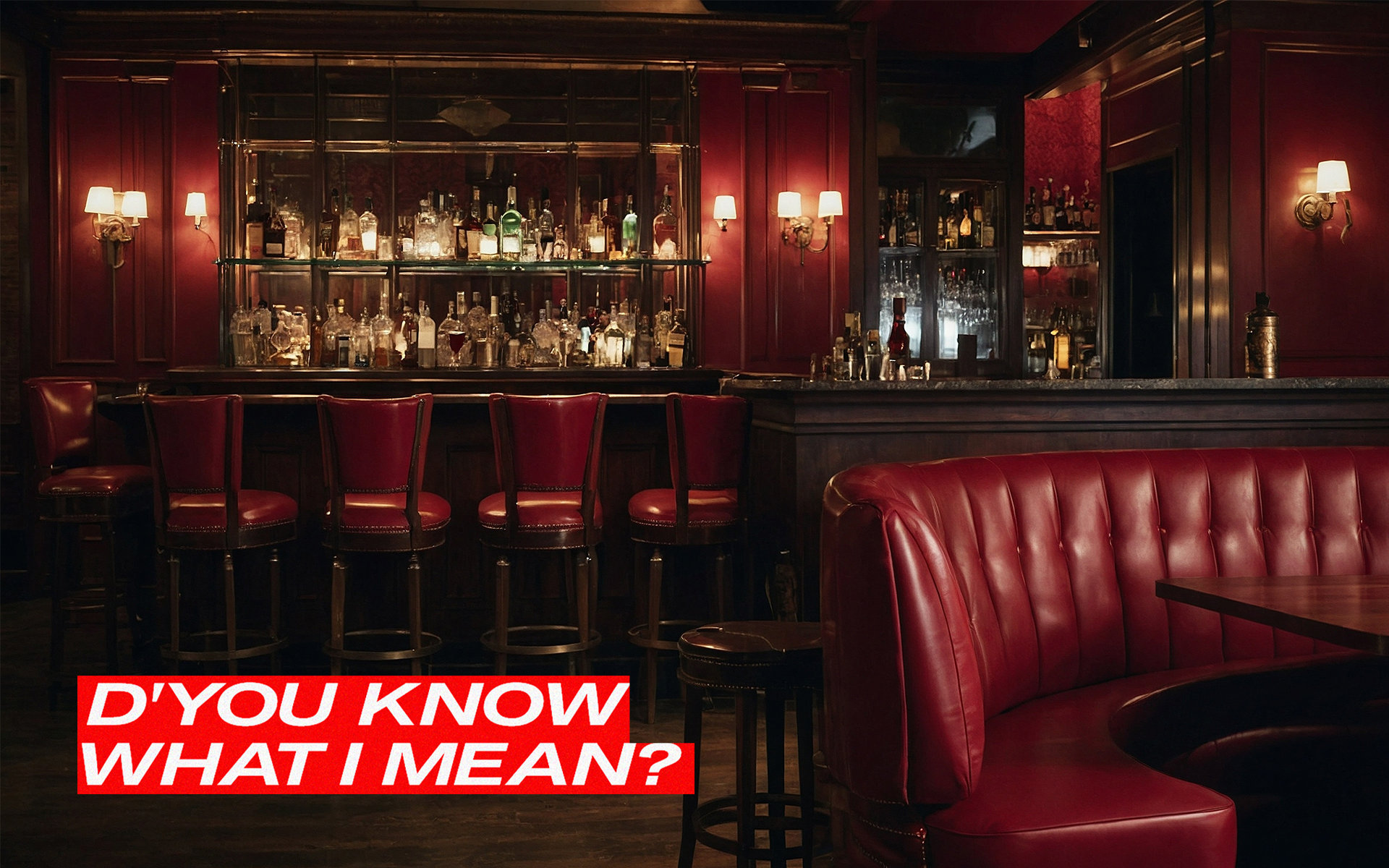
Actual speakeasies operated illegally during Prohibition, when discretion helped everyone avoid arrest. The idea returned decades later through bars like Sasha Petraske’s Milk & Honey, which opened on New York’s Lower East Side on New Year’s Eve 1999. It had no sign, an unpublished phone number and house rules discouraging shouting, lingering outside, and, crucially, a rule stating not to bring anyone unless you would leave that person alone in your home. Its elusive quality helped protect the intimate experience Petraske wanted to create.
Please Don’t Tell, or PDT, made the premise even more theatrical when it opened in 2007. Guests entered a hot-dog joint called Crif Dogs, stepped into a vintage phone booth and dialled one. The back wall opened into one of New York’s most celebrated cocktail bars. To get a reservation, you had to call their phone number and hope somebody picked up.
Don’t worry, I’m not giving away the secrets. Naturally, people talked about these places. Both became famous, inspiring countless imitators and establishing modern cocktail culture and the modern speakeasy.
But now social media has accelerated it. What might once have been a phone number, discreetly passed along, is now a post with the door, password and exact location for thousands of followers. Instagram accounts like Toronto’s Finest package bars and restaurants as insider discoveries while making sure that everyone discovers them at once. Being in the know is content.
Which brings us to Toronto’s 520 Cafe/Bar, a new “speakeasy” I noticed the other day. Its nighttime entrance is hidden among the doors of Graffiti Alley, but the business is named after its Richmond Street address, sits behind a floor-to-ceiling glass garage door and recently opened a street-facing patio. It is hard to preserve an air of mystery when your guests are drinking outside.
No shade on 520 itself. Hidden entrances remain fun, and every night out benefits from a little theatre. The appeal of places like Milk & Honey and PDT, though, depended on a shared understanding between the bar and the people who went there. Knowing about the place was cool. Knowing when to keep your mouth shut was part of being there.
That etiquette feels almost quaint now. Social media encourages us to convert every good discovery into proof that we discovered it. But places need time and a little obscurity to develop a culture of their own. When every new opening is immediately mapped, filmed and ranked, it isn’t really discovery.
Tell a friend. Better yet, take them there. And for the love of God, don’t make a reel about it. Gatekeeping has become a dirty word, often for good reason, but the first rule of the modern speakeasy should be the same as it ever was: keep it to yourself.
FEATURE PHOTO COURTESY OF ADOBE STOCK.