Every great team needs a scrapper. Someone who will hurl his body into the third row of fans to retrieve a loose ball, risk injury by morphing into a human obstacle on defence, and draw opponents into irrational fits of anger with his sheer persistence. They need a player so determined to score that he’ll try to crawl through a defender’s legs. This guy will treat every practice like it’s the Finals — never outworked, never outhustled. A great team needs someone who was told he wasn’t good enough, wasn’t big enough, never had a chance of playing at the top level, and spends every on-court minute of their prime trying to disprove it.
The vanishingly rare thing about Kyle Lowry — who retired as a Raptor earlier this summer after signing a one-day contract with the team he gave his prime to — was that he did all this not as a role-player or defensive specialist, a cult hero in the shadow of a far brighter star. Yes, he did knock over a few fans’ beers while trying to retain possession. He annoyed Aaron Gordon so much when they played in the Disney World bubble that Lowry shouted his room number out on court so they could fight after the game. And though George Hill wasn’t even that tall, Lowry still tried to wriggle underneath him, unsuccessfully, on a routine play at the top of the arc.
But he was the Raptors’ primary offensive weapon for almost his entire career in Toronto, their all-time leader in assists and triple-doubles, second all-time behind DeMar DeRozan in points scored. He was their foundational star, pushing the team to the brink of greatness and working alongside Kawhi Leonard to get them over the line to their first championship. Nobody serious can dispute that he was the greatest player in the franchise’s 30-year history.
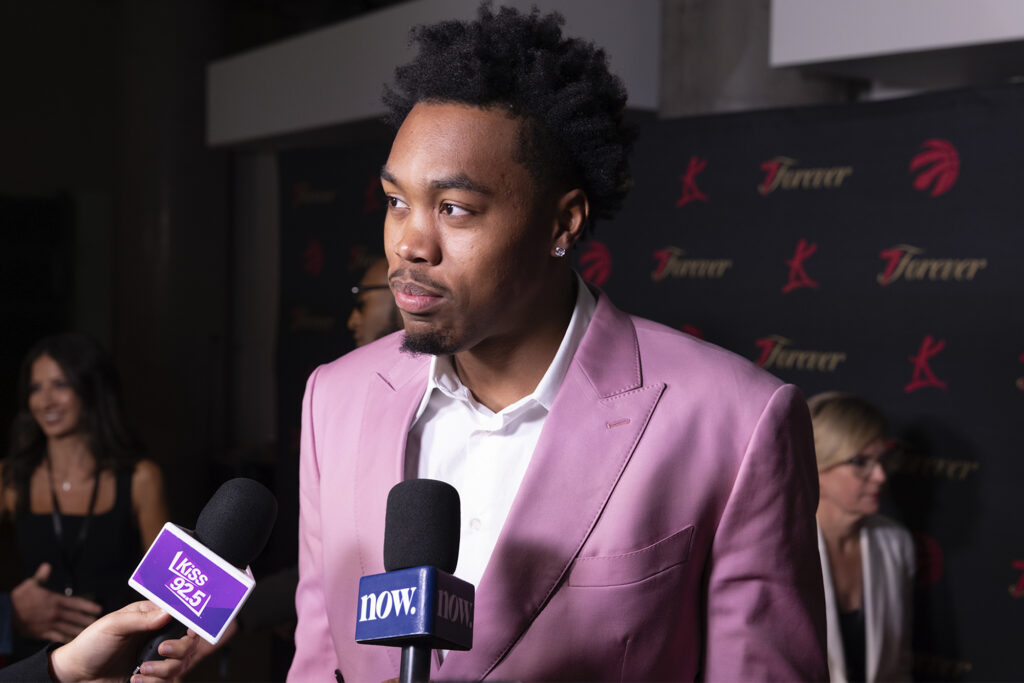
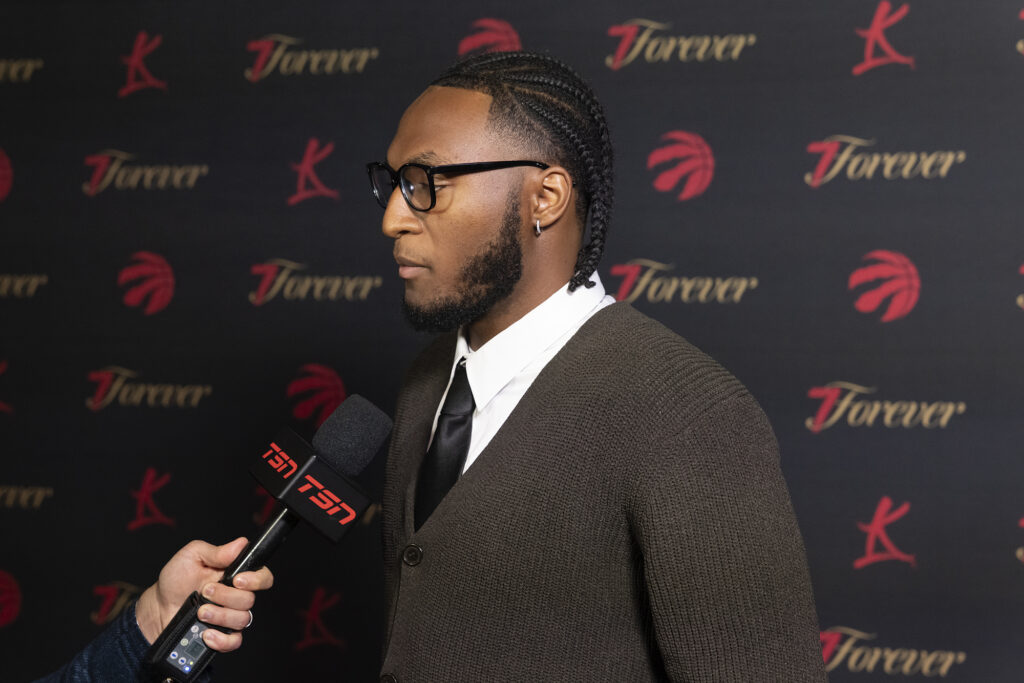
This season in Toronto will be a celebration of Lowry’s greatness in the same way last year was a long, ambient tribute to Vince Carter, and Lowry’s year kicked off on Saturday night, when the Raptors hosted a gala event for Lowry at the Design Exchange on Bay Street in Toronto. The red carpet was a parade of the most influential people in the club’s history: former Lowry teammates like DeMar DeRozan, Pascal Siakam, and O.G. Anunoby, current starters Immanuel Quickley and Scottie Barnes, and third-year head coach Darko Rajakovic.
It would have been difficult to imagine a night like this when Lowry arrived in Toronto from the Houston Rockets in 2012. Back then he had a reputation for creating friction with his coaches and the media, pushing his teammates too far in practice, and allowing his emotions to take over at inopportune moments. That feels like a distant memory now. For as much as he changed Toronto and set the standard for what a winning team should look like here, the city and organization changed him too. Masai Ujiri in particular challenged Lowry to organize that attitude into something more controllable, more dangerous to opponents than himself, a weapon he could brandish when he chose.
Kevin Love, who frustrated the Raptors three seasons in a row on a Cavaliers team led by LeBron James and later with Lowry in Miami, flew in for the dinner on Saturday night. Lowry, he said, was a nightmare opponent. “If I tried to post Kyle up, I’m thinking I have the advantage,” Love said. “I have the size, I have the weight. But if he faced up, he was stripping the ball. If not, he was taking one bump, and then the second one — he was falling down and taking the charge.”
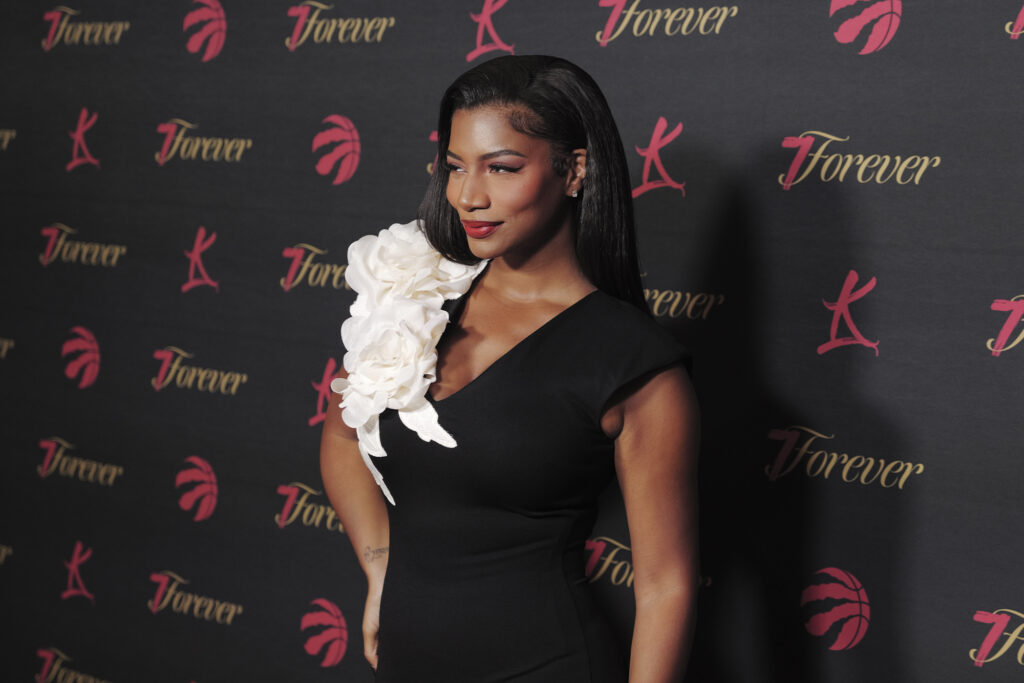
Taylor Rooks, the journalist and presenter who was in to emcee the dinner, went straight to Lowry’s grind as well. She pointed to those 345 charges he took through his career — way more than anyone else in NBA history. The greatest charge of all, she said, was the same one Lowry also identified as his favourite, one that wouldn’t count in official stats: from former teammate Kawhi Leonard, in the fourth quarter of the 2020 All-Star Game. Playing any defense at the All-Star Game is anathema. It’s an exhibition game so uncompetitive that offering even the most passive resistance is considered unsportsmanlike. But there was Lowry not only defending the greatest players on the planet but standing in their path and getting rocked.
These aren’t typically the tributes people pay to all-time offensive greats. The vibe is more fitting for, say, Dennis Rodman on the ’96 Bulls in his flamboyant prime, or Draymond Green as the all-conquering Warriors’ hard-nosed antagonist-in-chief. But neither of them had the champagne moments of Lowry: a fourth-quarter explosion to overturn a 30-point deficit in just nine minutes against the Mavs in 2019, a one-man 11-2 run to start Game 6 of the 2019 Finals, the double-OT dagger that forced a Game 7 against the Celtics. It’s a testament to Lowry’s bloody-mindedness that peers and pundits remember his persistence before his offensive numbers.
That produced an image of Toronto, an immigrant city, that fans could attach themselves to. “Everybody from here is from somewhere else, and they are always coming here to fight, to create a better life,” said Terrance Ross, who played alongside Lowry for five years. “I think that kind of translates the way he plays the game. The heart he brings to the game is unique. I think a lot of people can resonate with that.”
Basketball pundits and coaches seem to spend half their time talking about grit, determination, and grind, guys playing with a “chip on their shoulder,” people willing to sacrifice themselves for something bigger. Lowry was all of that. But he’ll go down as the greatest player in franchise history not because of the work ethic or even the numbers. They’ve built a statue to Kyle Lowry because the city was drawn to him more than any other more obvious pin-up hero. Undersized, prickly, overlooked, but eventually victorious, he was what Toronto and Canada wants to see in itself.
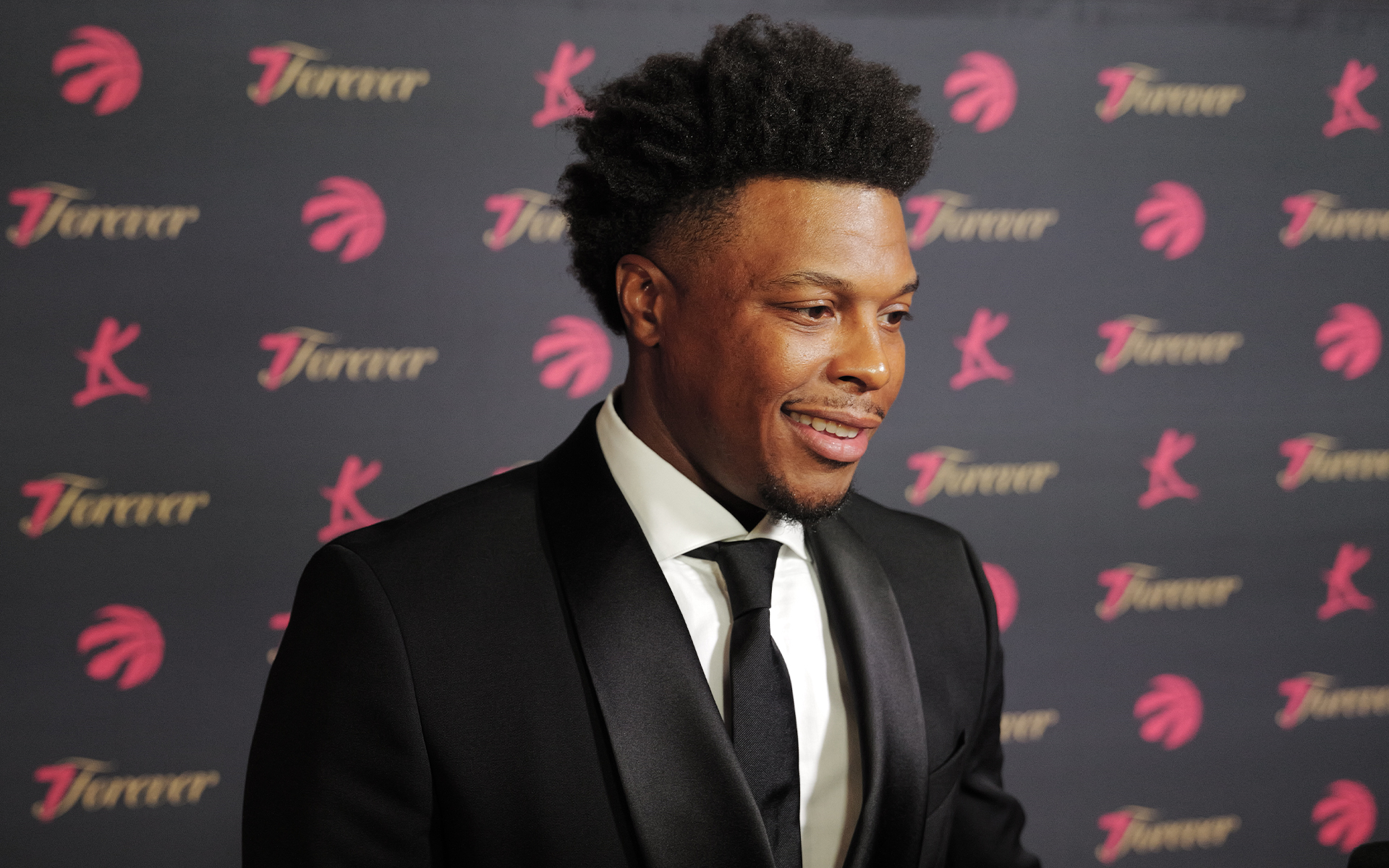
FEATURE IMAGE: KYLE LOWRY, PHOTO BY JUSTIN MASTINE-FROST.