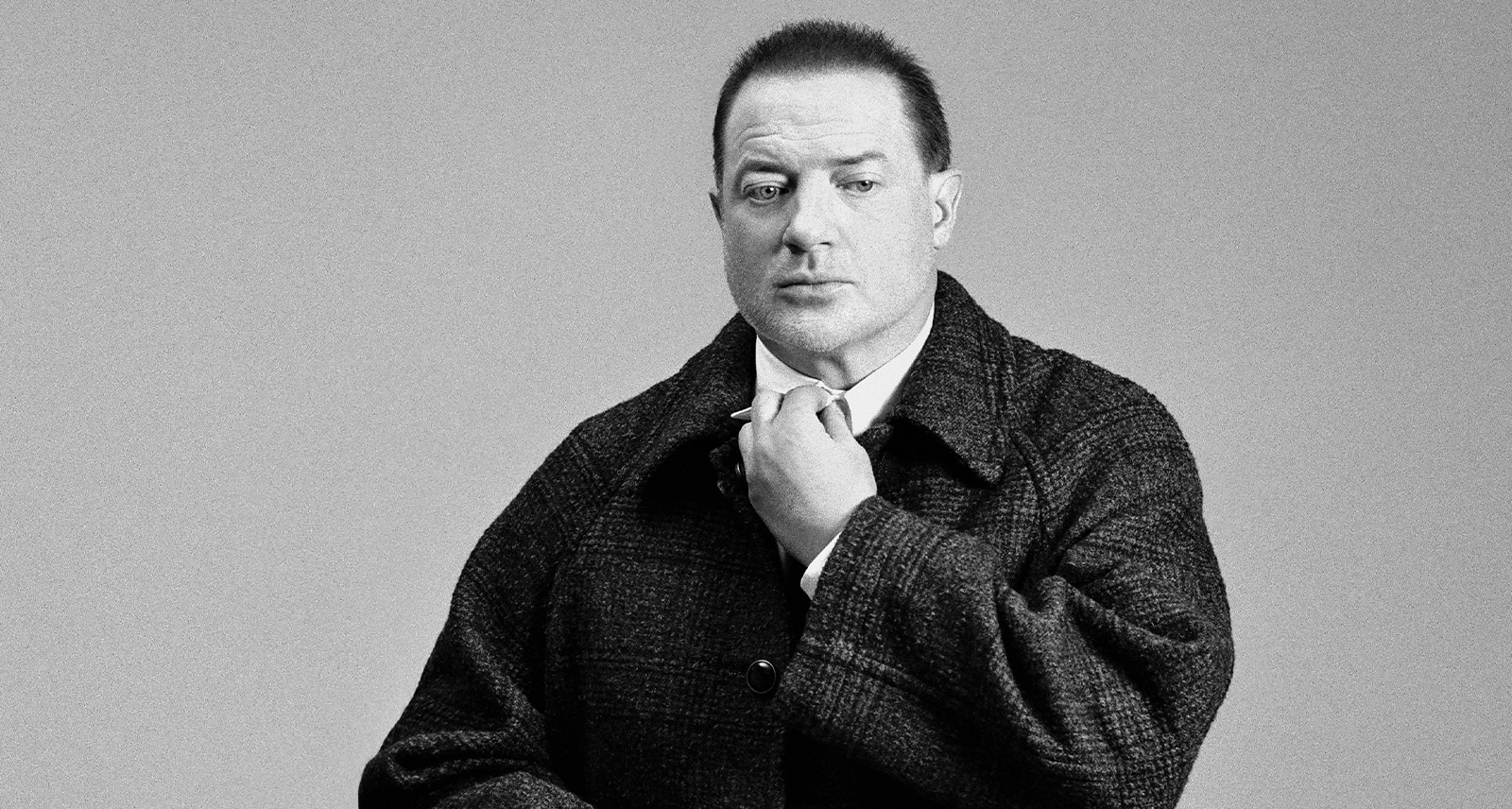
Brendan Fraser is getting ready to come home. Well, “home” might be a bit of a liberal term to describe his relationship to Toronto. Growing up, Fraser’s family moved often thanks to his father’s role with the Canadian Tourism Commission, living in Eureka, Calif., Seattle, Ottawa, the Netherlands, and Switzerland. Still, some of his most formative years were spent attending Upper Canada College. His time there was brief, just as it was in the places that followed. Such nomadism is a requisite part of acting. Whether as a career character actor or a perennial A-lister, the onus doesn’t change; you go where the roles demand (when you’re lucky enough to get the call). Fraser understands this better than most.
His complex career arc was well documented in a pair of magazine profiles, the first in 2018 and the second in 2022, following his Oscar-winning performance in Darren Aronofsky’s The Whale. While few could directly relate to Fraser’s story (as far as his trajectory as a Hollywood star, at least), the overarching narrative struck a universal chord: acting — like life itself — is messy, challenging, beautiful, and rarely linear. In the year following The Whale, whenever a headline featured Fraser’s name, the word “comeback” would inevitably follow. The basis of the articles was simple: the world was rooting for Brendan Fraser. But now, three years after his first Academy Award, “comeback” feels limiting, as if merely returning to the spotlight represented some sort of finish line. Instead, Fraser’s latest project, Rental Family — the very film that brings him back “home” for its TIFF premiere — is proof that the leading man isn’t merely coming back. He’s moved forward.
Rental Family, in many ways, is an intriguing departure from anything Fraser has done before. For years, his gifted physicality was core to the action roles that earned him A-list acclaim. Even years later, once the toll of stunt work proved too much for his body, he took on the role of Charlie in The Whale, a character whose severe obesity made for what he’s since described as “the most physical role I’ve done.” Instead, he offers a new shade — perhaps the most heartwarming and nuanced role we’ve seen from him and, appropriately, one that invokes new questions of “home.”
Ironically, Fraser plays an American actor in search of his own sense of belonging as an expatriate in Tokyo. His character, Philip, has lived in Japan for seven years, with his biggest break arriving in the form of a popular toothpaste commercial. Yet everything changes when he’s recruited to play “sad American” at a real-life funeral. Thus begins his tenure with a company that hires actors as surrogates to help clients through some of life’s biggest challenges. What begins as an acting job quickly evolves into confronting larger questions of family, religion, belonging, and otherness. It is, as Fraser describes, “a jewel in the crown” of his acting career, and perhaps his “most courageous” role yet.
“Acting is an act of courage, I’m convinced, every moment of the way. It should be a tightrope walk.”
Brendan Fraser
Less than two weeks after he exits our interview, Fraser will return to TIFF’s Tribute Awards as the 2025 Honorary Chair, where he’ll be a part of celebrating Rental Family’s director, Hikari, with the festival’s esteemed Emerging Talent Award. Ahead of the ceremony, Fraser discusses breaking new ground in Rental Family, concepts of home, and unfamiliar places that lie ahead.
I know you’re slated for travel to promote the film soon, but where are you at the moment?
I’m at my home in upstate New York, in a particularly forested area of Westchester. I’m also talking to you on a 20-year-old phone, so I’m hoping you can hear me okay.
You sound perfect. I know you’ll be heading back to TIFF for the first time since The Whale premiered. This time, you’re also attending as the festival’s 2025 Honorary Chair, where you’ll have the chance to play a role in celebrating your director, Hikari, with TIFF’s Emerging Talent Award. What does it mean to share this moment with your director?
It’s just so fulfilling to see Hikari realize this film after persevering through a labour strike and travelling [to Japan] in early spring last year, only to find that an essential character in the movie was not available to us because that character was the cherry blossoms. And they were late! But we found such beautiful ones throughout the weekend. And by Monday, they had all blown away. The ephemera of the experience — I wasn’t expecting to be as touched by the atmospheric love that is in the air in Tokyo, a place I didn’t know well. […] Hikari’s film is a love letter to Tokyo, and the address is “Loneliness, Anywhere.” It’s written in bittersweet ink and sealed with a cherry blossom kiss.
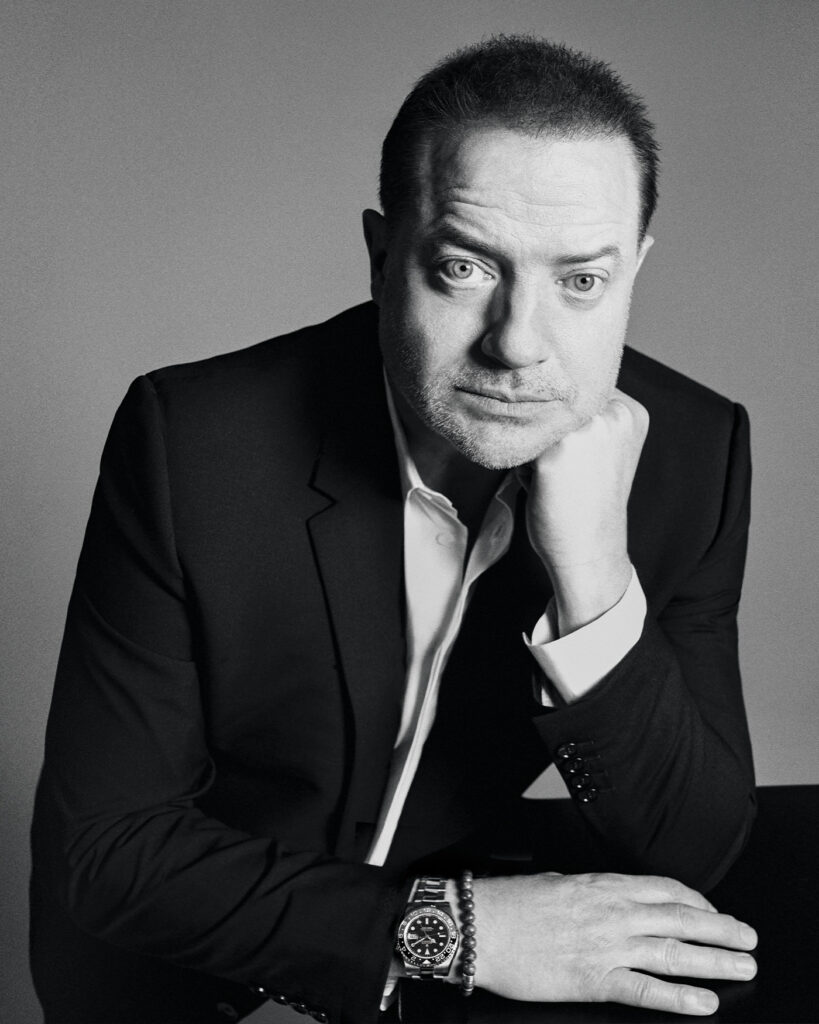
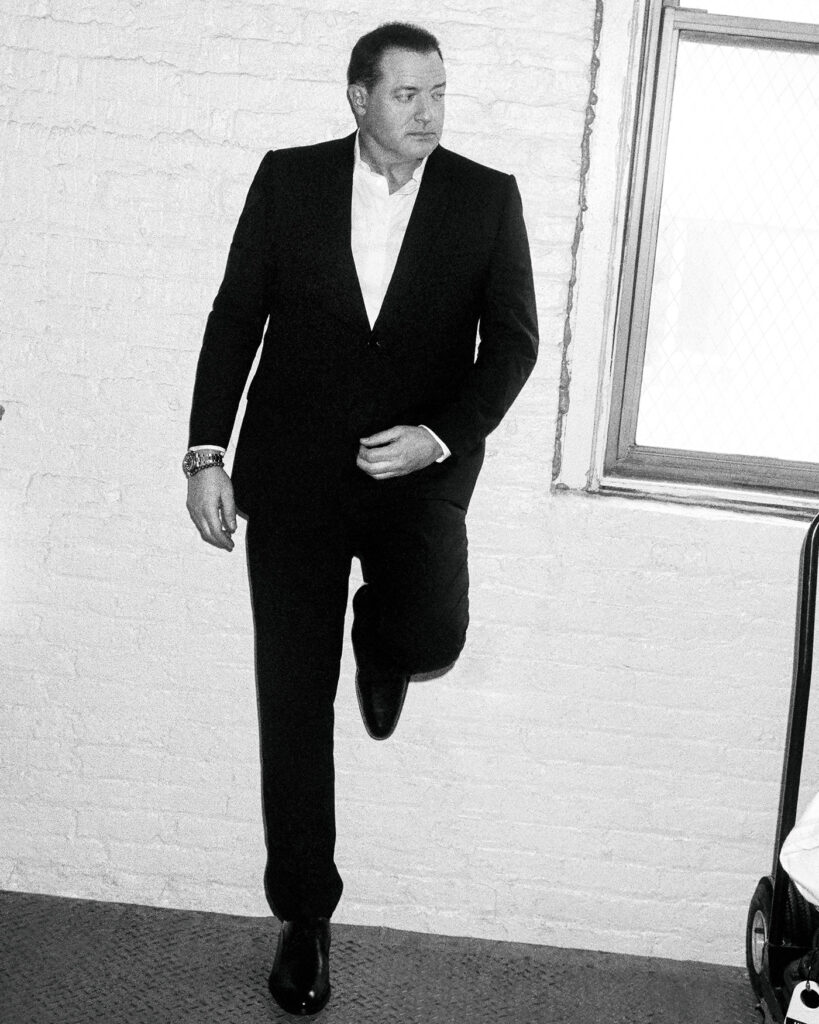
I think what makes it such a compelling love letter is just how honest it feels. The concept of a rental family itself, as it’s explained in the film, comes from an avoidance of addressing mental health.
Oh, yes. Absolutely. There is a whole sect of the population that is shut in. They either sit in the middle ground between 35 to 50 [years old], typically men, who live at home with their aging parents, and then there’s another population of aging parents who live alone. And the two groups don’t really connect in a meaningful way. That’s why the rental family agency is a business model in Tokyo. Yes, it’s easy to make pejorative jokes about it. But something more valuable is on offer; in every lie, there is a grain of truth. And this film exploits that notion — this is where Hikari excels.
With this being the first Japanese set you’ve worked on, I’m curious what elements of the culture were the most challenging to adapt to. Especially in the sense of your character — he’s an expat, but he’s been there for seven years. He’s an outsider, in many ways, but integrated into the culture.
Everyone feels like they have their nose pressed against the glass in life, you know? You’re on the outside looking in, but you want to be a part of that, the thing on the other side. Well, Philip is determined to find a way in. He comes with his own emotional baggage — not so much physical baggage, from looking at his apartment — living as an expat, looking for work. He walks into the rental family agency office and has to make a decision on the spot whether or not he will conform, whether or not he’ll take this new venture. […] He learns that not only is he very good at playing these roles, but he’s able to find an emotional connection in what you would expect to be an artificial way. But he finds it in a way that’s meaningful and sincere.
“In a word, this film is “Canada.” This is a film for audiences who embrace diversity, who are supportive of one another, and who acknowledge each other’s differences with respect and acceptance.”
Brendan Fraser on ‘Rental Family’
Outside the character, you had your nose pressed against the glass in similar ways to Philip during filming; you’re in an unfamiliar place speaking another language with these celebrated Japanese actors who are in their element. Did the on-set experience mirror the character at all?
In my experience, actors are largely just the same no matter where you go, in the sense that, when chosen, everyone takes it seriously at that level of performance. And naturally, everyone could not have been more accommodating. I was the most welcome guest, no matter where I went, always. And I’m talking about us — actors — in exalted terms. But the truth is, we all crack jokes and go out to eat and drink. We talk about our girlfriends and boyfriends, et cetera, et cetera. We find commonality, no matter what. It made it really easy for me, given [that] I’m not a Japanese speaker. I studied as best I could and worked with a tutor from NYU online. And then, I promptly forgot everything I learned once I got on the plane. But I learned the important things to say. We learn from necessity.
As I was watching, I thought that it felt quite fitting for this film to premiere at TIFF. You obviously know the city well, and you’ve had seminal films debut here before. Does it strike you as a film made for TIFF audiences?
In a word, this film is “Canada.” This is a film for audiences who embrace diversity, who are supportive of one another, and who acknowledge each other’s differences with respect and acceptance. I think there’s a reason Philip left the United States. […] He has the need to escape and redefine himself. He learns that all along, he was enough. And it took the relationship he has with a very clever, now-overlooked actor — part of that aging, isolated population — to shift that.
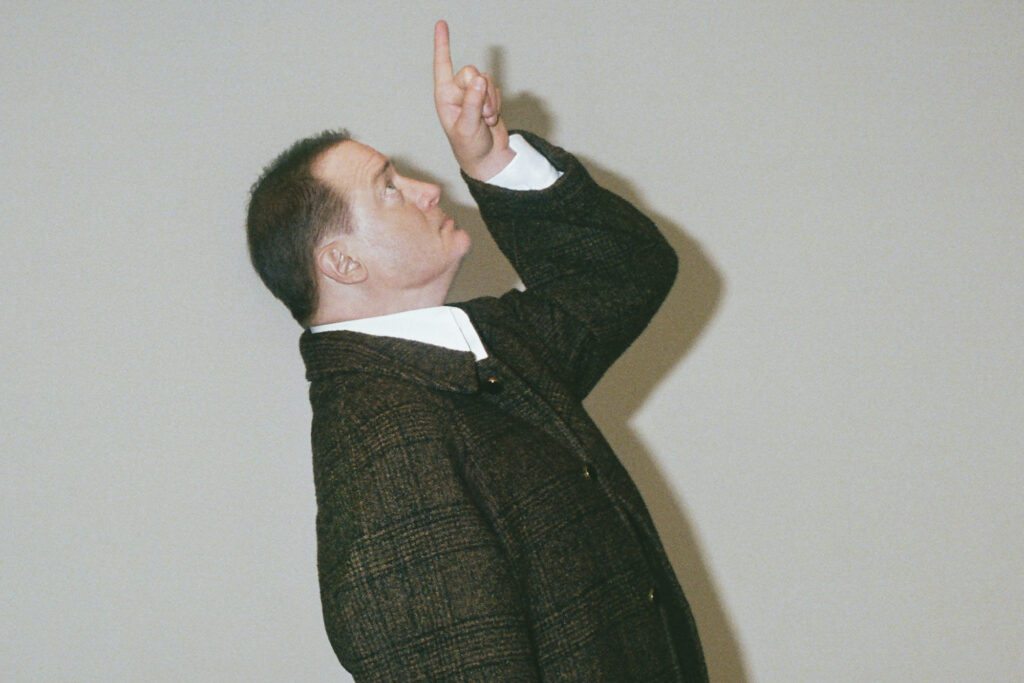
And to have that relationship alongside Akira [Emoto], who plays the actor, just brings it all together.
I mean, he’s the Japanese Ian McKellan. I got my experience working with Ian McKellan during Gods and Monsters, a film about a director who stays in the pool house and paints flowers in his backyard because everyone has forgotten about him. This unique relationship — two people from worlds apart, in both films — is forced. And that’s what makes the dynamics so interesting, to see unlike types align.
We’ve talked about why Toronto and Canadian audiences, more generally, will really relate to this film. Ideas of home — and how transient those ideas can be — are at the centre. You made the move to L.A. to start your career, now you’re settled in upstate New York, you’ve travelled around the world for work. Did this film and embodying Philip leave you reflecting on your conceptions of “home”?
It’s funny you ask because I was just thinking about this, I promise you. Living in all these places — and I’ve been very lucky to have a transient or nomadic or “dad’s job changed so we have to move” routine — what it did for me, ultimately, is make me adapt to new environments and places. It made me comfortable in my own skin. And, yeah, the armchair psychiatrist could say, “Oh, that’s because you’re trying to protect yourself no matter where you are.” But I think it’s a product of being exposed to many different cultures. You learn that we’re pretty much all the same when it comes down to it.
And this story itself, I have to point out — unless you disagree, and I welcome it — it is villain-free. You can’t point towards one physical obstacle or character apart from one thing: “apathy.” The obstacle is “apathy” — to take the action, or not. To take the action is a huge risk, but this is a movie where people do that. It doesn’t always have gleaming results. It does leave people’s hearts bruised or battered or broken, even. But there is a sense of reconciliation and renewal. It shows us — sorry, I’m choking up as I’m saying this — it shows us that family really is who we are with. It’s not always what we’re born into.
That’s all Hikari. That’s all her. And Hikari means “light,” and “fire,” and “energy.” And she has that.
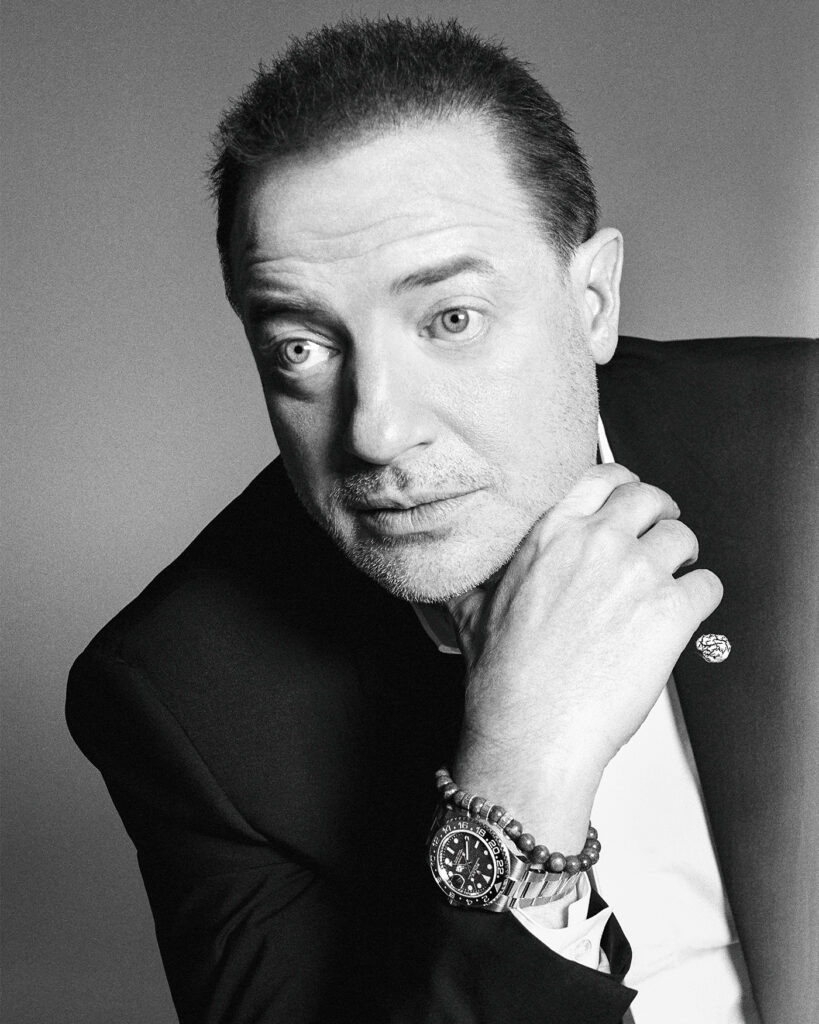
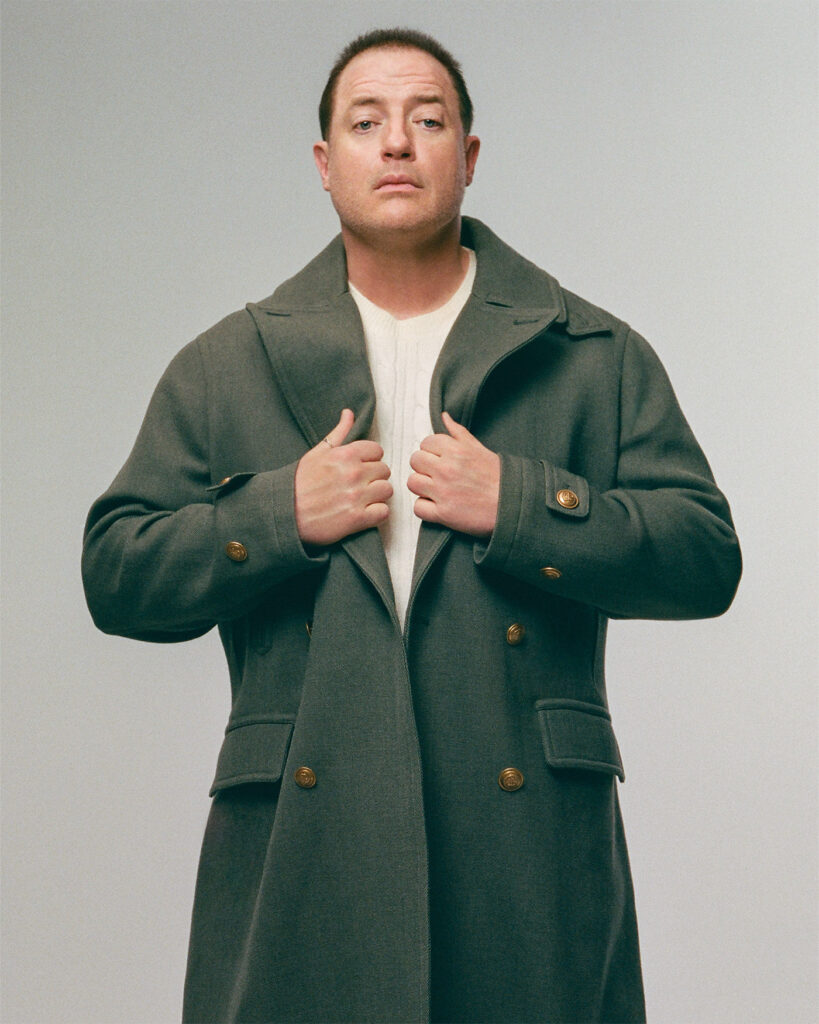
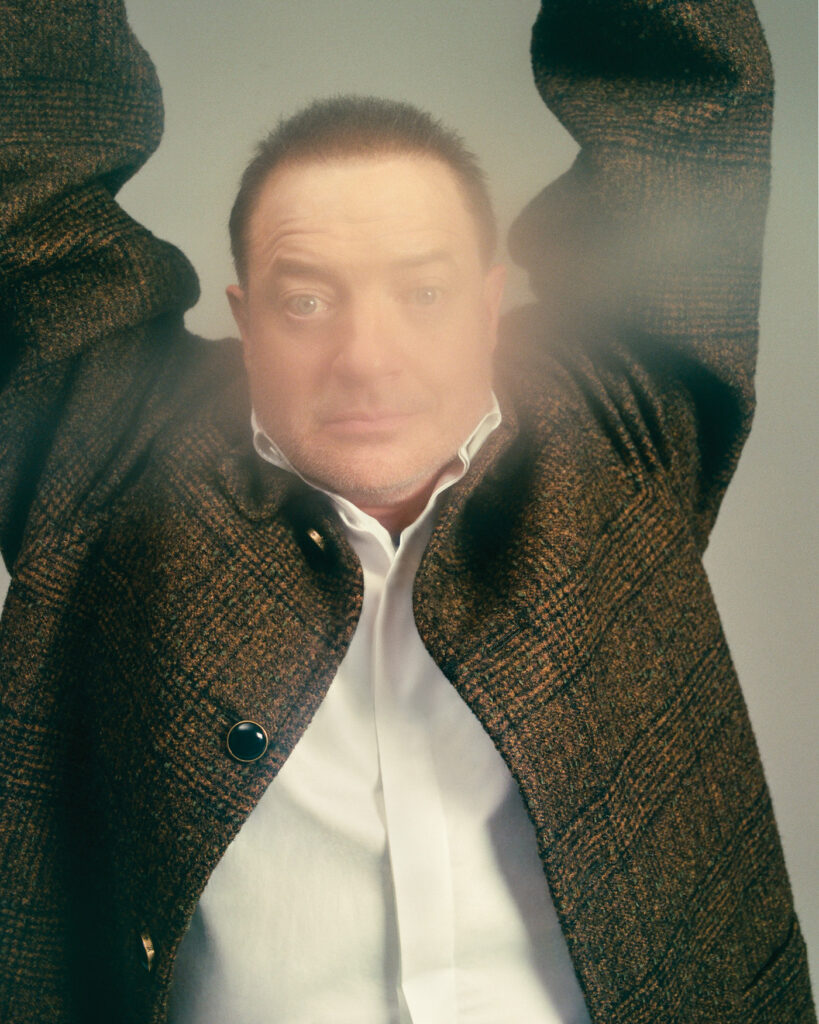
RIGHT: JACKET AND SHIRT BY LOUIS VUITTON MEN’S.
No, I can’t disagree. And I think that aspect — the fact that there’s no singular villainous character — just speaks to how well Hikari plays on those human elements. I thought, in that same vein, it was a really singular, refreshing role for you, too. Early in your career, I feel like so many of your performances were elevated by this sense of physicality: The Mummy, George of the Jungle, Journey to the Centre of the Earth. Then, The Whale — it’s so different — but you’ve described it as your most physical role yet. Even your work in Killers of the Flower Moon felt so centred around this imposing physicality. But there’s none of that here. It’s just these subtle elements coming together to make such a human character. In the moment, did this feel like a significant shift for you?
This is a man who learns how to have a genuine connection as a father with a child, which is the last thing he ever expected to happen because he’d always been looking for that for himself. […] The sense of finding a character, with so many people paying such close attention to the details, holding my hand along the way and guiding me through the language challenges, to be patient with me through my bad Japanese pronunciations — probably trying to keep from giggling at whatever I said — is an unconventional process. But it explores the universal connections that make people feel seen and heard and validated. In a world that has so many sharp and prickly angles to it, I think we need films like this now more than ever.
It’s why I signed on right away. It was unlike anything I’d read before. This movie was a giraffe born into a family of zebras. It’s unique. That’s why I wanted to sign on: it was a risk. It made me feel creatively frightened. Acting is an act of courage, I’m convinced, every moment of the way. It should be a tightrope walk.
When I think back on your recent projects, they all seem to be leaps. They’re unconventional roles. You’re not being asked to walk in merely as the tall, handsome leading man. At this point, are roles that require courage the leading driver when it comes to selecting a script?
Yes. Ultimately, we all want to do good work. I’d like to think we do. I know I do. And audiences know when they’re being pandered to. Maybe this isn’t a film that is going to solve everyone’s problems, but it will shed light on things in life that you can look at in a new way as a result. That’s unique. That’s the type of material that I’m hungry for, always. I’ve been lucky enough — and I can’t stress that word enough — to be a part of that with this film. This one is a jewel in the crown for me.
I think what makes it special is that there are so many different attachment points for people. A lot of people have an aging parent, or a child that they just want the best for, or a big leap that they’ve taken, and they’re wondering if it was the right decision. With all that this film encapsulates, what do you hope audiences take away from your performance?
I hope they have a similar reaction as I did when I saw the final story that Hikari captured, which is, “You are good enough. And you were good enough all along. All you have to do is look at yourself and believe.” That’s the core aspect of spiritualism and Shintoism — and of course, it contends with many different gods and powers of nature — but there’s no central deity. It’s far more all-encompassing. It puts the individual at the centre of it, and, for that, it makes the message so much more universal.
Photography: Brent Goldsmith
Styling: Sam Spector Grooming: Natasha Leibel (The Only Agency)
Production: Hyperion LA
Shot on location at Untitled NYC.
Photo Assistant: Clay Howard-Smith
Stylist Assistants: Katie Vaughan, Kate Millar, Lillian Agid
On-Set Producer: Cole Stokley