For years, global audiences have known him as the seismic force behind Pablo Escobar in Narcos, giving a Golden Globe-nominated performance so volcanic it scorched the landscape of prestige television. Wagner Moura is not just the man beneath the Medellín drug lord, but an actor and director whose cinematic choices are guided by a much more conscious reflection of the path he’s walking on as a person and actor.
Now, with his compelling internalized performance in the Brazilian entry The Secret Agent, Moura is shedding the intensity of his past to reveal a new, perhaps more mature artistry. Earlier this week, the film earned Golden Globe nominations for Best Motion Picture Drama and a nod for Wagner Moura as Best Actor, making history as the first Brazilian actor to get a lead actor nomination in the drama category at the Globes. For the same role, he has already won the Cannes Film Festival Award for Best Actor, New York Film Critics Circle Best Actor Award, and a nod from the Critics Choice Awards.
“The character that I play is just a man who is sticking with his values. I think that that’s a very hard thing when you are under an authoritarian government.”Wagner Moura
As the actor sweeps through awards season with historic nominations, the world is finally recognizing the full spectrum of his craft: the depth and quiet conviction of a man who chooses his roles strategically because, for him, the art and the path of the person are inseparable. It’s about time he gets his due on the global stage in cinema.
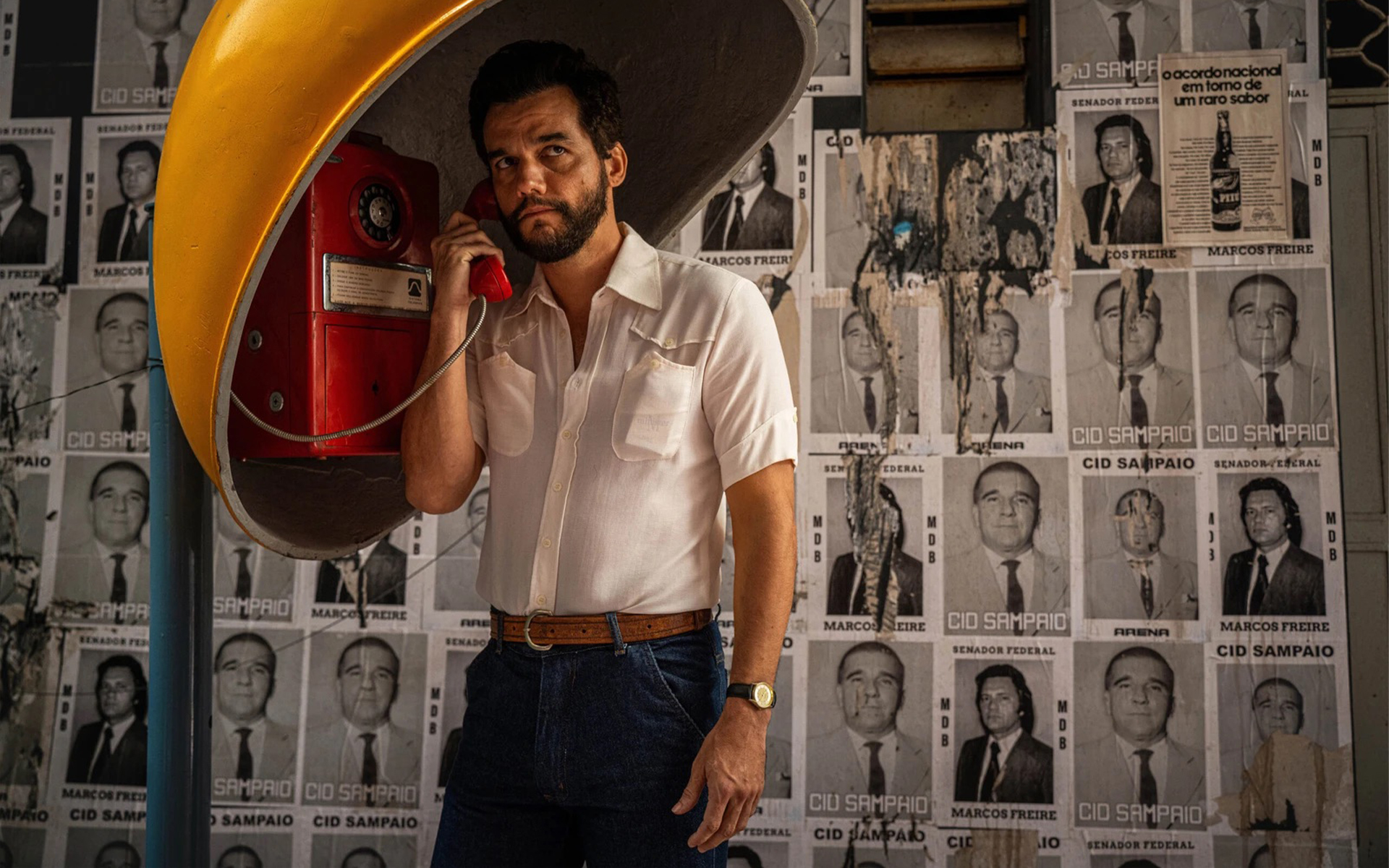
His performance as the hunted former academic Marcelo is a study in stoicism and internal turmoil. The film, which is now playing in theatres, is set in 1977 Brazil under a heavy military dictatorship, a political environment that was deeply personal to Moura and director Kleber Mendonça Filho.

Moura sees the character as a representative of countless people worldwide who face persecution simply for their identity or beliefs. He links the story directly to his own artistic focus on political and social themes, citing his experience directing his film Marighella about a leader of the armed resistance. “[Marcelo] represents many people in the world that get in trouble, have their lives in danger, just because they are who they are, just because of the colour of their skin, their sexual orientation, the religion that they chose,” Moura explained in a virtual interview. “The character that I play is just a man who is sticking with his values. I think that that’s a very hard thing when you are under an authoritarian government.”
While Moura is known for more intense characters, Marcelo demanded a calm, stoic temperament: living under an alias and desperately trying to protect his son, Marcelo cannot afford to call attention to himself. This presented a rewarding challenge for the actor, who is also a father to three sons.
“In many other films that I’ve done, you’ve seen me being very explosive,” Moura reflects. “But in this case, it’s sort of a mix between [Director] Kleber and I, and he is more stoic… Everything happens internally. As an actor, it was a very beautiful exercise for me.”
“I like who I am, I’m having less self-doubt and I’m less self-conscious about things. I think these experiences are making me feel more comfortable in my own skin.”Wagner Moura
Beyond the technical performance,The Secret Agent has become a touchstone for Moura’s personal and artistic maturity. He views his acting career, which began at age 15, as a continuous process of self-discovery, finding that getting older has brought comfort and coherence to his life and work.
“I think that I’m enjoying the journey of getting older, of getting more mature, both as a human being, and, of course, as an actor,” says the 49-year-old actor. “I was doing theatre in Brazil, like a month ago, and every single time I’m on stage, for example, it’s a chance to know something more about myself.” Collecting his thoughts, he added: “I like who I am, I’m having less self-doubt and I’m less self-conscious about things. I think these experiences are making me feel more comfortable in my own skin.”

This sense of inner peace drives his career choices, particularly his gravitation toward politically charged projects. He consciously seeks roles that align with his personal values and curiosity.
“I think I’m being very coherent with the path that I’ve been walking both as an artist and as a person,” he asserts. “I look back and I like the choices that I made because for me, it’s very connected. That’s why I feel that I gravitate towards political projects because it’s in my zone of interest.”
“I decided to become an actor not because I felt that I was talented… I wanted to be an actor because I wanted to hang out with those people.”Wagner Moura
This period of self-reflection has brought Moura to a realization about his acting process: he is constantly drawing from within, regardless of the role’s demands. When asked how he can play such different characters, from a drug lord to a mild-mannered professor, Moura reveals his core philosophy.
“I’m always playing myself in all of those characters because you have everything within you. You just have to go there and look for and dig it and look for it and put yourself in there with honesty.”
The film’s deeply rooted Brazilian identity was important to him. “It was so liberating to be speaking my language, to speak Portuguese in a film and to be doing this with Kleber in the Northeast of the country, which is where I also come from.”
Moura’s experience directing his debut feature, the political biopic Marighella, has affected his own approach in front of the camera, giving him a deeper respect for his collaborators. “It changed me a lot. It gives you more empathy for actors. I love actors. I love being around actors,” he shares, revealing the root of his career choice. “I decided to become an actor not because I felt that I was talented… I wanted to be an actor because I wanted to hang out with those people.”
As a director, he gained a pragmatic understanding of the actor’s pivotal role, citing an example directing an episode of Narcos in Mexico: “I really realized how important an actor is. I’ve seen this many times where I wrote the script I directed, I knew so much about it, and the actor just showed me something that I would never think about.” This is why he prizes the spontaneity of performance: “I like the liberty that you have to just say, ‘Action. Game on,’ and then this scene can go anywhere.”
Moura doesn’t consider himself a director, but rather an actor that directs. He is already preparing for his next major undertaking, his second directorial feature, Last Night at the Lobster, in which he will also star alongside Brian Tyree Henry, Elisabeth Moss, and Sofia Carson. Based on the novel by Stewart O’Nan, the film centres a group of chain restaurant employees who are fired just before Christmas and snowed in for one final night.

Moura describes the project as “a very controlled set for an actor, director” and calls it an “anti-capitalist Christmas film.” He added: “It’s a film about the employees of this food chain restaurant that all get fired the week before Christmas. So, it’s grounded in the American tradition of Christmas movies, but also a working class film… where the magic doesn’t come from the sky, but from empathy that one person has towards the other.”
He continued: “What I can bring to this is the way we do films in Brazil, which is anchored in the tradition of political Brazilian films, and also the way we move with the camera. We don’t have much money to shoot it in Brazil — usually all the films are very independent.”
With his personal path now inseparable from his artistic choices — and with a promising directorial project on the horizon — Moura’s recent accolades are more than just recognition of a single role, but promise of a compelling global artist poised to bring the authentic, fierce spirit of Brazilian cinema and its filmmaking style to the world stage.
The Secret Agent is now playing in theatres.
FEATURE IMAGE: WAGNER MOURA IN “THE SECRET AGENT.” PHOTO COURTESY OF ELEVATION PICTURES.