We’re only a few days out from the holiday break at SHARP, yet — as it goes for most of us — hosting a family gatherings or New Year’s parties requires just as much work as a nine-to-five. To prepare for our snowy soirees, we’ve spoken with a slew of chefs across Canada; below, they share their advice for throwing the perfect holiday get-together. Get inspired for your festivities with the culinary experts for whom hosting is a form of art.
Season’s Greetings: Langdon Hall’s Michelin-Feted Sommelier Offers Holiday Tips
Visit Langdon Hall
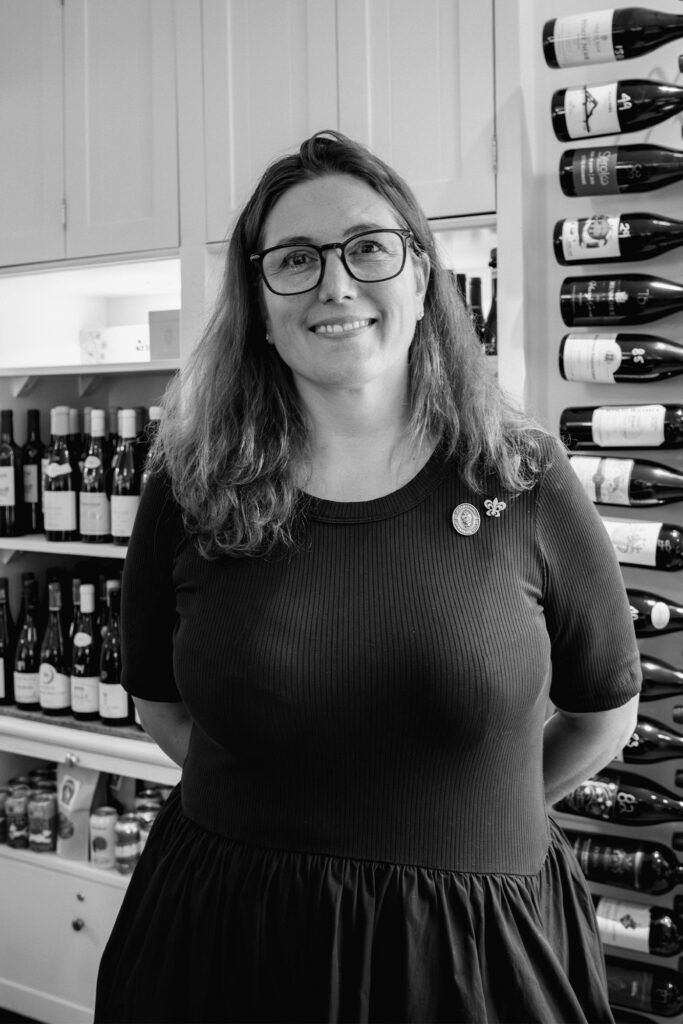
More than a decade before Faye Maclachlan won the 2025 Michelin Guide Toronto Sommelier Award, the wine director at Langdon Hall in Cambridge, Ont., changed her career path after tasting a bottle given to her by a customer. “When I tried it, I thought, ‘I need to know why this tastes the way it does,’” she recalls. “That curiosity has never ended. Wine education starts with realizing how little you know, which only makes you hungrier to learn. It’s a field where you’ll never know everything, and that’s what keeps it fascinating.”
For SHARP readers who are curious about serving and gifting wines over the holiday season, MacLachlan offers the following insights.
On pairing wines with holiday fare: “Gamay and Beaujolais are fantastic with turkey and all the trimmings. A richer-style rosé or a crisp sparkling wine also works beautifully. Holiday meals are full of richness and salt, so you need acidity to refresh your palate. For cranberry-heavy plates, Pinot Noir or a Valpolicella Ripasso are great matches.”
On gifting wine: “When in doubt, stay classic. Choose something people will be proud to bring to a dinner table. You can’t go wrong with well-known regions and balanced, versatile styles. If you don’t know their tastes, avoid extremes and save the funky orange wines for adventurous drinkers. A ‘safe’ but elegant choice always finds its moment.”
Warm Welcome: Renowned Toronto Restauranteur Yannick Bigourdan Shares His Blueprint For Hosting
Visit Restaurant Lucie
As the owner of four beloved Toronto eateries — The Carbon Bar, Trattoria Amano, The Berczy Tavern, and Restaurant Lucie — Yannick Bigourdan could write a book on refined hosting. Thankfully, for those with holiday hosting responsibilities on the near horizon, we’ve condensed Bigourdan’s expert insights to help guide you through the season.
When it comes to setting the scene, what are the small design or table-setting details that make the biggest impression?
It’s never about extravagance, it’s about harmony: the black leather mats, the choice of a wine glass, the way candlelight brings just enough warmth. That’s what total hospitality is: an invisible orchestration where every element whispers care, not control.
How can hosts create a high-quality dining experience at home without making it feel too formal or intimidating?
Generosity matters more than perfection. True hospitality isn’t about the shiny objects or the fancy decor, it’s about how welcome people feel the moment they sit down. When the host feels comfortable and joyful, everyone else does too. Warmth comes from the heart!
What’s your go-to strategy for ensuring guests feel cared for from arrival to dessert?
Anticipation is everything. I like to remind myself that we need to “read our tables.” From the moment someone walks in, we read their rhythm: do they want to engage, or just observe? Do they crave energy or calm? We want to understand what they are really looking for in their dining experience.
What’s one signature touch or indulgence you’d recommend every host include to elevate their holiday gathering?
Create a moment of surprise, something thoughtful but not necessarily extravagant. It could be a tiny amuse-bouche, a personalized note, or a small toast that tells a story. Every great evening should have one emotional crescendo, that one detail that makes guests feel, “This was made just for me.”
Wild Terroir: François-Emmanuel Nicol of Tanière³ Tells Us How His Curiosity Made Him the First Chef in Quebec to Earn 2 Michelin Stars
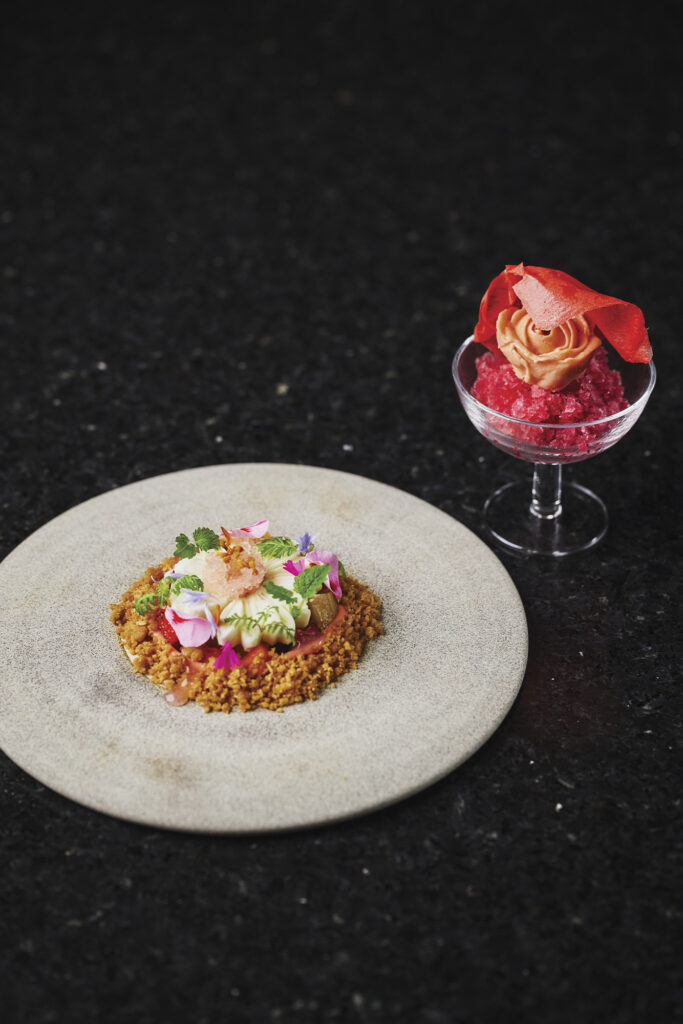
Visit Tanière³
Set in 17th-century stone vaults beneath old Quebec City, Tanière³ seems less like a fine-dining restaurant than it does an immersive culinary experiment. Its architect, François-Emmanuel Nicol, is a chef whose quiet determination has made him one of Canada’s most distinctive culinary thinkers, and the first in Quebec to earn two Michelin stars.
Born in Gaspésie to Breton parents, Nicol grew up close to nature and later trained at Montreal’s ITHQ hospitality consulting centre before honing his craft at Michelin-starred kitchens including Arzak in northern Spain’s Basque Country and Mirazur on the French Riviera.
When he returned home, he saw an opportunity to explore the wild ingredients around him. “When we opened Tanière³ [in 2019], I felt that we knew only a little about the plants Quebec has in the wild,” Nicol recalls. “Our whole approach was to really develop the province’s wild terroir.”
Each evening, diners move through three candlelit vaults, their meals beginning with six “wild bites” and two cocktails inspired by a single ecosystem. “Our approach leads us to work with new plants we’ve never used before,” says Nicol, adding that he collaborates with biologists who guide his team toward ever-narrower ecosystems and increasingly obscure species. “The first thing we do when we get a new plant is immerse it in oil, vinegar, sugar, water, and alcohol, just to see what kind of aroma we’ll get. Then we create a recipe around it.”
Seasonality defines this process. “Nature changes slowly, so we want to change slowly too,” he says. Dishes evolve over months rather than days, and ingredients are preserved through the seasons: supremely fresh scallops are turned into chicharrones, matsutake mushrooms into a purée or grated garnish. “The idea is to never throw anything away,” Nicol adds.
The chef’s curiosity extends beyond ingredients. In 2023, he joined fellow chefs in lobbying for Michelin to come to Quebec City, a campaign that succeeded within a year. He also works with three First Nations communities — the Innu, Maliseet, and Wendat — to source traditional ingredients such as scallops, sea urchin, and ancestral white corn. “It’s really important to showcase that culture,” Nicol says. “It’s a huge part of Canada’s culinary influence, and I want to be very delicate in how I use and present those products.”
For Nicol, acclaim is secondary to purpose. “What people like most,” he says, “is that everything they taste is both new and authentic.”
FEATURE PHOTO COURTESY OF RESTAURANT LUCIE.