For most watch brands, an anniversary is an excuse to dip into the archive and release a retro-inspired reissue. For Citizen, the 50th anniversary of Eco-Drive feels more like a victory lap for an idea that fundamentally changed modern watchmaking, though there are plenty of designs in the back catalogue that would make awesome reissues. Long before sustainability became luxury’s favourite buzzword, however, Citizen engineers were already asking: why should a watch ever need a disposable battery at all?
This simple question led to the 1976 Crystron Solar Cell, the world’s first analogue light-powered watch and the spiritual beginning of what would become Eco-Drive. Fifty years later, the technology has become so integrated into the fabric of watchmaking that it’s easy to forget how radical it once was. In typical Japanese fashion, Citizen didn’t approach the problem with marketing theatre or Swiss-style romance. Instead, the brand pursued pure practicality: create a watch that was more reliable, more accurate, more environmentally responsible, and more accessible to ordinary people.
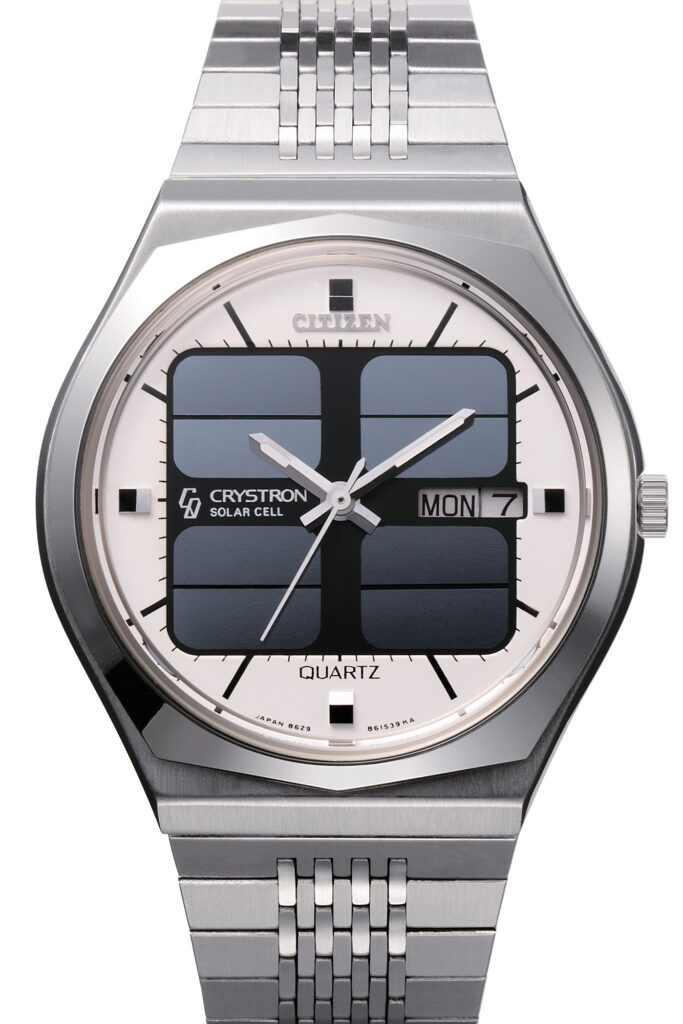
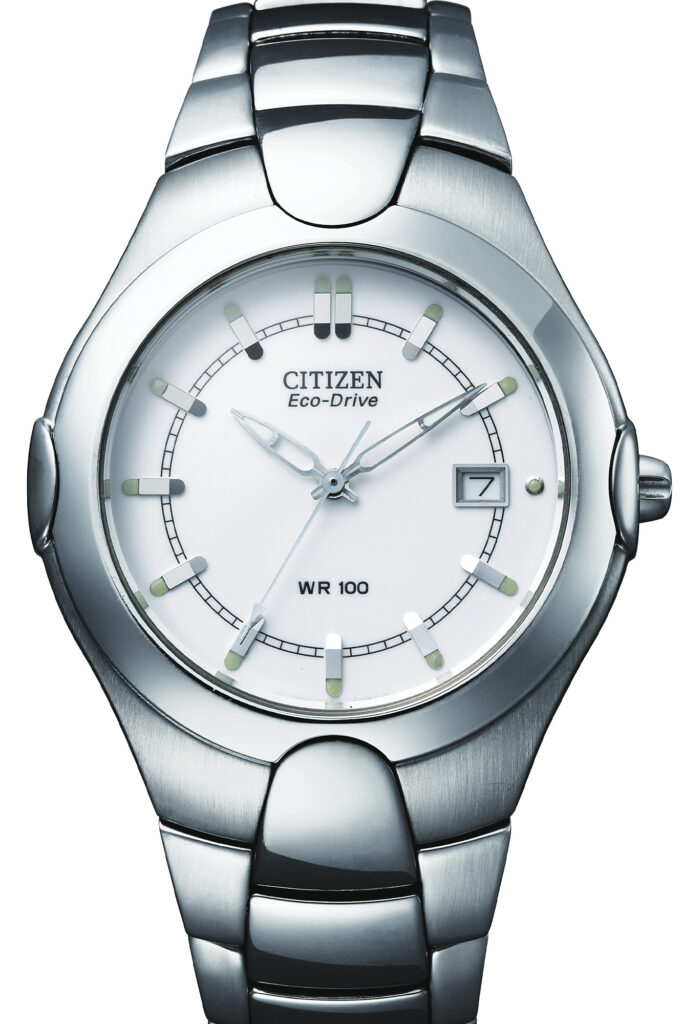
RIGHT: CITIZEN ECO-DRIVE ECLISSE.
PHOTOS COURTESY OF CITIZEN.
That last point matters because it defines Citizen more than any individual movement or design language. The company’s philosophy has always revolved around the democratization of quality. Even the name “Citizen” reflects the idea that great watchmaking shouldn’t exist exclusively for collectors chasing six-figure complications. It should exist for everyone. And Eco-Drive became the perfect embodiment of that ethos.
The technological progression over the last half century is staggering. Early Eco-Drive calibres in the 1990s delivered roughly six months of power reserve and accuracy in the range of ±20 seconds per month. At the time, it felt futuristic to have a watch powered through the dial by any light source, eliminating routine battery changes altogether. But Citizen never stopped refining the formula.
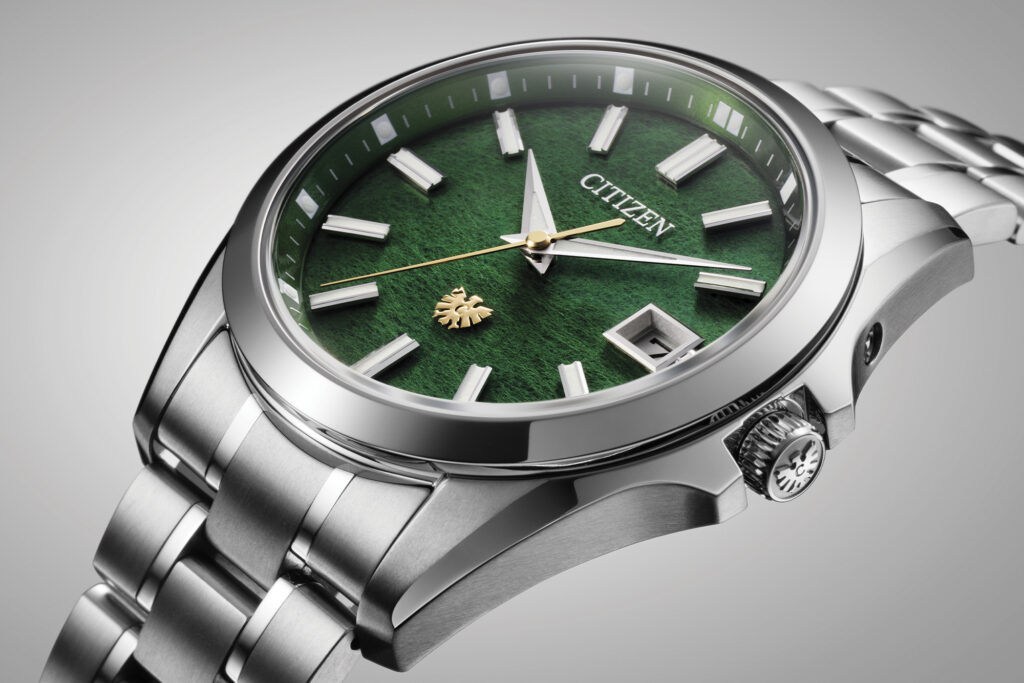
Today’s Eco-Drive movements are operating on an entirely different level. The brand’s modern Caliber A060, found in The Citizen line, offers an astonishing 18-month power reserve in power-save mode alongside perpetual calendar functionality and accuracy rated to ±5 seconds per year. Then there’s the monumental Caliber 0100, which pushed quartz regulation into previously unimaginable territory with accuracy of ±1 second per year without requiring GPS or radio synchronization. That makes it the most accurate watch movement in the world.
What makes Citizen particularly fascinating is that these innovations don’t arrive with any chest-beating swagger. The brand simply engineers the thing, perfects it quietly, and puts it into production. The Eco-Drive One, for example, arrived as the world’s thinnest light-powered watch with a movement measuring just 1 mm thick. Most brands would build an entire mythology around an achievement like that. Citizen treated it almost matter-of-factly.
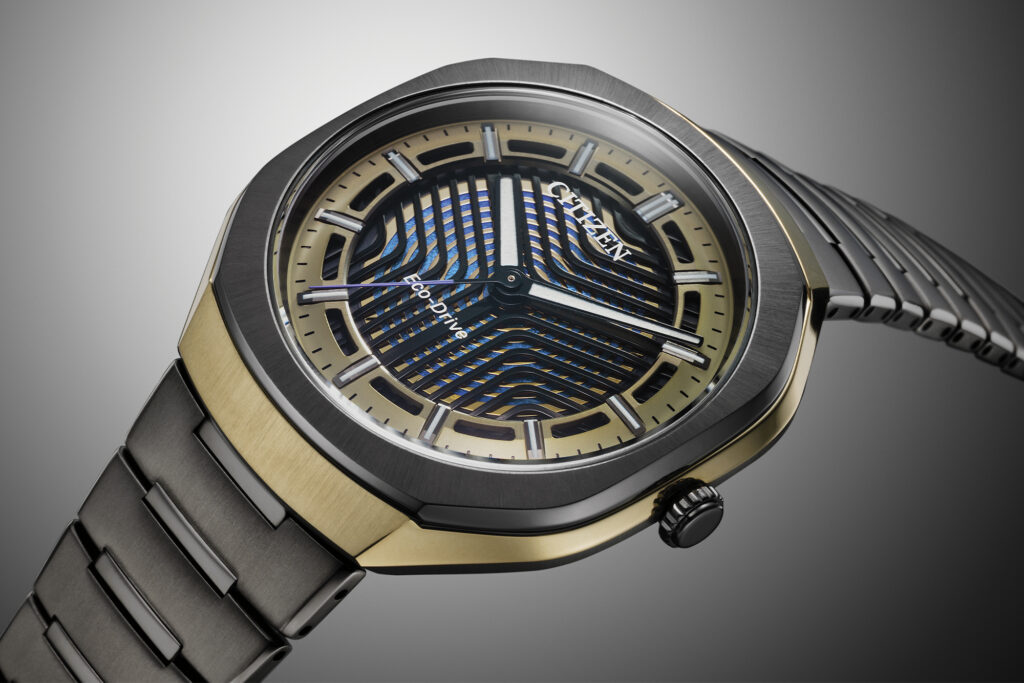
The anniversary pieces released this year perfectly capture that mentality. The new Eco-Drive Photon models celebrate not just the technology itself, but the broader idea of light as both an energy source and a design principle. Their multilayered dials use structural colour technology developed alongside Fujifilm, an innovation that feels quintessentially Japanese in its blend of engineering and artistry.
Unlike traditional pigments, structural colours are created through microscopic surface structures that manipulate reflected light. The result is a dial that shifts dynamically in tone and texture without compromising the solar charging capability beneath it. That’s the critical breakthrough. Historically, solar watches often required brighter or more translucent dials that limited aesthetic flexibility. Citizen’s latest technologies dramatically expand the colour palette while preserving charging efficiency. In other words, Eco-Drive watches no longer need to look like “solar watches.” They can simply be beautiful.
And that distinction is important because Citizen has spent decades proving that technological practicality and emotional watchmaking are not mutually exclusive. You see it in the hand-dyed washi paper dials of The Citizen models. You see it in the Zaratsu-style polishing on Super Titanium cases. You see it in the brand’s increasingly obsessive attention to finishing, tolerances, and tactile quality across price categories that would embarrass many competitors who market their watches at significantly higher prices.
That’s perhaps the most compelling thing about Citizen and its 50 years of Eco-Drive innovation: the company still feels driven less by luxury positioning than by the pursuit of refinement itself. There’s an unmistakably Japanese philosophy at work here — the belief that precision, utility, beauty, and longevity are all interconnected. Citizen doesn’t separate high technology from craftsmanship because, in its worldview, they’re the same thing. The finishing on modern Eco-Drive models, particularly in The Citizen collection, rivals watches costing substantially more, with hand-finished details, exceptional case work, and dial execution that feel deeply philosophical. At a time when much of luxury watchmaking is increasingly about exclusivity, Citizen continues to champion something far more difficult: making genuinely excellent watches for everyone who appreciates quality and excellence.