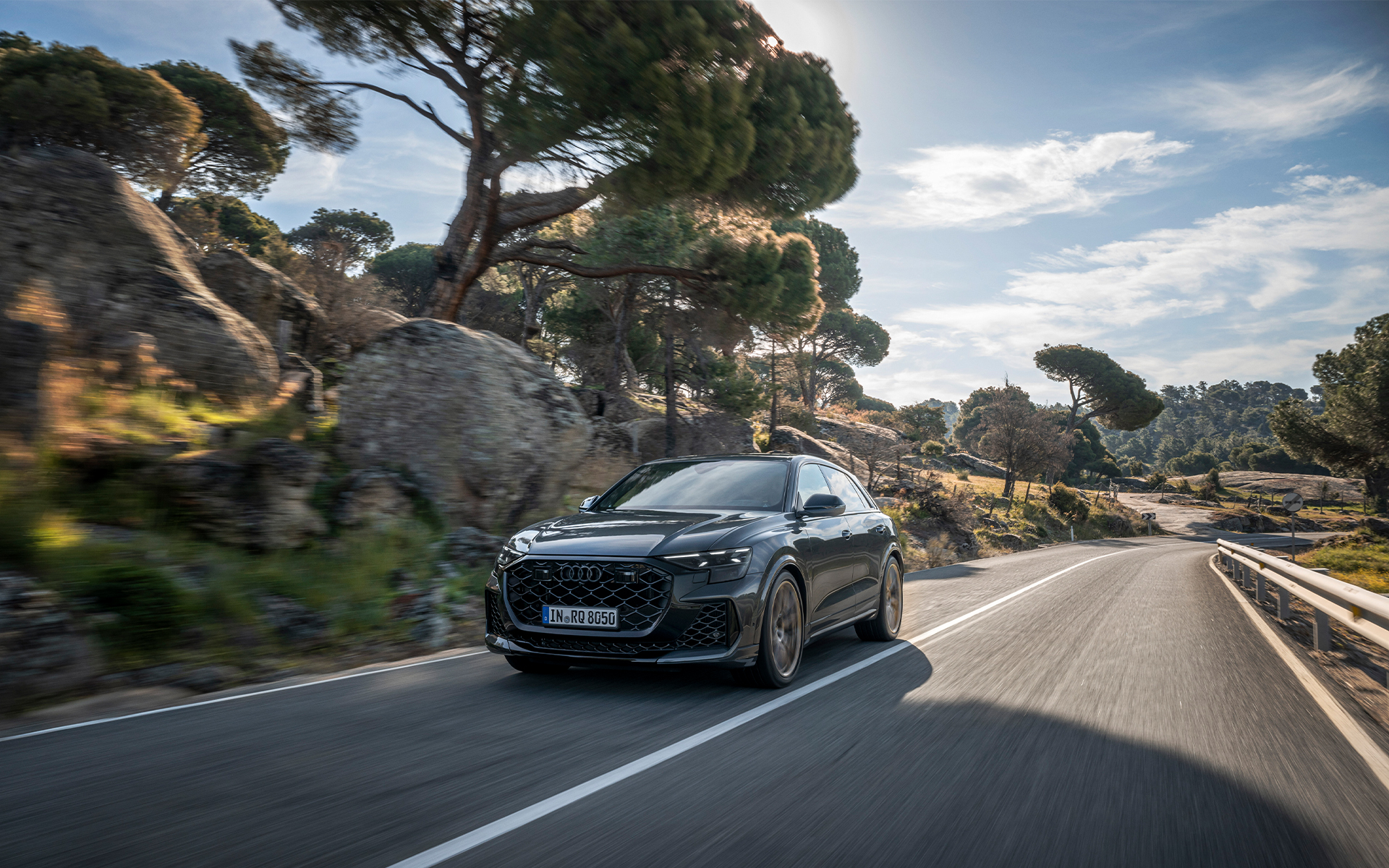
There’s a particular stretch of German autobahn where the road seems to inhale before it exhales — six lanes wide, arrow-straight, bordered by farmland and forests, cute villages and morning fog, all punctuated by small white signs with five diagonal black stripes. Ende aller Streckenverbote. Restrictions lifted. In an Audi RS Q8, that sign doesn’t just signal permission; it invites intent.
The RS Q8 is an exercise in contradiction: a full-size luxury SUV that looks more boardroom than pit lane, yet hums with barely restrained violence. Slip it into Dynamic, flatten the throttle, and the landscape begins to compress. Wind noise stays eerily subdued, the adaptive air suspension hunkers down, and the digital speedometer sweeps upward with the confidence of a brand that’s been perfecting high-speed stability since the days of the Silver Arrows. On a de-restricted autobahn, the RS Q8 feels less like a provocation and more like a natural habitat.

Before the speed, though, comes the etiquette. Autobahn driving isn’t about chaos — it’s about discipline, and anyone who treats it otherwise quickly becomes a hazard.
First: The Left Lane Is Sacred
It’s not a cruising lane, not a place to linger. You use it to overtake, then you move back right. Even at 200 km/h, if something faster approaches in your mirrors, the expectation is immediate courtesy. In Germany, lane discipline isn’t politeness — it’s law.
Second: Mirrors Matter More Than Speed
On unrestricted sections, closing speeds are extreme. A car appearing small in your mirror can be doing 280 km/h. Checking once isn’t enough; you check, signal, and check again. The autobahn rewards awareness and punishes assumption.
Third: No Speed Limit Does NOT Mean “No Rules”
Construction zones, weather conditions, and traffic density can impose limits instantly. Those digital overhead signs aren’t suggestions, and fines are swift. VMax only exists when conditions allow it.
Fourth: Signalling Is Non-Negotiable
Lane changes without indicators are considered reckless, regardless of speed. Clear, early signaling is how 200-plus traffic flows smoothly without drama. It’s the only way you can pass another car with these kinds of speed deltas.
Fifth: Tailgating Is Taboo
At high speeds, following distances expand dramatically. Flashing headlights from behind isn’t aggression — it’s communication. The faster car signals, the slower car yields. No ego, no theatrics.
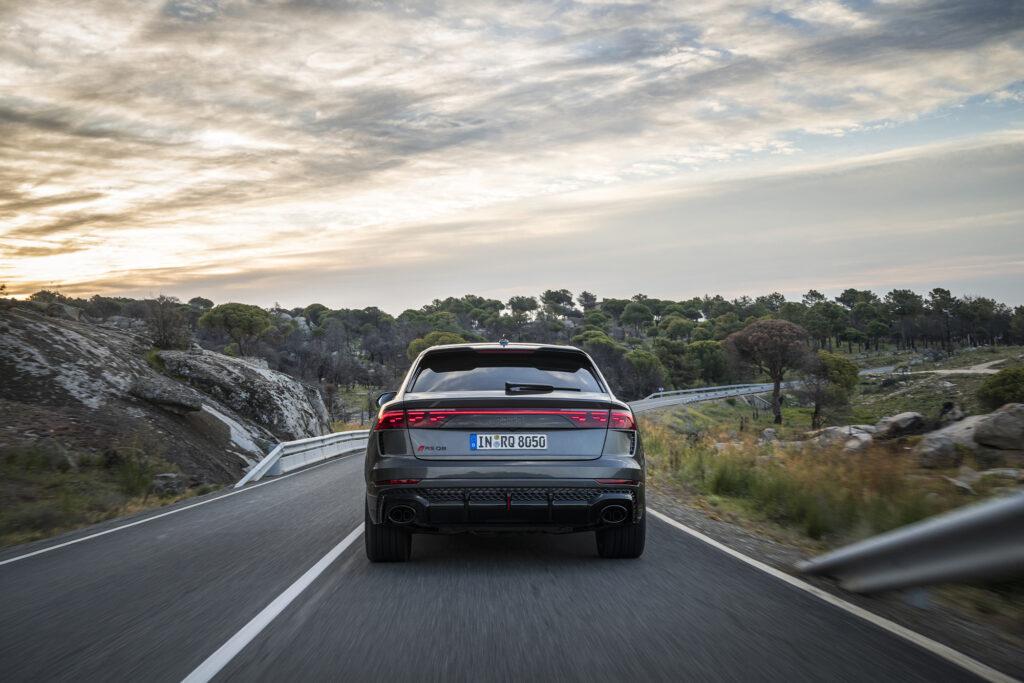
With that framework in place, the RS Q8 comes alive. Its 4.0-litre twin-turbo V8 delivers 600 horsepower, and it does so with a deceptively smooth wave rather than a spike. Acceleration is relentless but refined, the kind that presses you into the quilted leather seats without suspending your breathing. We cruised comfortably at over 220 km/h, the engine turning with lazy confidence, the chassis utterly unbothered by these speeds. When the road cleared, we pushed further, briefly touching a maximum of 240 km/h (respecting the maximum speed of the winter tires), the RS Q8 tracking arrow-straight, unflustered, serene. You need to experience this to truly appreciate what you’re paying for. The depth of engineering, the solidity, the overall performance envelope… all sadly wasted on North American roads.
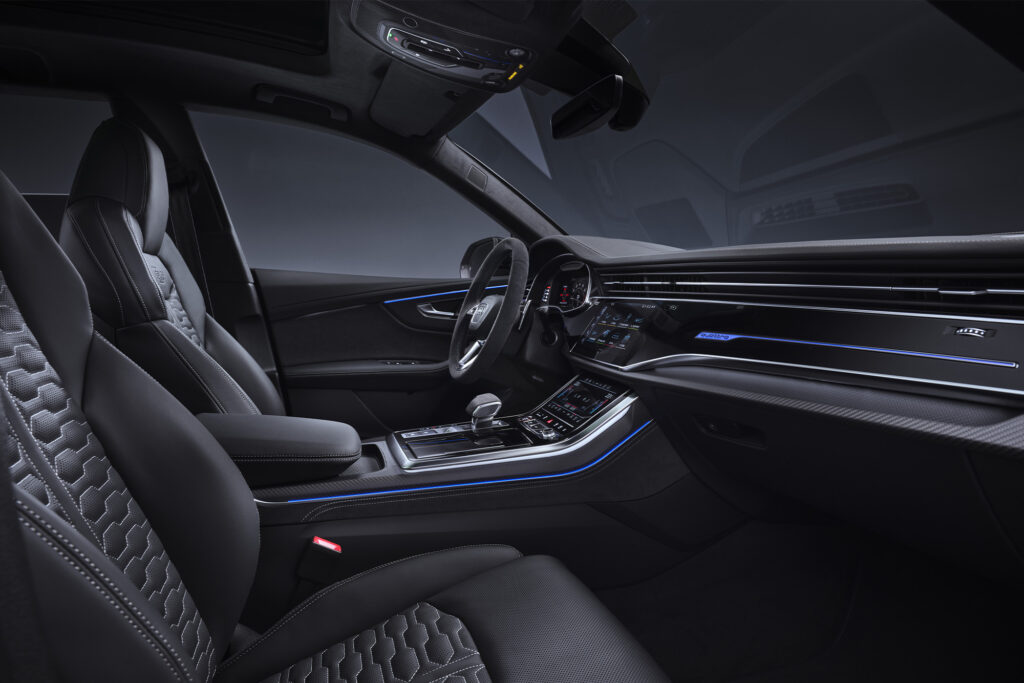
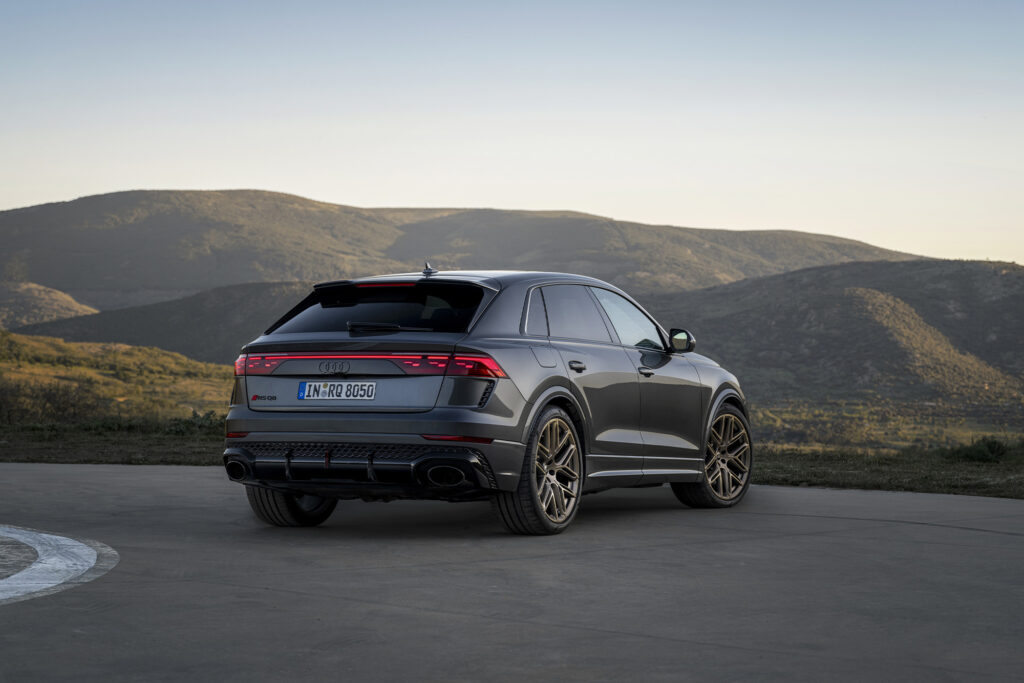
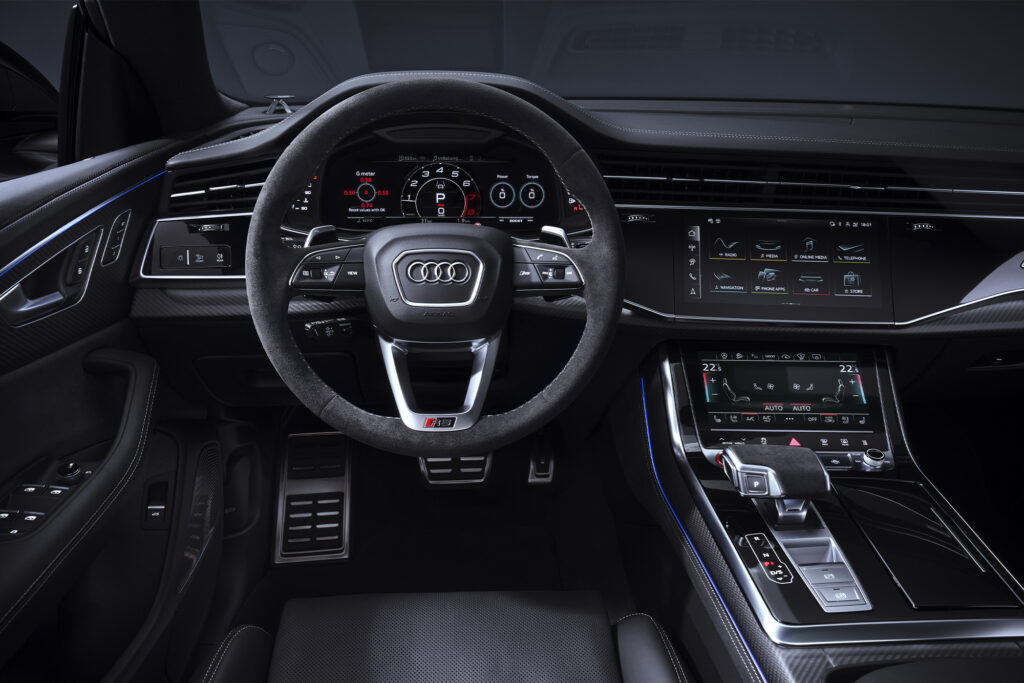

What’s remarkable isn’t just that the RS Q8 can do this — it’s how normal it feels while doing it. The steering remains composed, the brakes reassuring, the cabin hushed enough for conversation. Audi’s engineering doesn’t dramatize speed; it normalizes it. That’s the real flex.
And yet, there’s restraint baked into the experience. The autobahn teaches respect — for physics, for fellow drivers, for machinery. Speed here isn’t about dominance; it’s about harmony and expediency. When everyone plays their part, traffic flows at velocities that feel surreal yet controlled, safe and responsible.
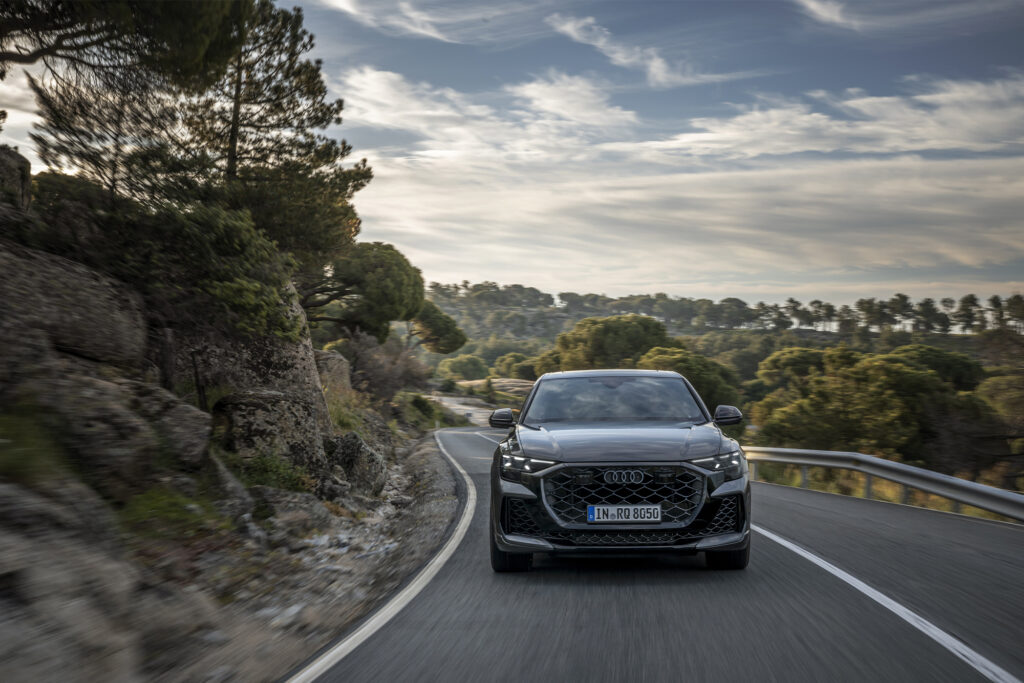
As the unrestricted zone ends and the stripes give way to a posted limit, the RS Q8 settles back into civilized composure, as if nothing extraordinary has happened. You’ve tasted a uniquely German kind of freedom — one built not on recklessness, but on rules so well understood they allow engineering brilliance and personal responsibility to flourish.