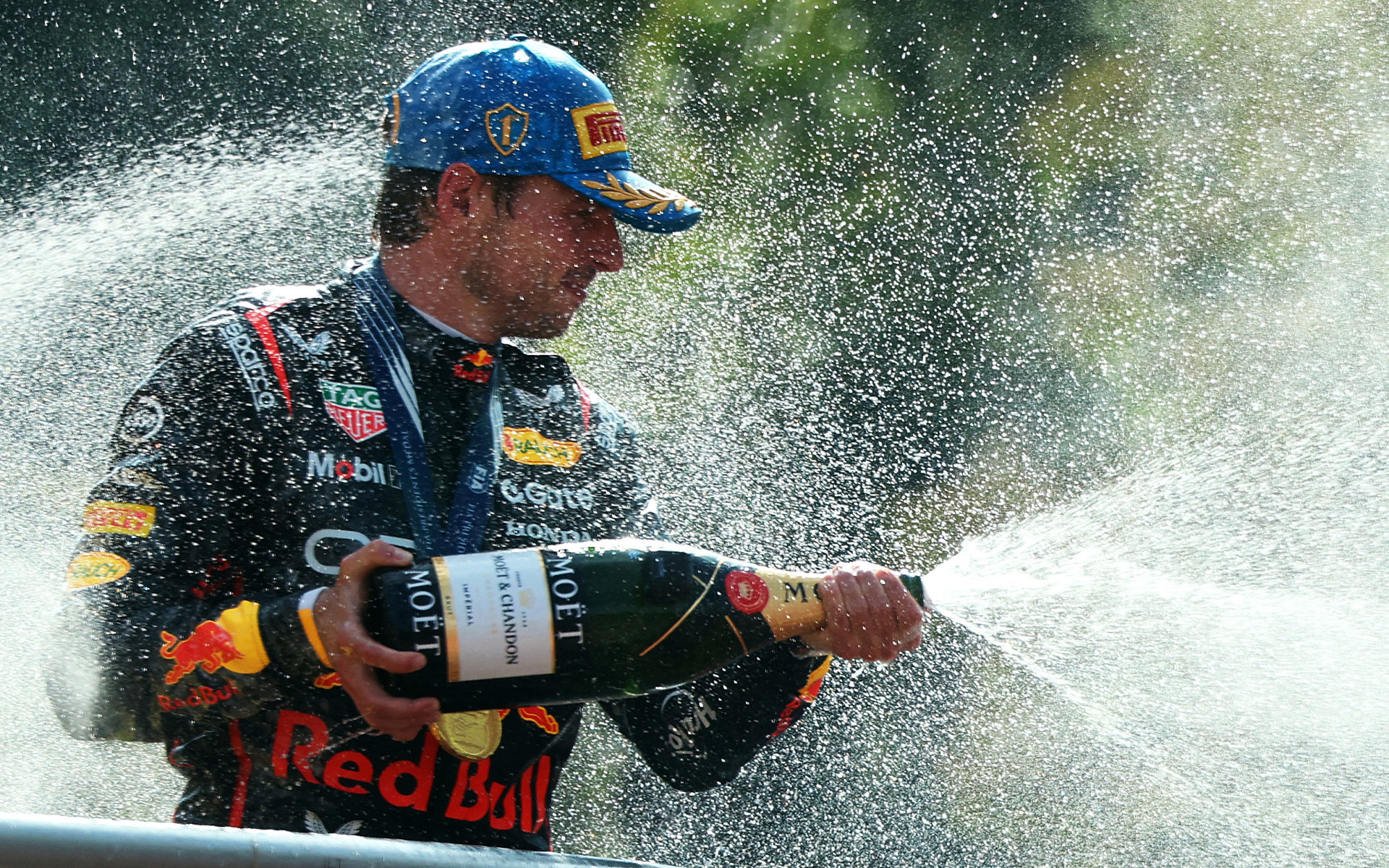
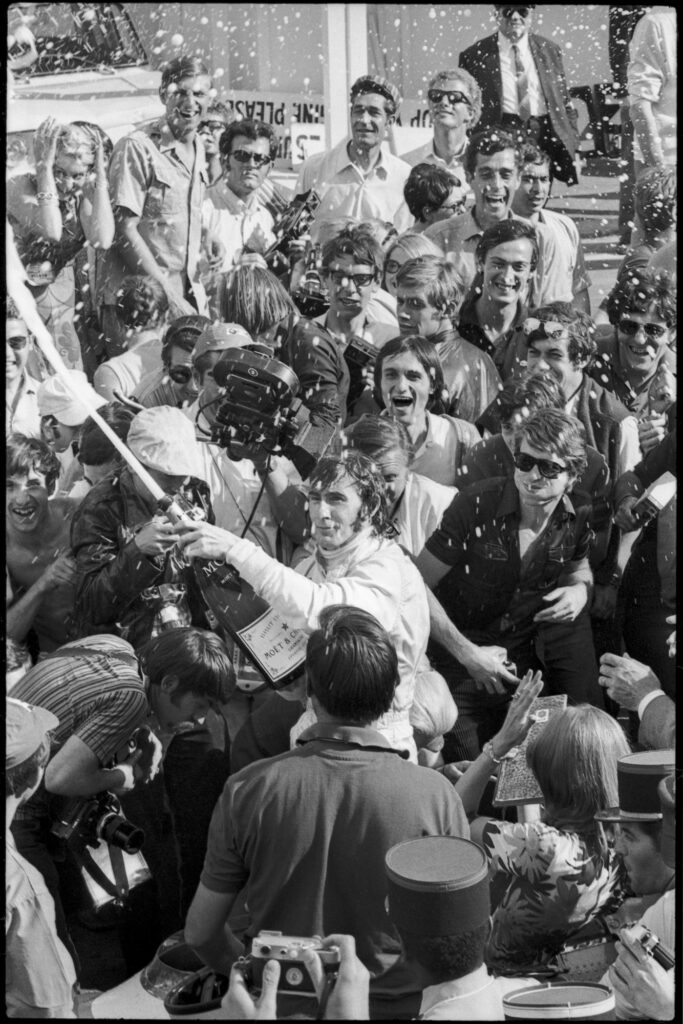
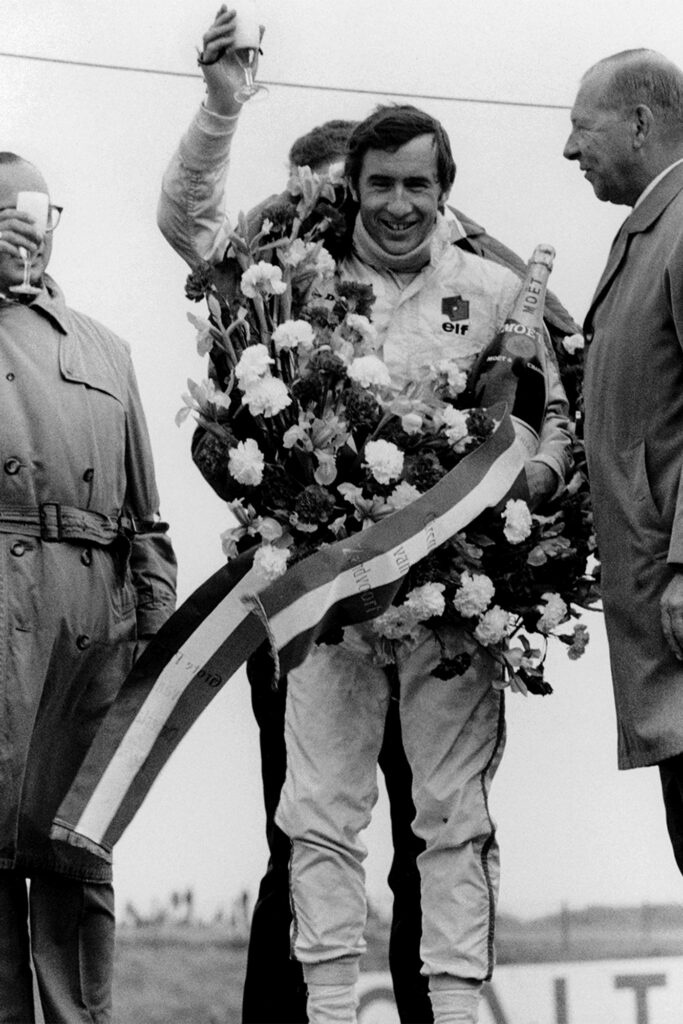
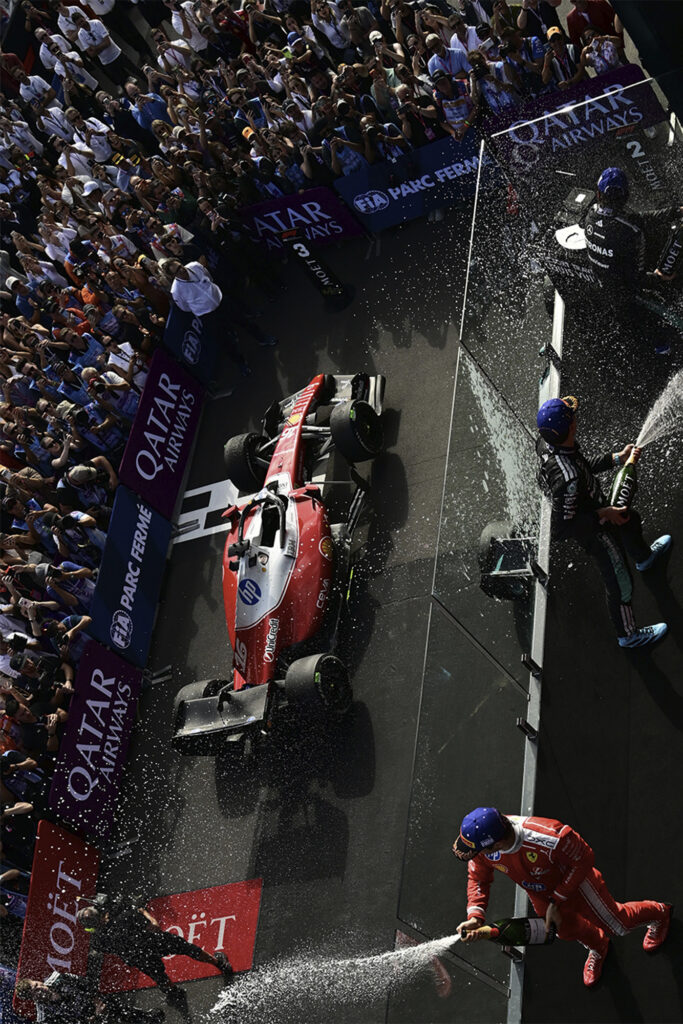
Every Formula One podium ends the same way, predictable yet making us jump up from the sofa just the same, as the national anthem of the winning driver tries in vain to drown out the crowd’s roar. Then, as the trophies are handed over, someone shakes a magnum bottle of Moët & Chandon they have absolutely no business shaking and aims it at their teammates as overspray hits the VIP crowd and pit crews. This chaos is somehow one of the most beloved rituals in sport. And this year it turns 60.
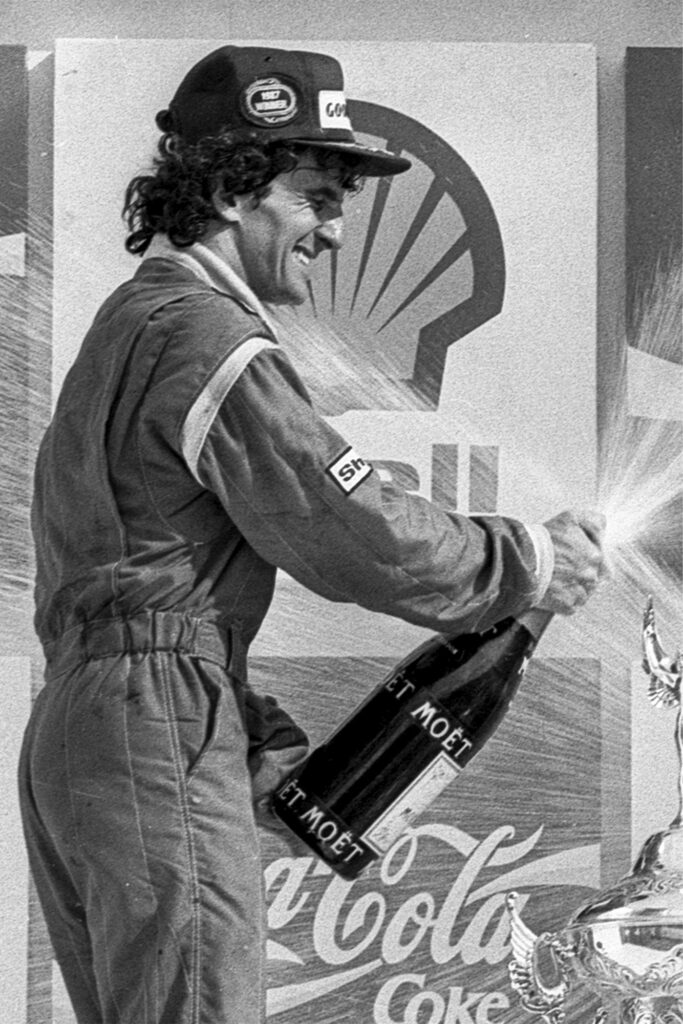
PHOTOS COURTESY OF MOËT & CHANDON.
Like most great traditions, nobody actually planned this one, and we now see it spill over into everything from the Tour de France to the NBA, even hockey. Hell, in 2026 a quick google search will even find you on wedding photographer’s home page where you are given bottle-popping tricks of the trade.
PHOTOS COURTESY OF MOËT & CHANDON.
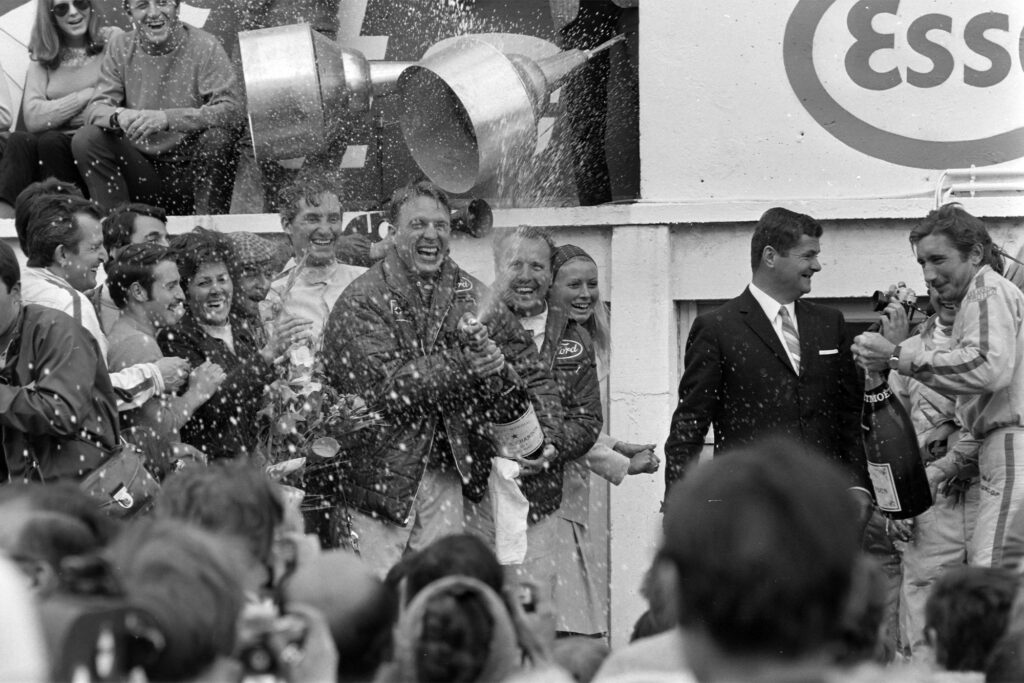
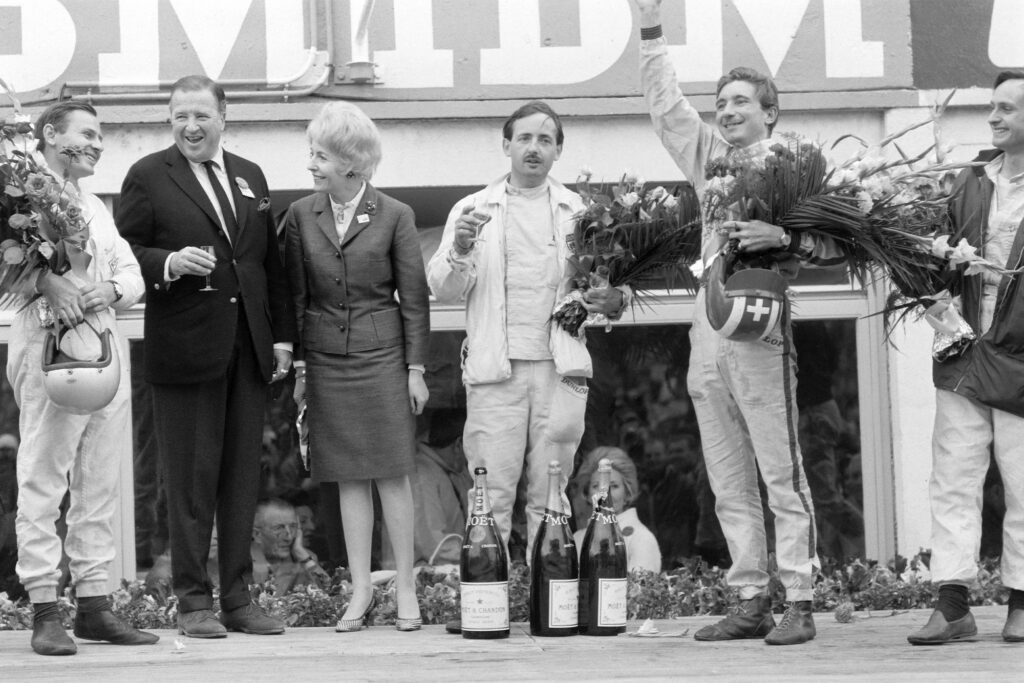
This is a far cry from its humble start at the 1966 24 Hours of Le Mans, the great endurance race around the Circuit de la Sarthe, and a different beast entirely from Formula One. Ford was busy staging its famous beatdown of Ferrari that year, and Henry Ford II, never a man to do things quietly, decided the standard victory bottle wasn’t going to cut it. He called for a Moët & Chandon Jeroboam, a three-litre bottle, because when America wins, America does not sip. Bruce McLaren and Chris Amon hoisted the thing on the podium like a trophy in its own right, and created accidental history. Over in the 2-litre class, Jo Siffert and Colin Davis were handed their own Jeroboam, which had spent its day being jostled around, even shaken, without anyone registering the consequences. Even a hand-fitted Moët & Chandon cork could give up at an inopportune moment, and champagne went everywhere. The fountain of celebratory bubbly was an accident, and the kind of moment a PR team would normally beg everyone to forget.
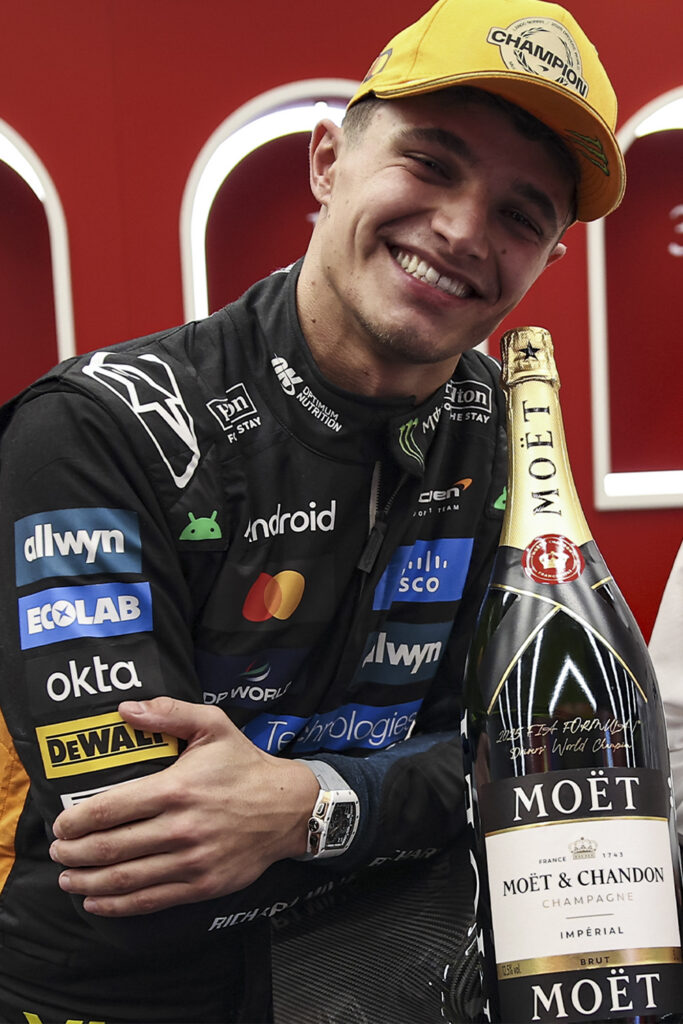
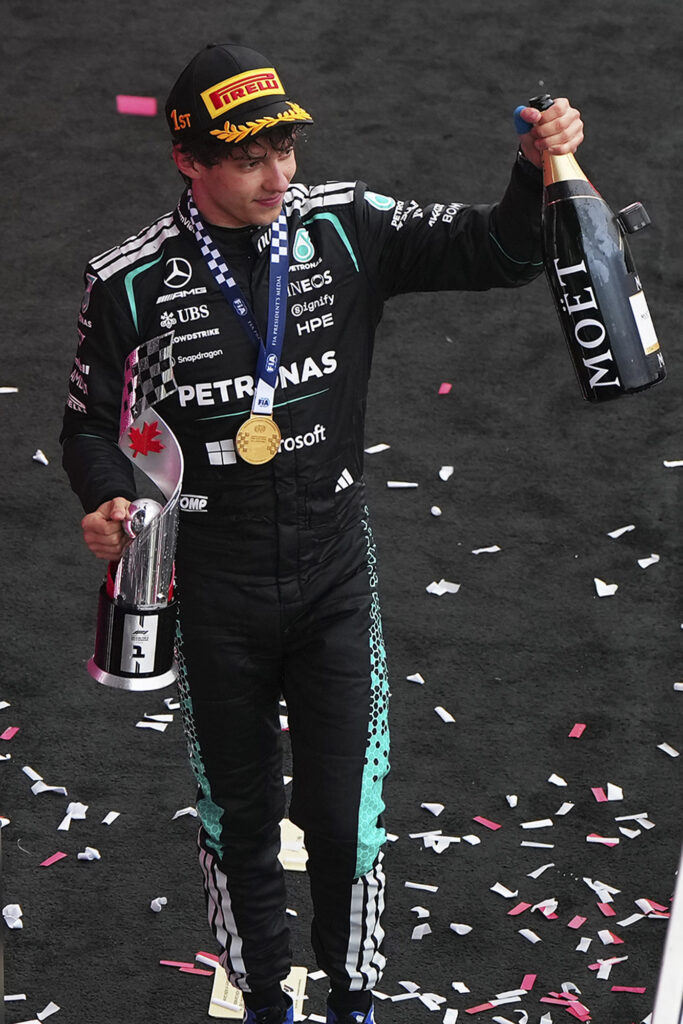
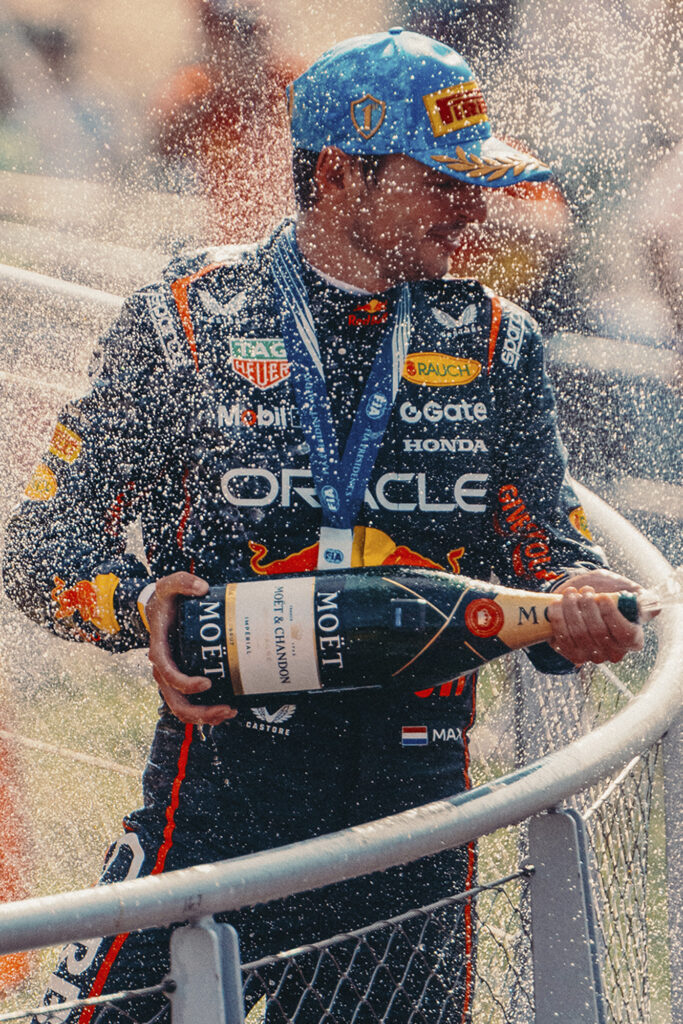
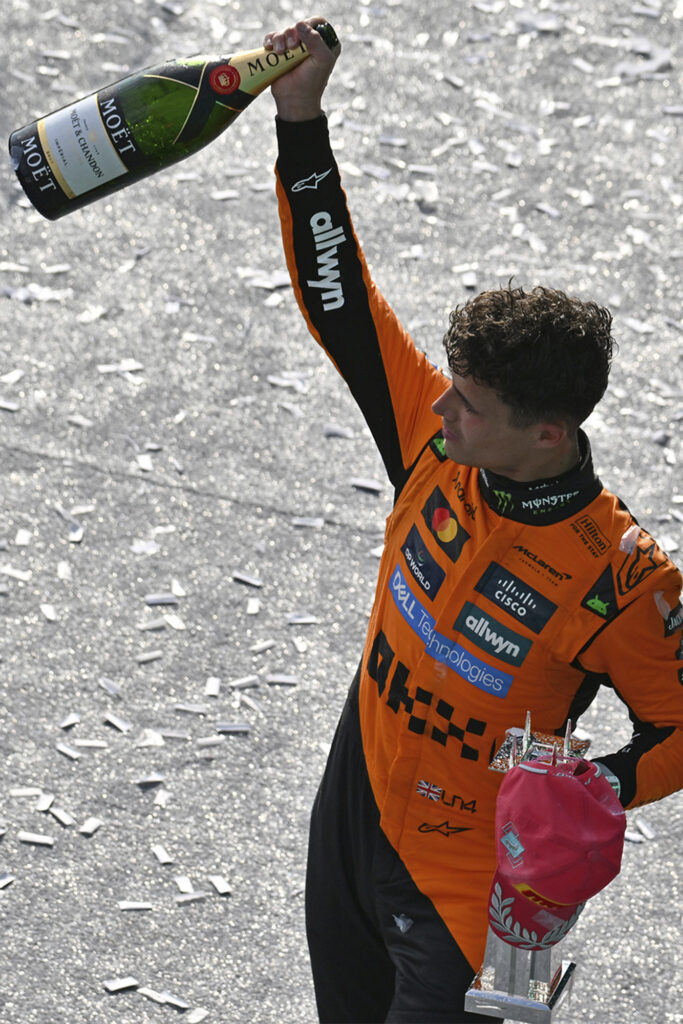
BOTTON: MAX VERSTAPPEN (L), LANDO NORRIS (R).
PHOTOS COURTESY OF MOËT & CHANDON.
But a young driver named Dan Gurney was paying very close attention, and twelve months later, fresh off winning Le Mans 1967 alongside A.J. Foyt, Gurney shook his own Jeroboam on purpose and let it fly into the crowd. What had been a clumsy mishap and what some say is a waste of a beautiful drink became a deliberate, gleeful tradition, and motorsport has never looked back.
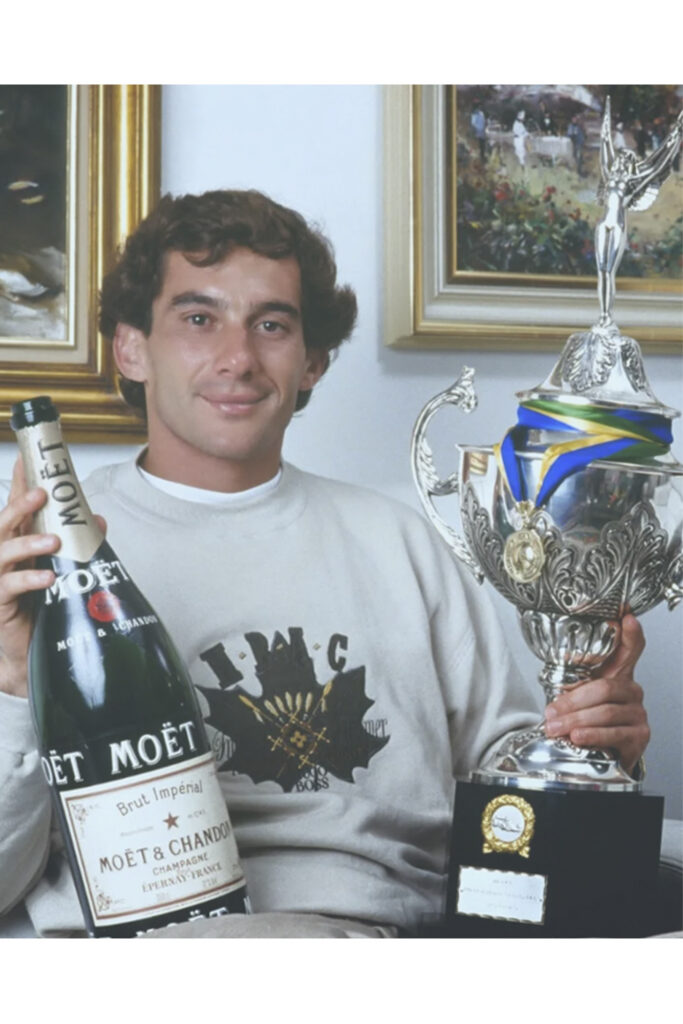
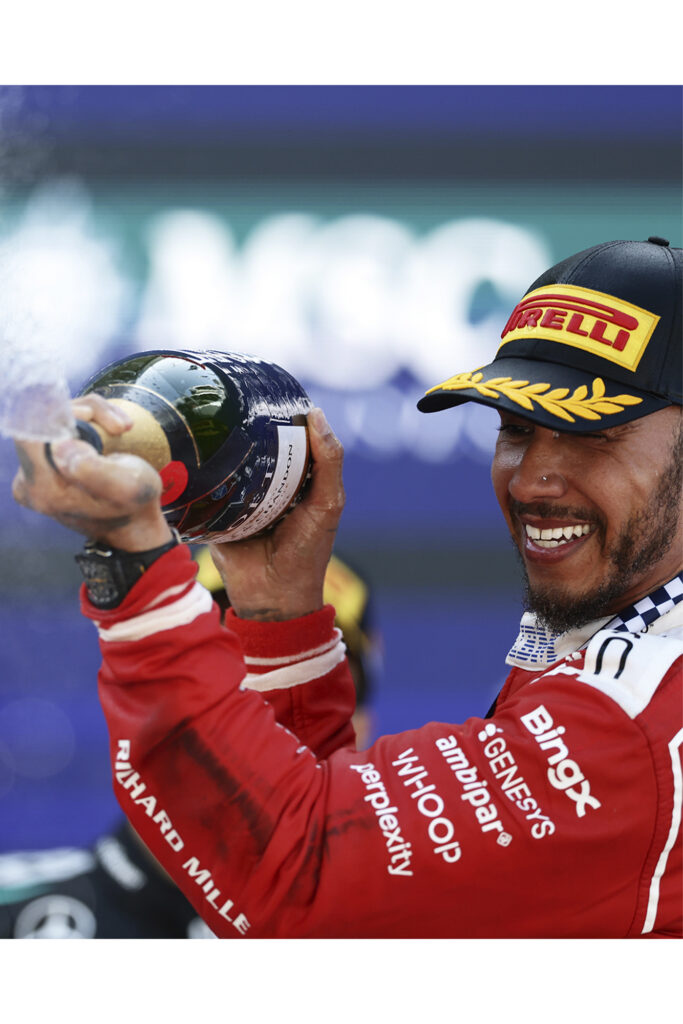
The spray feast crossed into Formula One at the 1969 French Grand Prix, when Jackie Stewart gave it the podium stage it deserved, and it became the sport’s unofficial second trophy ceremony. Legends like Niki Lauda and Ayrton Senna have shaken Jeroboams with the vigour of adrenaline-fuelled happiness. So have Alain Prost, Michael Schumacher, and even today’s young stars like Charles Leclerc and Lando Norris. They have all taken their turn drenching whoever happens to be standing closest, and sixty years on, it remains the one moment in F1 that has nothing to do with telemetry, strategy, or tyre degradation. It is pure, soaked joy, and it photographs beautifully.
PHOTOS COURTESY OF MOËT & CHANDON.
Which brings us to the house behind the bottle. Moët & Chandon, the official champagne of F1, has been making champagne since 1743, long before anyone thought to put a cork under pressure on a podium, or God forbid, shake a bottle on purpose. Based in Épernay and drawing on the largest vineyard holdings in Champagne, the Maison built its name on the dry taste of Brut Impérial, the bottle most people picture when they hear the word champagne, before expanding into the vintage-driven Grand Vintage, the on-the-rocks-friendly Ice Impérial, and the prestige-tier Collection Impériale. Moët & Chandon is now poured in more than 150 countries, which means there is a reasonable chance someone, somewhere, is shaking one open in celebration as you read this. Sixty years after a shaken bottle ruined a tuxedo and stained a driver’s flame-proof overalls at Le Mans, a moveable fountain of champagne proves that the best traditions are rarely the planned ones.
FEATURE PHOTO COURTESY OF MOËT & CHANDON.