It’s tough to improve a good thing. As Nissan’s best-selling model, the Rogue has become a familiar fixture of the crossover landscape. Adding a hybrid seems like a natural evolution, but here’s the thing: Nissan did not need to go this hard with the 2027 Rogue Hybrid.
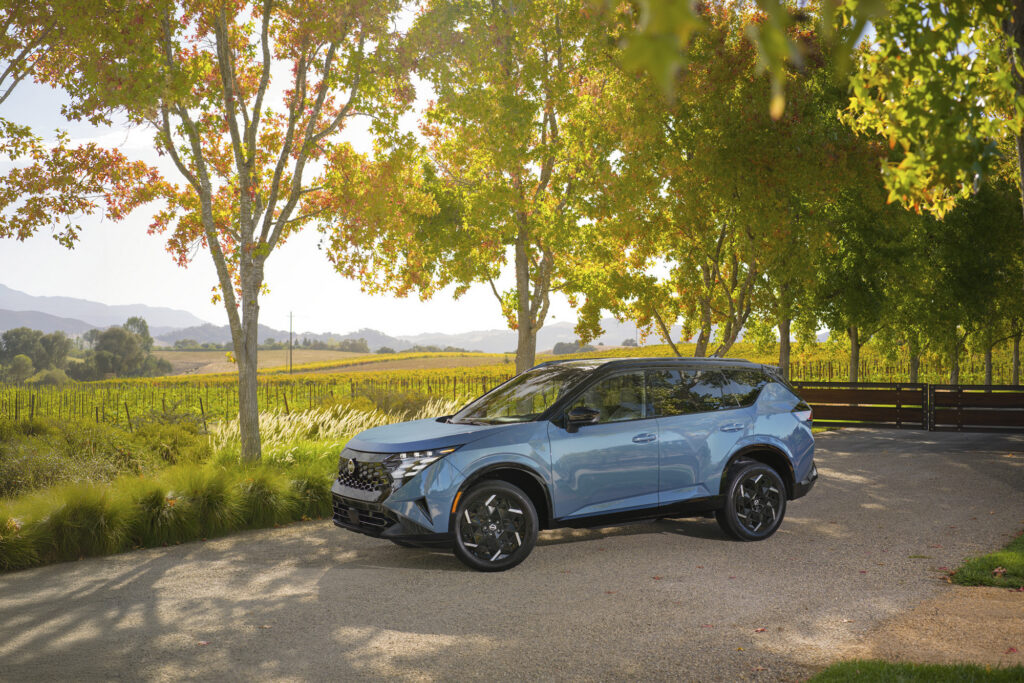
California’s coast is a blend of rugged and refined. Luxury properties line the waterfront, while nearby mountain passes offer rocky ledges, steep grades, and all the twisty roads that come along with them. At no point did the Rogue Hybrid feel out of place or out of breath in Santa Barbara. Based on how it drives, and considering what it can do, it’s a big step forward from past versions and worth putting on your shopping list.
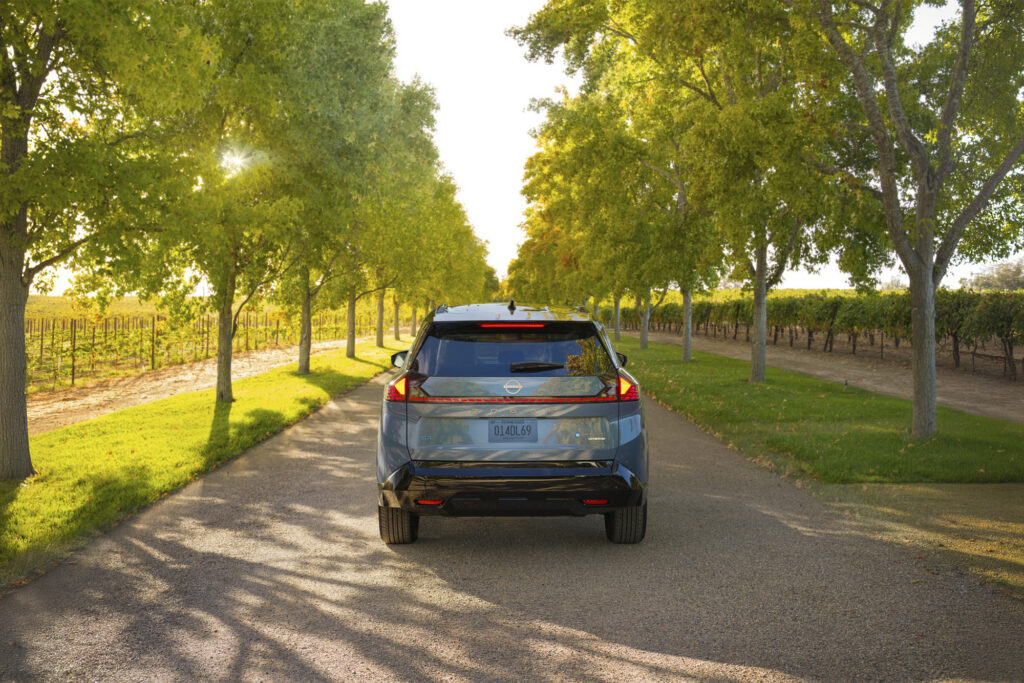
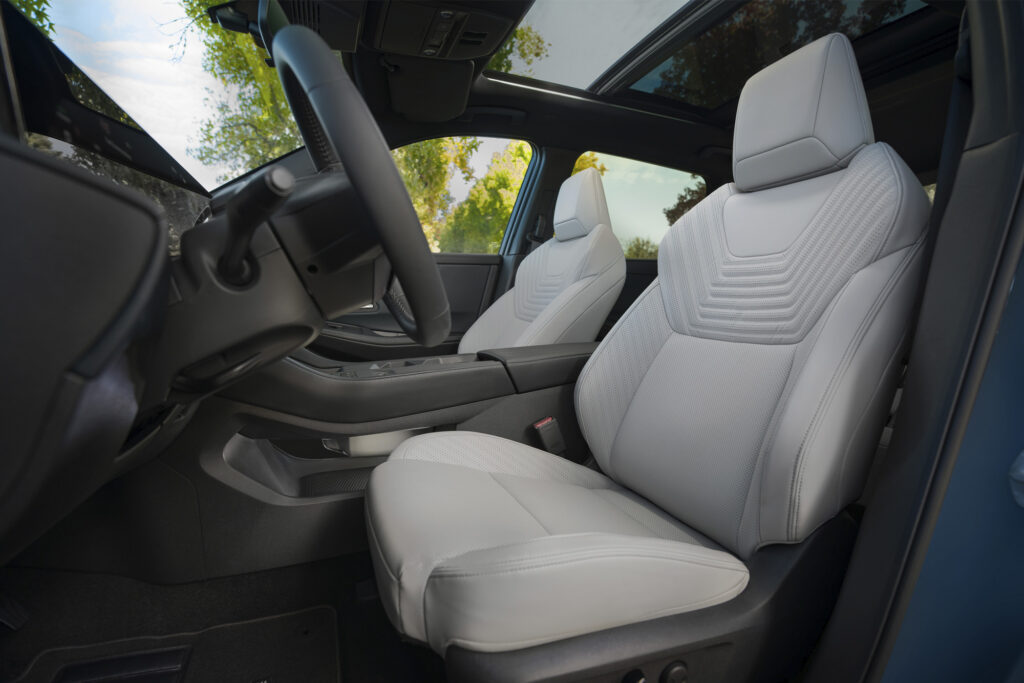
Its practicality hasn’t changed. Its two-row, five-seat configuration leaves plenty of space for cargo, and visibility is excellent. The wide rear-door openings were noticeable and much appreciated. Nissan also highlighted an additional lower LATCH anchor supporting a centre-position child seat.
It’ll do the road trip, the commute, and the school run without breaking a sweat. But hey, it’s 2026, and I expected all of that. What I didn’t expect was how it drives.
Electric Drive, Gasoline Convenience
Unlike a plug-in hybrid, the Rogue Hybrid needs no external charging. Its gasoline engine never drives the wheels. Instead, the engine drives a generator, supplying electricity to the drive motors or replenishing the battery. Generated electricity doesn’t always have to pass through battery storage first, either.
The lithium-ion battery holds just 1.67 kWh, but its job is to act as an energy buffer, capturing energy under deceleration and supplying the motors when needed. Driving range comes from the gasoline in the tank.
There’s a tangible feeling from behind the wheel that electric motors are doing the driving. The instant torque makes it feel punchy at all speeds, and the transitions between the e-POWER system’s operating conditions felt seamless. Going by acceleration, quietness, and handling alone, you could think you were driving an electric car. The difference? Instead of plugging it in, you fill it with gas.
Seems strange, but Nissan has worked it out over two previous generations of e-POWER drivetrains and nearly two million vehicles worldwide. Nissan says its dedicated generator engine achieves 42% thermal efficiency, and that this generation was developed to meet North American demands for sustained highway driving and strong acceleration. Its integrated five-in-one drive unit packages the traction motor, generator, inverter, and two fixed gear sets together.
Behind the Wheel
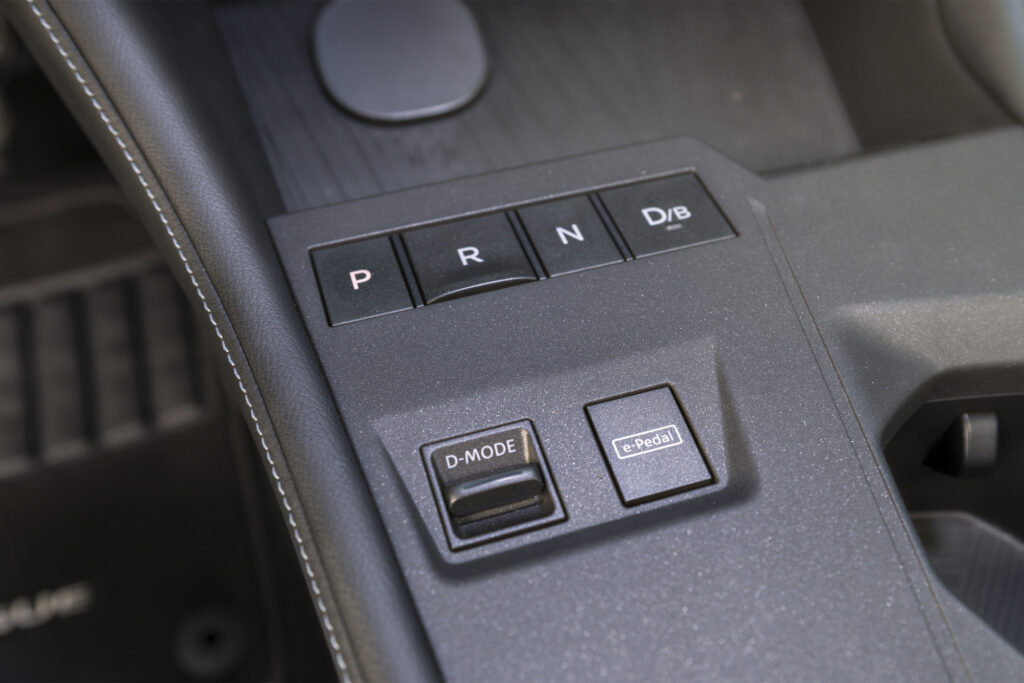
That’s plenty of engineering, but its effect is straightforward. In the winding mountain passes near Santa Barbara, acceleration was quiet and noticeably powerful, with enough oomph to press me back into the seat. It was most impressive uphill, where the Rogue’s low-down electric torque sent it up steep grades with ease. And, yes, it does have a one-pedal driving mode, for those who are accustomed to EVs.
The Rogue automatically controls when its combustion engine runs, favouring conditions where surrounding noise can help mask it. Quietness comes partly from choosing the right moment to generate electricity. Outside the Rogue, the engine was audible, similar to a car cycling through a high idle to power its A/C on a hot summer day. Inside, it wasn’t nearly as intrusive.
Dual electric motors, one front and one rear, provide standard all-wheel drive. There’s no mechanical prop shaft linking the axles, and the motors can act independently.
Braking was strong, too. In a separate demonstration, I tried Nissan’s Smooth Stop, which adjusts braking force in the final moments before the car stops to reduce that familiar, abrupt rebound.
A practiced driver can soften a stop by easing off the brake pedal just before coming to rest, the way a good limo driver does. The Rogue effectively handles that final adjustment for you. It’s noticeable when you’re anticipating it, but feels natural. For passengers who dislike being jostled around, or drivers considering rideshare work, it’s an appealing touch of low-speed refinement.
The View Outside and In
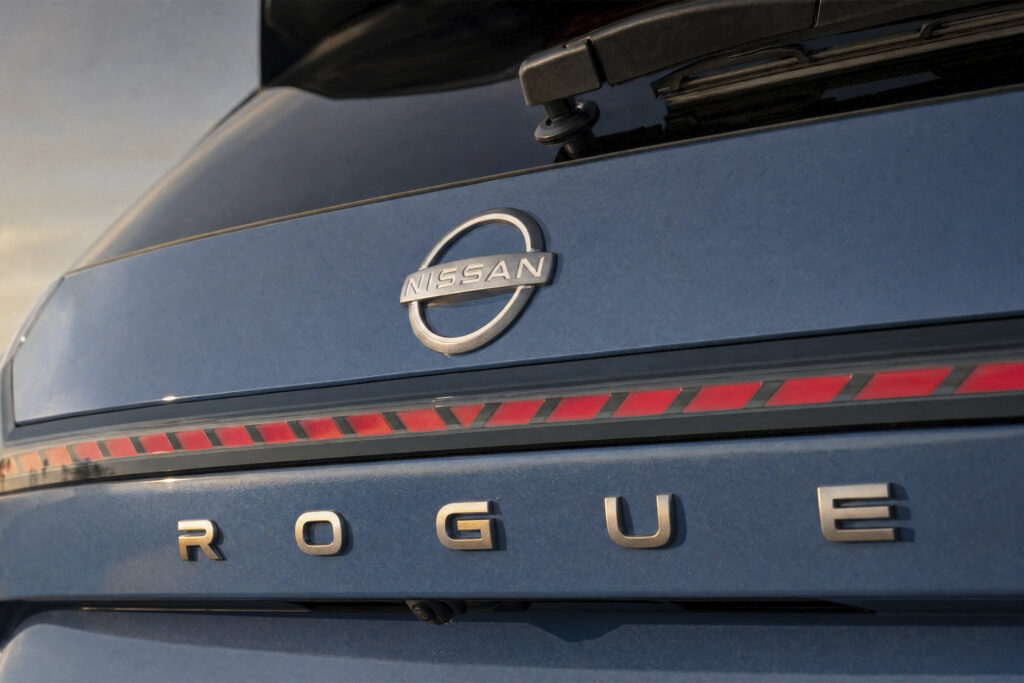
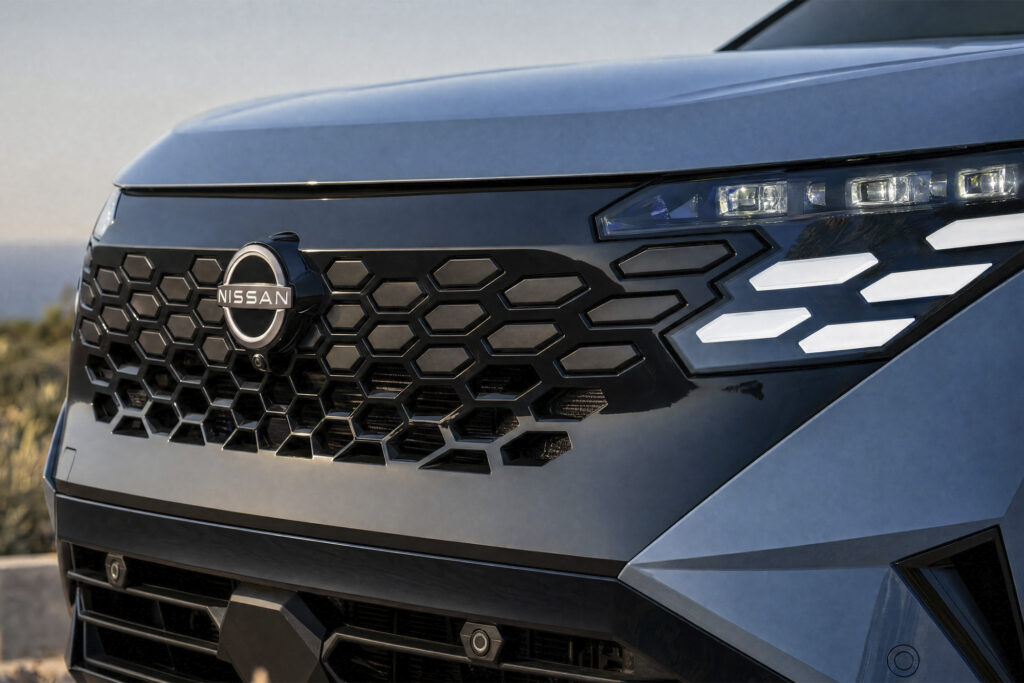
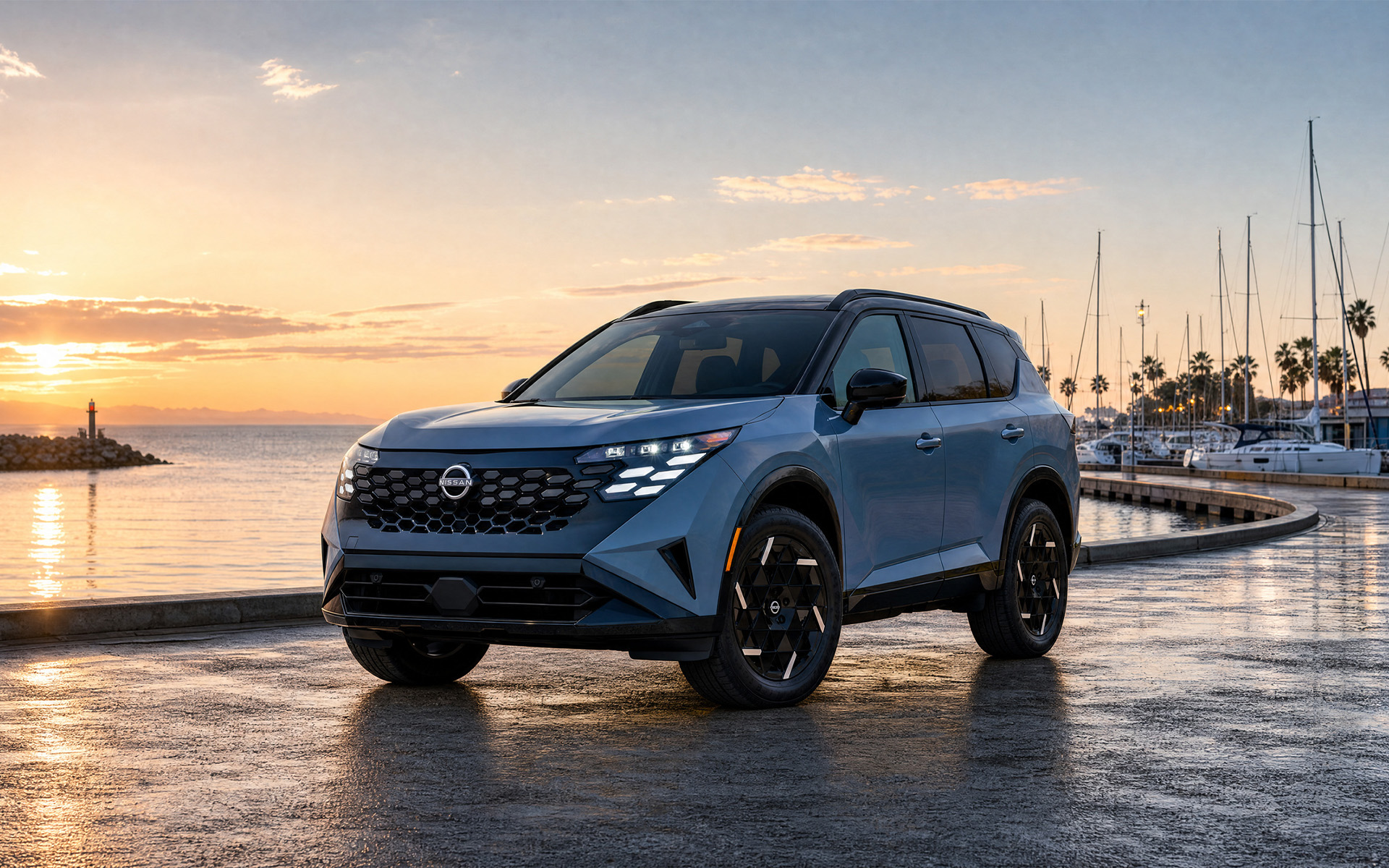
The exterior is a story of two halves. The overall form is sleek and refined: the glass meets the metal body sides cleanly, and the lighting and grille sit neatly within the shape. This was particularly apparent in Horizon Blue Metallic, which had a noticeable shimmer.
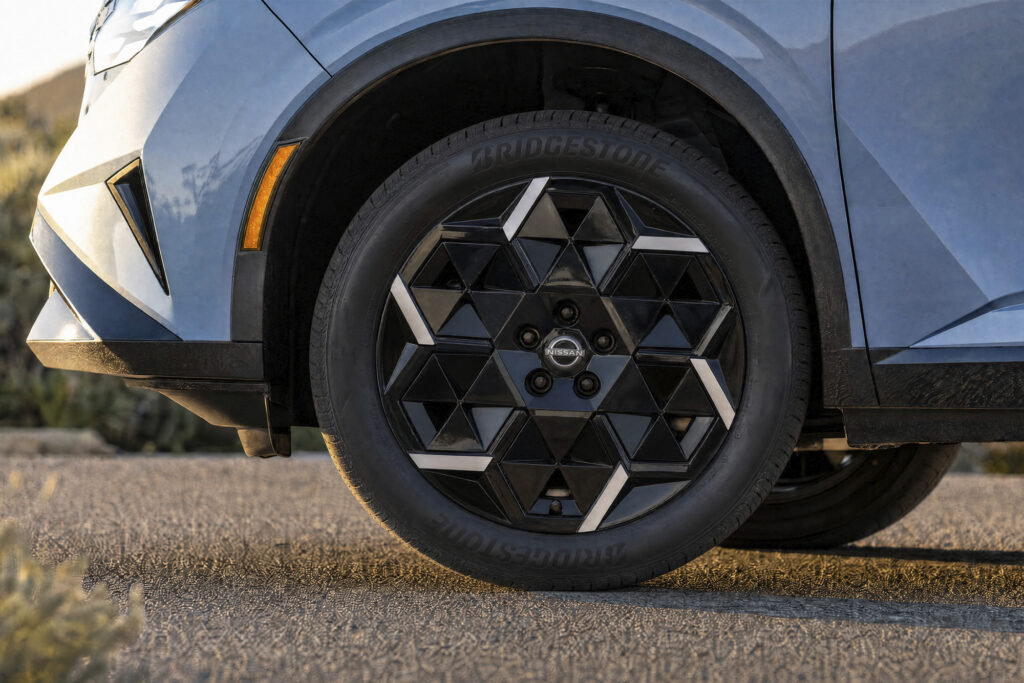
Up close, the geometric details become interesting. It’s at middle distance that the design loses some of that interest and reads more like an ordinary crossover. There’s less for the eye to explore between the clean overall shape and those close-up details.
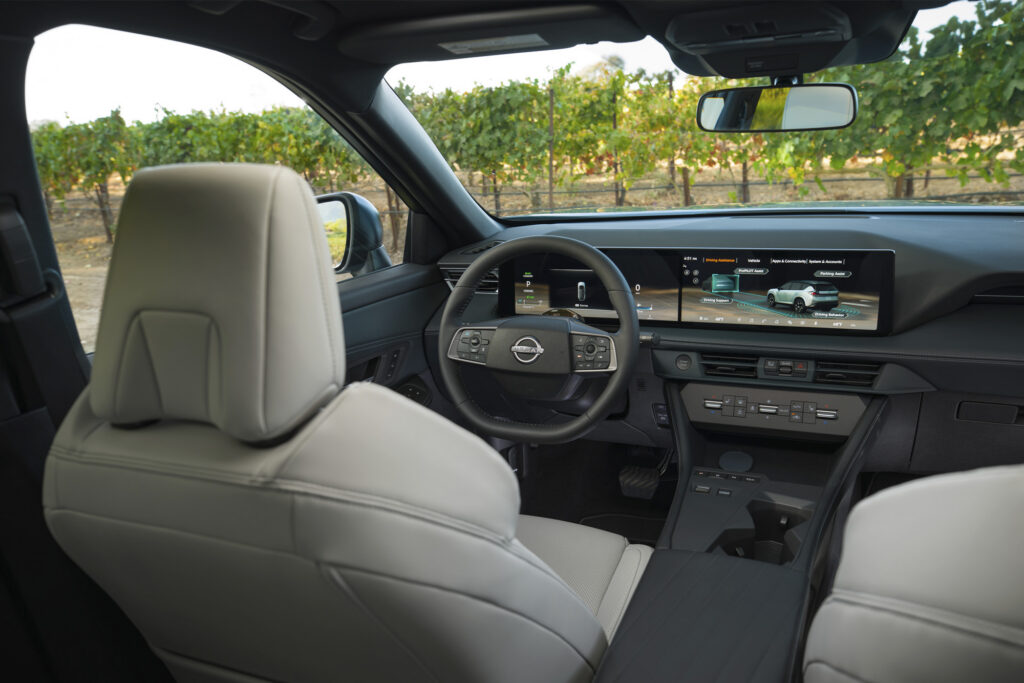
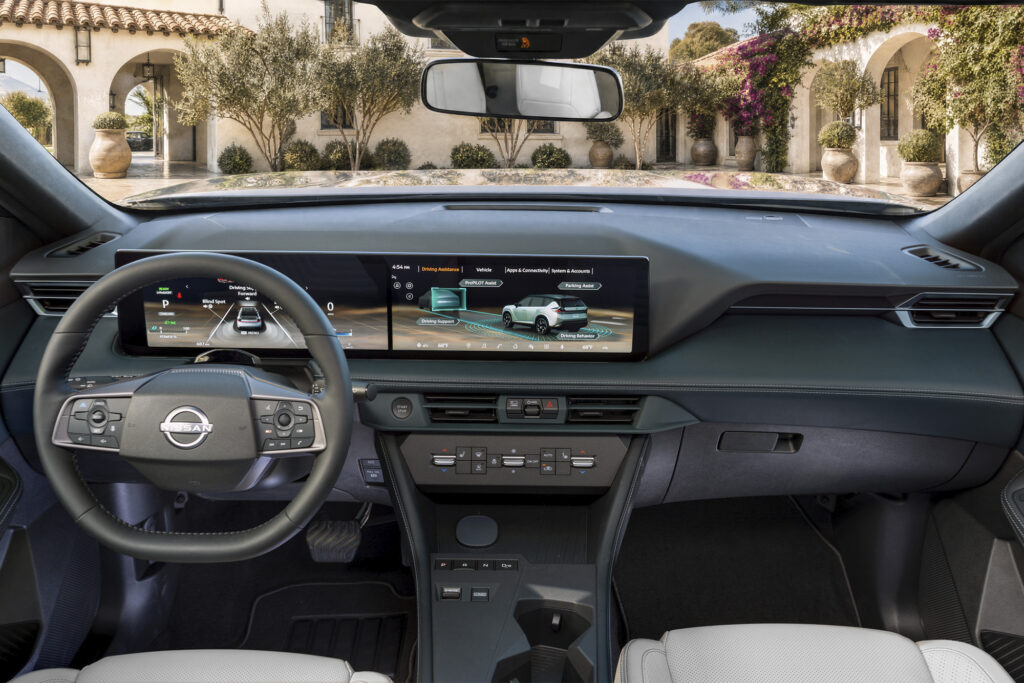
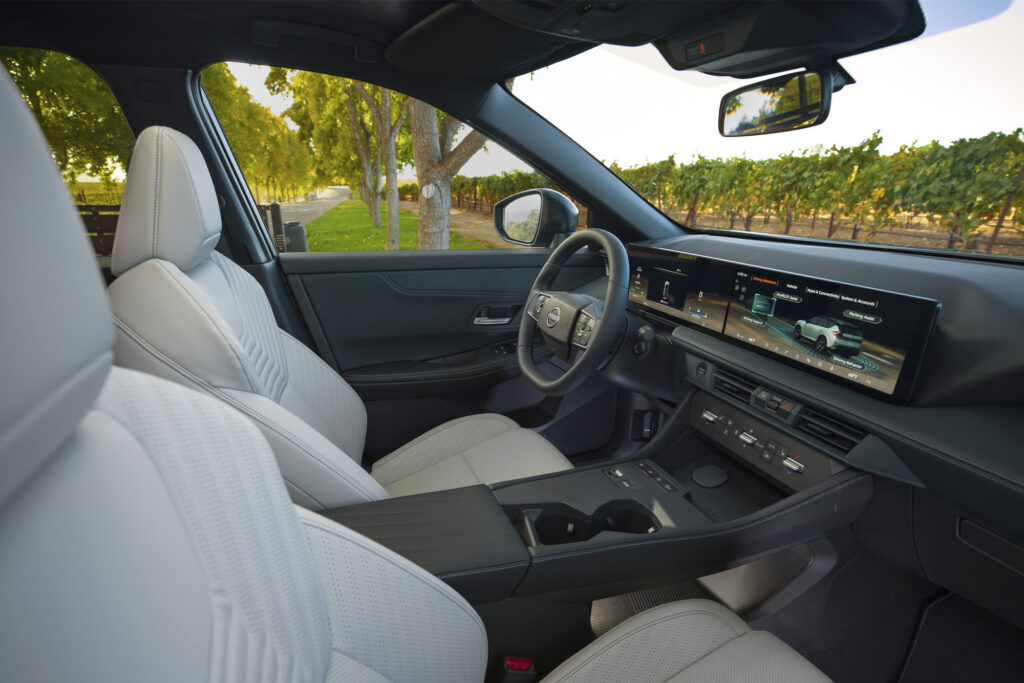
Inside, the Rogue probably has just as much plastic as every other crossover in its class, though it’s much less in your face. The standout is the large padded blue-green section running below the screens and above the physical audio and climate controls. Available dual 14.3-inch displays handle instruments and infotainment, but thankfully, the screens don’t have to do everything. Dedicated climate and audio buttons work alongside steering-wheel controls, and the combination significantly reduced the time it took to feel at home.
The Around View Monitor was another welcome feature. Its transparent-vehicle view makes it easier to see what’s around the Rogue using the cameras. Cameras are never a substitute for our glorious human eyes, but as a backup, these are impressive.
The Rogue also comes with Nissan’s ProPILOT Assist driver-assistance suite. I didn’t get the chance to fully assess its lane-keeping or stop-and-go assistance during this drive.
Everyday Appeal
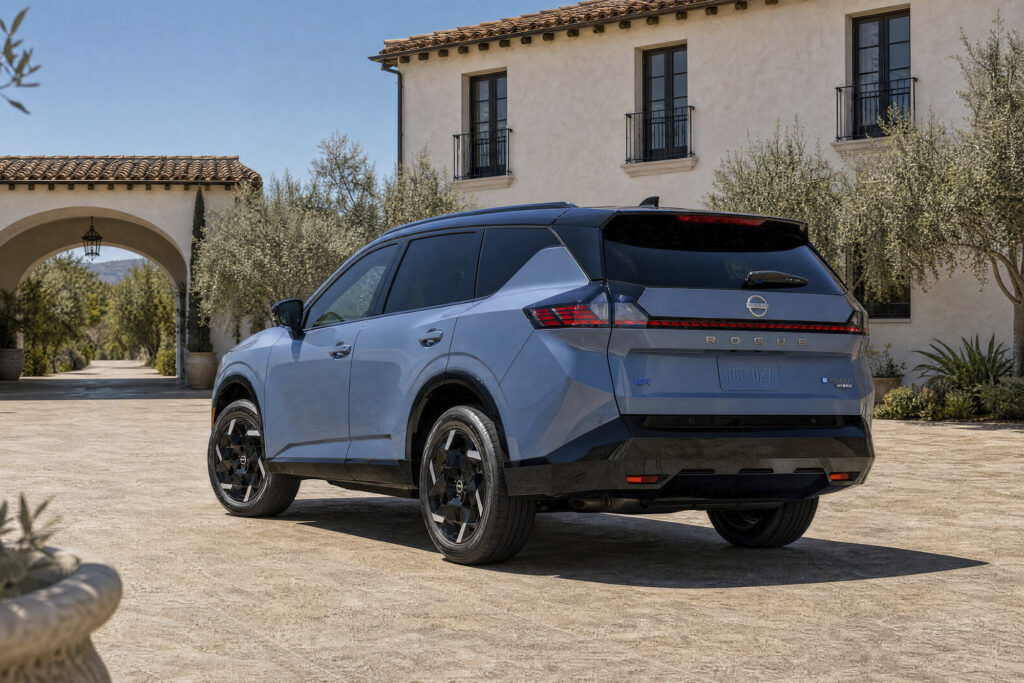
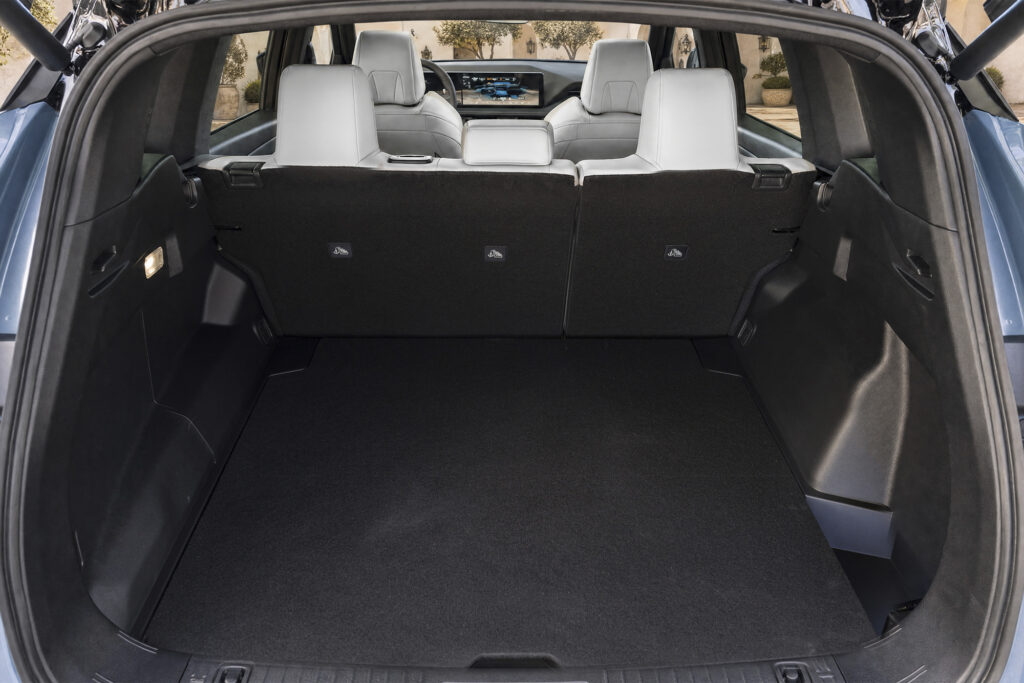
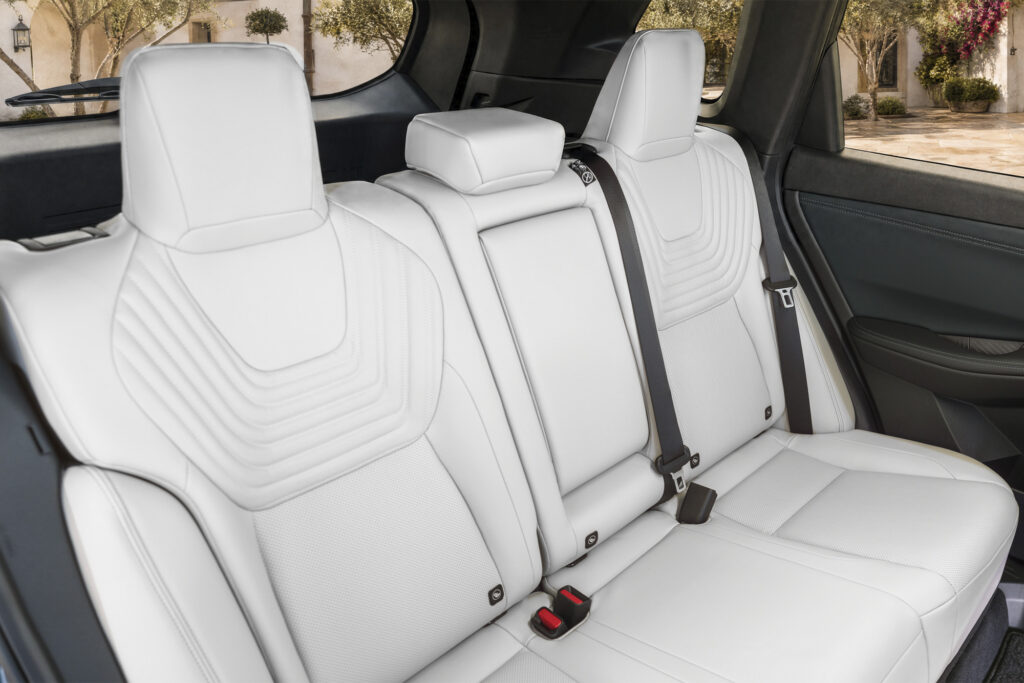
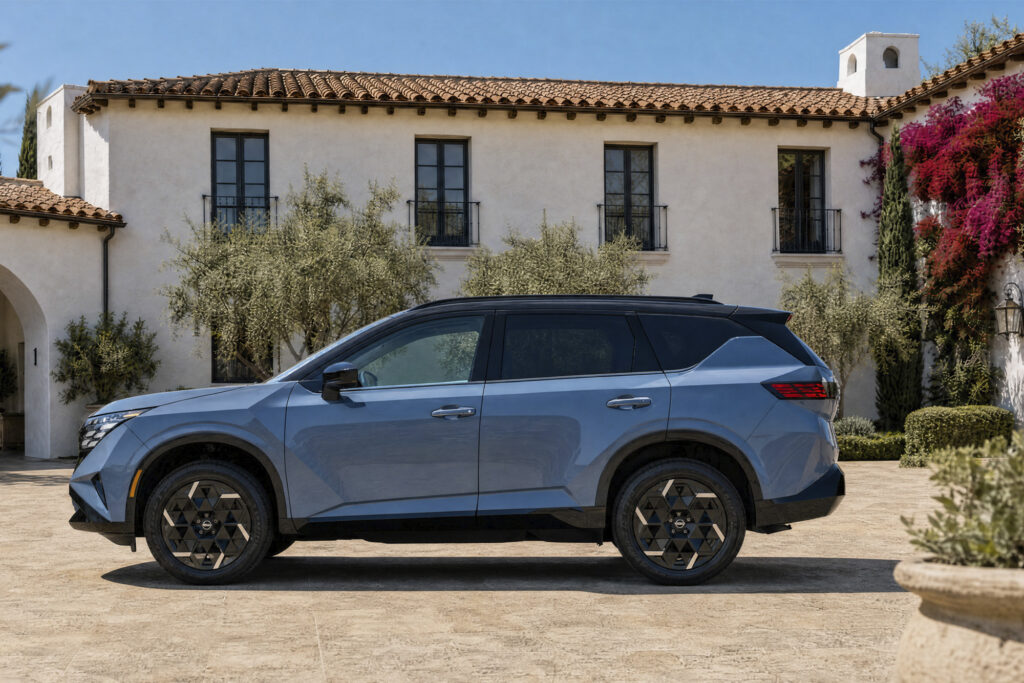
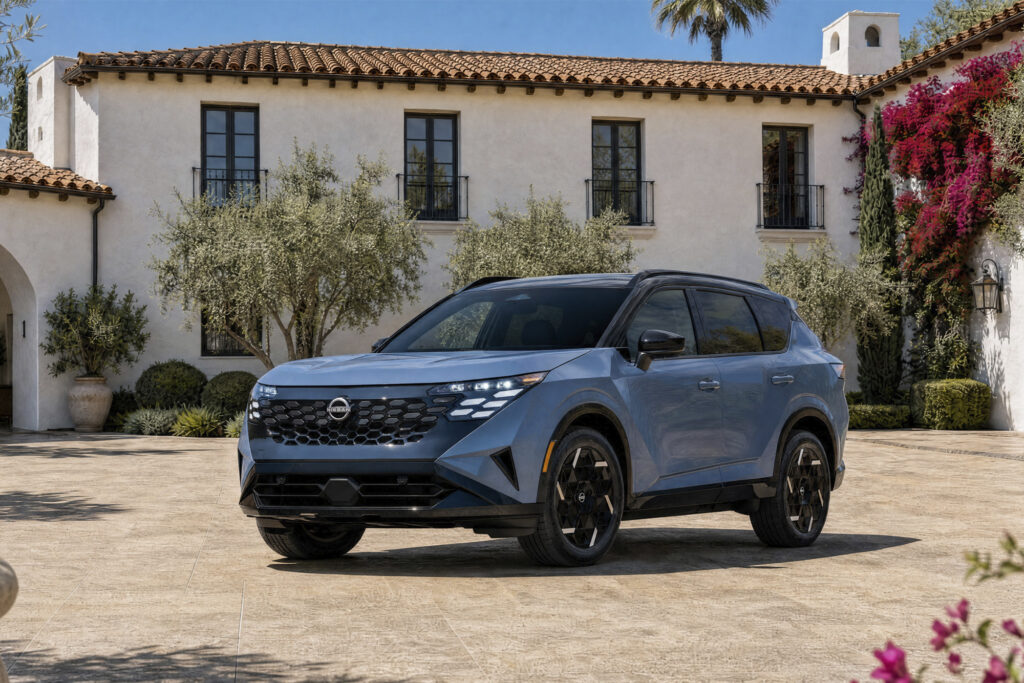
Nissan had Toyota RAV4 Hybrids available for comparison. Back to back, the Toyota felt more utilitarian and less refined. The Rogue was a vehicle I’d rather spend time in every day, both for the cabin and the overall driving experience.
Nissan lists Canadian pricing from $39,998 for the SV AWD, with the SR I drove at priced at $47,998. Canadian availability is expected to begin with the SR in November.
For fuel consumption, Nissan presented 6.2 L/100 km combined for the SR; final Canadian numbers are pending.
The Rogue’s combination of power, refinement, and everyday utility makes it compelling. You can geek out over how its drivetrain works, try to maximize efficiency, or enjoy a full-throttle rip on twisty roads. But I suspect the new Rogue Hybrid will be most at home — and appreciated — when making the everyday drive so much nicer.