A decade ago, if you wanted an integrated bracelet watch — that is, a 1970s-style sport watch where the bracelet is an integral piece of the design — you wouldn’t have had many choices. The AP Royal Oak. The Patek Nautilus. The BVLGARI Octo. The Girard-Perregaux Laureato. Today, however, anyone looking for one faces a truly staggering array of options, from the cheap and cheerful Citizen Tsuyosa to the delightfully excessive IWC Ingenieur Perpetual Calendar. In light of this abundance, we decided to challenge ourselves to choose just one and make a case for it over all others. Here’s how that went.
Vacheron Constantin Historiques 222
Jeremy Freed, Watch Editor

Vacheron Constantin Finally Re-Released the 222 in Steel
PHOTO COURTESY OF VACHERON CONSTANTIN


Vacheron Constantin Finally Re-Released the 222 in Steel
PHOTO COURTESY OF VACHERON CONSTANTIN

Vacheron Constantin Finally Re-Released the 222 in Steel
PHOTO COURTESY OF VACHERON CONSTANTIN

Vacheron Constantin Finally Re-Released the 222 in Steel
PHOTO COURTESY OF VACHERON CONSTANTIN
What can I say? I’m a simple man with simple tastes. In the pantheon of great 1970s sports watches, the Vacheron Constantin 222 is usually considered a firm third place behind the Nautilus and Royal Oak, and there are a couple of reasons for this, both of which only make it more desirable in my eyes.
First, it came out in last, in 1977, in honour of Vacheron Constantin’s 222nd anniversary that year (see what they did there?) While 222 is an impressive birthday, calling the watch the 222 still strikes me as such a funny, deeply 1970s move that I like to imagine grew out of the brand very much needing to release a modern watch, and being unable to wait three years for its 225th anniversary to do it. Regardless, it works: such an unconventional design doesn’t befit a conventional anniversary year.
Second, it was designed by Jörg Hysek. While many of Gerald Genta’s designs, including the Royal Oak, Nautilus, and Ingenieur, are enshrined among the icons of 20th-century watchmaking, Hysek has yet to receive his due. I believe it’s coming. Hysek did his best work in the 1990s, and as the appreciation for that decade’s avant-garde designs continues to grow, I believe Hysek’s creations like the Breguet Marine, the Seiko Kinetic Arctura, and the TAG Heuer Kirium will eventually be recognized as beautiful examples of late-20th century design.


But back to the 222 and why I’d choose it over every other integrated bracelet watch on the planet. For one thing, after more than 270 years in the game, Vacheron Constantin’s horological clout is unequaled. The 222 is far from the most technically impressive specimen in their catalog, but it embodies centuries of know-how and heritage, and I appreciate that.
Then there’s its size. Integrated bracelets are notorious for wearing larger than their non-integrated brethren, and as a small-wristed gentleman, they all tend to look enormous on me. For that reason, and for reasons of historical accuracy, I appreciate that Vacheron Constantin resisted the urge to upsize the 222 and re-released it in its original “jumbo” 37mm case diameter. Likewise, at 8mm thick, the case’s slim profile makes it all the more wearable. Which leaves us with one remaining question: Steel or yellow gold? My answer: Why choose just one?
Jaeger-LeCoultre Master Control Chronomètre
Justin Mastine-Frost, Director of Digital Content
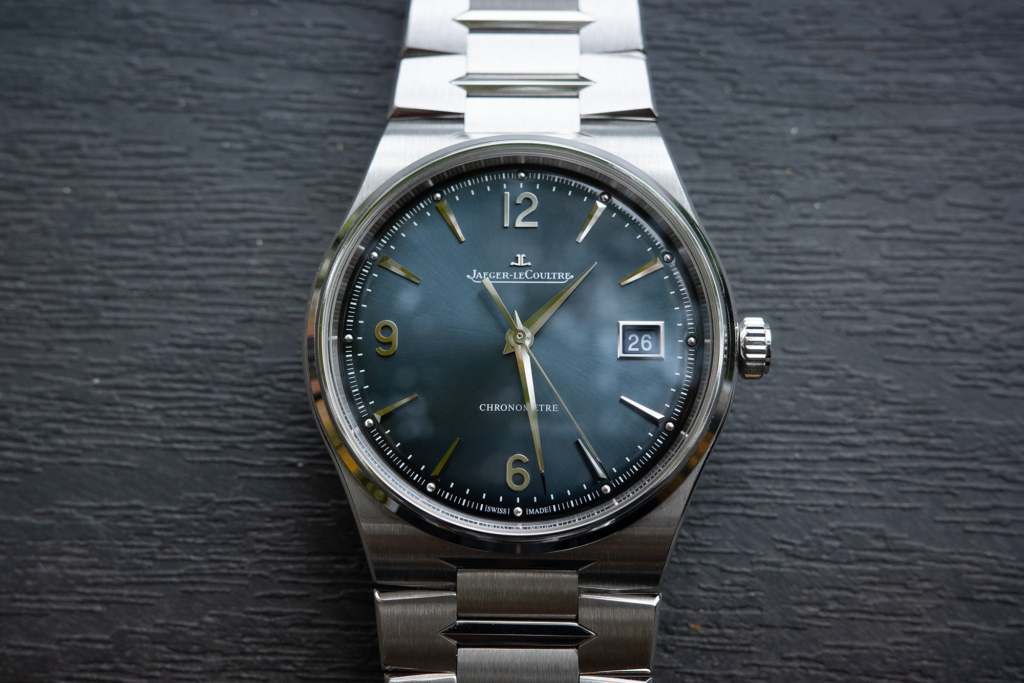
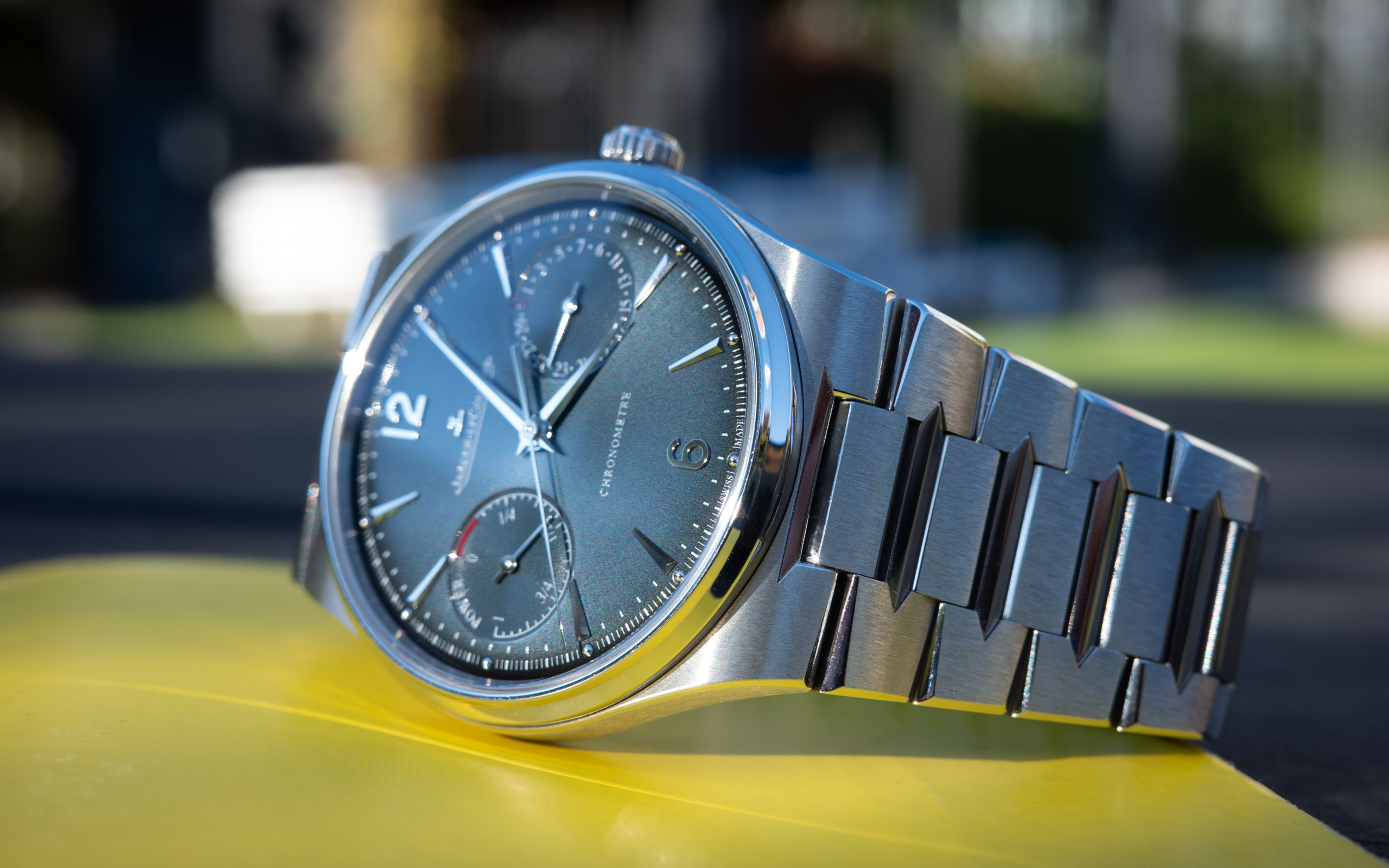
While I’m wholly supportive of Jeremy’s selection above, knowing the rich history of the 222 is very difficult to ignore and also agreeing that its “less hyped than Patek & AP” status is an added selling feature, my pick has to be this 2026 release from a brand long known as the watchmaker’s watchmaker. Sure, I’ve been a fan of Jaeger-LeCoultre for some time now, and a past owner of a couple of their watches, but right from the first glance I knew the new Master Control Chronomètre was something special.
I’m a hard sell on the integrated bracelet category to begin with, as lingering damage after a wrist surgery in 2016 has left me a touch more sensitive to both the fit and mass of watch bracelets in general. Thus, bracelets that are either overly hefty or lacking in articulation points are immediate non-starters. Seeing the slender profile of the MCC’s case and the design of its bracelet links I knew my concerns were assuaged. The watch is offered in three configurations — one reference with time and date, one with a power reserve indicator and date, and the top-shelf perpetual calendar — and the thickest of the trio is only 9.2mm thick.
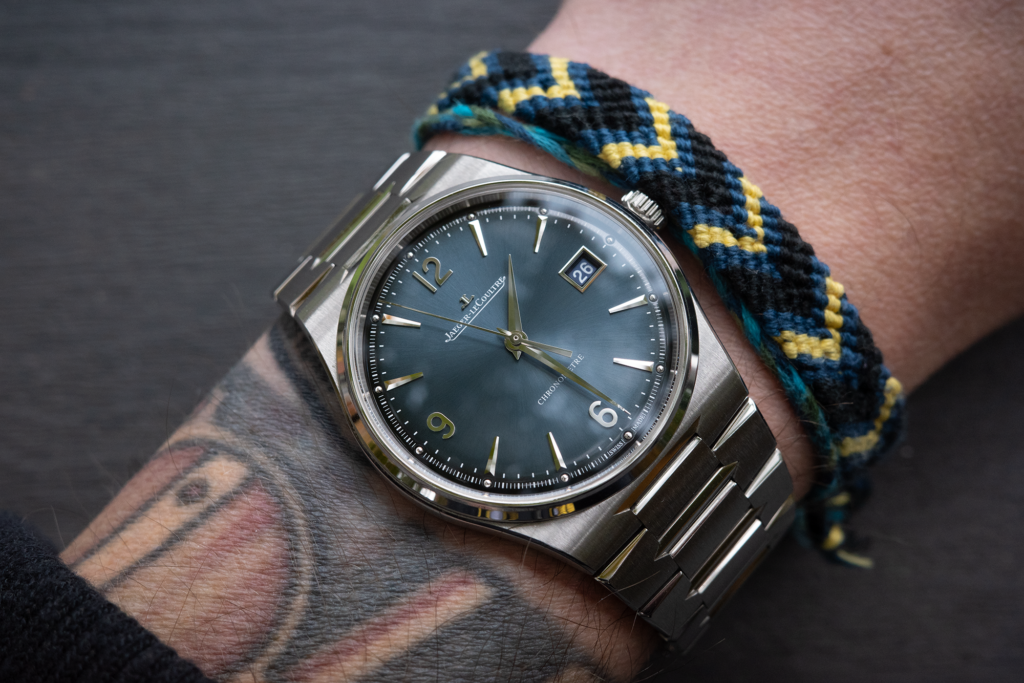
On the wrist, these watches simply melt onto you like a second skin rather than a bulky accessory. The proportions are just right, and each variant boasts exceptional legibility. To me, though, it’s all in the bracelet. The design of the links is as charming as it is original; much as I dig through my memory I can’t think of another bracelet that this reminds me of. Also, going back to the watchmaker’s watchmaker claim, Jaeger-LeCoultre did something really smart with these Master Control Chronomètre bracelets. The parts that looks like a polished centre link are actually screwed into the main links, allowing them to be removed for re-polishing should an owner wish to remove past scuffs and scratches.
Unlike Jeremy’s conundrum deciding over gold and steel (the MCC collection is also offered in rose gold with chocolate brown dials), choosing the steel reference is an absolute no-brainer. If I had my druthers it would be the perpetual calendar without question, setting me back a paltry $63,500, but my inner pragmatist would likely nudge me back to the simple time and date reference and its more modest $19,500 sticker price.