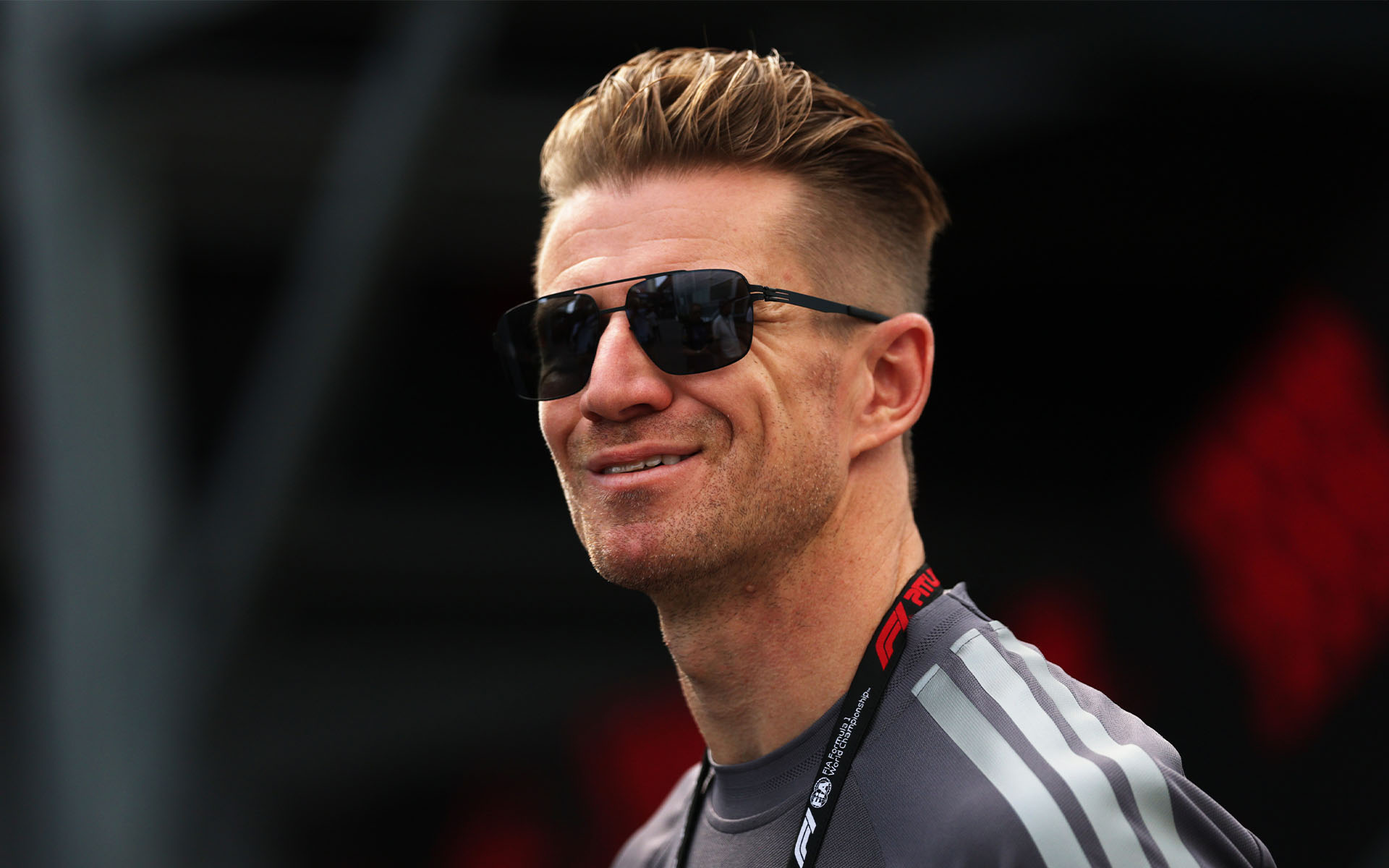
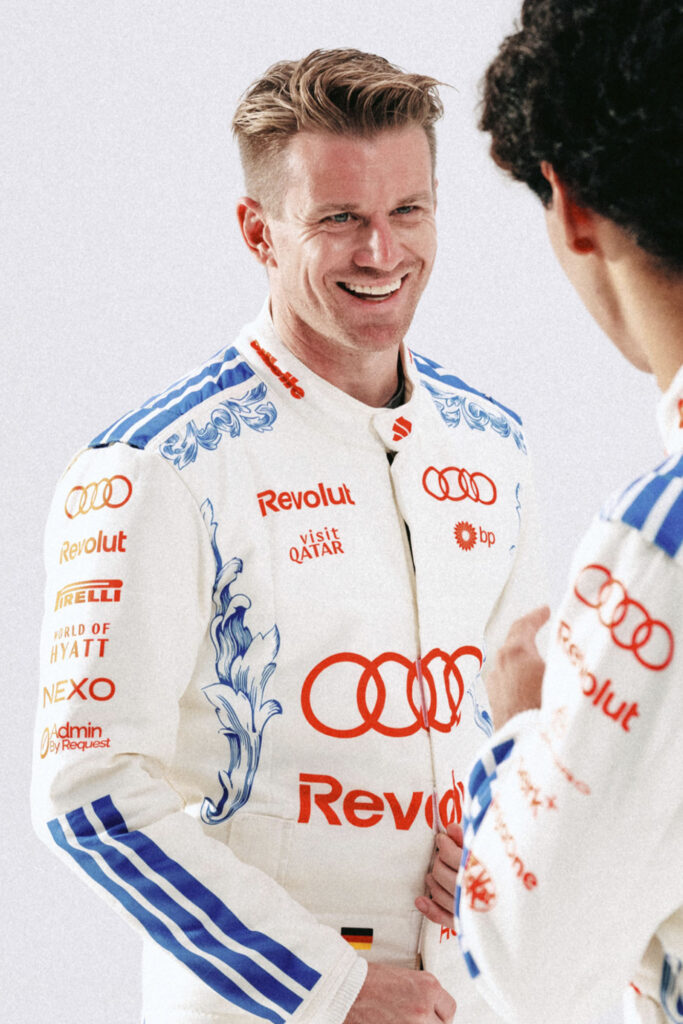
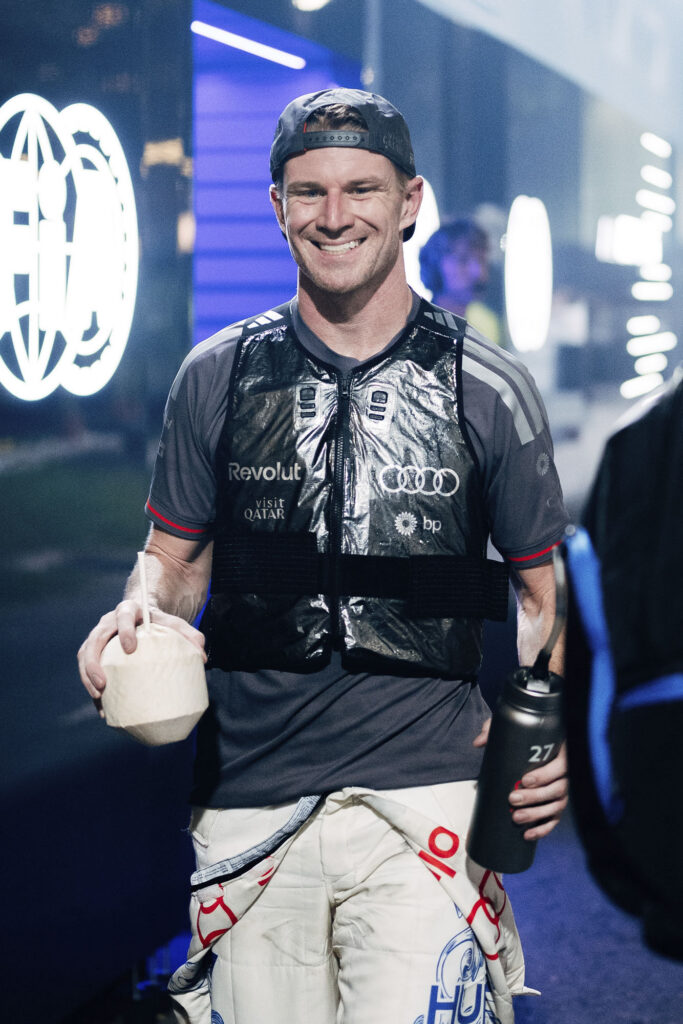
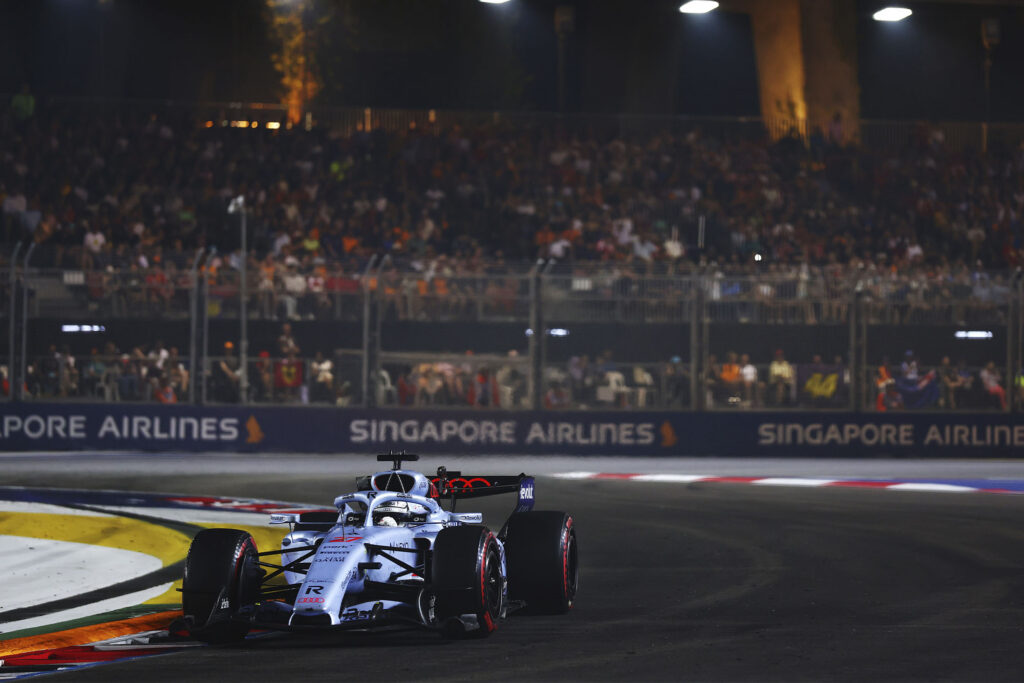
In the midst of a whirlwind weekend at the Formula 1 Singapore Grand Prix, we sat down with Audi driver Nico Hülkenberg’s manager, Raoul Spranger, to talk about the life of an F1 driver.
Hulkenberg is an F1 veteran; it’s been 16 years since he first raced for Williams, but in 2026 he’s moving into uncharted territory as one of two drivers for Audi’s new Formula 1 team. “Hulk,” as he’s known, is one of just 22 people on the planet who get to race an F1 car on any given weekend. It’s a dangerous and demanding job, certainly not quite as devil-may-care as Brad Pitt made it look in the Hollywood version of F1.
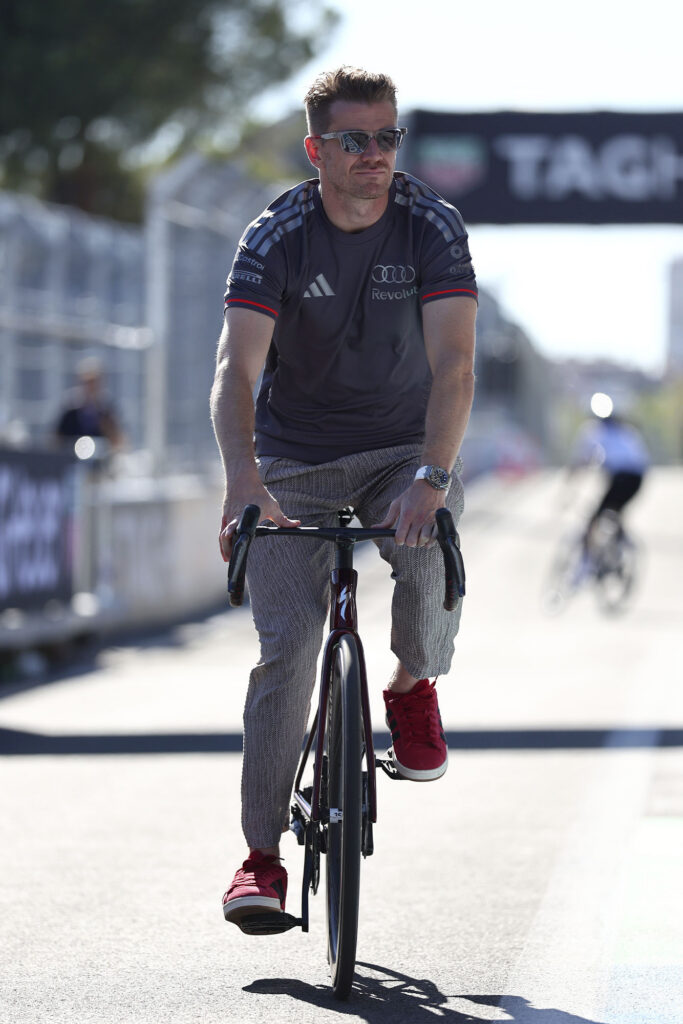
As Hulkenberg’s manager — Spranger prefers “wingman” — it’s his job to ensure his driver has everything needed to operate at his peak, and nothing he doesn’t. Spranger settled into a high-top table outside Audi’s paddock base to talk about the move to a works-team project, the unique expectations that come with representing Audi and how fatherhood has affected the F1 driver.
SHARP: What made Hulkenberg’s move to the Audi Revolut F1 Team such a significant transition?
Raoul Spranger: It was a bigger change than simply driving a different car. He was joining a works-driver project and working with more than 1,000 people. It takes time to get to know everyone, understand the processes and improve them.
What does your role as Hulkenberg’s manager look like as the Audi team grows?
I call myself a “wingman” because I don’t like the “manager” label. Nico and I have worked together for eight years, and the relationship is built on trust. I try to keep distractions away so he can focus on performance. The job is a mix of many small things: social media, talking to journalists and the team, and making sure the details are in place.
“People are getting more confident, they like working and pushing together, and you can see a lot of smiles. Everyone is getting hungrier to improve.”Raoul Spranger
How has his life and routine changed day to day since joining Audi?
He is based in Monaco, but he spends much more time at the team’s headquarters in Hinwil [Switzerland] and Neuburg [Germany] now — to understand what’s happening at both factories and to work in the simulator. He’s German and also likes being back in Germany for work.
How has the team itself changed? Audi bought out the old Sauber squad, and has been pumping it full of money and personnel with a clear goal of winning a world championship by 2030. It’s ambitious.
It was a smaller team two years ago. It grew last year, and now we’re pretty big. The team is capable of running these demanding weeks. People are getting more confident, they like working and pushing together, and you can see a lot of smiles. Everyone is getting hungrier to improve.
Does representing Audi bring more pressure for him, as both a driver and an ambassador for the brand?
I think so. If you represent Audi, you represent the brand, both factories and probably more than 80,000 employees. It’s different from representing a race team without that scale behind it. We talk about it. And I try to understand whether it’s weighing on him, so we can keep as much pressure away from him as possible.
What is that pressure you’re trying to keep away from the driver? There’s obviously the pressure to perform, to compete, but what else?
It’s the fact that so many people are behind him and watching. People are emotionally involved in the project. That can create pressure, but it’s also great to see how connected people are to it.
What were your expectations for Hulkenberg’s first year with Audi?
When Audi showed the R26 F1 car design in Munich last November, of course we hoped the car would be a rocket ship. But after testing in January and February, we understood it was a long-term project. Building an engine, gearbox, hydraulic system and a car around it is complicated.
We can’t say we’re happy with everything, but we’re satisfied with how we’ve developed through the year and that we can fight for points every weekend. Nico is smiling more because he sees we’re going in the right direction.
One of the biggest changes in Hulkenberg’s life was becoming a father. You’ve been working with him before and after that shift. How did that change him?
I was surprised, because he can be really impatient. I wondered how that would work, but his little girl has made him more patient. Overall, I think he’s found a better balance. Before, he had different purposes in life; now he’s committed to being a Formula 1 driver and a family man. That gives him clear guidance about what to focus on. I think he’s a better driver these days.
This interview has been edited and condensed for length and clarity.