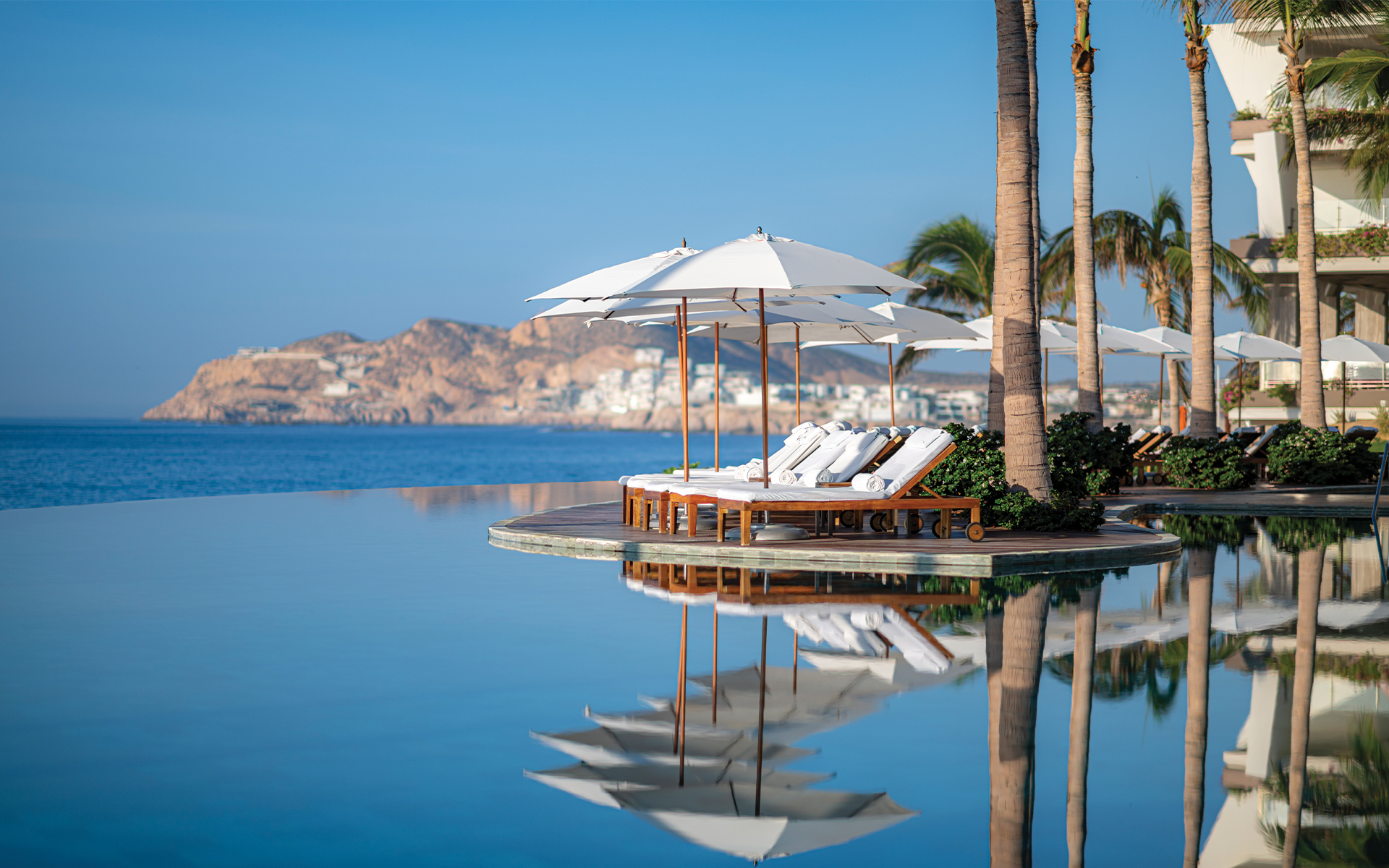
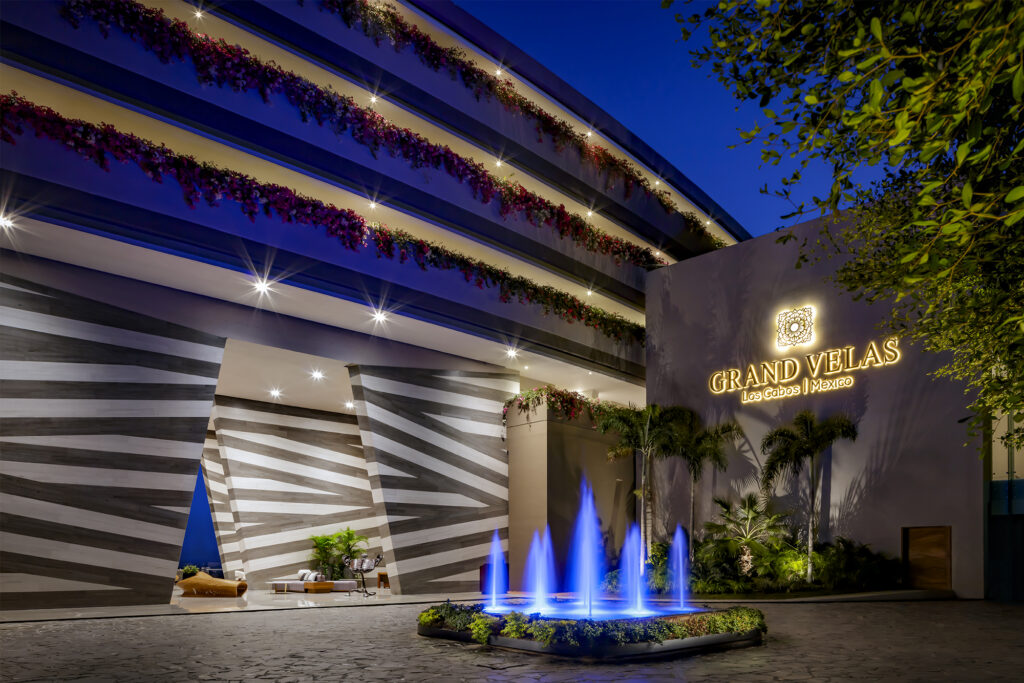
When you travel with a small child, it does not take long to discover what kind of vacation you are going to have. Will you be able to relax, or have you simply moved the logistics of parenting to somewhere less familiar? For me, the answer came shortly after arriving at Grand Velas Los Cabos, along with the distinct relief of realizing that this would, in fact, be a luxury vacation for the parents too.
My husband and I had travelled to the southern tip of Mexico’s Baja California peninsula with our four-year-old son, where a private SUV was waiting to take us from the airport to several days beside the Sea of Cortez. Travelling with a preschooler still requires its usual inventory of snacks, schedules and contingency plans, but Grand Velas seemed designed to anticipate many of those concerns before they had a chance to become problems.
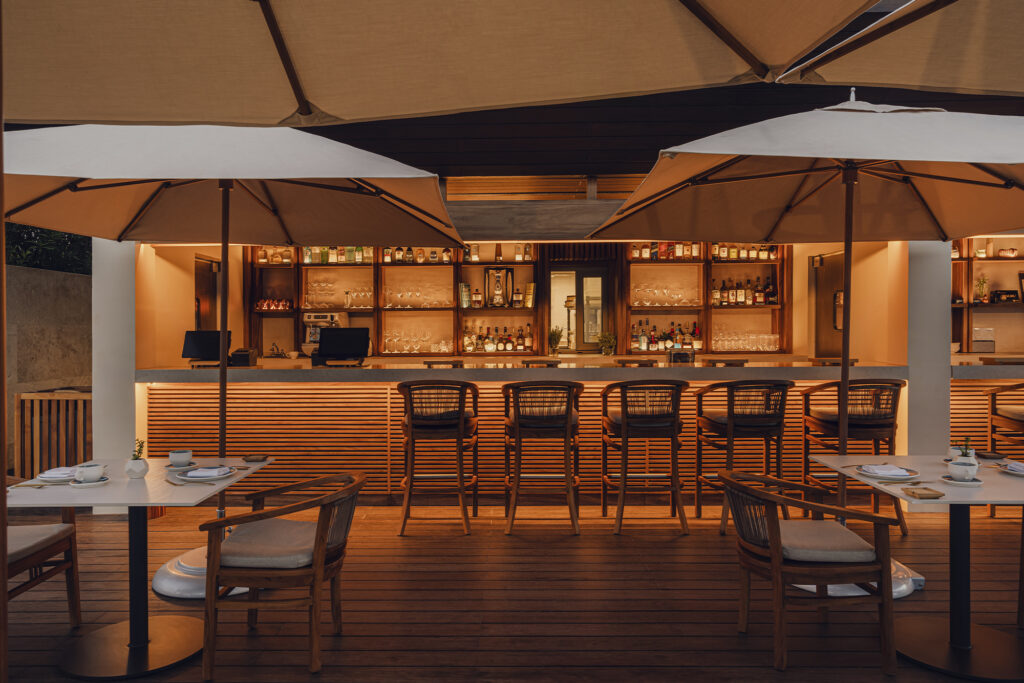
There was no conventional hotel check-in. We were personally greeted on arrival and taken to a quiet concierge area overlooking the ocean, where an entire welcome cart offered champagne, juices, fruit and water. Our 24-hour personal concierge introduced himself, took over the luggage logistics and began mapping out the week: restaurants, spa appointments, activities, anything we might need. It was a remarkably frictionless arrival, and our first indication of something we would come to appreciate about Los Cabos more broadly: sometimes the greatest luxury is simply having less to think about.
Cabo, Reconsidered
Canadians hardly require an argument for travelling south during the winter season. We require an argument for the destination.
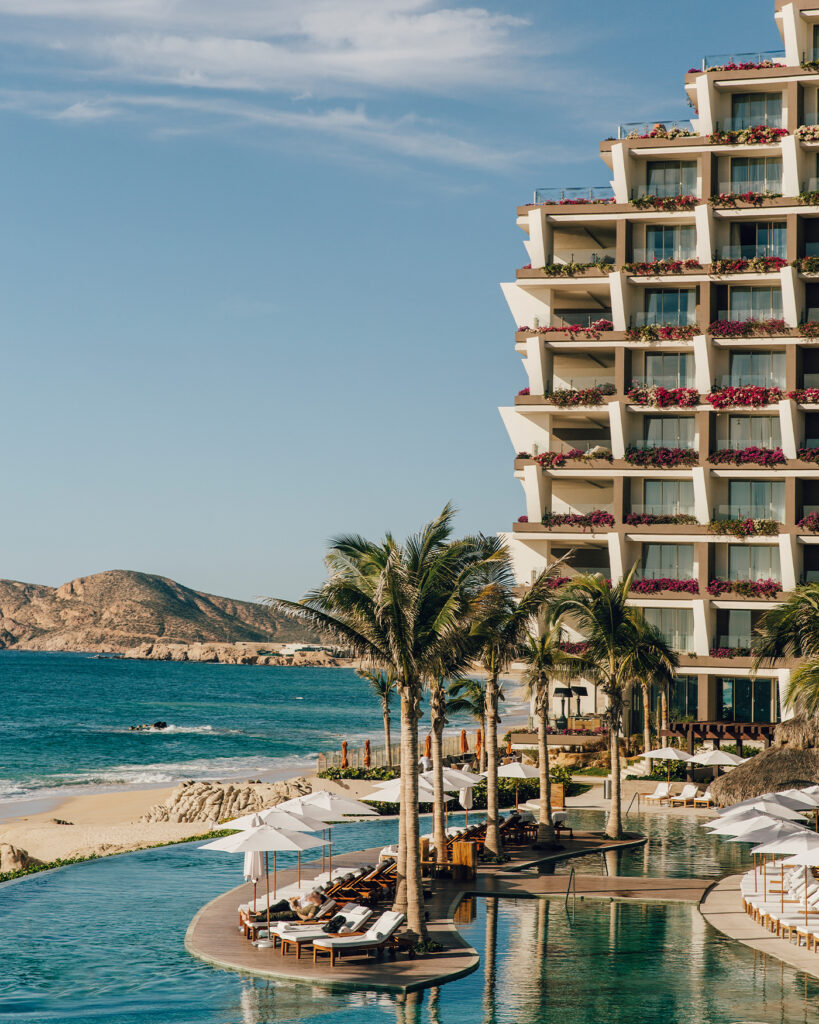
For decades, Los Cabos has occupied a familiar place in the North American imagination: sunshine, golf, sport fishing, celebrity sightings, and expensive resorts arranged along the bottom of a desert peninsula. All of those things remain true, but they no longer adequately describe a destination that has matured into one of the most sophisticated winter escapes within relatively easy reach of Canada, combining ambitious hotels and architecture, increasingly serious food and wellness, and a natural landscape unlike almost anywhere else in the traditional winter-sun market.
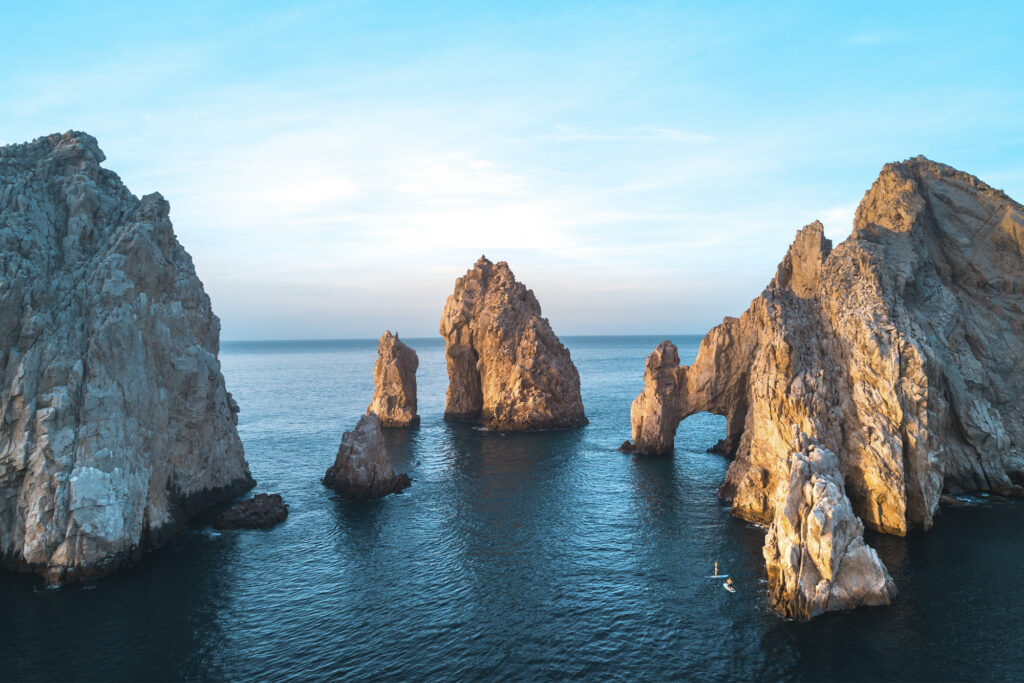
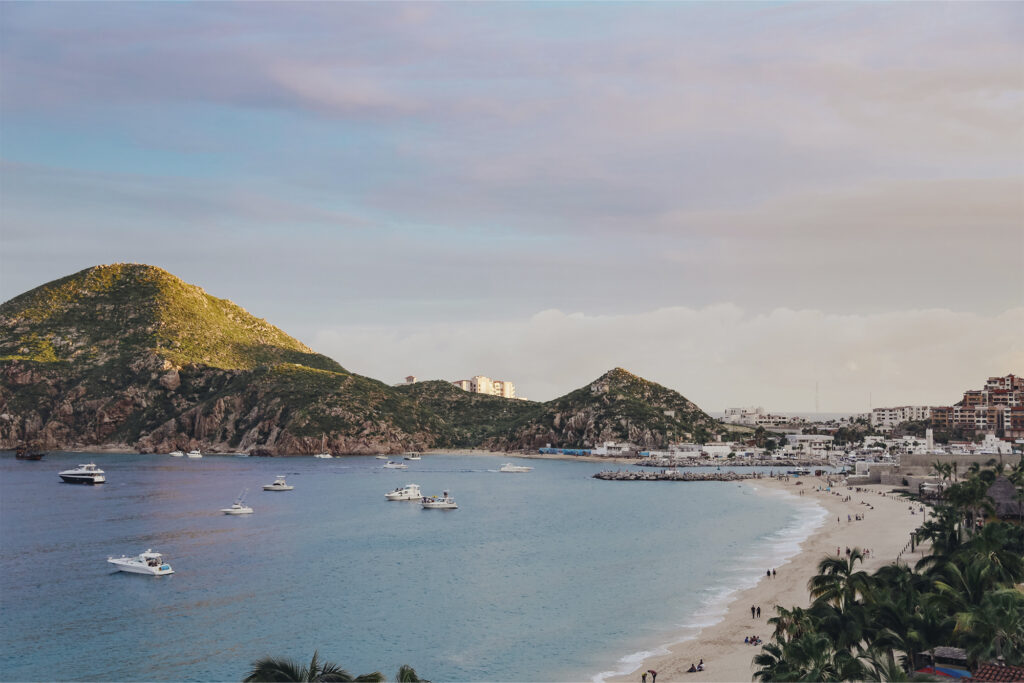
At the southern tip of Baja California Sur, mountains and desert run toward two very different bodies of water: the calmer Sea of Cortez and the far wilder Pacific. Cabo San Lucas brings marina energy and nightlife; the resort corridor strings some of Mexico’s most impressive hotels along the coast; San José del Cabo slows things down with galleries, historic streets and a greener landscape, while farther inland, farms and foothills begin to replace beach clubs.
The biodiversity offshore is equally remarkable. Baja California Sur is home to roughly one-third of the world’s marine mammal species and hundreds of species of fish, and during whale season, which conveniently coincides with the Canadian winter, you don’t necessarily have to go looking for them. During our visit, we watched whales breach offshore while standing at Grand Velas.
The hotels are changing too. Soho House will soon open its second Mexican outpost at Cabo del Sol, including a coastal iteration of Cecconi’s. It joins a luxury landscape that already includes Rosewood, Nobu, Four Seasons, and Waldorf Astoria, with still more high-end development underway. Cabo has been a luxury destination for some time; what is changing is the breadth and sophistication of what that luxury can now look like.
The All-Inclusive, Without the Compromise
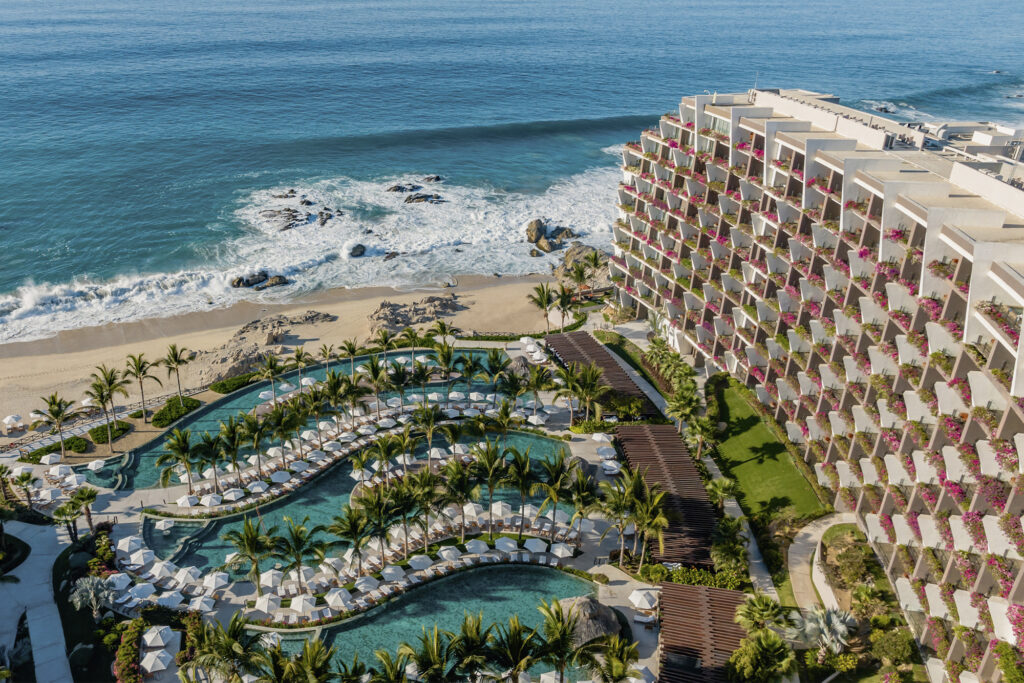
Which brings us back to Grand Velas. There may be no phrase in luxury travel more contradictory than five-star all-inclusive resort. Even the better examples have historically involved some kind of trade-off: an extraordinary beach paired with an ordinary buffet, a beautiful room with institutional cocktails, convenience at the expense of genuinely interesting food.
Our two-storey suite offered an early argument against those assumptions. Upstairs, a generous living and dining area, a long with a full bathroom, gave us enough space to spread out without immediately surrendering the room to the chaos that follows a small child on vacation. Downstairs was a massive bedroom with its own sitting area and a bathroom roughly the size of a small city apartment.
But it was the details waiting for our son that made the bigger impression. A wagon had been filled with water toys; there was a child-sized tent, a foosball table and a popcorn maker, along with snacks and milk already stocked in the minibar and children’s toiletries in the bathroom. Outside, we had our own private plunge pool, while a playground and splash area were just steps away. None of it felt like the usual assortment of children’s amenities added to a luxury hotel as an afterthought. Someone had clearly considered what would make the room exciting for him while making the week meaningfully easier for us.
Had we needed more, the resort could have supplied everything short of another parent. Cribs, strollers, bottle warmers, sterilizers and age-appropriate toys are among the complimentary amenities available through its baby concierge program. Professional nannies and private babysitting can also be arranged for an additional fee; we did not use the service ourselves, but several families we got to know during our stay did and spoke glowingly about the caregivers.
Grand Velas succeeds not because it is luxurious for an all-inclusive, but because it operates like a luxury hotel that happens to include almost everything.
The Best Reason to Leave
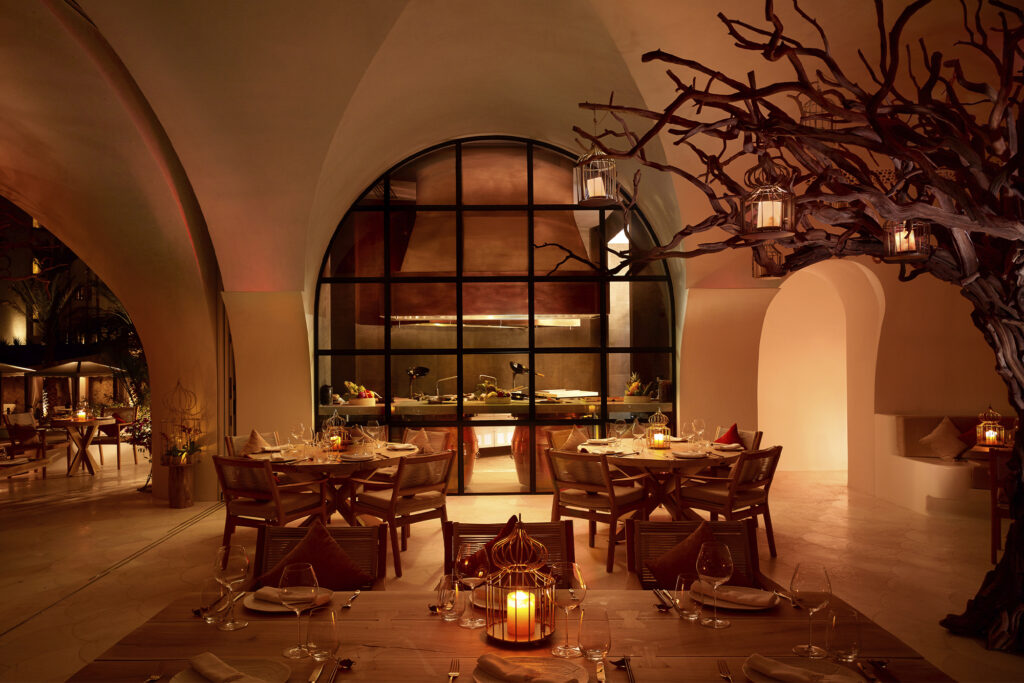
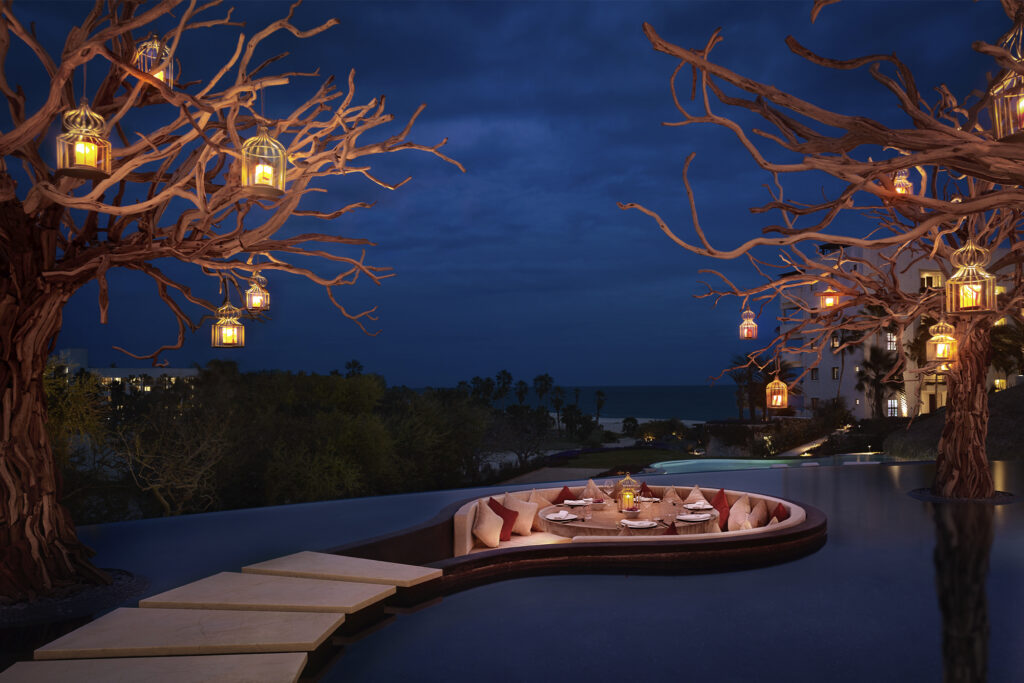
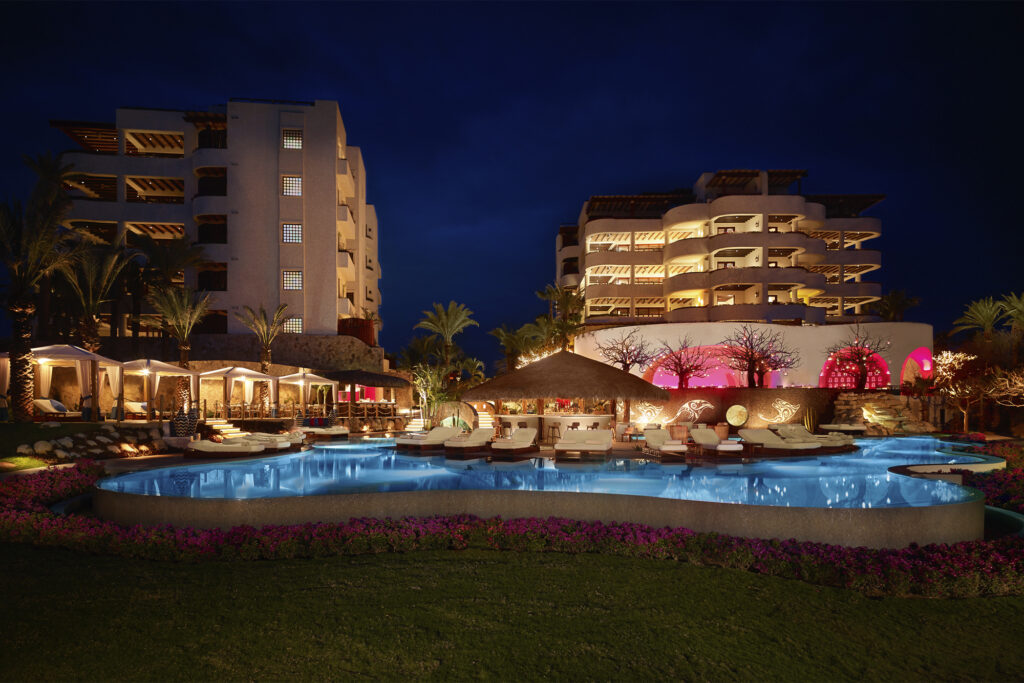
Still, spending an entire trip inside even a world-class resort would miss much of what makes Cabo interesting now, and two very memorable meals required leaving ours.
Árbol, at Las Ventanas al Paraíso, is the kind of restaurant that reminds you luxury can still produce genuine theatre. We ate outside among sculptural trees illuminated against the night, surrounded by reflecting pools and warm architectural light. It is breathtaking without feeling austere, a difficult balance at a time when some luxury restaurants seem designed primarily to be photographed, although you would be remiss not to take a family photo here.
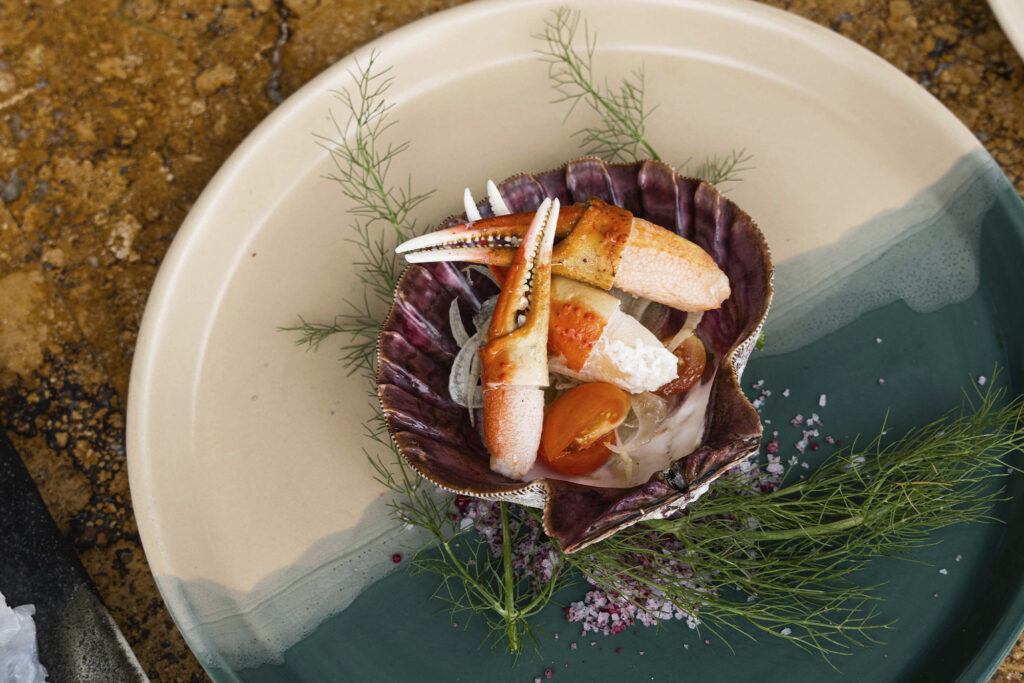
The menu is equally unexpected. Baja seafood and regional ingredients travel through India and Southeast Asia, with a raw bar piled with Baja lobster and local oysters alongside chicken makhani and Kerala lobster curry, while tandoori lamb chops and Asian-marinated lobster share space with local catch dressed with Thai lime, lemongrass and kaffir.
On paper, that much geographical range could feel confused. At the table, it doesn’t. Excellent ingredients, particularly the seafood, give the menu its throughline, and the kitchen is confident enough not to reduce Mexican resort dining to the usual collection of luxury signifiers. Árbol is glamorous, certainly, and Las Ventanas itself is among Cabo’s most rarefied addresses, but the restaurant does not rely on its setting to justify the reservation.
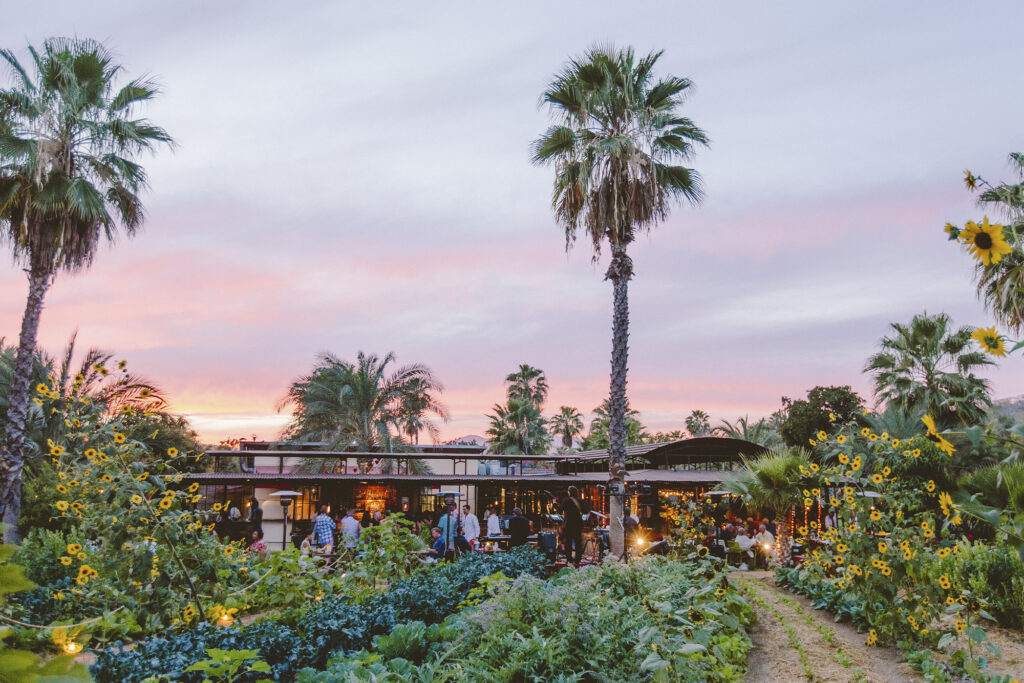
Flora Farms offers almost the inverse experience. Slightly north of San José del Cabo, tucked into the foothills of the Sierra de la Laguna, the 25-acre organic working farm feels startlingly lush after days surrounded by Baja’s sand, stone and cactus, and treating it simply as a restaurant means missing much of the point.
Give it an afternoon. There are gardens to wander, shops and a market to explore, fish and turtles to feed, and farm tours that can be coordinated with lunch or dinner. Children disappear toward a sprawling playground that looks more Copenhagen than conventional resort attraction, while adults can settle into the strange pleasure of having nowhere particularly urgent to be. During our visit, a band played throughout the afternoon and into dinner while our son moved happily between the playground, gardens and animals.
The farm drives the menu, with produce coming from the property and meats from its nearby ranch, but the thing I have thought about with embarrassing frequency since returning home is a margarita made with heirloom carrot. The “Farmarita” sounds suspiciously like something invented for a wellness influencer, but it is slightly sweet, bright, distinctive and genuinely the best margarita I have ever had.
Árbol and Flora Farms could hardly look more different, but together they demonstrate why leaving the resort matters. Cabo now has restaurants that are not simply good for a resort destination; they are places I would tell someone to build an afternoon or evening around.
Leaving with a young child proved far easier than we had anticipated, too. One morning, a short transparent-boat tour from the Cabo San Lucas Marina turned the water beneath our feet into a moving aquarium as we headed toward El Arco. It was not an epic excursion, which was arguably its greatest virtue with a four-year-old: enough tropical fish and dramatic coastline to hold his attention, then back on land for excellent fish and shrimp tacos at Tacos Gardenias.
There is something appealing about the ease with which Cabo lets those experiences coexist: serious hotels and taco shops, Michelin-starred dinners and ice cream carts, an extravagant restaurant one night and a preschooler staring through the floor of a boat the next morning. Not every experience needs to announce itself as luxury to make a luxury vacation better.
The Pacific Reset
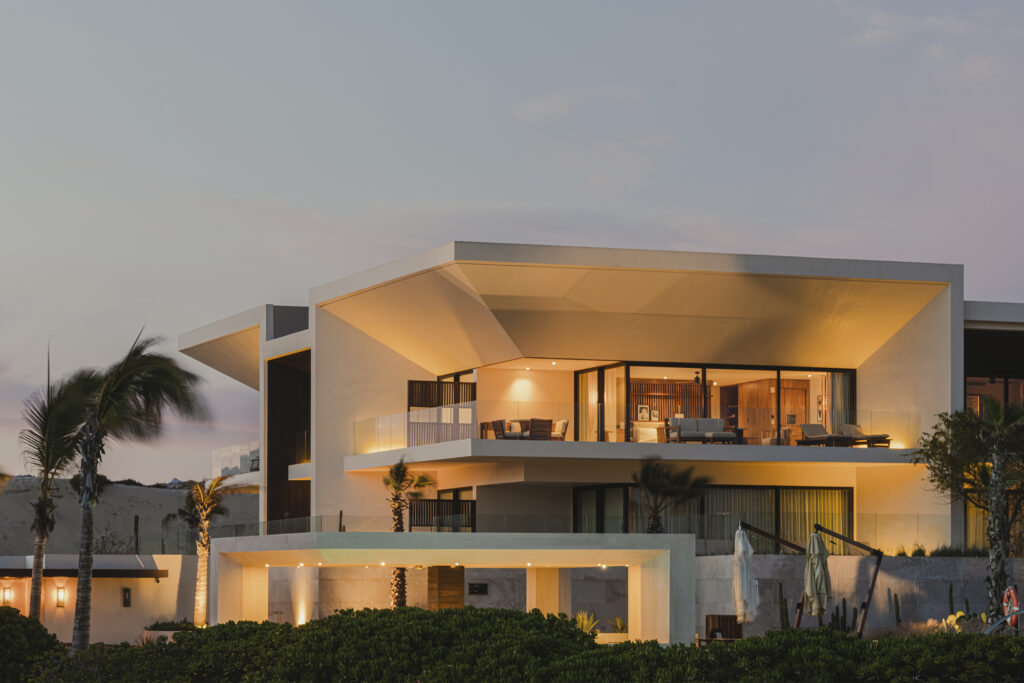
Moving to Nobu Hotel Los Cabos felt like arriving at a different version of Cabo. On the Pacific side, the landscape becomes more elemental, the water rougher and the desert more dominant, and Nobu responds with pale stone, teak, clean geometry and Japanese minimalism against Baja’s raw coastline. The result is restrained and undeniably cool.
Our room was tranquil and generously proportioned, with a large spa-like bathroom and enough storage to prevent three people’s belongings from taking over the place. Glass doors opened onto our own pool overlooking sand dunes, desert and palm trees, with egrets wandering past in the mornings. Elsewhere, there are adult pools with DJs and private cabanas alongside quieter palm-lined pools where couples and families coexist easily.
It is also a hotel that gets the small things right: complimentary water and SPF stations sit around the pools; service is attentive without becoming ceremonial and nothing feels especially difficult. At a property bearing the Nobu name, though, the real test was always going to be the food.
Dinner at Nobu itself involved several lobster dishes and a healthy amount of the exceptional raw menu, alongside the classics I am constitutionally incapable of skipping: Black Cod with Miso and Rock Shrimp Tempura. The seafood was exceptional, but perhaps my most emphatic advice is to save room for dessert, no matter how unlikely that seems by the end of dinner. With a four-year-old at the table, convincing everyone to order several was not especially difficult.
Just as impressive over several days is the breadth of dining beyond Nobu itself. Ardea offers steakhouse cooking while Muna draws on Mediterranean influences, and between those restaurants, breakfast, poolside lunches, room service and the Nobu Café, we could eat three meals a day on property without feeling as though we were repeatedly choosing from variations of the same resort menu. The food, wine and service remained consistently excellent whether we were sitting down to a proper dinner or ordering something beside the pool.
The spa produced another consensus. My husband and I both emerged from separate treatments declaring them among the best massages we had ever had, then happily stayed put for the hydrotherapy facilities, steam and sauna rooms, experiential showers and outdoor cabana-covered hot tubs. After several days of international travel with a four-year-old, spending a few hours being unreachable felt luxurious enough on its own.
The Case for Cabo
There is no shortage of places willing to sell Canadians sunshine between November and April, which is why sunshine alone isn’t a particularly compelling reason to choose one anymore.
Cabo offers the pools and palomas, golf and sport fishing you would expect, but you can also watch whales breach from shore, explore the Sea of Cortez, wander galleries in San José del Cabo, spend an afternoon on an organic farm and build an itinerary around restaurants that would be worth seeking out in any major city. Just as importantly for us, doing those things didn’t require choosing between travelling well and travelling comfortably with a child.
By the end of the week, “family travel” felt like the wrong category for what we had done. We had stayed at two excellent and dramatically different hotels, eaten Indian food beneath illuminated trees, drunk carrot margaritas on an organic farm, watched whales from the coast, looked through the floor of a boat at tropical fish and spent long afternoons beside spectacular swimming pools.
Our son happened to be there for all of it. For Canadians already contemplating what they will spend to escape the cold this winter, that is perhaps Cabo’s most persuasive argument. You are going south anyway. You may as well go somewhere where the hotel, food, service and experiences are worth travelling for.
The writer travelled to Los Cabos as a guest of the Los Cabos Tourism Board.