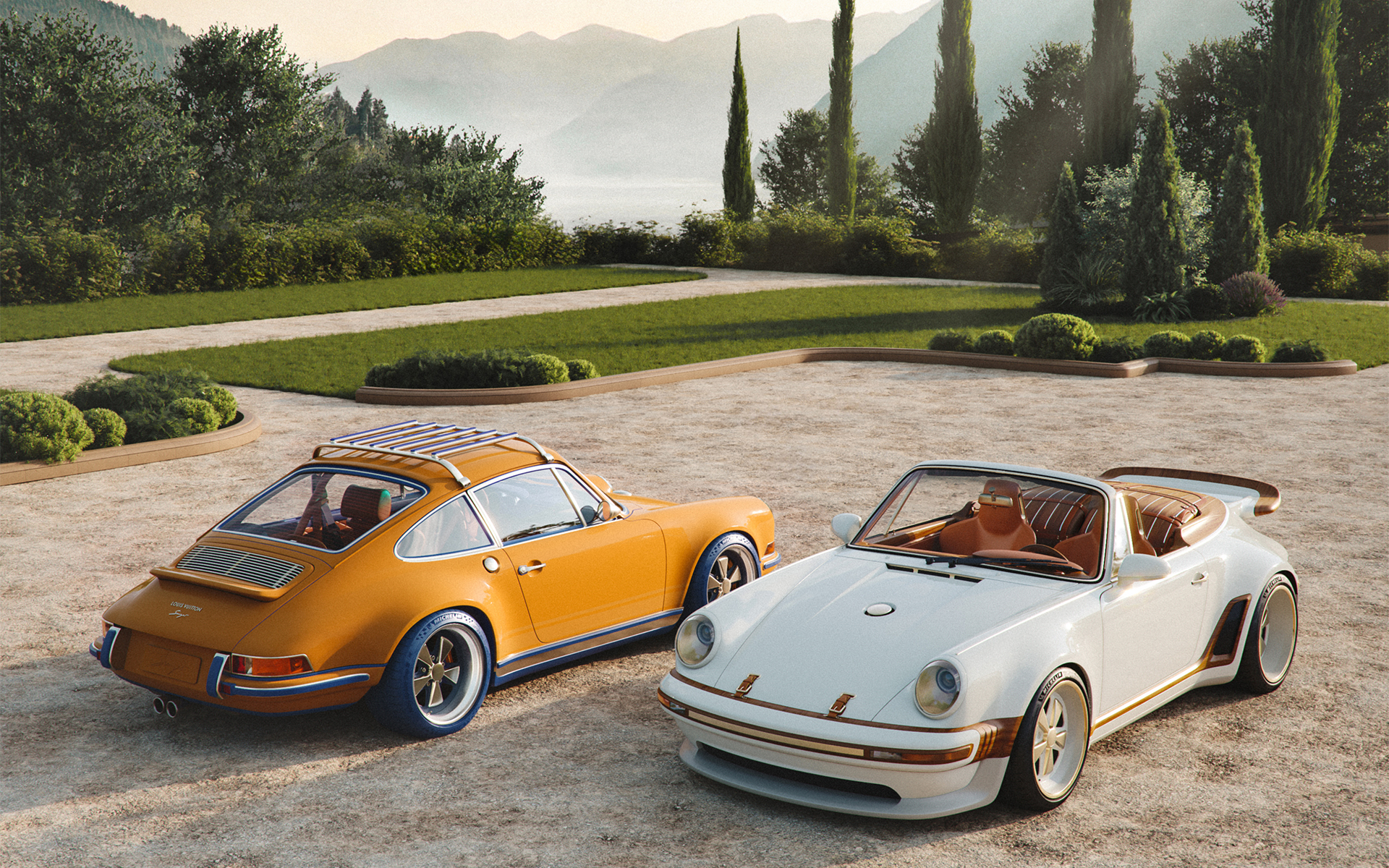
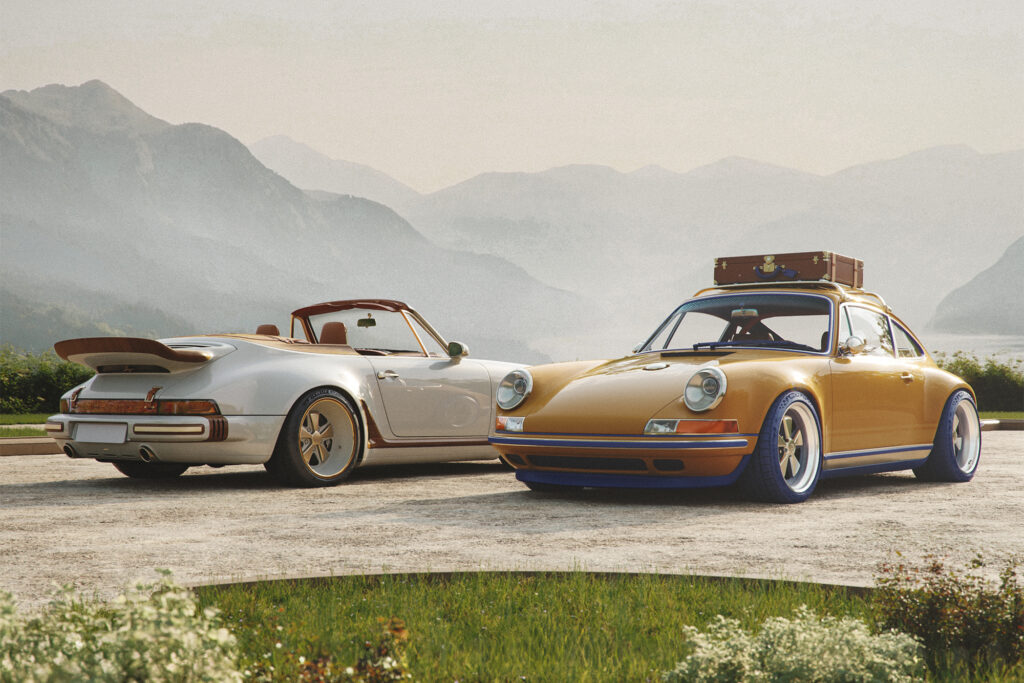
Louis Vuitton’s first collaboration with California-based Porsche restomod specialists Singer Vehicle Design has yielded a pair of exquisite classic Porsche 911s, because of course it has. In hindsight it feels as if a collaboration like this was only a matter of time. The line between luxury fashion and high-end cars has been blurring for years, decades perhaps, but this collaboration between two tastemakers in their respective fields proves there really is no line anymore. And why should there be? The clientele is the same. If you love Louis Vuitton’s leather goods and watches, it’s only natural you would also be into Singer’s meticulous vintage Porsche restorations.
To hear Louis Vuitton watch director Jean Arnault tell it, “This unique and remarkable adventure began with a request for a dashboard clock for a car reimagined by Singer.”
Sounds simple, right? It isn’t, at least not if you want it done to the high standards these brands have built their reputations on.
Originally, the idea was for Louis Vuitton to create a detachable, mechanical timepiece, inspired by the brand’s famous Tambour watch, which could also be converted into a desk clock.
“In addition to the design and production of this clock by La Fabrique du Temps Louis Vuitton workshops in Switzerland, it quickly became apparent to us that this collaboration with Singer could extend to the personalisation of every functional element of the vehicle, enhancing them through our expertise in leather craftsmanship and watchmaking,” Arnault explains.
After all that, Singer wasn’t just going to stick this clock into the dashboard and call it a day. The company’s founder and executive chairman (and former rock star) Rob Dickinson is famously obsessive; the company motto is “everything matters.”
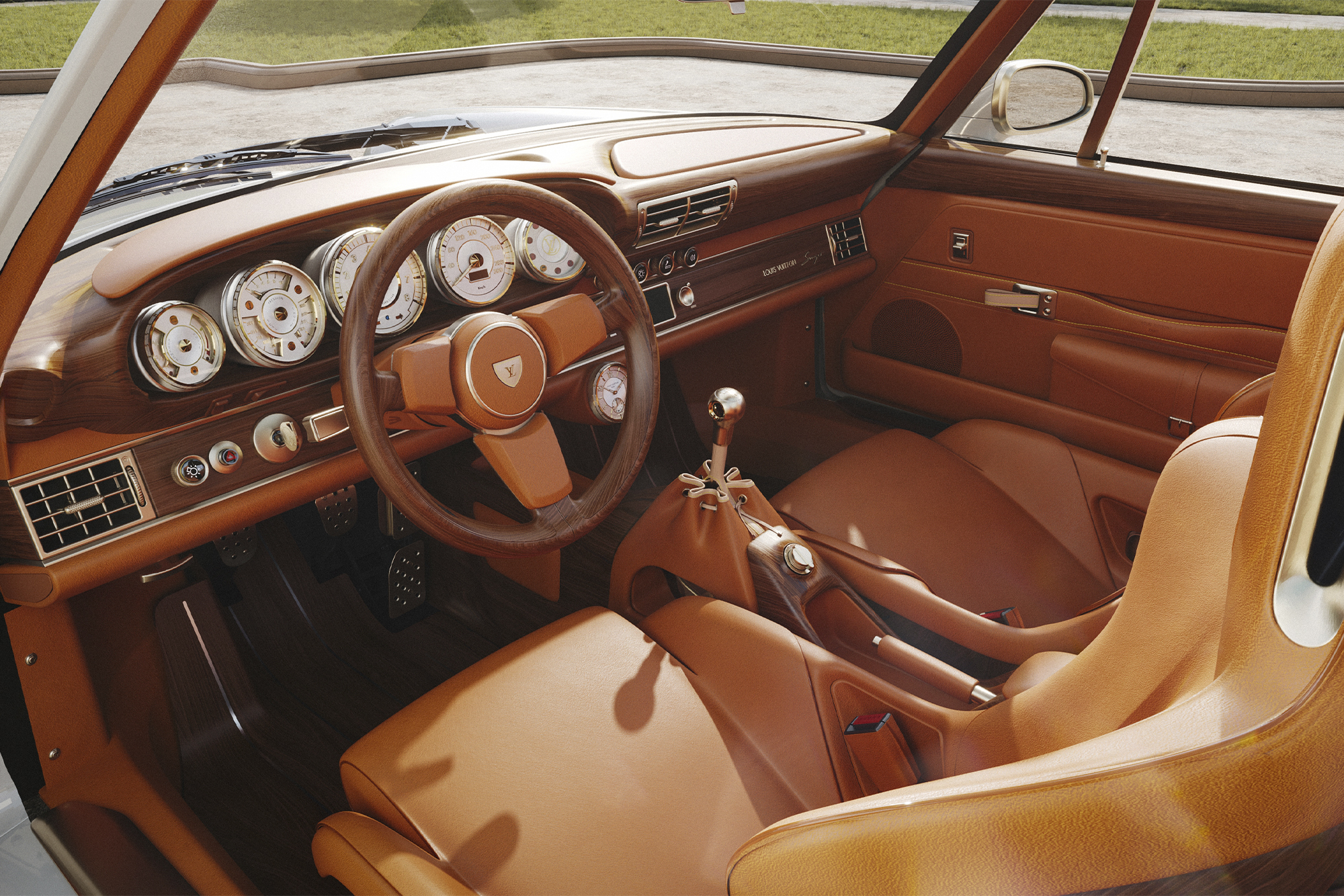
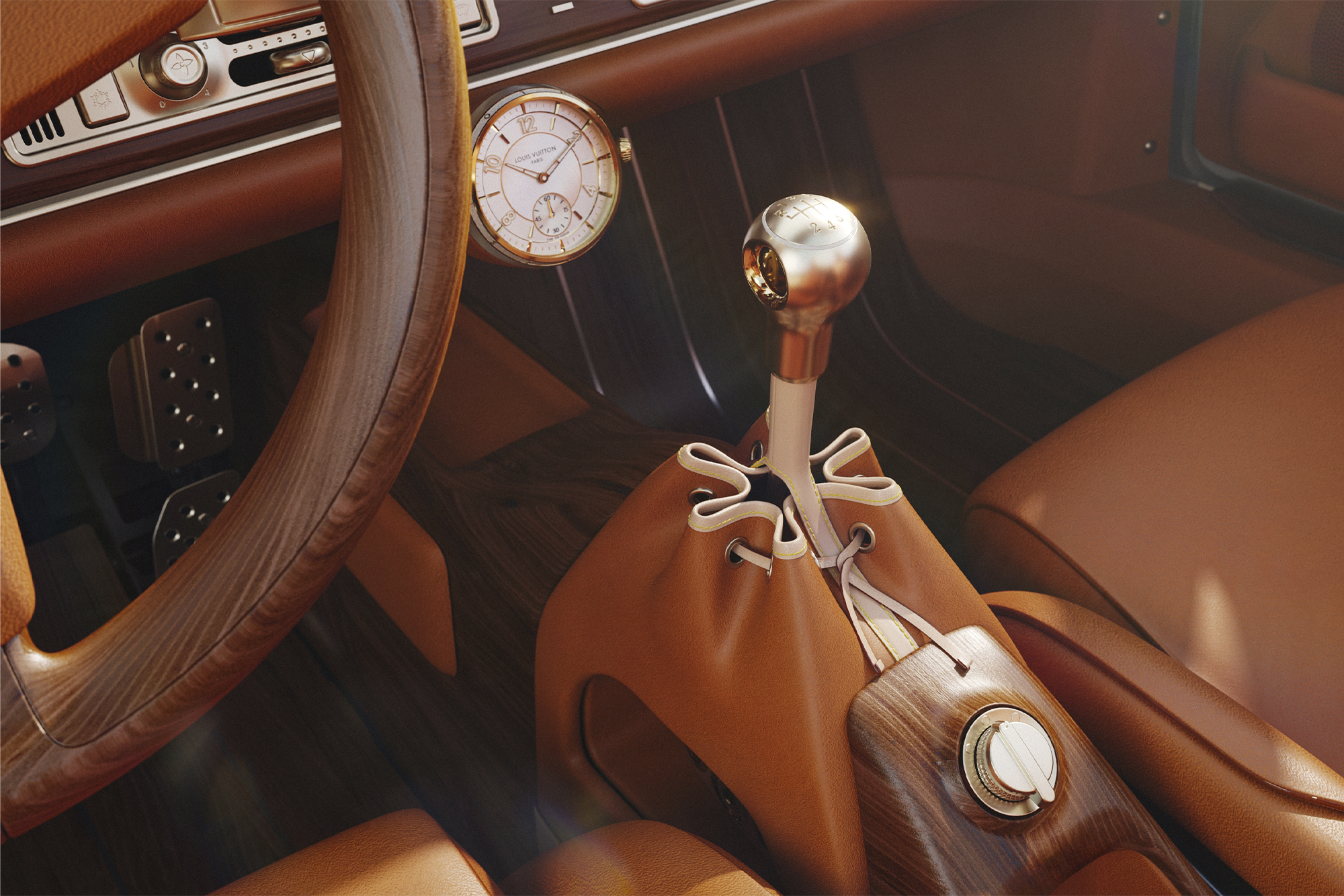
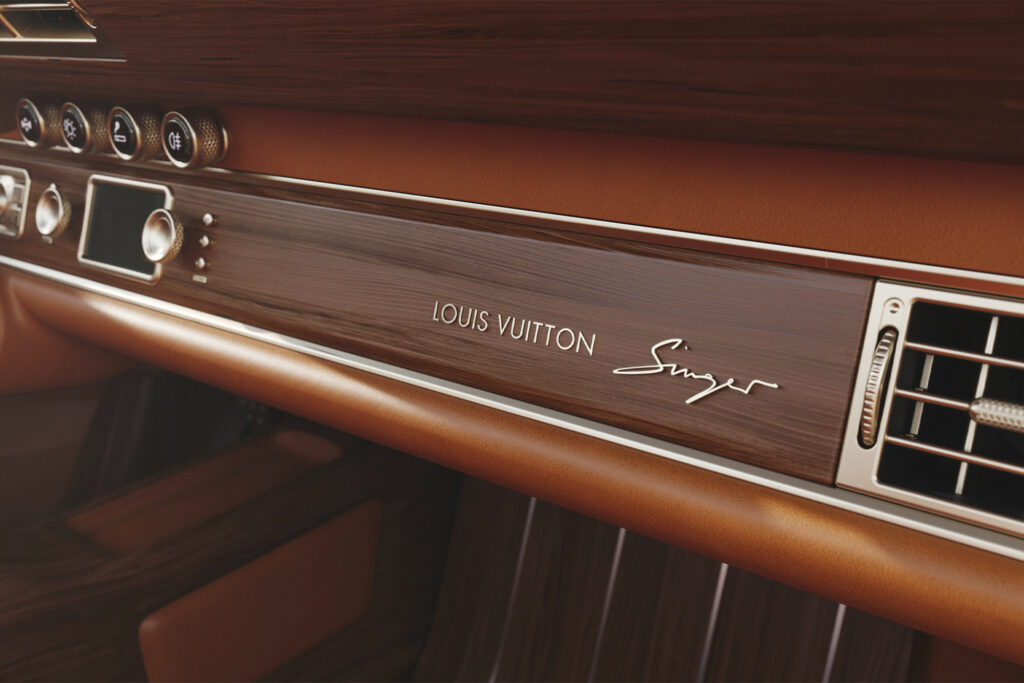
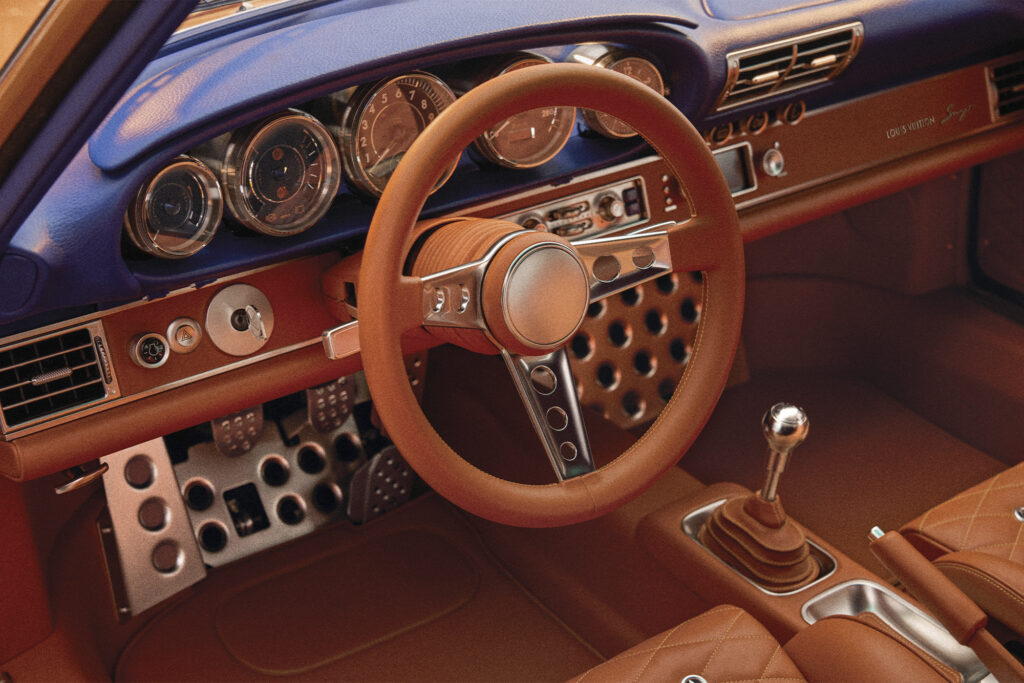
What started as just a clock turned into the House’s designers reimagining every detail of the dashboard — including the speedometer, rev counter and gauges — to ensure they matched the lines of the Tambour.
At that point, Louis Vuitton was all in, and the companies collaborated on every detail not just of one car, but two full restomods. These cars are the first co-branded items in Louis Vuitton’s 172-year history, which shows how much faith the House has in Singer.
“The aim was to create a true synthesis between Singer’s architectural and timeless language and the Louis Vuitton culture, characterised by refined materials, travel and expression of style,” says Octave Chany, project lead designer at Singer.
Both cars are quite literal examples of Louis Vuitton’s Art of Travel philosophy; these are works of art that are both movable and moving. (We dare you to put pedal to metal in a 911 reimagined by Singer and not crack a smile. It’s impossible.)
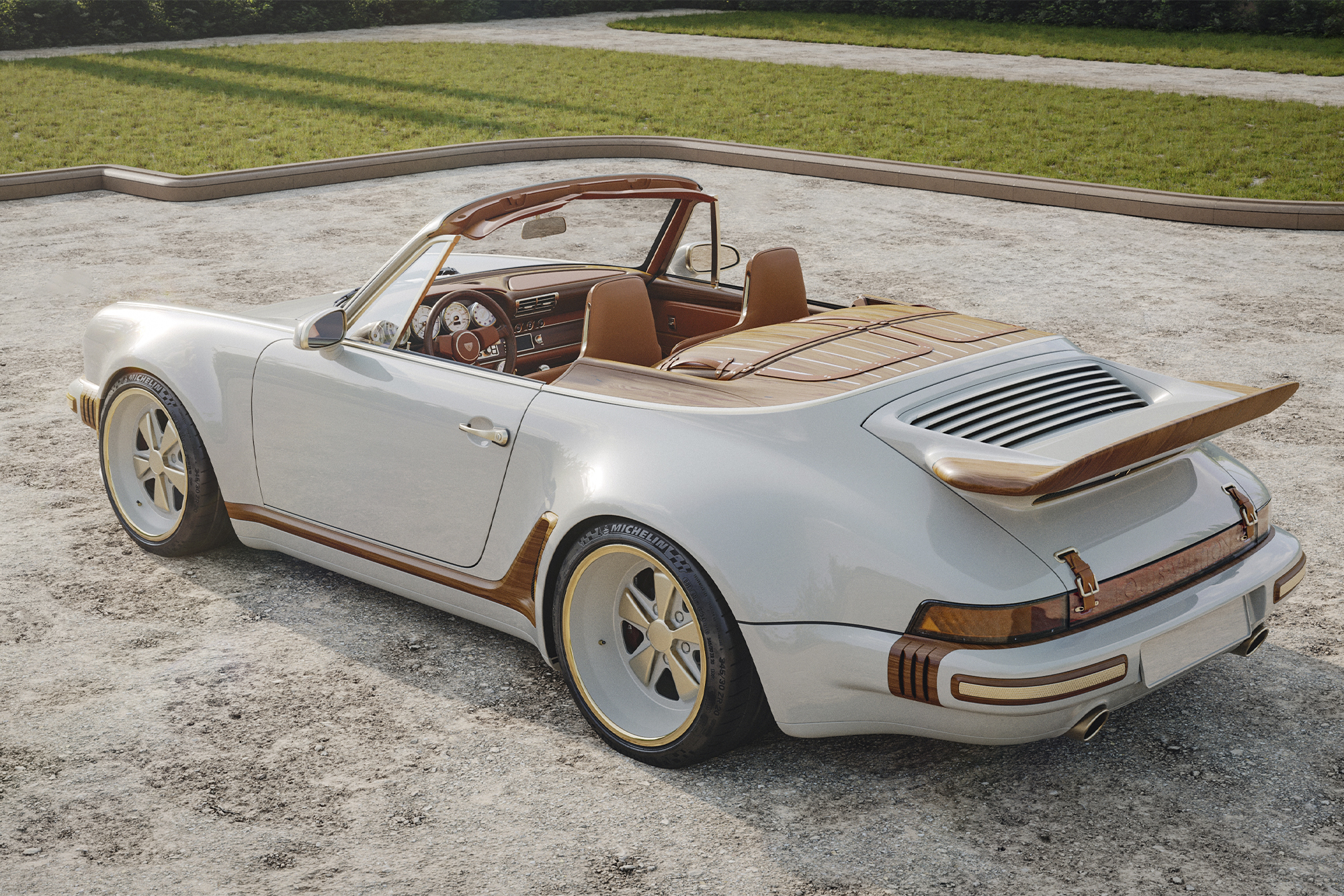
Everywhere your eye wanders there are fresh details to discover. Take, for example, the teak-inspired wood decking and bumper details on the cabriolet. Wood shouldn’t work on a bumper, and yet it looks like it belongs there. Move in closer and you’ll notice there’s also wood panelling lining the rear engine compartment and the front trunk.
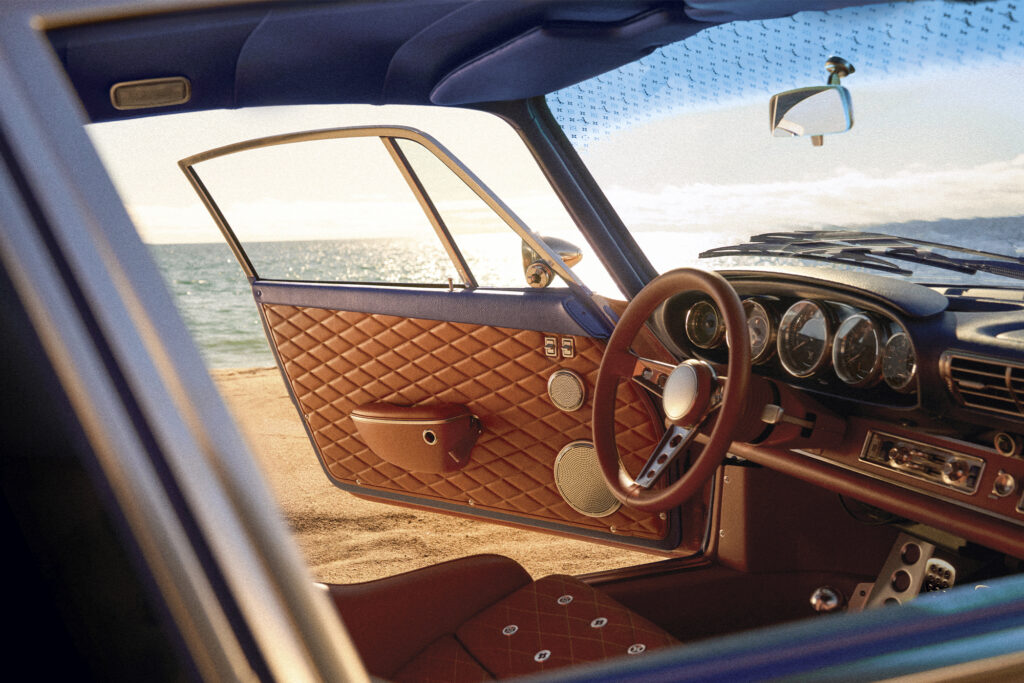
On the coupe, there are no plastic buttons. They’ve all been replaced. New adjustment knobs, control switches, locks, pull-tabs and air vents have all been crafted in metal, predominantly rhodium-plated. All the leather pieces in the cabin were selected by Louis Vuitton’s experts, while the execution was done by Singer. Edges of the door handles use the same edge-dyeing leather technique used on Louis Vuitton bags. The diamond-patterned embossing on the seats was made to echo the “malletage” motif found inside Louis Vuitton trunks.
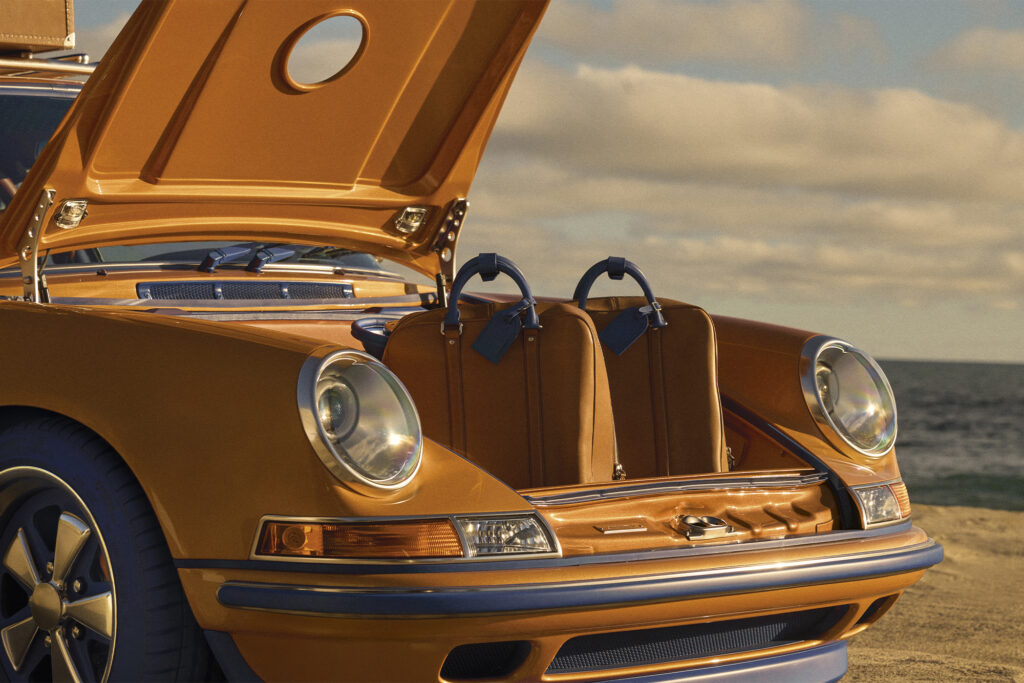
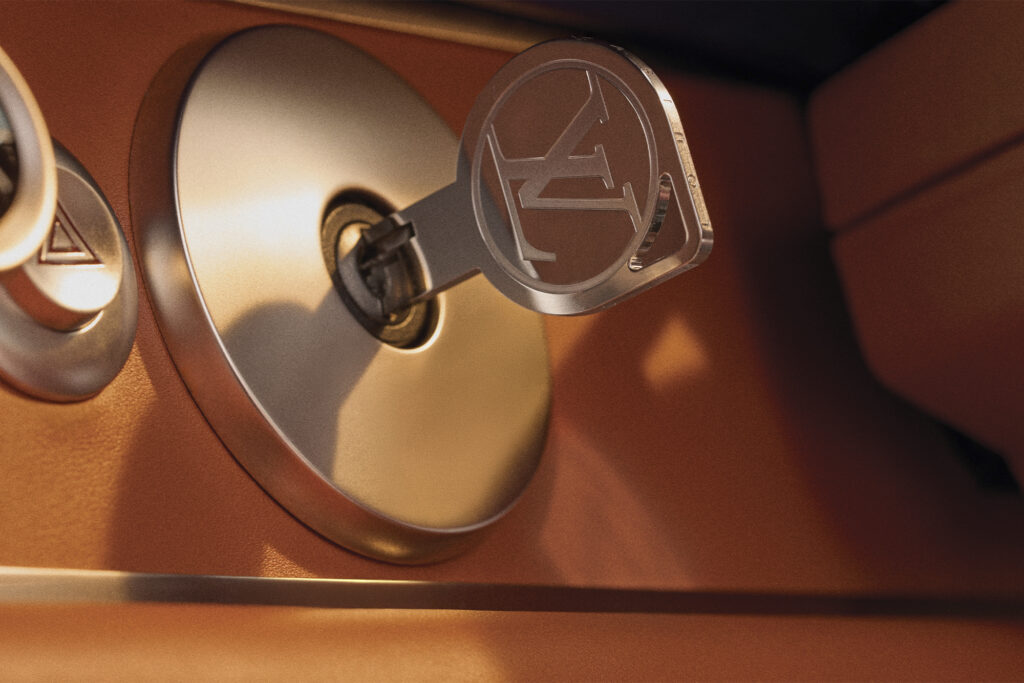
And the collaboration didn’t stop there. Once the cars were finished, the Louis Vuitton team set about creating a capsule collection for each car. For the cabriolet’s driver, for example, there’s a made-to-measure suit in parachute silk. A pair of driving gloves are made of braided leather with a single hand-painted Monogram snap. There are also bespoke sunglasses and a matching carbon helmet. And, of course, a series of custom Louis Vuitton luggage and a fitted garment bag that folds flat against the cabin is, naturally, included.
We could go on; the details here are almost infinite, so be sure to have a good long look at all the photos. For all the gearheads, we’ve listed the basic specifications of each car below.
Porsche 911 Reimagined by Singer — Classic
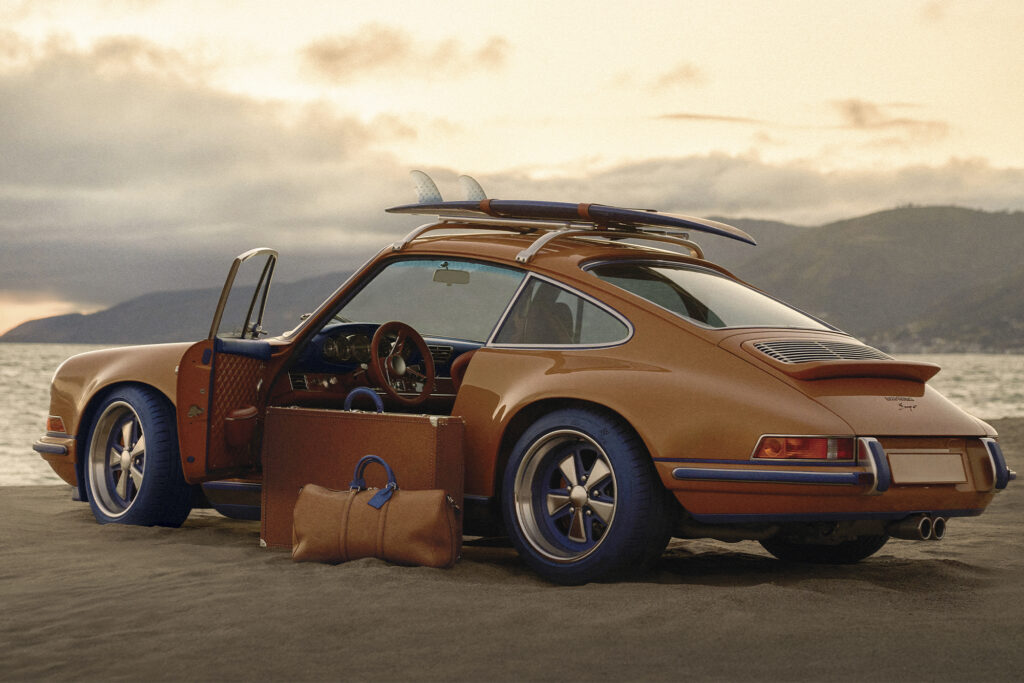
- Type 964 coupé chassis
- Lightweight carbon fibre bodywork in Saffron with speed-activated rear wing
- 4.0L, naturally aspirated, air-cooled flat six
- Six-speed manual transmission
- Rear-wheel drive
- Carbon-ceramic braking system
Porsche 911 Reimagined by Singer — Classic Turbo
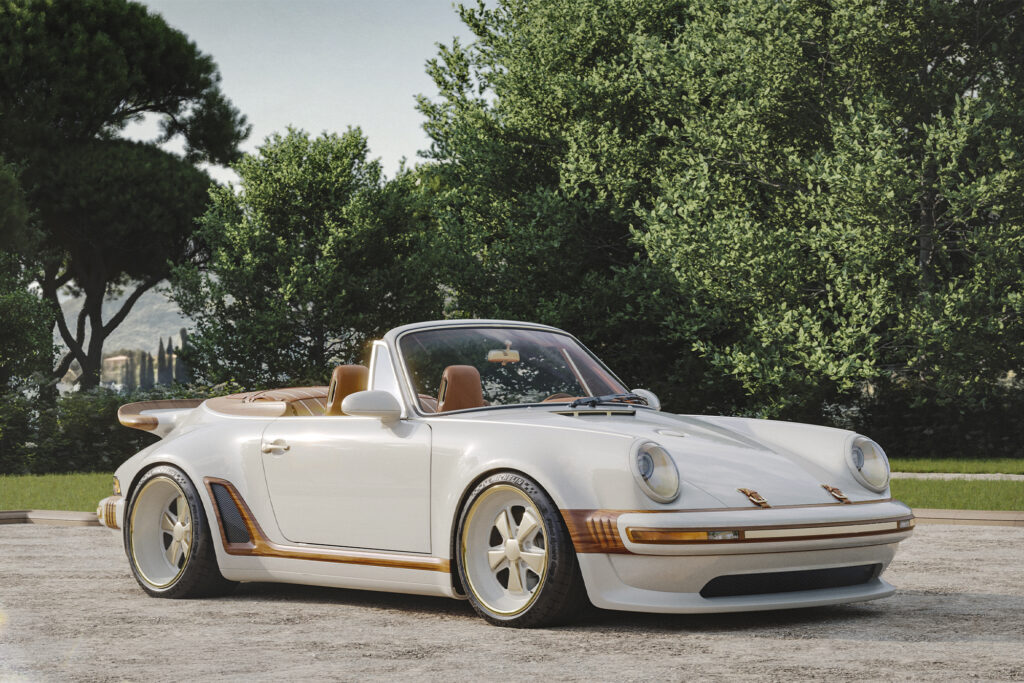
- Type 964 cabriolet chassis
- Lightweight carbon fibre bodywork in Calcaire Lutétien white with whale tail rear wing
- 3.8L, twin-turbocharged, flat six with air-to-water intercooling
- Six-speed manual transmission and selectable drive modes
- Rear-wheel drive
- Carbon-ceramic braking system
FEATURE PHOTO COURTESY OF SINGER.