It’s a 13-hour flight from Toronto to Tokyo, and then another seven to Singapore’s Changi Airport. All told, you’re looking at about 24 hours of travel. The time difference is 12 hours, so you don’t get jet lag so much as your whole world gets turned upside down. Welcome to the far side of the world, for 36 hours in Singapore with Audi’s Formula 1 team at the OG after-dark Grand Prix.
This is the rookie season for the Audi Revolut F1 Team, but the factory squad — which even builds its own F1 engine in-house, in Neuburg, Germany — is already starting to challenge established midfield teams. Being there, seeing the Audi team up close, you can tell this is not a short-term play. Audi’s F1 team is investing in a massive new campus for F1 operations in Hinwil, Switzerland, with a clear (and, it must be said, wildly ambitious) goal of winning an F1 world championship by 2030. That’s just four short years away.
City in a Garden
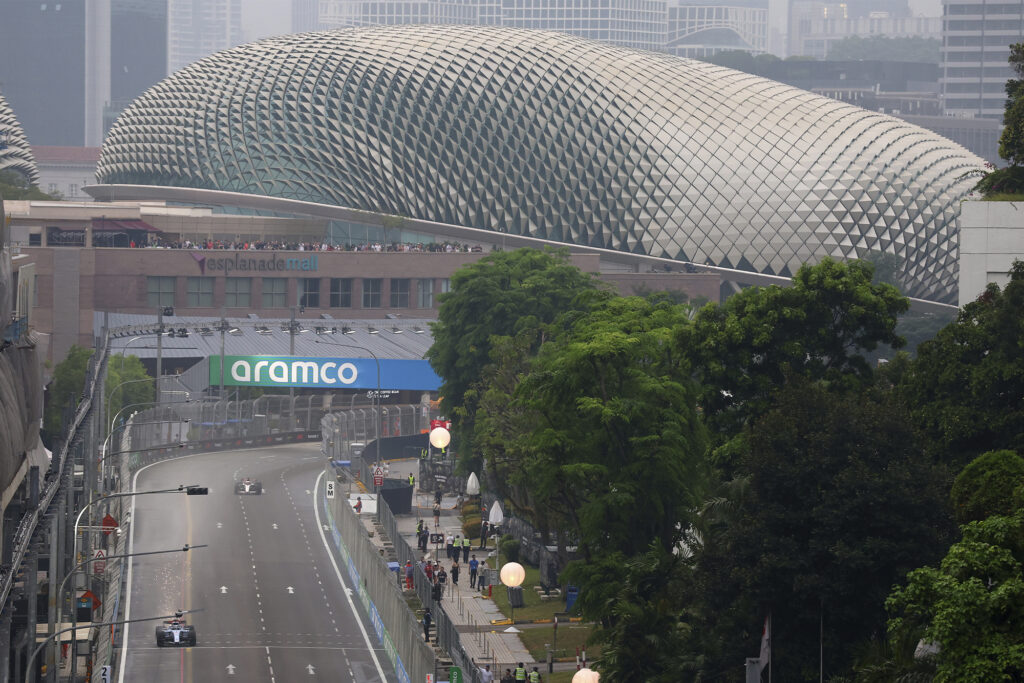
The heat and humidity hit you as soon as you step out of the airport, but Singaporeans play it cool in crisp white T-shirts, toting sun umbrellas and somehow making handheld fans look kind of chic. It’s just the tourists who seem to sweat. It was mid-October and the daytime highs were on the far side of 30 C, but it felt more like 40 C, according to the BBC’s forecast. Lest you forget, Singapore is a tropical rainforest. It looks like it, too; the city is overflowing with greenery. It was Lee Kuan Yew, Singapore’s first prime minister, who envisioned a “Garden City” in the 1960s. Today, it’s more like a City in a Garden, with parks and green spaces connecting tree-lined streets.
Singapore’s Food Scene
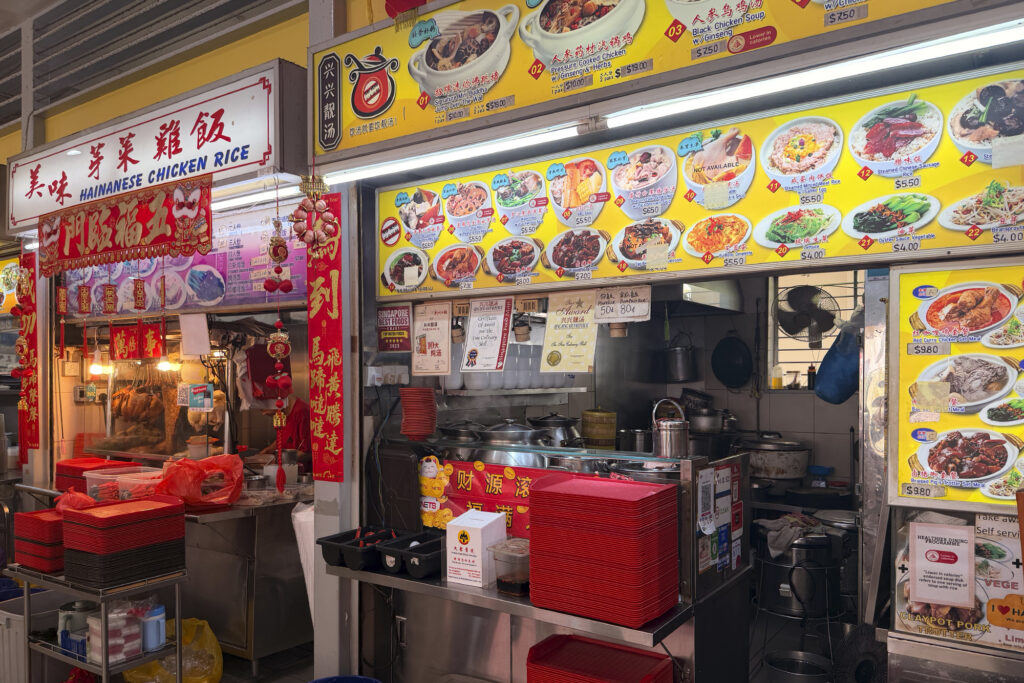
People come from across Asia, and indeed the world, to shop and do business here. I lost count of how many Rolex stores are on Orchard Road, the main high-end shopping strip. But the real draw in Singapore is the food; the city is famous for its hawker centres, where even humble street-food stalls earn Michelin recognition.
On advice from a friend who lived in the city, I took a morning off — another advantage of the fact the Singapore Grand Prix is a night race — to visit the Tiong Bahru area. It’s home to a series of Art Deco-style low-rise, whitewashed apartment blocks with rounded corners, curved balconies, porthole windows and spiral staircases. Between the blocks are leafy parks. The neighbourhood is full of little cafes, bakeries and bookstores — and, of course, Tiong Bahru Market & Food Centre. It’s a two-storey market with more little stalls selling more great food than a person could possibly hope to eat in one morning. Jian Bo Tiong Bahru Shui Kueh, Tiong Bahru Hainanese Boneless Chicken Rice and Tow Kwar Pop are all Michelin-recommended spots in the market, but, honestly, everything I tried was incredible.
A special shout-out must also go to Singaporean kopi, a thick local brew that’s approximately the consistency of motor oil. The coffee beans are roasted with sugar and margarine, and the coffee is served hot or iced with sweetened condensed milk. It’ll blast away the jet lag, I promise.
Inside the Singapore Grand Prix Paddock Club
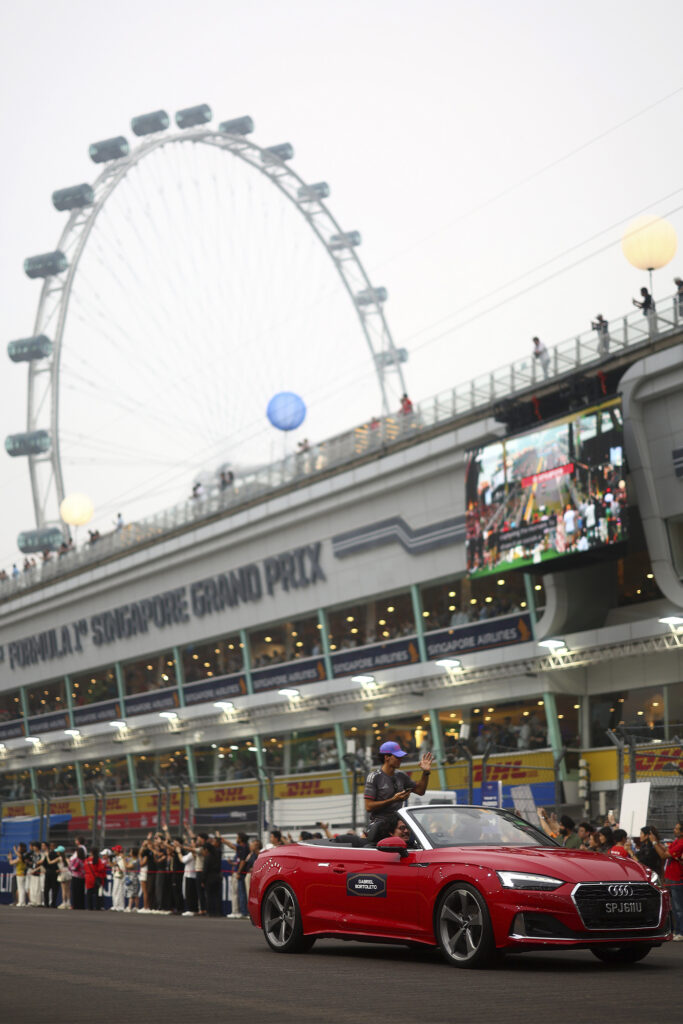
Despite the heat and haze, fans lined up before the gates to the Marina Bay Street Circuit even opened. This year, as usual, the Singapore Grand Prix was sold out, with more than 301,000 fans attending over three days. And I do mean fans; they all showed up in official merch, repping their favourite teams and drivers.
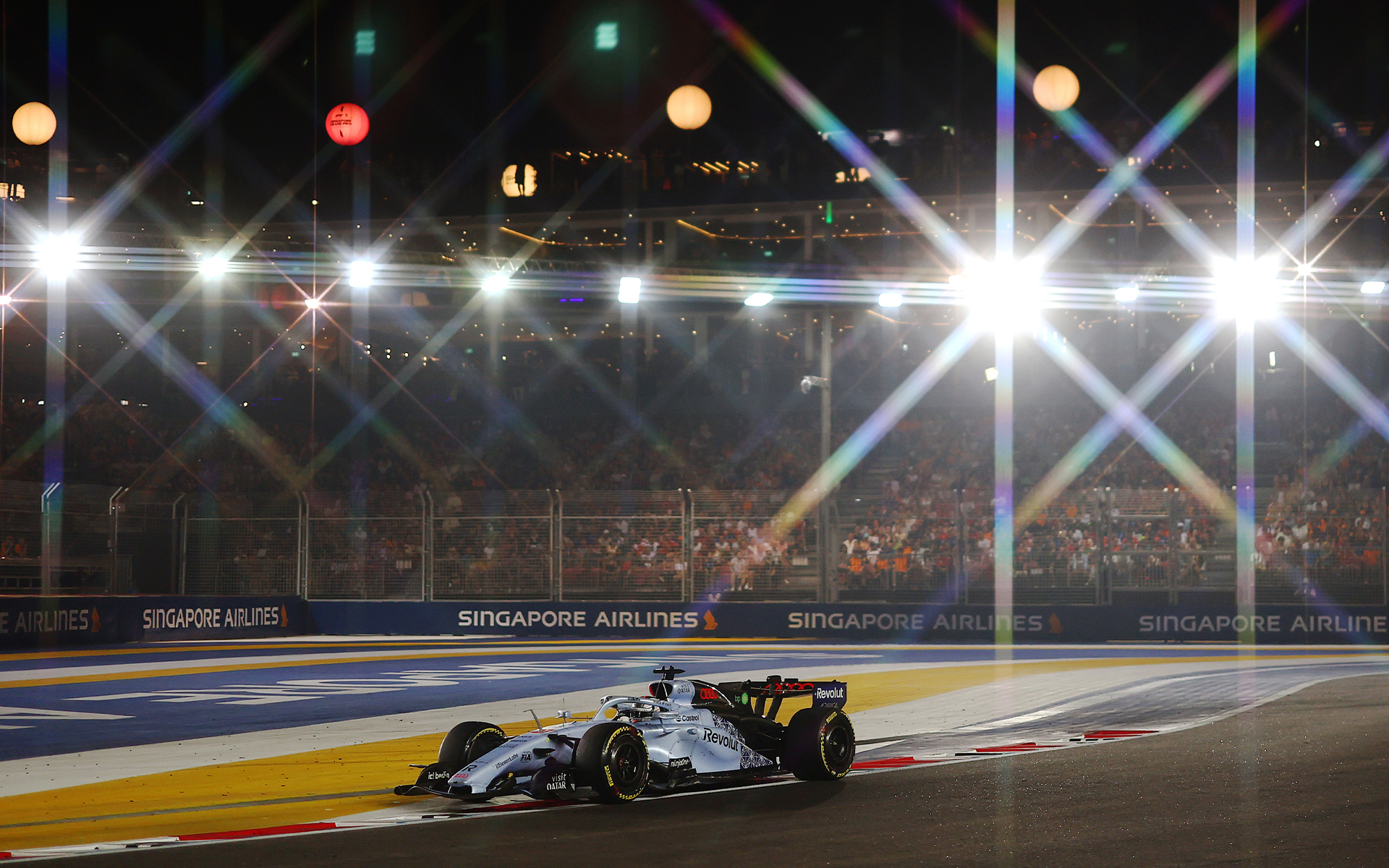
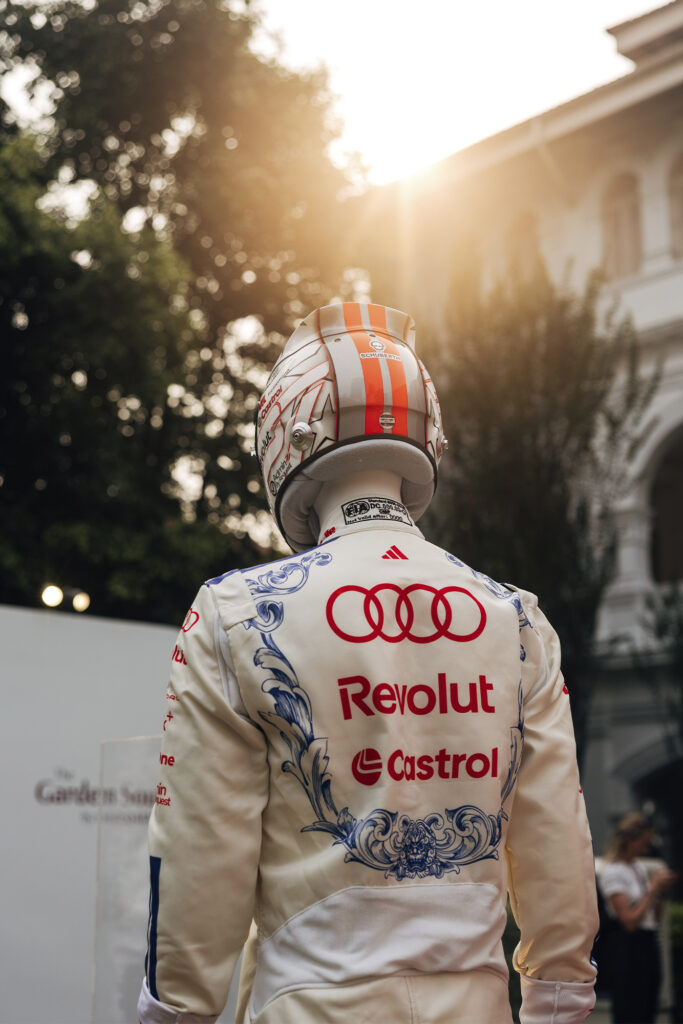
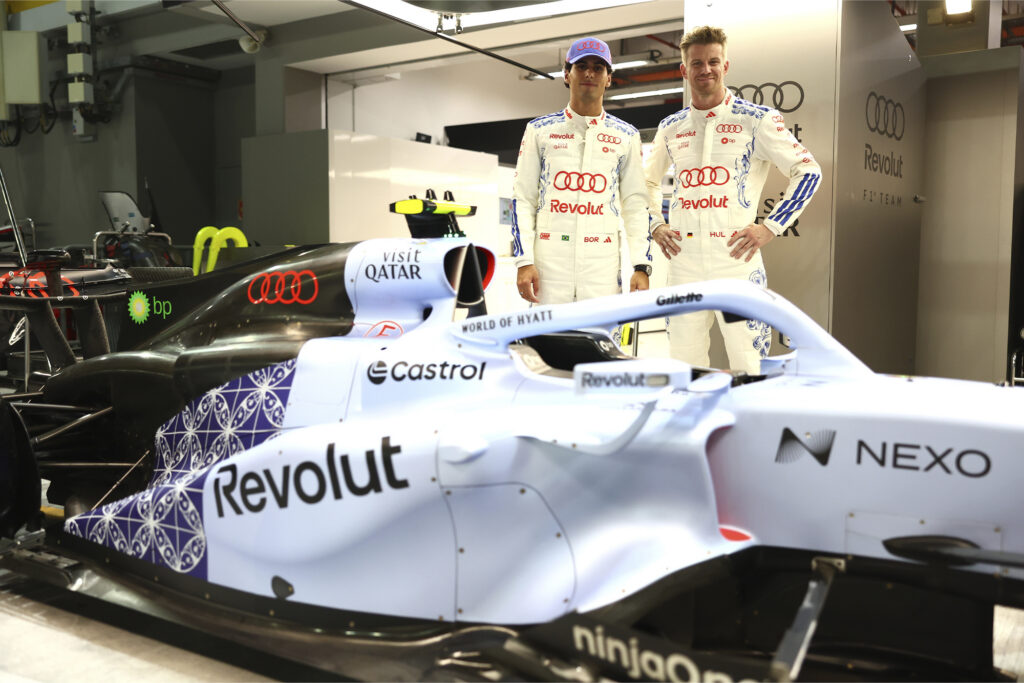
Audi and Adidas dropped a killer capsule collection for the Singapore race, to go with Audi’s locally inspired Night Race livery. (Best-looking car of the season so far, no doubt.) The race takes place downtown, in the heart of the city, and there’s a real buzz in the air all weekend.
Once inside the venue, it’s a quick walk to the (mercifully air-conditioned) Paddock Club, which is where you’ll find all the teams’ private suites.
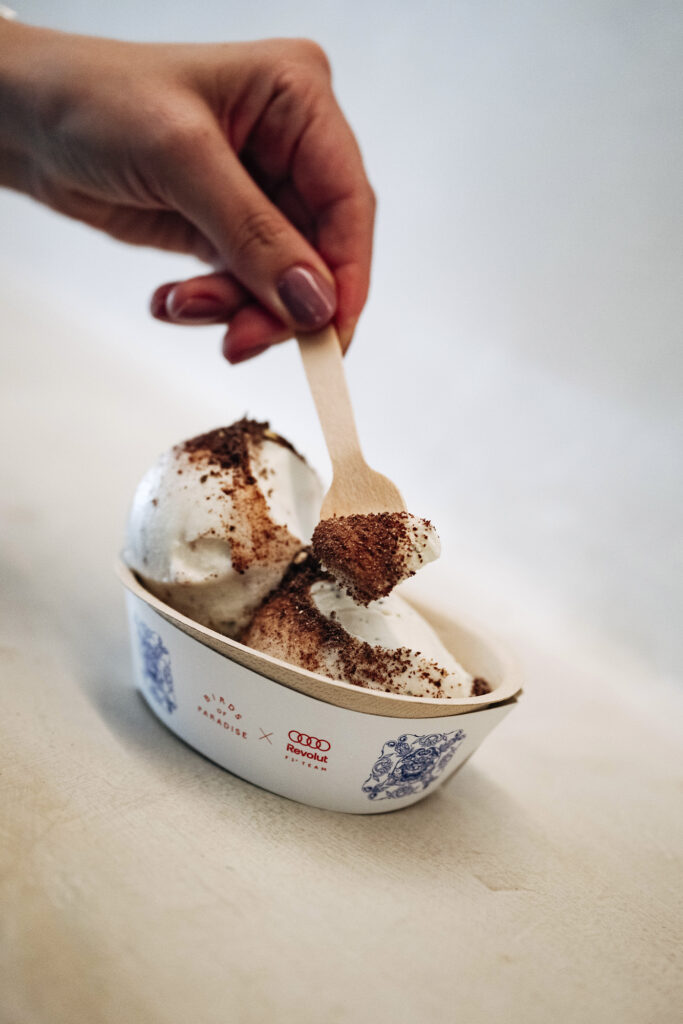
It’s located directly above the pit boxes, with a view over both the pit lane out the front and the paddock at the back. Inside are a multitude of indoor and outdoor lounges with a direct view of the track, grandstand seating, a to-die-for gelato shop, a merch stand, bars and restaurants. And they’re not just any restaurants, either, but pop-ups from several two- and three-star Michelin establishments from Singapore and beyond. I can’t tell you exactly what tickets cost — the Paddock Club is already sold out for 2027 — but I can tell you it’s well over $10,000 for the whole weekend. It’s the ultimate Formula 1 experience.
Formula 1 at Night
The crowd in Audi’s Paddock Club — mainly corporate sponsors and brand ambassadors — all push up against the window for the start of the race. There’s a flurry of activity in the garages and pit lane below us. Mechanics are rushing back and forth with all manner of gear. The grandstands are packed.
Seen up close during a tour of the pit lane, F1 cars look so much more exotic and special than they do on television. This is motorsport’s cutting edge. Audi’s ice-blue livery for the race pops under the 1,600 floodlights illuminating the track.
A visit behind the scenes inside the team’s garage is eye-opening. Standing at the back — in the same spot Kim Kardashian stands when she’s visiting Lewis Hamilton in the Ferrari garage — it’s a picture of constant motion. Even in this crushing heat, with everyone in fireproof overalls, the whole operation is tight. Everyone is doing a specific job, moving with purpose. Every little piece of gear is in its right place. There’s no clutter, nothing left lying around on any surface.
The precision and professionalism, seen in everyone from the hospitality staff and servers to the mechanics, pit crew, and drivers, is mind-blowing. Even more so when you consider they put on this whole F1 circus in Malaysia the weekend before, and Azerbaijan the week before that.
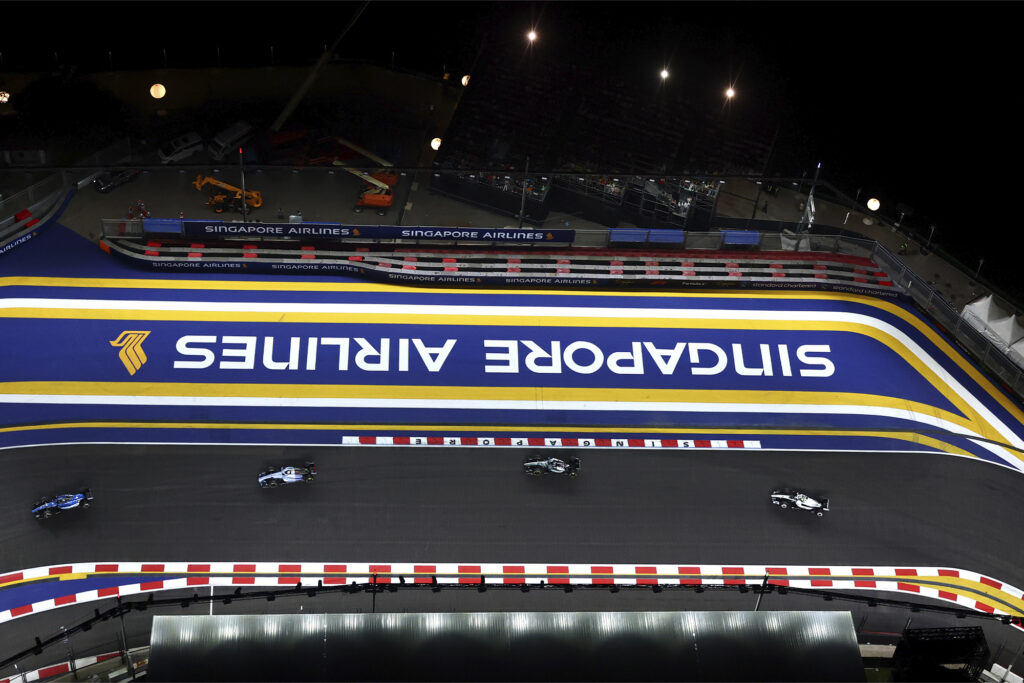
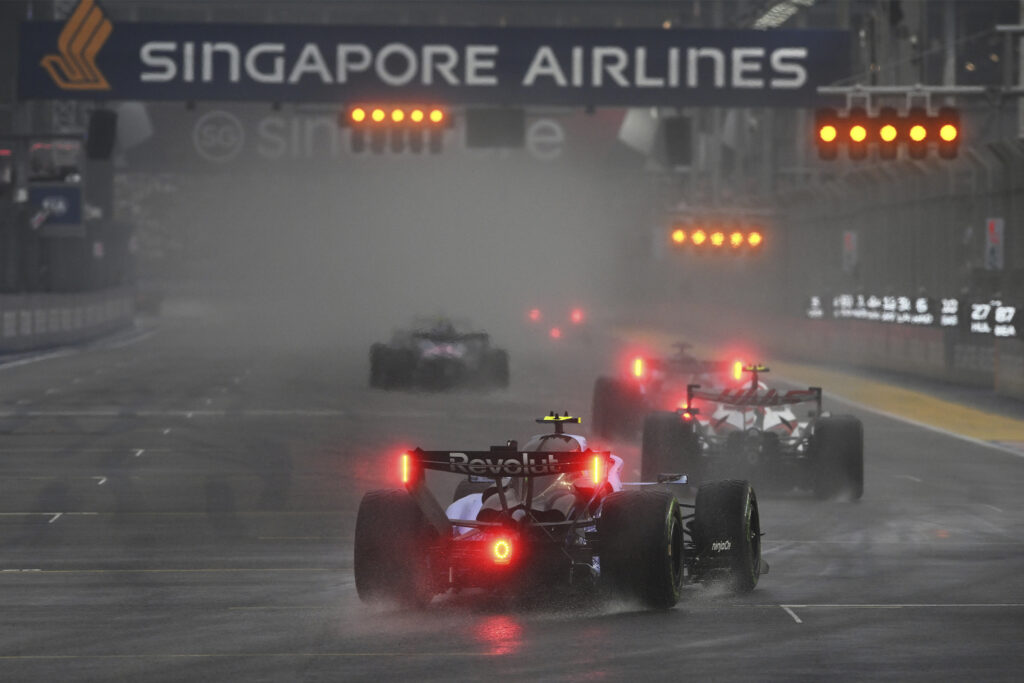
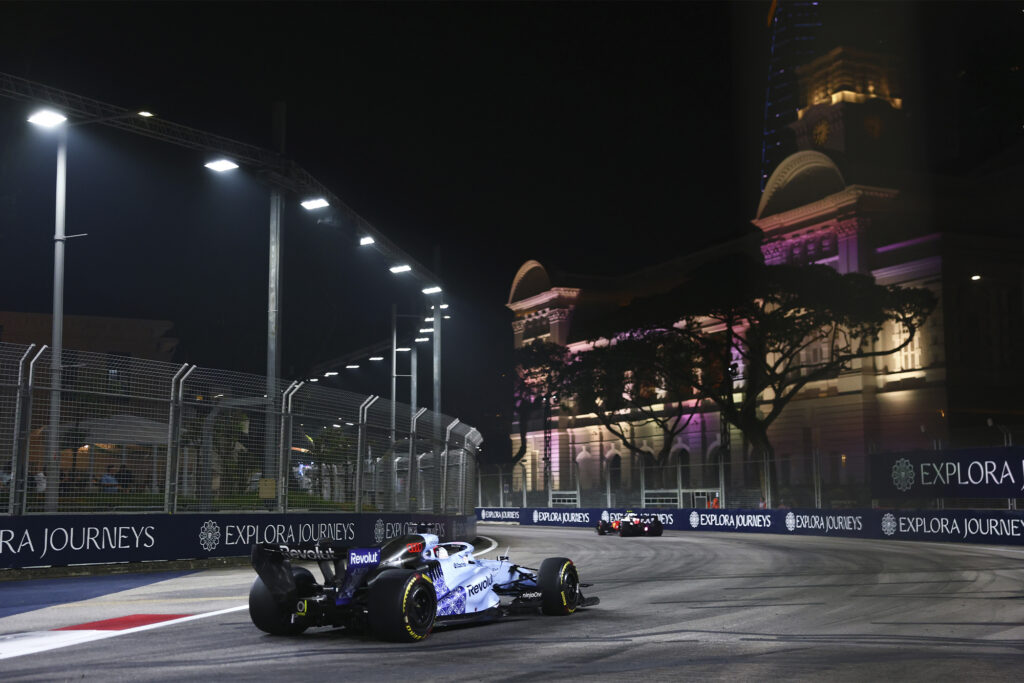
On the tight street circuit of Singapore, F1 cars look impossibly fast, especially against a backdrop of regular traffic trundling along city streets in the distance. The way the cars turn in on corner entry and pivot at the apex is downright violent. And I know there was a lot of fuss made about the lack of noise from the 2026 engines, but, again, heard up close, they’re ear-splittingly loud. (Although, of course, #BringBackV10s.)
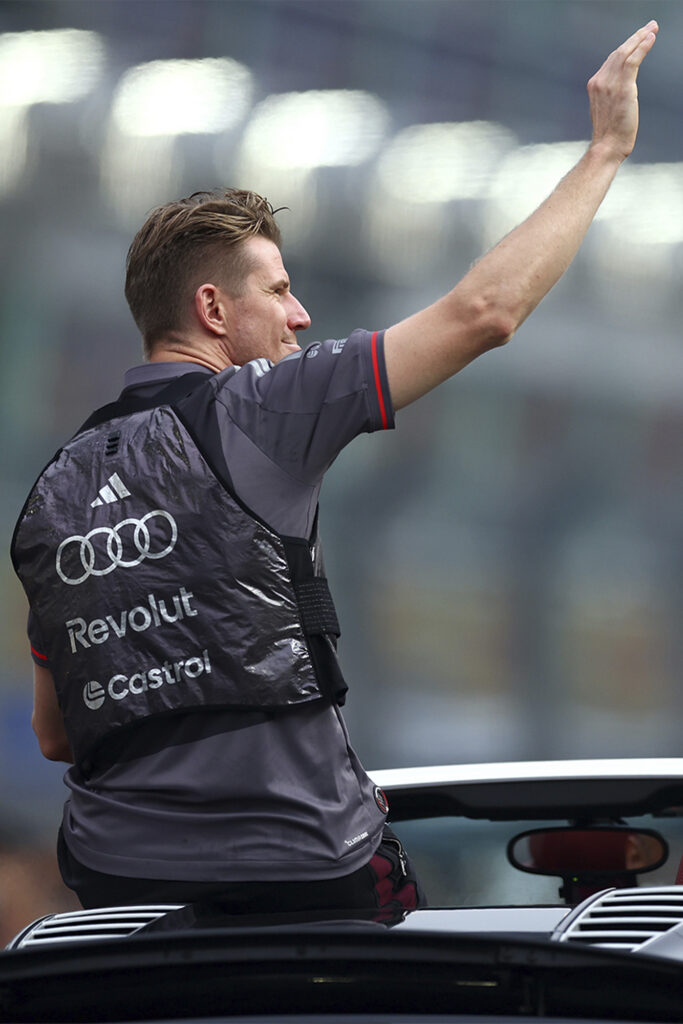
Singapore is one of the most physically torturous circuits on the entire calendar because of the heat; drivers lose about 7 pounds (3kg) during the race from sweat alone. All it takes is a split-second lapse in concentration to have an “incident.” (George Russell learned that the hard way, crashing out of the lead of Saturday’s Sprint.) On Sunday at the main event, Audi’s Nico Hulkenberg managed to keep Russell at bay in the closing stages of this most gruelling race to finish eighth and pick up crucial points for the team. His teammate at Audi, Gabriel Bortoleto, didn’t fare quite so well, retiring early in the race with a gearbox issue. For the full story, read our recap of the Singapore Grand Prix — including Saturday’s Sprint — right here.