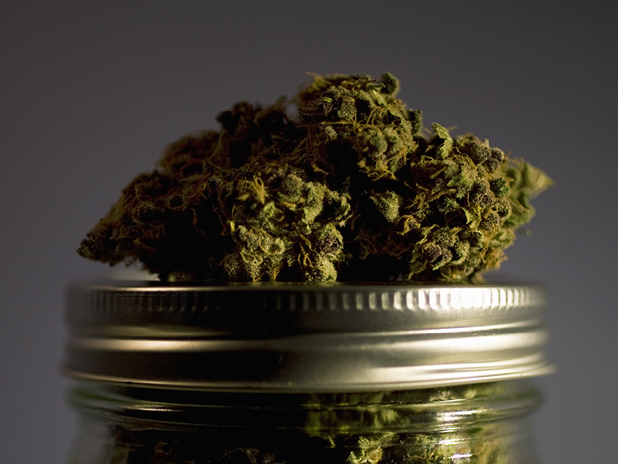
Here’s the hitch: the Harper government hates pot, and even voting in a longhaired Liberal won’t change the fact that marijuana has historically been seized more often than studied. “No research dollars have been committed to this in the past 50 years because there’s been a war on drugs,” says Sean McNulty, a Toronto portfolio manager who has invested in a number of LPs. “You’ll get money to research the impact of wind turbines on a rare species of bats before you get money to research medical marijuana.”
In the absence of hard data and empirical evidence, Health Canada—already severely underfunded and on a government leash—is understandably hesitant to start passing the joint to anyone with a scraped knee. (And they’re probably not keen on the idea of doctors writing a 75-year-old grandmother with terminal cancer a prescription for Donkey Dick, either.)
That’s where Walters comes in. Unlike other facets of the bud business, his clinic isn’t big money. Provincial health plans cover the cost of visits for its 1,300 patients; the insurance money from appointments and urine tests covers overhead and keeps the lights on. “I make money every time someone pees in a cup,” Walters often jokes, “so I serve a lot of coffee.”
But the humour disguises a clever business plan. When a patient comes to the clinic, he fills out a series of electronic questionnaires about his medical condition and symptoms, among other things. After using medical marijuana, if he’s prescribed it, he responds to more surveys about how certain strains in particular amounts help or hinder his ailment. Anonymized and combined with other patient input, those questionnaires provide an unprecedented statistical snapshot of medical marijuana use. Walters plans to open more clinics in Toronto and in the Maritimes, where PTSD rates are disproportionately higher. With more patients receiving more relief, the data only becomes more accurate and robust.
“It’s incredibly valuable information,” says Tweed executive vice president Mark Zekulin. “If it can finally let us understand not just anecdotally why a particular strain might work for insomnia while another might work for chronic pain, you can start to form the basis for a Phase I clinical trial.” If it could successfully complete a series of clinical trials, cannabis would be eligible for a drug identification number, which would allow pharmacists to sell the medicine over the counter, give it unprecedented legitimacy and boost its user base significantly.
Walters’s data is also the only substantial Canada-specific market research on medical marijuana, and he’s banking on the fact that LPs will be willing to ante up to have access to it. As the industry matures, some of those LPs—and the investors behind them—will win big, others will be bought out and many more will flat-out fail. But there will always be a need for stats, and, so far, Walters has a monopoly on the numbers.
If he’s poised to make millions, though, Walters isn’t letting on. He doesn’t talk much about money, and he’s practically developed a phobia of publicly traded stocks. If you catch him excited or up in arms, it’ll be because an LP is jacking up it prices and his clinic’s patients can’t afford their medicine, not because he lost thousands on the market. He has the born-again air of a man looking for redemption for past sins—a man who’s found a passion grander than a paycheque. “I’ve created hedge funds. I’ve created public companies. I’ve built mines. Big fucking deal,” he says. This is different. “I built a clinic with my own hands. I did that. I helped create something that helps people every day. I’ve never been able to say something like that before.”