“Miyabi” has no English equivalent. The Japanese term draws from the root word miya, which denotes a ruler’s dwelling place; a religious temple, or a king’s palace. Miyabi, then, refers to the sentiment of these settings — well-mannered, courtly, graceful. Some translate miyabi as “elegant” or “sublime.” Yet these descriptors pale in comparison to the true experience. That’s where Miyabi Knives comes in.
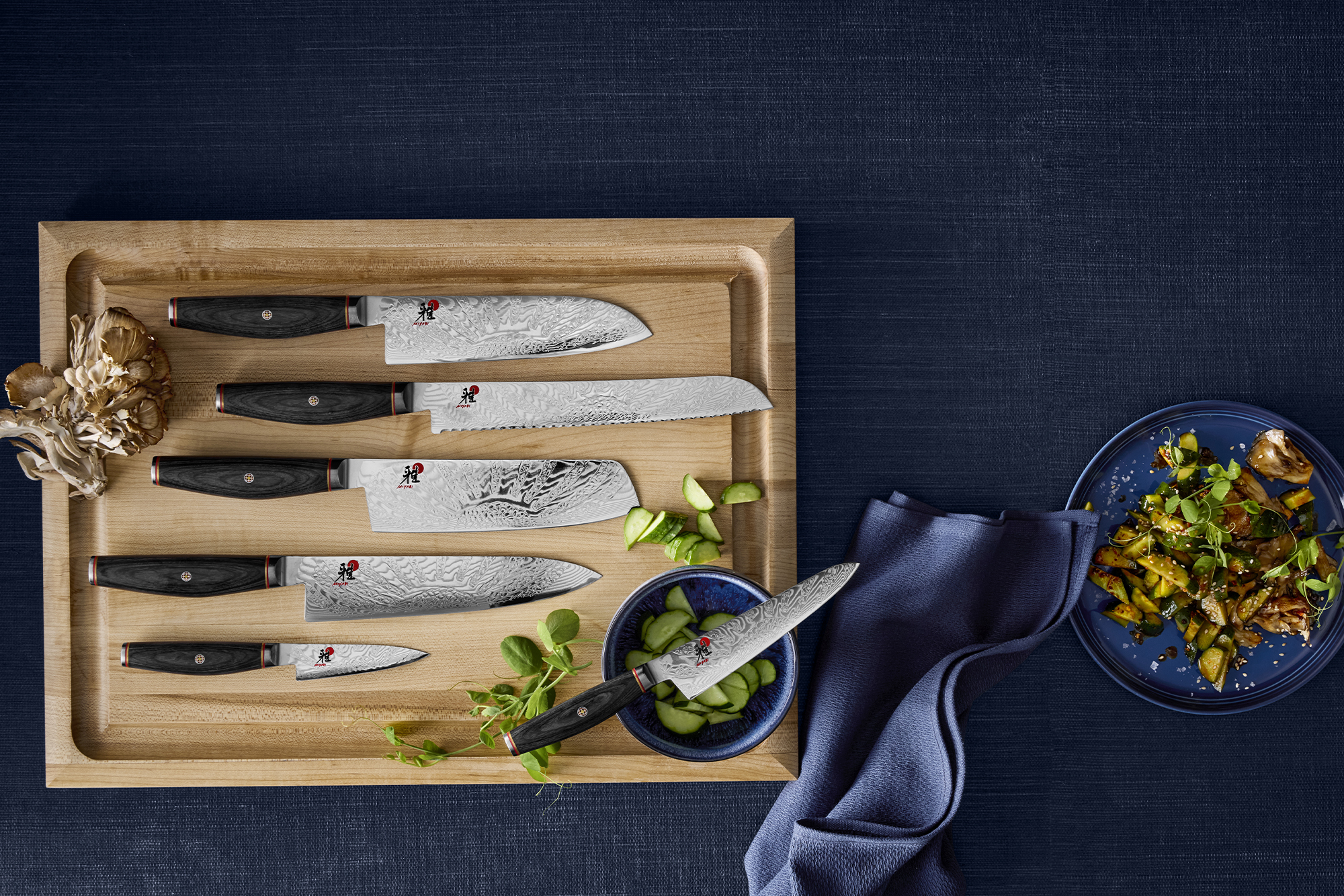
As the name suggests, Miyabi Knives specializes in fine cutting tools. Shaped from premium carbide stainless steel, the metal retains its razor edge over time. To forge the knives, Miyabi uses a Damascus-style technique: 49 layers of steel are welded together, infusing the material with a unique pattern of waves and stripes. Next, Miyabi hones each blade by hand with a traditional process dubbed the Honbazuke method. It’s an involved affair, using a series of stones to maximize sharpness. In turn, each model slices quotidian staples — charcuterie cheeses, celebratory cakes, stalks of cilantro or chives — with sleek, exacting precision.


Primarily produced in Seki City, Japan — a storied locale with a reputation for sword-making — Miyabi Knives showcase traditional craft through a contemporary lens. Modern manufacturing includes more than 100 steps per knife; creation lasts 42 days.
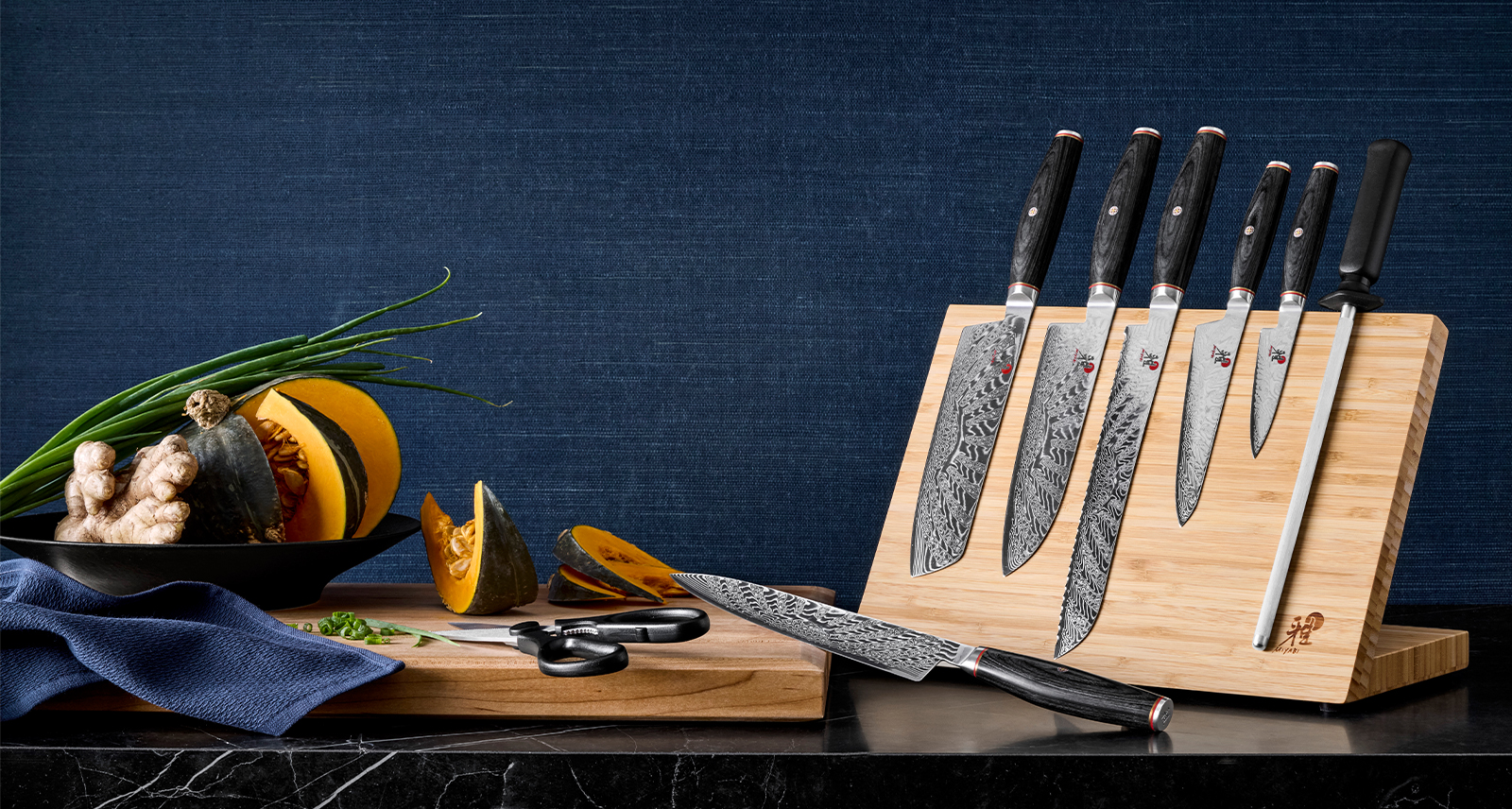
Given the intense labour behind each blade, the nine-piece Miyabi Tenmei Easel Knives Set is a true rarity. Composed of six knives, plus a pair of shears, a magnetic storage easel, and honing steel, the set captures the essence of miyabi: delicate designs with powerful, precise performance. The seven-inch Santoku offers all-purpose versatility, while the rectangular, six-and-a-halfinch Nakiri chops vegetables with unparalleled ease. Also included are paring and prep knives, as well as a blade for bread and a classic chef’s knife. It’s the ultimate refinement: an elegant edge turns everyday slicing, dicing, and cubing into an elevated form of art.