On the cusp of the landmark 50th edition of TIFF, CEO of Toronto International Film Festival Cameron Bailey stands at the helm of one of Canada’s most acclaimed cultural institutions. For decades, TIFF has been regarded as one of cinema’s most revered events, introducing the world to everything from critically acclaimed indie darlings to worldwide blockbuster successes. But when it comes to the continued success of creative arts, Bailey — and TIFF’s board of directors — understand just how vital it is to invest in its innovation.
As an industry leader who’s spent 25 years with the organization — four of those as CEO — Bailey has been instrumental in expanding and cultivating TIFF’s loyal audiences and ensuring the festival is an essential stop for filmmakers from around the world. Throughout his tenure, Bailey has held many key roles, beginning as a programmer with Perspective Canada, founding the Planet Africa section, working as TIFF’s Artistic Director, and most recently as the Co-Head of the organization.
“If journalists write the first draft of history, film programmers curate the first draft of the film canon. TIFF’s programming team stands on the front lines of contemporary cinema.”
Cameron Bailey
Ahead of what might prove to be TIFF’s most momentous occasion, we spoke with Bailey about his longtime relationship with the festival, maintaining its illustrious reputation, and how he hopes to continue evolving its offerings over the next 50 years.
You’ve had such a core influence on TIFF throughout your tenure. How has TIFF influenced your passion for storytelling?
I was a big reader ever since I was a kid in Barbados. I went on to study English Literature at Western University, and that was where I took my first film courses. I was hooked by the revelation that movies could do so much more than entertain. They could open whole new worlds to you.
I started writing about film and eventually programming, and that’s when TIFF came calling. Over 11 years as a festival programmer and another 18 years in leadership roles, TIFF has given me the opportunity of a lifetime. I’ve been among the first to see some of the defining films of our time, to play a supporting role in shaping their trajectories, and to learn first-hand from filmmakers what drives them. The whole thing has been so inspiring.
What were some of your first memories of interacting with the festival?
I interrupted the first week of my senior year at Western to come back to Toronto for this festival. It had an irresistible, magnetic draw for me. I knew I’d see things on screen I’d never seen before, and the festival of festivals did not disappoint. That’s the bar we still aim for every year.
“In the ’70s and ’80s, we learned how to show off Toronto as fun, smart, and a bit wild. That attracted Hollywood. In the ’80s and ’90s, our deep attention to cinema coming from Asia, Latin America, the Soviet Union, Africa, and Iran convinced the world that we were serious about our global interests.”
Cameron Bailey on TIFF’s evolution.
You’ve held such a breadth of roles over the years. For those unfamiliar, can you offer context to your experiences and how they shape your leadership of TIFF today?
Making the transition from film critic to film programmer was pivotal for me. As a critic, I loved sifting movies through my own ideas and experiences; I always thought of reviewing movies as a subjective exercise. Becoming a programmer meant adding a new lens: the audience. I’ve learned so much in listening to and watching our audiences in Toronto. Like all movie audiences, they create that human magic of becoming one empathetic organism together in the dark. But there’s something singular about the Toronto audience as well: they bring such generosity, such curiosity and such a vast variety of global experiences to that collective response to each film. That’s what we all try to keep in mind at TIFF: our audience is a unique, living entity. It has wisdom we can all learn from.
How has TIFF evolved over the course of its 50-year history?
Back in the ’70s and ’80s, we learned how to show off Toronto as fun, smart, and a bit wild. That attracted Hollywood. In the ’80s and ’90s, our deep attention to cinema coming from Asia, Latin America, the Soviet Union, Africa, and Iran convinced the world that we were serious about our global interests.
We responded early to technological change, adopting digital cinema, series, exciting new work from streaming platforms, and short-form social media content. I’ve always wanted TIFF to stay close to where the artists are headed and where the audience is headed. If we do that, we’ll always stay relevant.
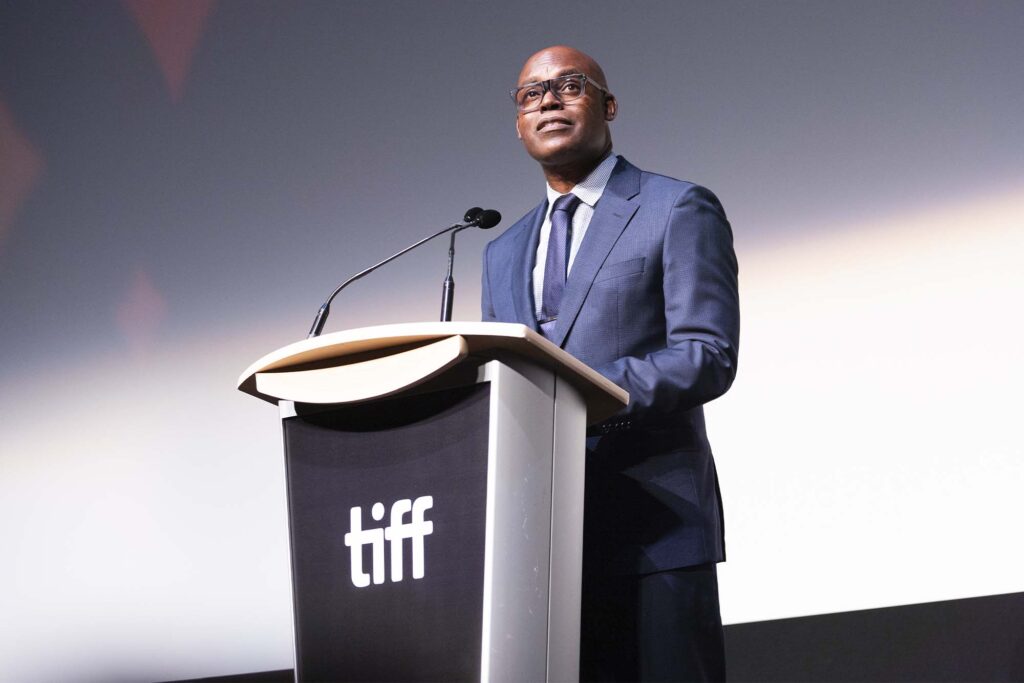
How do you balance celebrating Canadian filmmaking and opening the doors to international productions?
Canadian screen storytellers keep making it easy for us to be boosters. From opening the festival in 1988 with David Cronenberg‘s Dead Ringers to Alanis Obomsawin winning the Best Canadian Feature prize in the ’90s, to showcasing early work by Atom Egoyan, Patricia Rozema, Denis Villeneuve, and more, this small country keeps producing globally recognized talent. This year, look out for new work from Chandler Levack, Zacharias Kunuk, and more.
How have the team’s curatorial decisions evolved over time?
If journalists write the first draft of history, film programmers curate the first draft of the film canon. TIFF’s programming team stands on the front lines of contemporary cinema, making decisions that will contribute to what trends emerge in cinema and what filmmakers become this generation’s next obsession. Christopher Nolan came to our festival in 1999 as a part of our Discovery program. The people lucky enough to see their first film by Chantal Akerman or John Woo or Pedro Almodovar or Lucile Hadzihalilovic saw entirely new visions that have turned the arc of film history in their direction.
“Daring to imagine that Toronto could be a global centre for the culture and business of screen storytelling, potent enough to attract a genius like Guillermo del Toro to work and live here.”
Cameron Bailey on what TIFF should be most proud of.
Can you speak a bit more to the impact of TIFF’s talent development initiatives?
Our talent development programs have been modest in terms of resources but outsized in impact. One of the things I’m proudest of is how putting emerging filmmakers in direct contact with greats like Claire Denis or the Dardenne brothers can crack open whole new reserves of inspiration among artists just starting out.
I know that our Rising Stars program brought actors such as Jessie Buckley, Tatiana Maslany, and Shamier Anderson to greater recognition in the industry at turning points in their careers.
What do you think the festival should be most proud of in terms of its evolution over 50 years?
Expanding the vision from an annual festival to a year-round organization that brings people together through cinema. Building a permanent home for film lovers in TIFF Lightbox. Drawing more inspiration and more energy from this magnificent polyglot city of Toronto as it’s evolved. Daring to imagine that Toronto could be a global centre for the culture and business of screen storytelling, potent enough to attract a genius like Guillermo del Toro to work and live here.
Feature photo by George Pimentel, courtesy of TIFF.