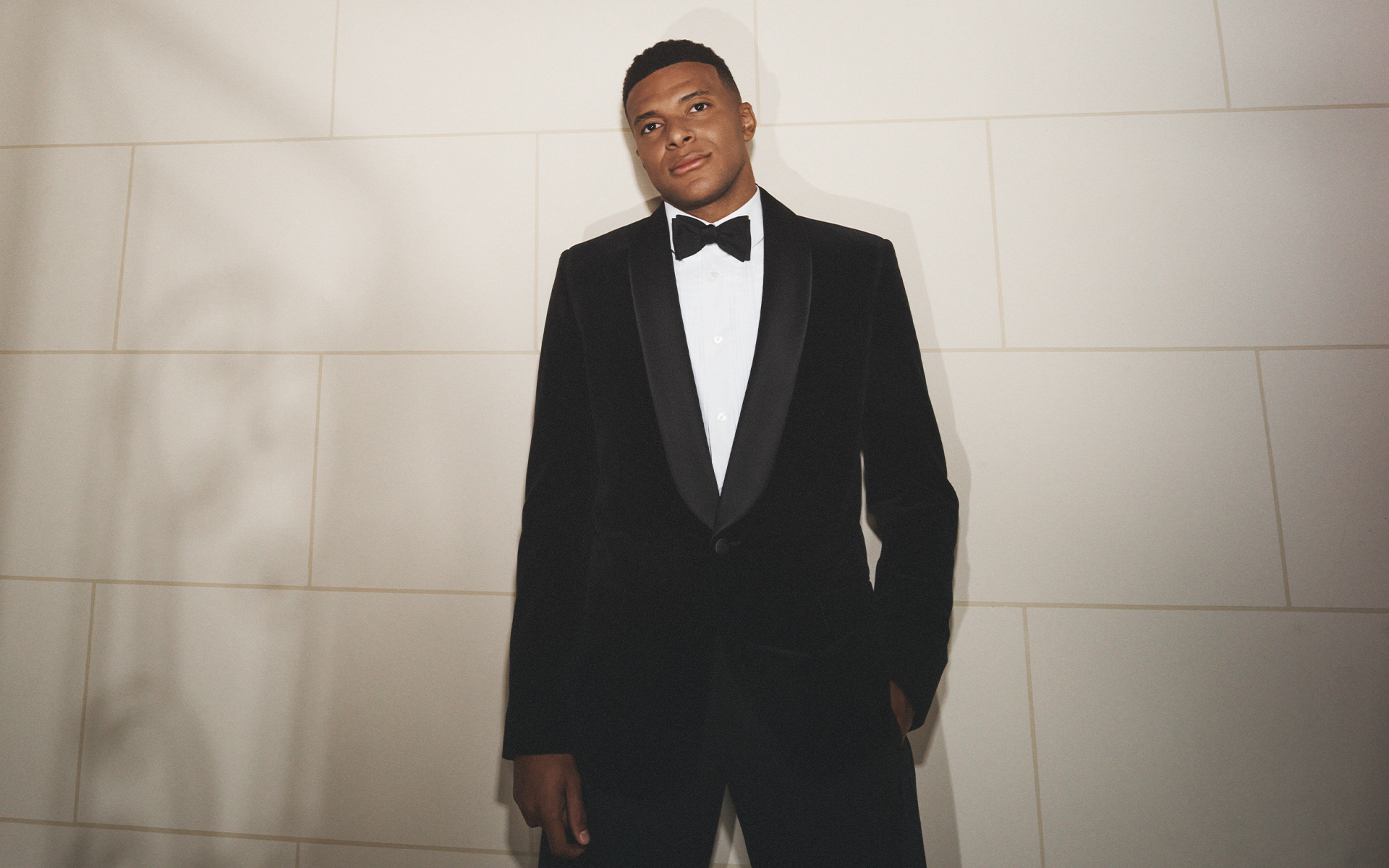
This summer feels like it’s vibrating at a different frequency, one that hasn’t been felt on this continent since 1994. Back then, the World Cup in the U.S. was both a proof of concept and an exercise in possibility — a high-gloss introduction of the world’s game to a skeptical frontier. Today, that curiosity has been replaced by a crushing sense of scale. With the tournament expanded to 48 teams and three nations, North America will effectively become the temporary capital of the sporting world, the absolute epicentre of global culture. And at the heart of it all is Kylian Mbappé.
At 27, the Frenchman has finally shed the prodigy label that defined his early years in Bondy, a working-class, ethnically diverse suburb northeast of Paris. Now, he’s a finished product — a global icon who has spent the last decade making the extraordinary look routine.
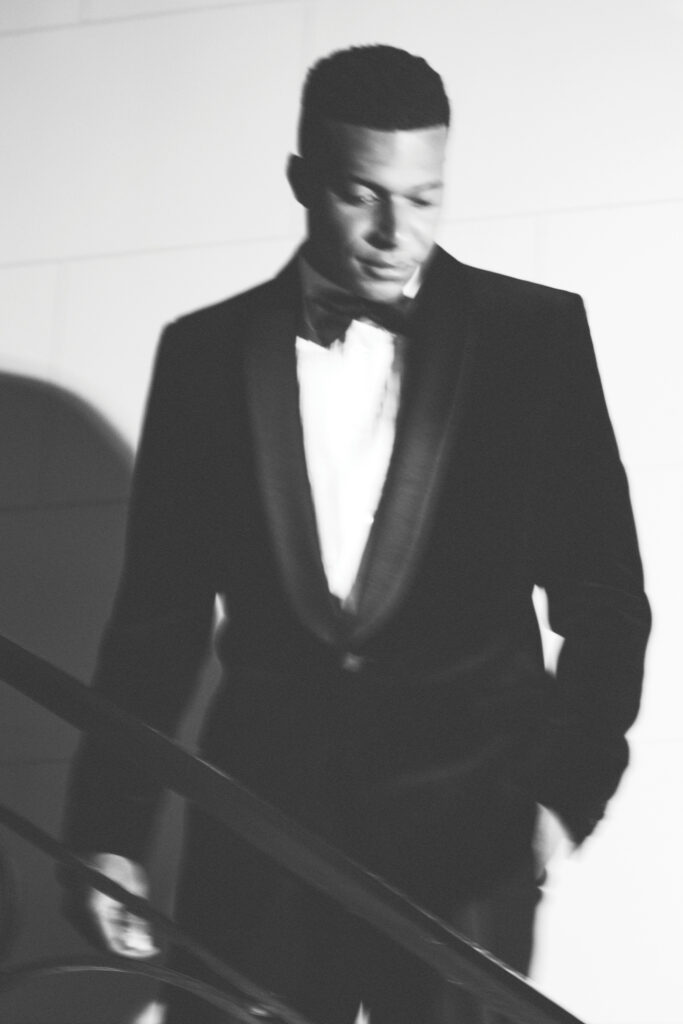
While the French squad might be logging minutes in stadiums south of the border, the weight of Mbappé’s presence is felt across every host city from coast to coast. For a country like Canada, which is still mid-pivot into its own soccer identity, the arrival of an icon of this magnitude on our continent represents a massive cultural jolt. “This exposure will only help embolden and enrich Canada’s soccer journey,” says Shireen Ahmed, a senior contributor for CBC Sports and a leading voice on the intersection of sport and culture.
“When I think about somebody who I consider a legend, I think about integrity, I think about character, and I think about Kylian Mbappé.”Shireen Ahmed, CBC Sports
We usually talk about Mbappé in terms of raw physics. The headline is almost always the speed — the 38 km/h sprints that leave world-class defenders looking like they’re running in work boots. There’s a violent elegance to the way he separates himself from the pack in a five-metre span.
Steven Sandor, a veteran soccer journalist who has tracked the game’s evolution for decades, suggests that looking only at the speedometer misses the point of the actual experience of facing Mbappé. “He’s the most terrifying player in the world running at a defender,” Sandor says. “If he’s running at one or two central defenders, he’s the only other player in my memory who could terrify a defender one-on-one like Thierry Henry.”
That terror comes from his cognitive pace. While moving at a speed that would trigger a camera in a school zone, Mbappé remains utterly cold-blooded. He processes the game faster than the players trying to stop him, making clinical decisions at a velocity where most players would be lucky to simply keep the ball at their feet. He’s a high-performance machine with a processor that never throttles.
Then there’s the Madrid of it all. Two seasons into his tenure at the Bernabéu, the “Galactico” experiment has yielded the expected statistical monster. Fifty goals in his first 53 La Liga matches is an absurd return. Yet, a tension has lingered over the Spanish capital. In the hyper-theatrical world of Real Madrid, scoring goals is the baseline; you’re also expected to fit the soul of the club. The debate has centered on how a superstar of his magnitude fits into an ecosystem already crowded with apex predators like Vinícius Júnior, as well as the lack of club trophies after two minor ones claimed during his first year in Madrid (neither being Champions League nor La Liga trophies).
“Kylian Mbappé knows how to play soccer in an exceptional way,” Ahmed notes. “As long as that serves the overlords in the boardrooms of Real Madrid, he’ll be fine. But there is precedent for him to know that even the most beloved of beloveds won’t be favoured once they don’t suit the business anymore.”
The World Cup, however, remains his natural habitat. Mbappé enters this tournament with 12 World Cup goals, stalking the ghosts of Miroslav Klose and Ronaldo. He is chasing a third consecutive final, a feat that feels like a relic from a different century of the sport.
Sandor argues that if Mbappé delivers this summer, the domestic noise becomes irrelevant. “If France wins the World Cup, and he’s a star, people aren’t going to talk about the Real Madrid stuff,” Sandor notes. “They’re going to talk about his legacy for France. That will be three World Cup finals in a row. He’d be up there with Zinedine Zidane as the greatest French player ever.”

As the captain of France, Mbappé’s role has evolved. He’s become the social and cultural barometer for a young, diverse squad, navigating the complex social and racial politics of France with a level of agency we rarely see from athletes in their prime.
Unlike the quietism of the Zidane era, Mbappé hasn’t been shy about using his immense platform. During the 2024 French elections, he urged the youth to vote against political extremes. “He’s shifting the role from just a player to a spokesperson — speaking for himself, but because of the amount of people he reaches, it’s incredibly important,” Ahmed says. Mbappé carries the weight of a nation’s expectations, and he does so with a visible, almost defiant, ease.
The 2026 tournament feels like a formal coronation. We have officially moved past the Messi and Ronaldo era, leaving a vacuum that Mbappé has filled with terrifying efficiency. He has spent years preparing for this exact moment, the chance to dominate a tournament on the world’s biggest commercial stage and cement a legacy that will be discussed for decades.
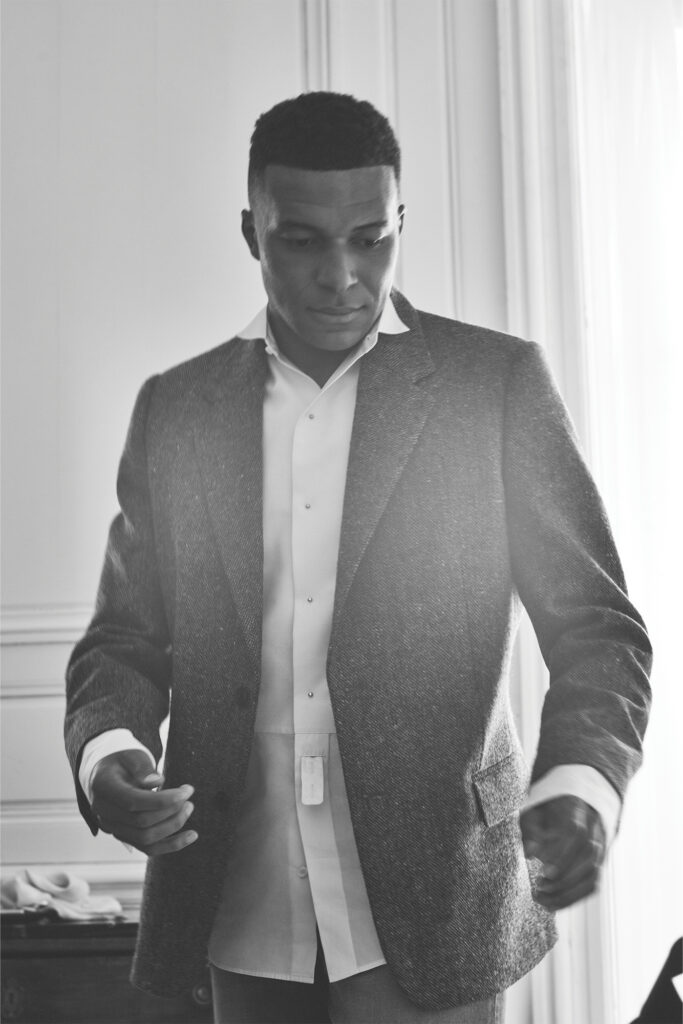
“When I think about somebody who I consider a legend,” adds Ahmed, “I think about integrity, I think about character, and I think about Kylian Mbappé.”
By the time the final whistle blows this July, the conversation will likely shift from whether he’s the best player in the world to where he sits in the pantheon of the greatest to ever touch a ball. Everything about his recent output suggests he’s already operating in a future that the rest of the world is only starting to realize has arrived.
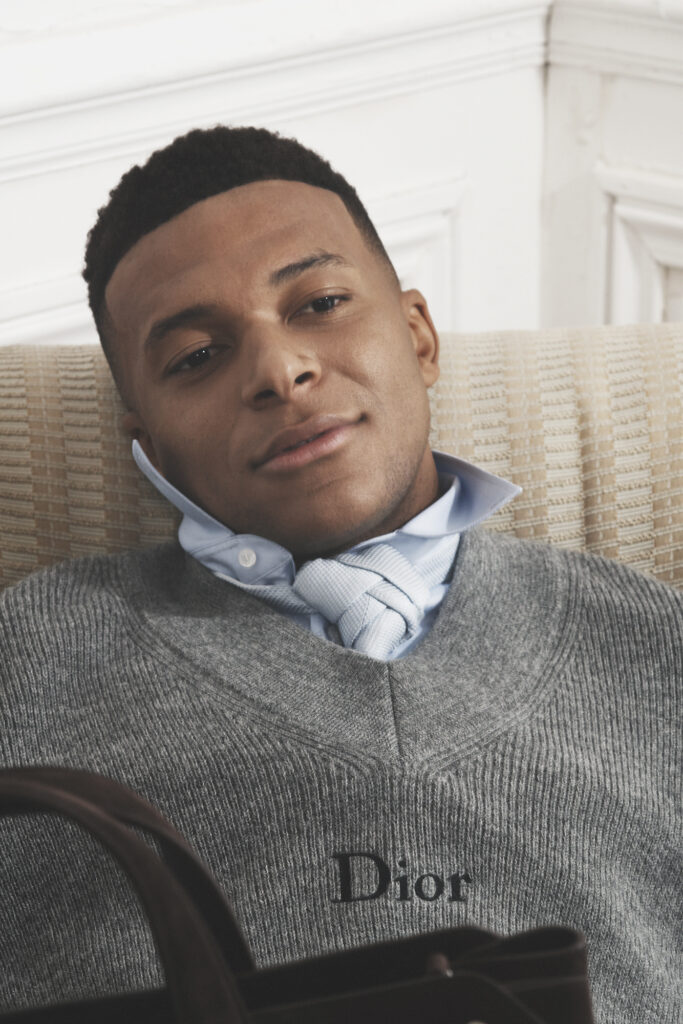
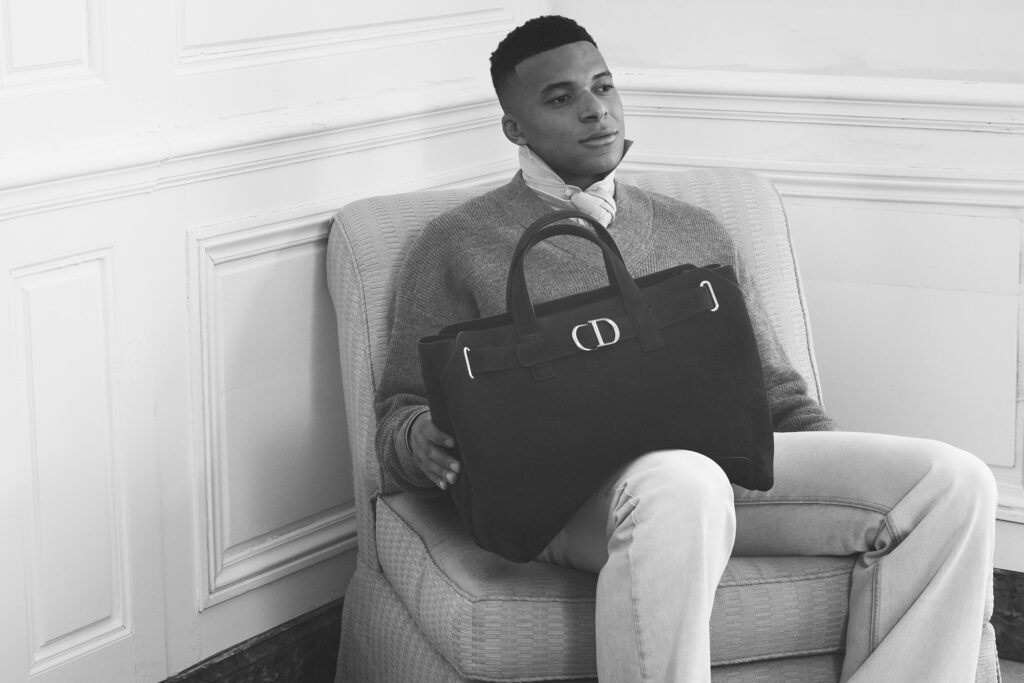
ALL CLOTHING BY DIOR, AVAILABLE AT DIOR BOUTIQUES AND DIOR.COM.
PHOTOGRAPHY: DAVID SIMS.