Sitcoms are having a moment. If last year’s one-two punch of Adults and Overcompensating suggested a resurgence, then the runaway success of Rachel Sennott’s I Love LA confirmed it. And, with its final episode airing just last month, the Mindy Kaling-penned Not Suitable for Work drove the point home: a new generation of sitcoms is here to stay.
Shaped by predecessors likeThe Office, 30 Rock, and Parks and Recreation, today’s sitcom electrifies the mundane. Unusually compelling people find themselves in nearly universal settings: a sparsely decorated shared apartment; an open-concept office stocked with boxes of bubbly seltzers; a cramped corner table during happy-hour. Plots leave room for character-driven comedy — Not Suitable for Work follows five dreamy-yet-determined graduates as they shoot for personal and professional success in the middle of Murray Hill, Manhattan. Shenanigans ensue.
“Things are the funniest when you’re not trying to be funny; you just play something earnestly, and the craziness of the character or the situation makes it funny.”Jack Martin
Yet certain qualities separate the streaming-era sitcom from network ensembles of the early aughts. Seasons are short and speedy. Casts, meanwhile, are increasingly pulled from a pool of sketch-comedy stars; these actors, often traditionally trained, have also learned to condense character, plot, and setting into a tight 90-second TikTok, captured in a nine-by-sixteen frame. One such actor? Not Suitable for Work‘s very own Jack Martin, who stars as aspiring TV producer Josh Teitelbaum — a lover of cable-knits and corduroys, described as having “his mother’s eyes and his father’s connections.”
Martin himself is quite the opposite. On the cusp of 28, he has found a path into the entertainment industry on his own merit; summer courses in screen acting led to coaching sessions and talent reps. Then, of course, there’s social media: Martin’s punchy point-of-view sketches have amassed over one million followers across Instagram and TikTok — for which the actor credits his confidence. “I didn’t think I was funny enough to do comedy,” Martin admits. Yet, once he began posting through the pandemic (“There was kind of nothing else to do”) viewers resonated. “People found it funny,” he laughs, “and I was like ‘Great!'”
Martin doesn’t show a shred of self-doubt on screen, however. When Josh Teitelbaum protests, “This cardigan is cool! It gives me a quiet sophistication!” Martin perfectly captures the self-righteous snarl of someone who has never waited tables. Speaking shortly before the Season 1 finale, Martin shares his experience filming Not Suitable for Work, lessons from Mindy Kaling, and hopes for Season 2.
Congrats on the first season of Not Suitable for Work. What was it like to see the first season roll out?
It was amazing. I really loved the show. I always thought it was amazing, but I always try to keep my expectations in check, you know? I don’t want to assume that everyone’s going to love it.
When it came out, people seemed to be really liking it and connecting with it. I’ve gotten all sorts of nice messages and it’s just been such a lovely experience. I feel a lot of gratitude for the opportunity to play this character and to be with such an amazing group. I mean, all the writers are incredible. The cast is incredible. We’re genuinely friends. We really like each other. It’s such a rare thing, and I feel so grateful to do it.
I’d love to know how the project came about for you. How did you hear about it, and what were your first thoughts?
It was so crazy and almost random. I had heard about it really early — not in a secret way or anything — it was, like, a Deadline announcement that Mindy [Kaling] was doing a show about Murray Hill, which is the neighbourhood in New York where most of my friends moved after graduation. I had so many people sending it to me being like, ‘You’ve got to be in this show.’ So, I had been wanting to be in it for a while, I was waiting for casting to start. I got in pretty much at the last minute. They ended up calling the director of a movie I did, Pizza Movie, and he recommended me. Then, I got in the room and ended up booking it two days after that. It feels very lucky. Everything in this business feels lucky. I feel super grateful. It was something — I’m not making this up — I’ve been wanting it for a long time. So, the fact that it worked out feels kind of crazy, you know?
“There’s a stigma associated with the internet, and I understand why — but I think that’s changed recently. Curry Barker and Kane Parsons, they’re these incredible directors that came up through the internet.”
For sure. Especially working closely with Mindy — she’s a legend in sitcoms: The Office, Sex Lives of College Girls. I’d imagine there might be an established workflow on set. What was it like to work alongside her and learn as you go?
It was incredible. Mindy, she’s a genius. I really think she’s a hitmaker, like in music, you know? She has this intuition — on top of her expansive intelligence — where she knows exactly what’s needed to make something a hit and make something work for a mass audience while still being good and specific, which is so hard. There are so few people on earth who can do that. It was eye-opening.
I’ve had certain moments, in my life and in my career, where someone says something that stands out. [Mindy] would say stuff that really stood out to me. Stuff that would only come to mind if you were her — if you had worked on The Office and created Sex Lives of College Girls and Never Have I Ever and Running Point and The Mindy Project — and really, really knew what you were doing.
I remember on set, there was a scene in episode two where I crashed my coworker’s after-work drinks. It’s really awkward. I’m, like, not supposed to be there. We wanted to play into the awkwardness of it, because it’s funny. Then, [Mindy] came over and she was like, ‘If we were at Dunder Mifflin, we would do it this way.’ I was like, ‘That’s so cool!’ [Laughs.] You know? She’s one of maybe ten people that can do that. It’s crazy.
It must be a masterclass in that kind of humour. Were there specific directions or insights that she saw with your character, Josh? We meet him as a stereotypical nepo-baby, but he slowly grows over the course of the season. What was it like to map that journey?
It was made very easy for me because he’s a brilliantly written character. Your life is easy, as an actor, when there’s good writing and when a lot of thought is put into something. This was not something where they were like, ‘Oh, yeah, and this is like The Guy in the Apartment.’ It’s not one of those shows. She’s been working on this for years. She knows this world really well. These characters are so deeply thought-out. Not just in terms of comedy — they’re well-rounded characters. They have aspirations and work struggles and romantic arcs and family relationships. All that comes into play. Like, [the writers] had already thought about Josh’s mom, who isn’t even in Season 1, you know? All that stuff is thought-out, and that makes it so much easier as an actor because the work’s done for you. I just wanted to do it justice, really.
My sense of humour is really… I think things are the funniest when you’re not trying to be funny. Like, you just play something really earnestly, and the craziness of the character or the situation makes it funny. Is this, like, way too long-winded of an answer?
Not at all!
Okay, ’cause I could talk about this all day. That’s what I went for with Josh. I just think the whole billionaire dad thing is funny. It’s funny when he’s, like, a dick unintentionally, because I think he’s a very kind-hearted person. He’s really trying to do the right thing. I think it’s funny when he steps in it, you know? So, I liked leaning into that.
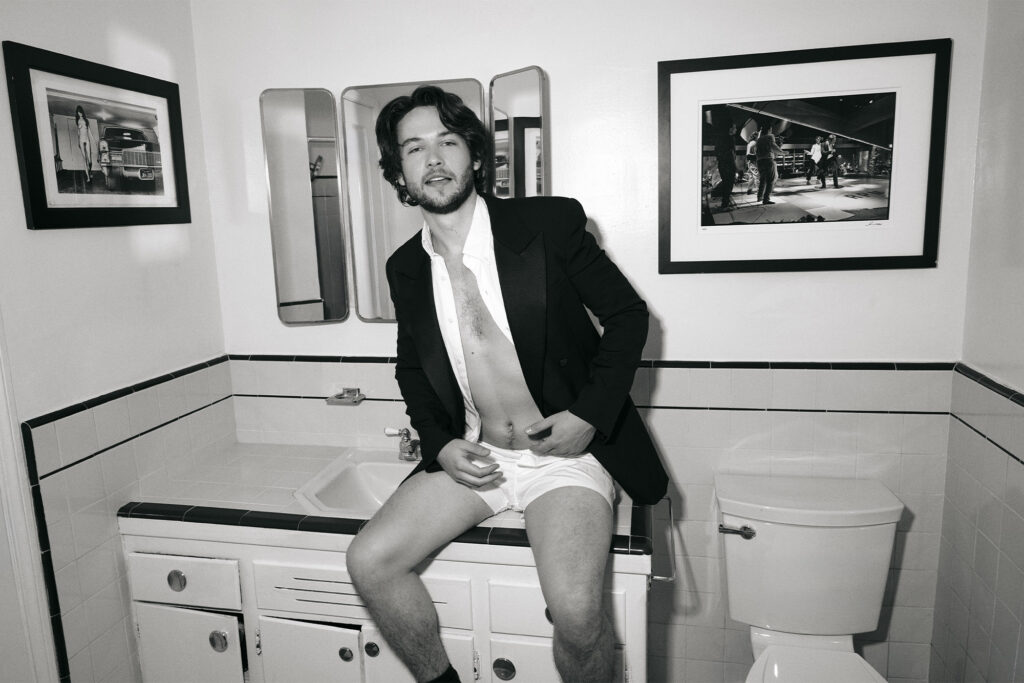
I’d love to dig into your take on comedy. Coming at it from sketches on TikTok and Reels — almost like one-man shows — how does that compare to scripted work? Does the experience inform your process on set?
It was incredibly helpful. I think, for a while — I loved making that stuff, I love looking at it positively — but I almost, internally, looked down on it or felt a bit ashamed about it. There’s a stigma associated with the internet and I understand why, but I think that’s changed recently. Like, Curry Barker [Obsession] and Kane Parsons [Backrooms], they’re these incredible directors that came up through the internet.
In some ways, [social media] is not applicable. For the most part, the traditional acting training I’ve done — and the acting experience I’ve had — was the most helpful thing. I think you have to play the character in a genuine way… almost approaching it like you’re doing a drama. It really is the same to me: you have to build the character, be earnest, and have genuine motivations. If you treat him like a joke, it feels like a parody. It feels like a caricature, which I hope [Josh] doesn’t. I tried to play him really earnestly.
In terms of the rhythm of shooting comedy — when they let us do improv and bounce off each other — doing so many sketches over the years, I actually can’t believe how helpful it was. At the end of the day, doing comedy with other people, when you’re playing characters, it’s a universal language. Will [Angus] is kind of in the same boat in that regard. I don’t want to speak for him, but we’ve been good friends for a long time, and I think he felt similarly.
I’d imagine that breaks the ice on set — feeling that camaraderie and having those similar reference points in comedy. When you talk about formal acting training, were you thinking “I want to be working in comedy projects” or “I want to be pursuing drama on screen”? What did that journey look like for you?
I’ve always loved comedy. I’ve studied comedy. I have so many comedy heroes, Mindy Kaling being one of them. But I didn’t plan on doing comedy. My first real acting training was at NYU. I did a summer program there. It’s where I got my first agent. Over the years, I did a lot of training: different classes in LA and coaches and all sorts of things. When I started pursuing it, I was like, ‘I just want to be a dramatic actor,’ both because I loved it and because I didn’t think I was funny enough to do comedy. I had so much reverence for my idols in comedy — like I said, including Mindy — that I see these people as, like, so genius. I was like, ‘I could never do that.’
I started making sketches during the pandemic because there were no productions. There was kind of nothing else to do. Then, people found it funny, and I was like, “Great!” because I love comedy. It’s always been something I’ve adored. So, I just feel very lucky to do it, grateful to do it.
“That’s what acting is all about: empathy and understanding the person you’re playing — really understanding where they’re coming from.”Jack Martin
What were some of those inspirations — whether that’s projects, specific people, actors, or directors — who inspired you to pursue this career path?
Too many to count, truly. Genuinely, Mindy is a huge one. Always loved her work. I watched The Office every week while it was on air back in the day. Used to watch 30 Rock with Tina Fey and Tracy Morgan all the time. I love Nathan Fielder. I think he’s one of the funniest people on earth. I think I’ve seen literally everything he’s ever made. I love [It’s Always Sunny in Philadelphia]. I think Glenn Howerton is like one of the greatest comedic actors of our time — and he’s in the Mindy-verse! I’m kind of campaigning to get them to put him in Season 2, if we get one. But there’s a ton; I could really go on and on. I think it’s really hard to do comedy at such a high level, especially in the way that Mindy does it. I have so much reverence for the people that have pulled it off and been so influential.
It’s interesting to think about how series like The Office and 30 Rock were coming out on a weekly cadence on network TV. Now, the market has changed with the streaming model. Do you think the method of consumption has changed the content?
Oh, it totally has. I think the only reason it’s changed is because of business models and conversations between executives. I think the people — I can’t speak for everybody — but my comments are full of people being like, ‘We want 22 episodes!’ I think people like that structure, like The Office and 30 Rock and Arrested Development, where they have long runs and a lot of episodes. They weren’t made for binging, but you could binge them, you know? I think it serves the arcs of sitcoms really well. While this show is very funny, I think an underrated aspect is the characters: their relationships, their lives, and their families. That gets a lot more fleshed out when you get more episodes. I’m definitely hoping — I think we’re all hoping — that if we get to keep doing this, we get more episodes. It’d be great.
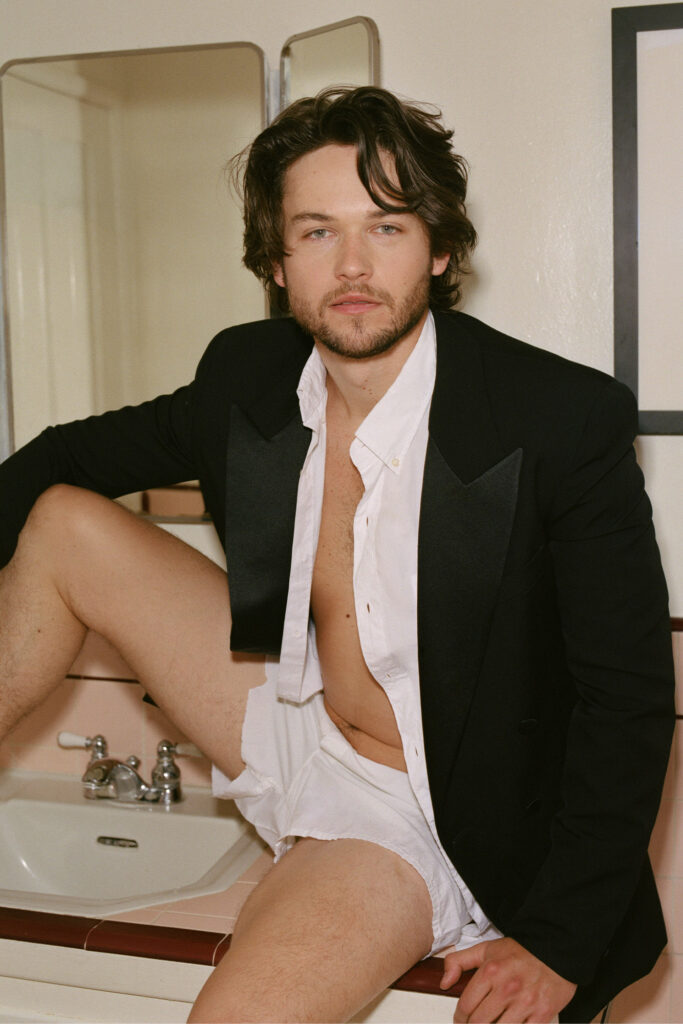
When the heart of the show comes from its characters — their backstories and relationships — how do you get inside the head of your character and think ‘Here’s how he would respond to the situation’?
Something that — I used to not understand why it mattered — they always teach you, when you take any acting class: You have to empathize with your character. I didn’t really understand why that was important when I first started acting. I’d be in a scene, or I’d be hanging out with the other actors, and they’d be like, ‘Your character is so annoying in this,’ and I’d be like, ‘Yeah, totally.’ I didn’t understand why I needed to be on my character’s side. When it comes out, or whenever you’re not acting, you can separate yourself and be like, ‘This guy’s the villain’ or whatever — if you are playing a villain, generally speaking. But, when you’re in the scene, you have to be your character’s biggest advocate. I think that’s what acting is all about: empathy and understanding the person you’re playing — really understanding where they’re coming from, and why they think they’re in the right. And, if they were in the right, why they would be in the right. Fully being on their side and really committing to that perspective.
I think that lends itself well to comedy. What ends up being funny, a lot of the time, is when someone has total conviction in their correctness when they’re wrong, you know? That wouldn’t work if you didn’t empathize and you didn’t have that conviction in their belief.
Looking ahead to, hopefully, a Season 2, what do you wish for your character? Are there things that you’d like to explore on set?
Truly, the show’s such a dream job. I love it. To an extent, I almost don’t want to wish for anything, because I trust the writers so much and what they’re doing with it already. What would be fun is — when we’re talking about ways into a character — it’s helpful when you can explore what really makes a character who they are. With Josh specifically, it has a lot to do with his upbringing and his parents. We got a lot of that in Season 1 with his dad. [During] those scenes with his dad, you see why this guy is the way that he is and how he was raised. We haven’t gotten a lot of the rest of his family yet. We haven’t seen any of them, besides his dad. I think that would be interesting to see. That surely shaped Josh and [explains] why he is the way that he is. I would enjoy that, for sure. But really, anything they want me to do, I’m sure I’ll be happy with. I love this whole cast. I love the writers. I just… I’m sure whatever they cook up is going to be awesome — if we are lucky enough to keep going.
Not Suitable for Work is now streaming on Disney+.
This transcript has been edited and condensed for length and clarity.
PHOTOGRAPHY: MAX MONTGOMERY
GROOMING: SIMONE KOGEN
STYLIST: JAKE SAMMIS