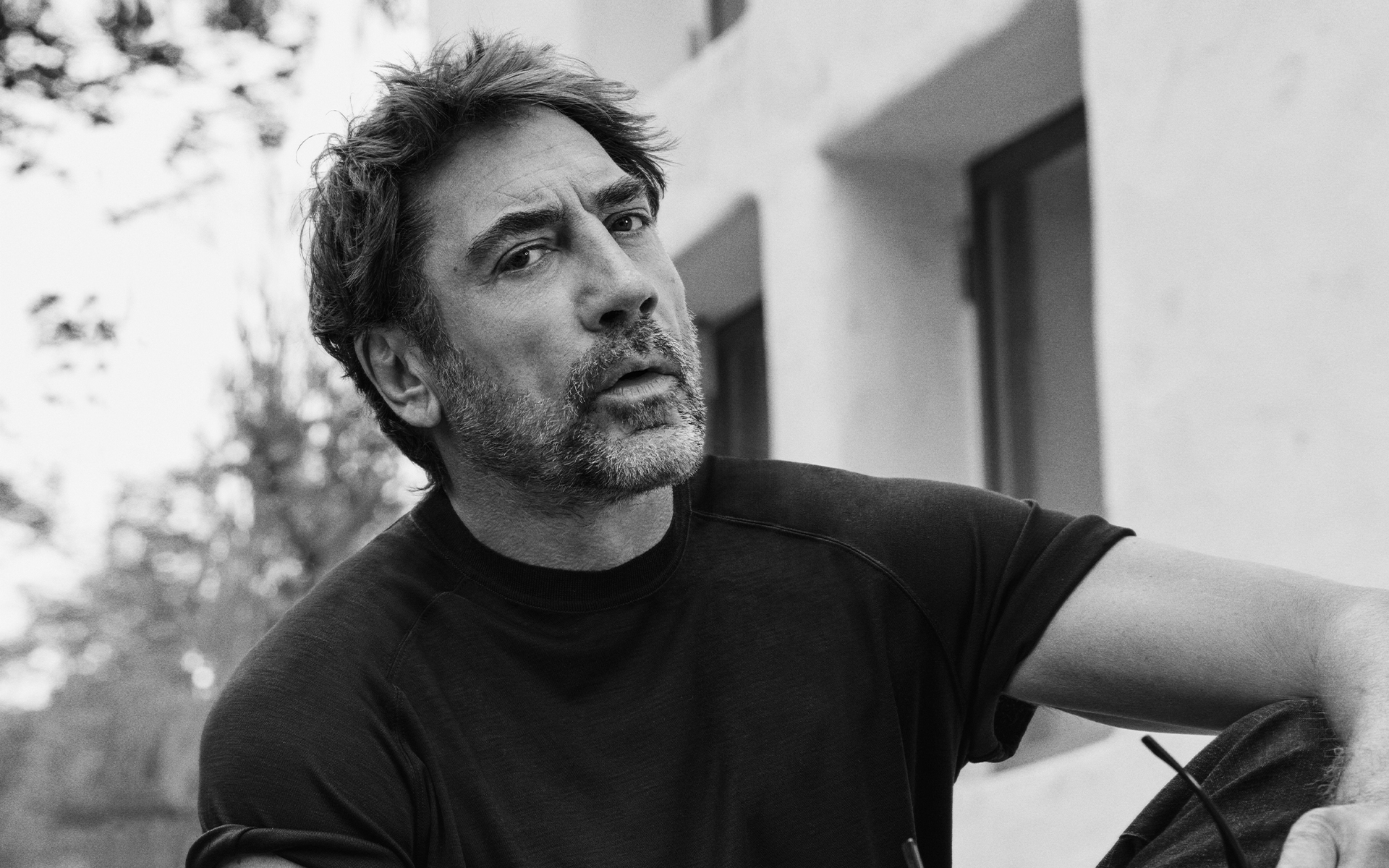
It’s tough to get Javier Bardem on the phone — though that’s no fault of his own. After the summer brought runaway success to Cape Fear, a limited series take on The Executioners by John D. MacDonald, Bardem jumped into a packed promotional cycle: at the time of writing, three feature films orbit the actor. The Beloved, a searing psychological drama, comes first. Following its critically praised world premiere at Cannes, the picture will have its North American debut during the Toronto International Film Festival (TIFF). Next in line is Bunker, also set to make its North American premiere at TIFF; the topical picture sees Bardem star opposite frequent collaborator and real-life partner, Penélope Cruz. Then, to close out the year, there’s Dune: Part Three. The latest instalment of Denis Villeneuve’s ambitious Dune adaptation is set for a December release. ‘Booked and busy’ doesn’t begin to describe it. When Bardem talks about his bustling schedule, however, the glass is half full.
“It is a gift to be able to make a living out of your passion,” he says. “I cannot take it for granted. I try to earn that luxury with every job I have.” How does Bardem earn his keep? As conversation flows from upcoming projects to the creative process, several answers surface; still, the actor’s philosophy is best summed up in a single word: gratitude.
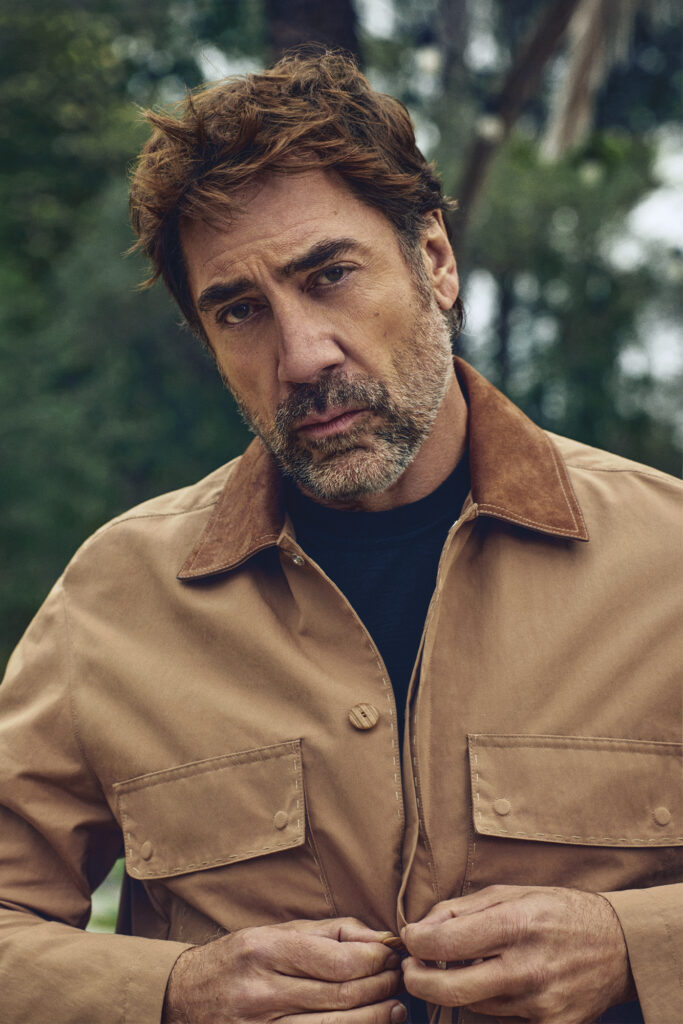
“The stories, directors, fellow actors, and actresses that I had the privilege to work with are truly powerful and inspiring,” Bardem says. “I just try to give back to them all the best I possibly can.” When, for instance, French director Florian Zeller said he wrote Bunker with Bardem and Cruz in mind, the actor was touched. “I was absolutely honoured and moved,” Bardem says. “Florian is an extraordinary artist, and feeling his support and generosity in aiming his creativity toward us both is very encouraging. We shared every step of the process with the care and commitment the story needed.”
Care and commitment come easily to a Hollywood veteran like Bardem. Of course, it helps that Bunker has an excellent elevator pitch. Bardem plays Miguel, an architect commissioned to build a bunker for his billionaire client, Andrew — a man rich in means and bankrupt in morals. Consequently, the project puts a strain on Miguel’s marriage to Sofia (Cruz). It’s a story of split values: monetary allure tests moral conviction.
Ideas from the film spilled into conversations on set. “We were discussing, many times, the selfish actions of those of us whose luxuries depend on the suffering of so many. Misery does not disturb us, as long as we don’t witness it,” Bardem says. “The world needs a more equal distribution of wealth and human rights. This moment is highly unbalanced by the greed and ownership of a few, maybe more than ever in recent history. To ignore that fact, and go with it for our own benefit, should and will bring consequences at a personal level — especially if you have a minimum sense of community, which I believe begins with your own family.”
To portray the intimate tension between their characters, Bardem and Cruz — a famously private couple — tapped into their instinctive artistic connection. “Penélope is an extraordinary actress; a brave, committed, generous artist who inspires me at many levels,” Bardem says. Cruz sets a high standard, and Bardem accepts the challenge with gratitude. “When you share a process, a situation, a scene, with such a good actress, there is nothing more than trying to be open to receive her artistic proposal, and give back to her all you have, in order to keep that flow moving.”
Cruz isn’t the only collaborator to inspire such passion. As conversation shifts to Dune: Part Three, Bardem calls director Villeneuve “a man of wisdom and high sensibility, of artistry and deep care — not only for his work, but for all those who accompany him in the process.” To put it more succinctly, he adds, “Denis is literally a beautiful, good human being who happens to be an extraordinary artist.”
“This moment is highly unbalanced by the greed and ownership of a few, maybe more than ever in recent history. To ignore that fact, and go with it for our own benefit, should and will bring consequences at a personal level.”Javier Bardem
But for Bardem, showing gratitude goes beyond giving a strong performance or offering genuine praise. It’s also about respecting the moral of each story. When I ask why Frank Herbert’s Dune still resonates today, Bardem pulls no punches. “He was writing a text that included some of the most worrisome aspects of humanity, and divinity, that concerned him. Now, those themes are in full exposition all around us,” Bardem says.
One such example? Climate catastrophe. Filming Dune amid a “majestic” landscape, Bardem was overcome with emotion: “[The environment puts] you right in the mood of how to imagine a world like this: always, everywhere,” he says. Yet there was a duality to the experience. “The extreme climate situation we are heading towards is happening faster and faster, creating this dystopia in reality for so, so many. The denial and lack of real action on global warming are, by far, the most urgent crises,” Bardem says. “We have to remind our political leaders to act now!”
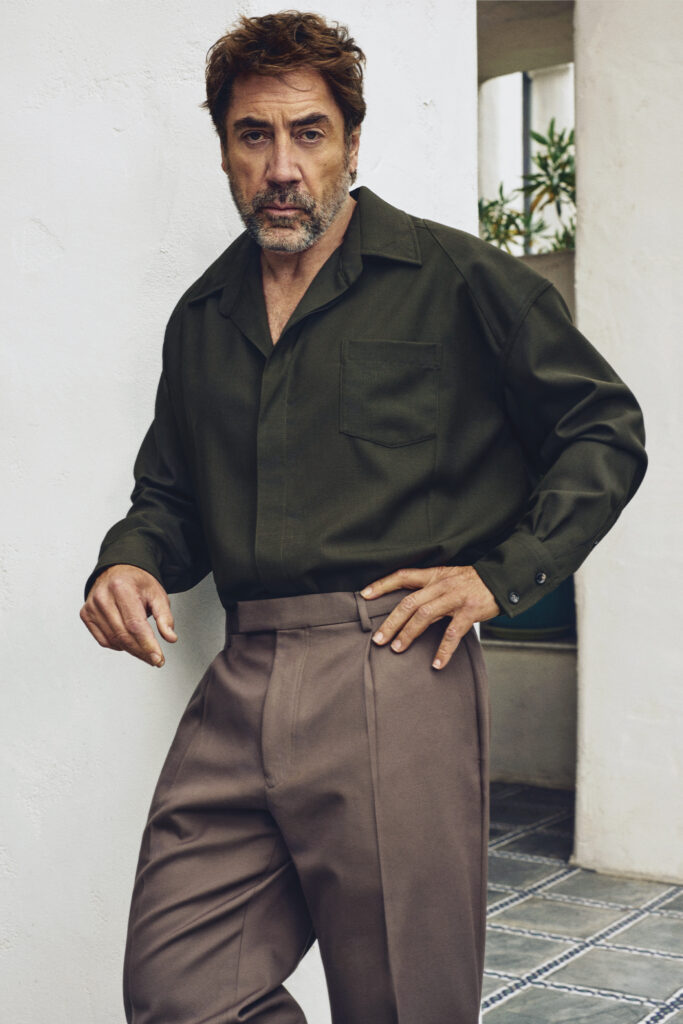
Bardem’s on-screen persona, Stilgar, would undoubtedly share the sentiment. For the uninitiated (if you’re out there), Stilgar leads the Fremen people — native inhabitants of the planet Arrakis, whose desert sands hold the Dune universe’s most valuable resource, “spice” — during a war between duelling colonizers vying for control of the planet. As a leader, Stilgar begins with pragmatism; he’s wary of the religious fervour surrounding Paul Atreides (Timothée Chalamet), though his devotion grows as the conflict evolves into a holy war.
Though Dune’s specifics are pure fiction, its plot draws a parallel to real-world unrest. “You do not need to look too far to see the destruction, the killings, and the abuse of people that any religion can lean on,” Bardem says. But here, he speaks with nuance. “Any religion is a source of inspiration for a spiritual connection to ourselves, the strongest force in the universe. [Religion] can transform others by sharing and giving presence, empathy, and attention with the best intention, independently of the gods you believe in. Unfortunately, many of the most terrifying acts of violence against others have been justified [as] service to different deities,” adds the actor. “I feel that is what the author Frank Herbert wanted to share, and [what Villeneuve has] translated so beautifully to the screen.”
And, though Dune: Part Three deals in heavy themes, Bardem describes his experience with pure positivity. “All three films felt like the same place of creative search done with joy,” says the actor. “That all relied on Denis’ fantastic vibe on and off set.” In fact, if there’s a common thread between Bunker and Dune, it’s this off-camera atmosphere. “It is always a gift to be invited to be part of something that can inspire others in different ways. The job we do is to invite the audience to imagine with us,” Bardem says. Again, he returns to gratitude.
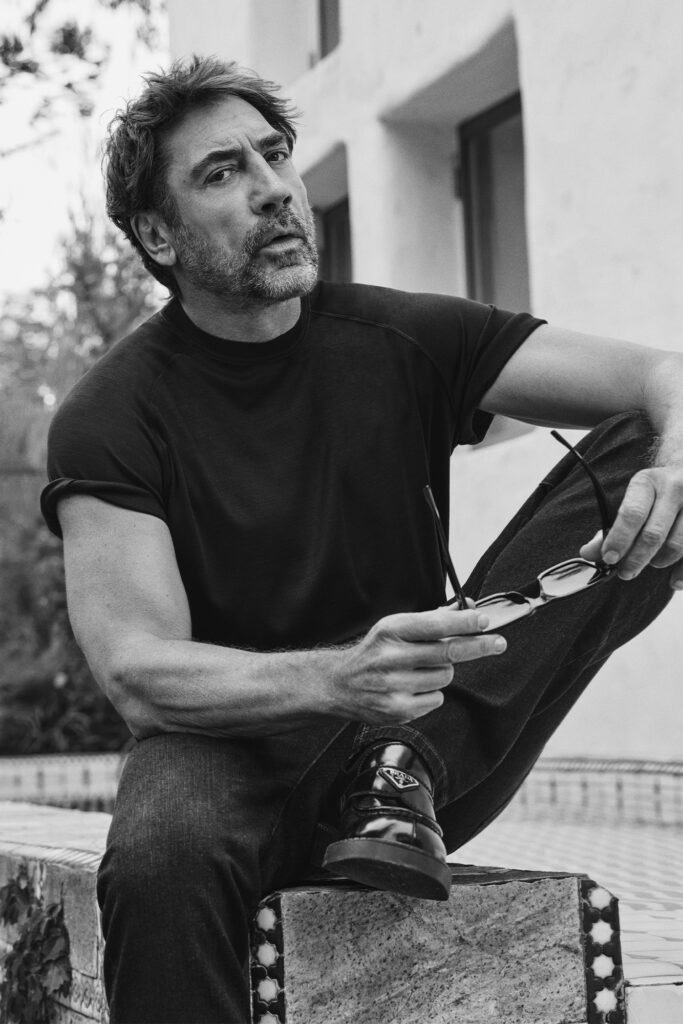
Perhaps that’s how, amid the chaos of contemporary life, Bardem remains as grounded as ever. Reflecting on lessons learned from each project, the actor says, “We need to accompany each other every step of the way.” The more we understand that, “the more solid and reliable the road gets.”
PHOTOGRAPHY: MICHAEL SCHWARTZ /TRUNK ARCHIVE.
GROOMING: CHRISTINE NELLI
PRODUCER: ASHA MARTÍNEZ
PHOTO ASSISTANTS: DANYA MORRISON & KEVIN PERSHIN
STYLING: FABIO IMMEDIATO
FASHION DIRECTION: JOANA DE LA FUENTE
PRODUCTION ON SET: ALEJANDRO RESTREPO
STYLING ASSISTANT: CATALINA COOPER