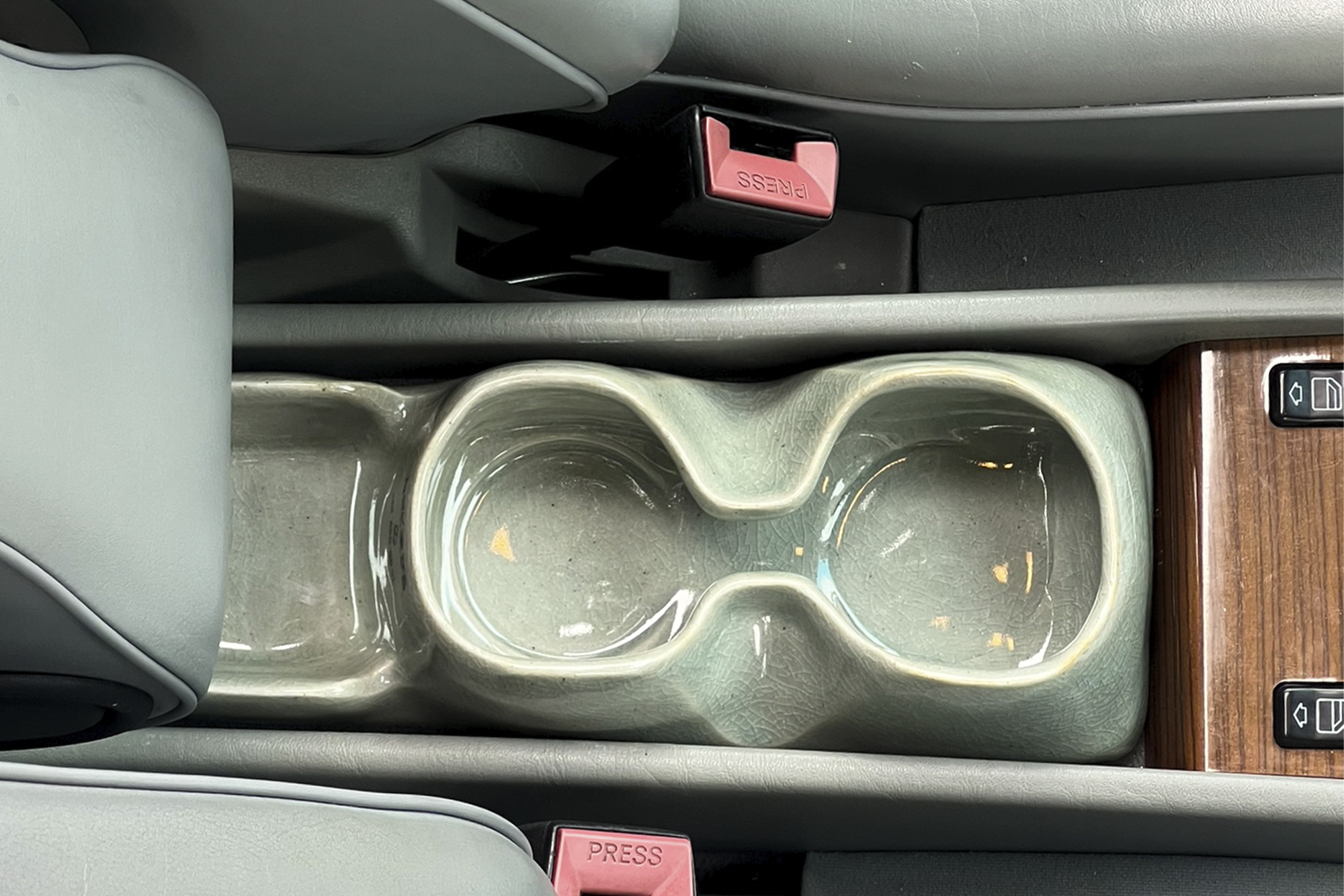
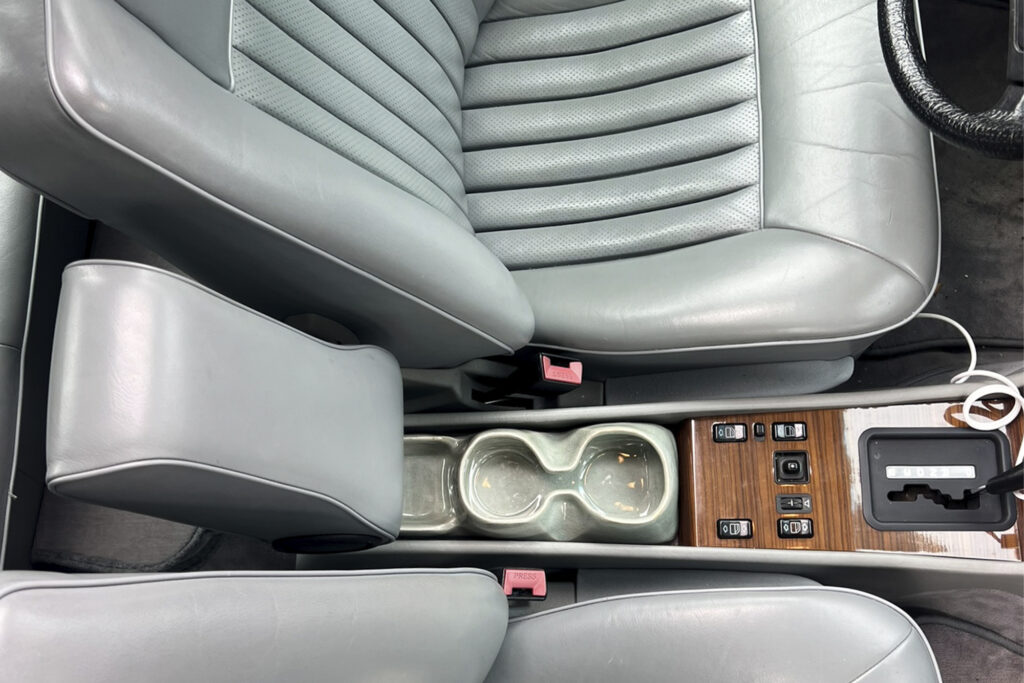
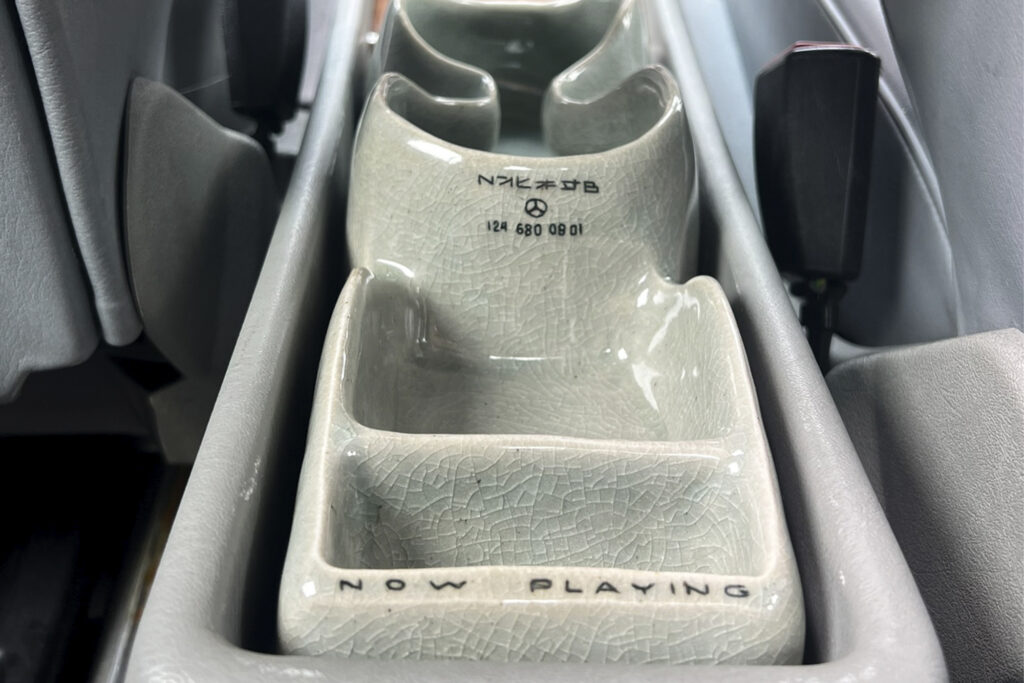
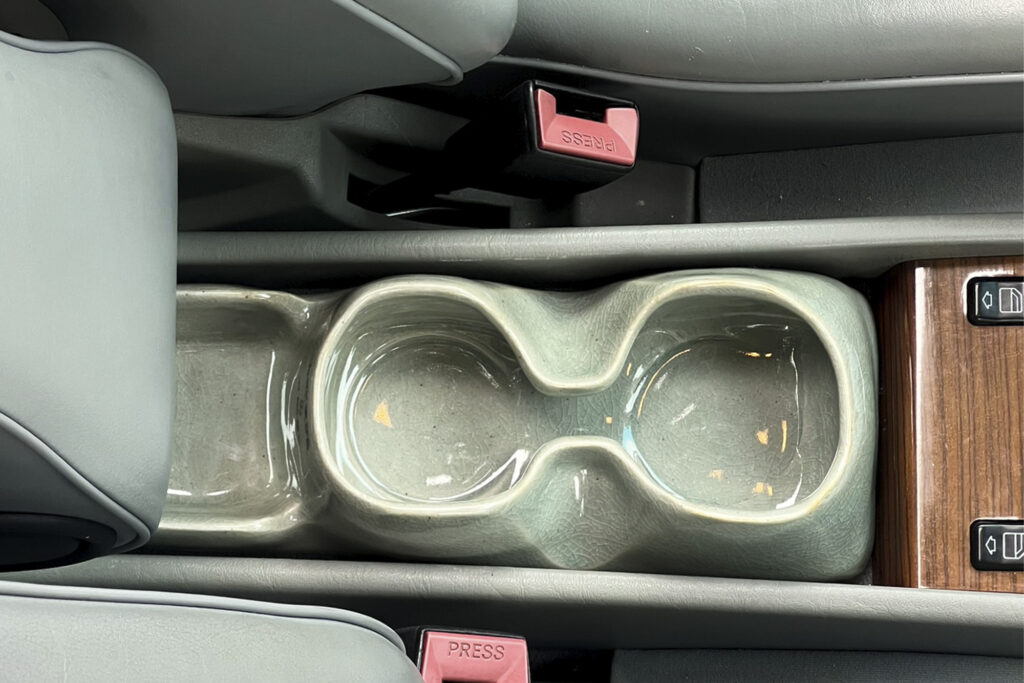
Nicholas Kitamura Bird, a full-time artist based in Los Angeles, stopped us in our tracks (mid-scroll, more accurately) recently with this beautiful porcelain cupholder he made for his 1989 Mercedes-Benz 300E. It fits into the centre console and has its own imaginary Mercedes-Benz part number. But, of course, this could never be a Mercedes part — or any car part — because it’s not mass-produced.
Bird is really onto something here. Adding a little dose of humanity to the mass-produced Teutonic precision of one of Benz’s best-ever sedans is strangely refreshing, alluring and even eye-opening. (It’s also genuinely useful; as everyone with a German car from the 1980s knows, the Germans had a strange aversion to cupholders back then.)
Can every car be improved with a bit more art? The answer is yes.
But before you read what Bird has to say about cars, art, cupholders and the state of automotive design, be sure to follow him on Instagram @enbird_art and check out the pieces available on his website.
SHARP: Can you give readers a little intro to you and your art?
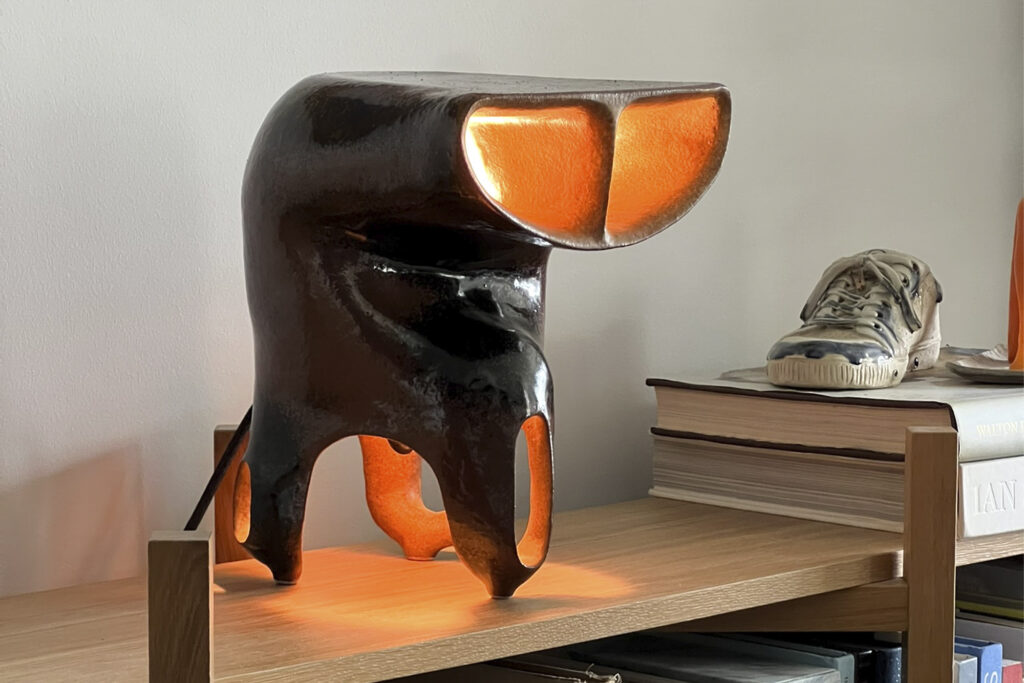
Nicholas Kitamura Bird: I am a full-time artist and I work primarily with ceramics. My practice is split between sculptural lighting, other items for the home, and some more conceptual technology-enabled work.
The cupholder is part of a series I started this year called IHTCI, which stands for Improving Homes Through Ceramic Innovation, though the H in this case can stand for Horseless carriage. The series is essentially about how a small inconvenience (like a car without cupholders) can be an invitation to design and make something special.
Do you also feel like this porcelain cupholder/sculpture, with its organic form and colour and materiality, represents something sorely missing from modern automotive design — or is that just me?
Every new car looks so angry and aggressive. Companies are telling customers what they want and not the other way around. Dishonesty is the norm: fake tailpipes, fake aero, carbon-fibre trim on 5,000-pound cars. Subscription services for basic functions. Everything inside is a screen. I’d love to see some humility come back into car design, and also yes, organic forms and materials. I don’t know if my cupholder can shoulder this entire burden, but making something for my car with my own hands was at least gratifying on a personal level.
Why did you make this — and how?
I made it because I found myself chugging drinks to avoid bringing them into the car.
I made the cupholder from a grogged porcelain and an iron-based celadon glaze. The trickiest part was the measurements, since porcelain shrinks and warps when you bake it at about 1,300°C, but it fits like a glove. When I posted this piece online, the comments section was full of people who thought it was an insane crash hazard, but it sits low in the car, it is very snugly surrounded by wood trim and soft plastic, and it will be strapped down. I can think of worse hazards in brand new cars.
What’s the make/model of your car and what do you love/hate about it?
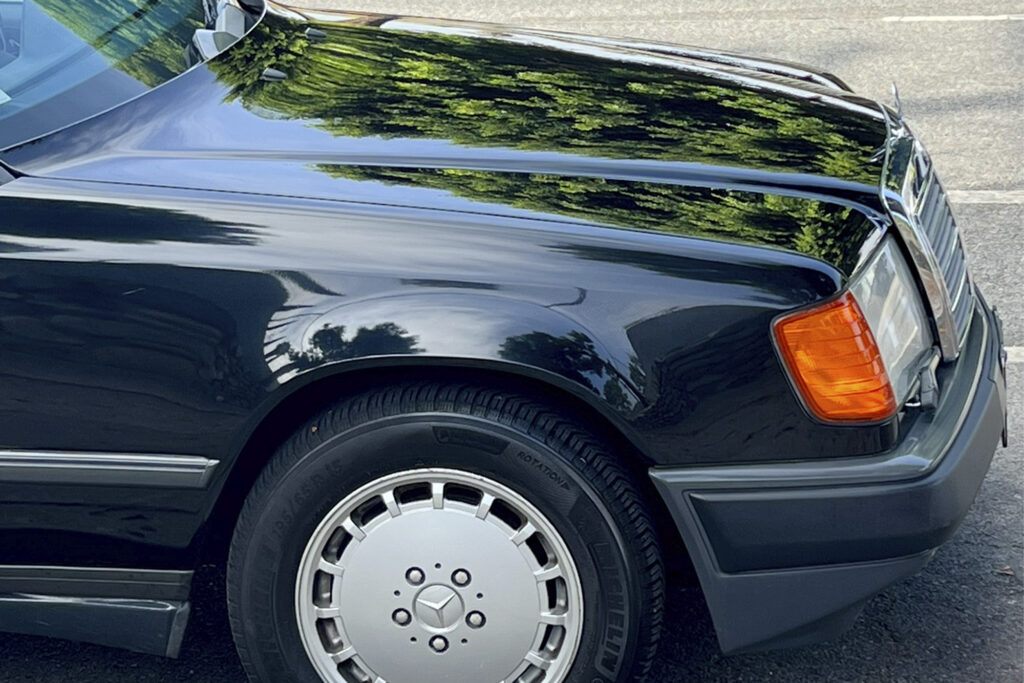
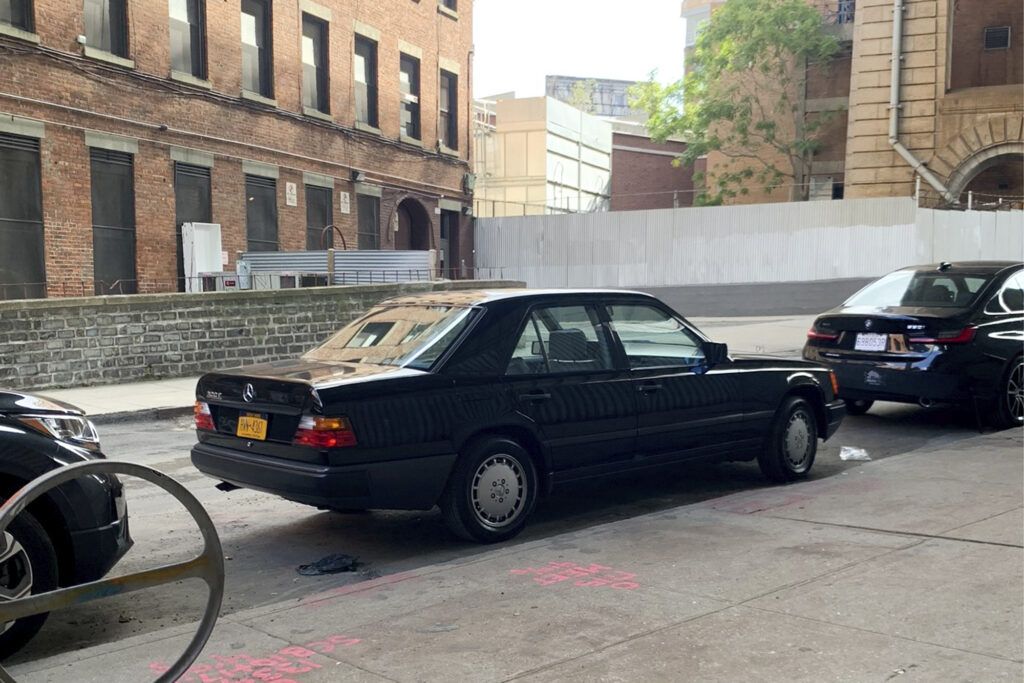
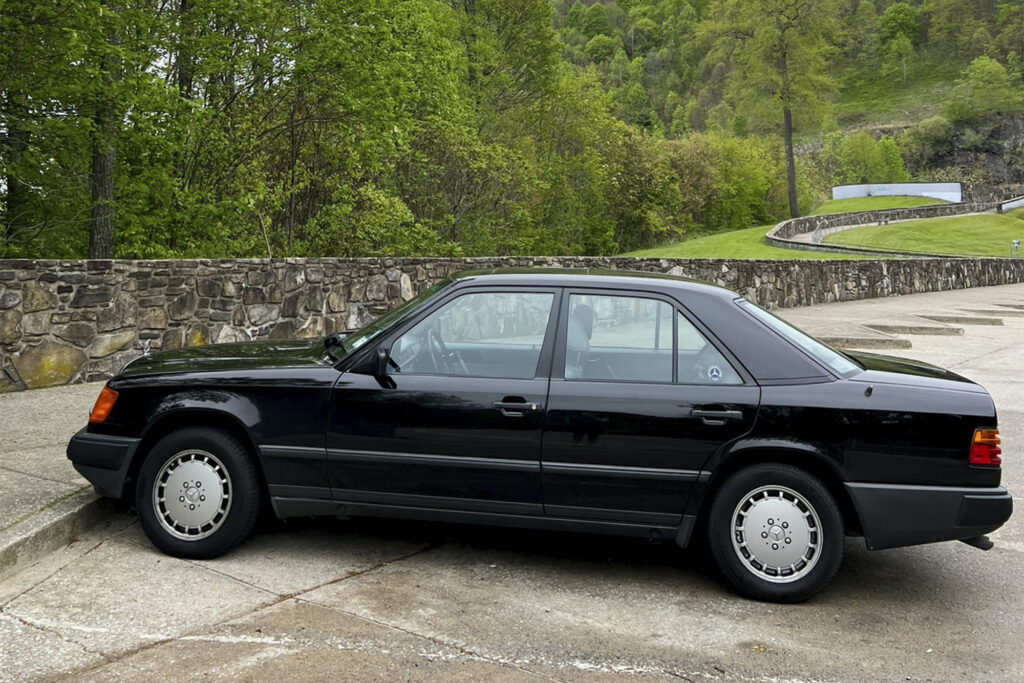
I drive a 1989 Mercedes-Benz 300E. It was a bit of a money pit at the start because it had sat for a while and the fuel system needed a refresh, but it’s sorted now and has never stranded me. I think it’s worth keeping old things around, even if this one wasn’t the soundest financial decision. I love that its design and engineering are so honest. Not a single line is superfluous. Nothing aggressive about it. It’s not a particularly fast car, but I like it that way — I don’t feel so rushed to get around.
What interests you about cars, if anything?
I was obsessed with cars growing up. For a good stretch of my childhood, I wanted to be a car designer. I love when people love their car, and you witness it every day in L.A., which is where I grew up and also currently reside. Living in NYC for 15 years in between changed my perspective, however. I still absolutely love cars, but I wish I could take public transit more places.
This interview has been condensed and edited for length and clarity.