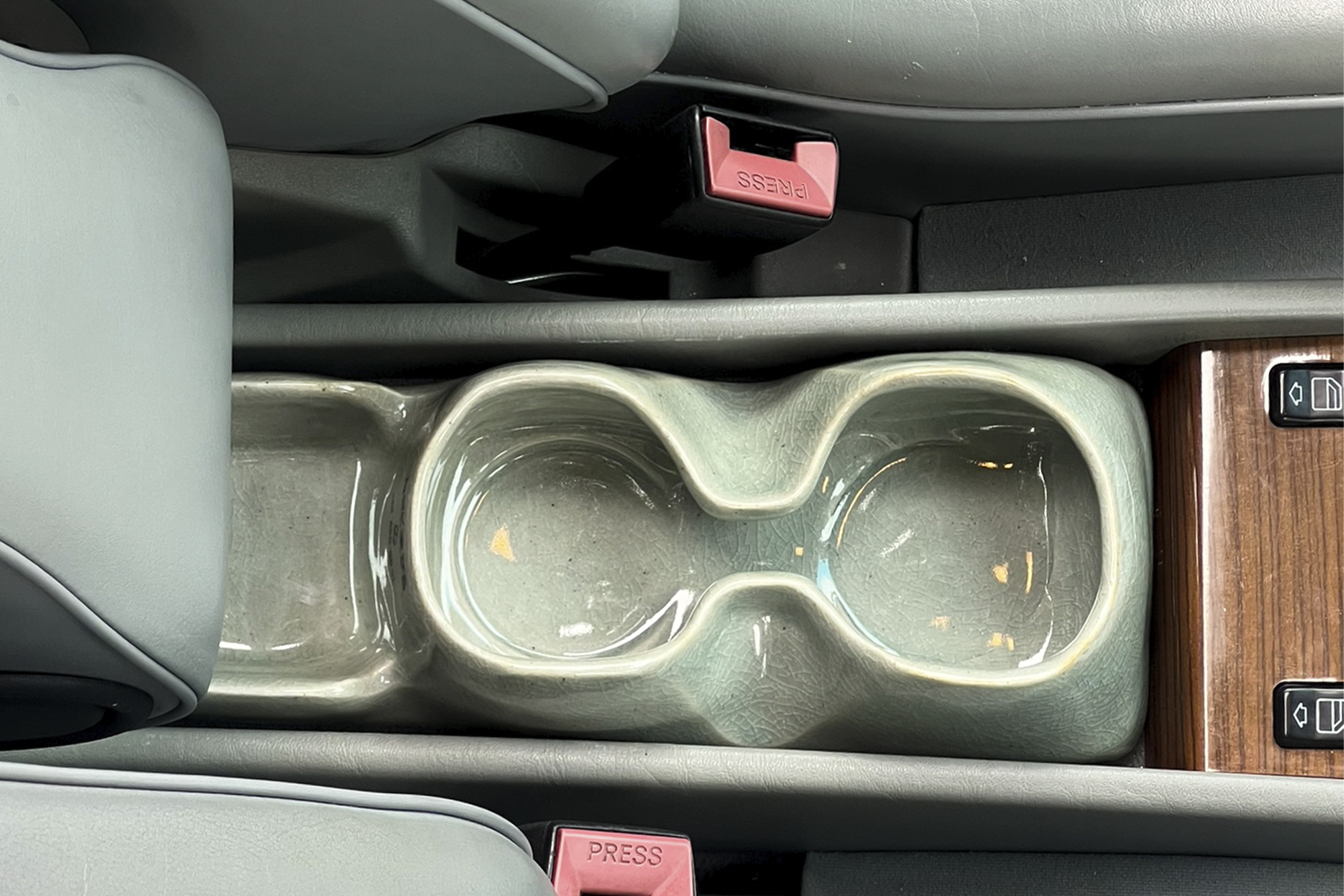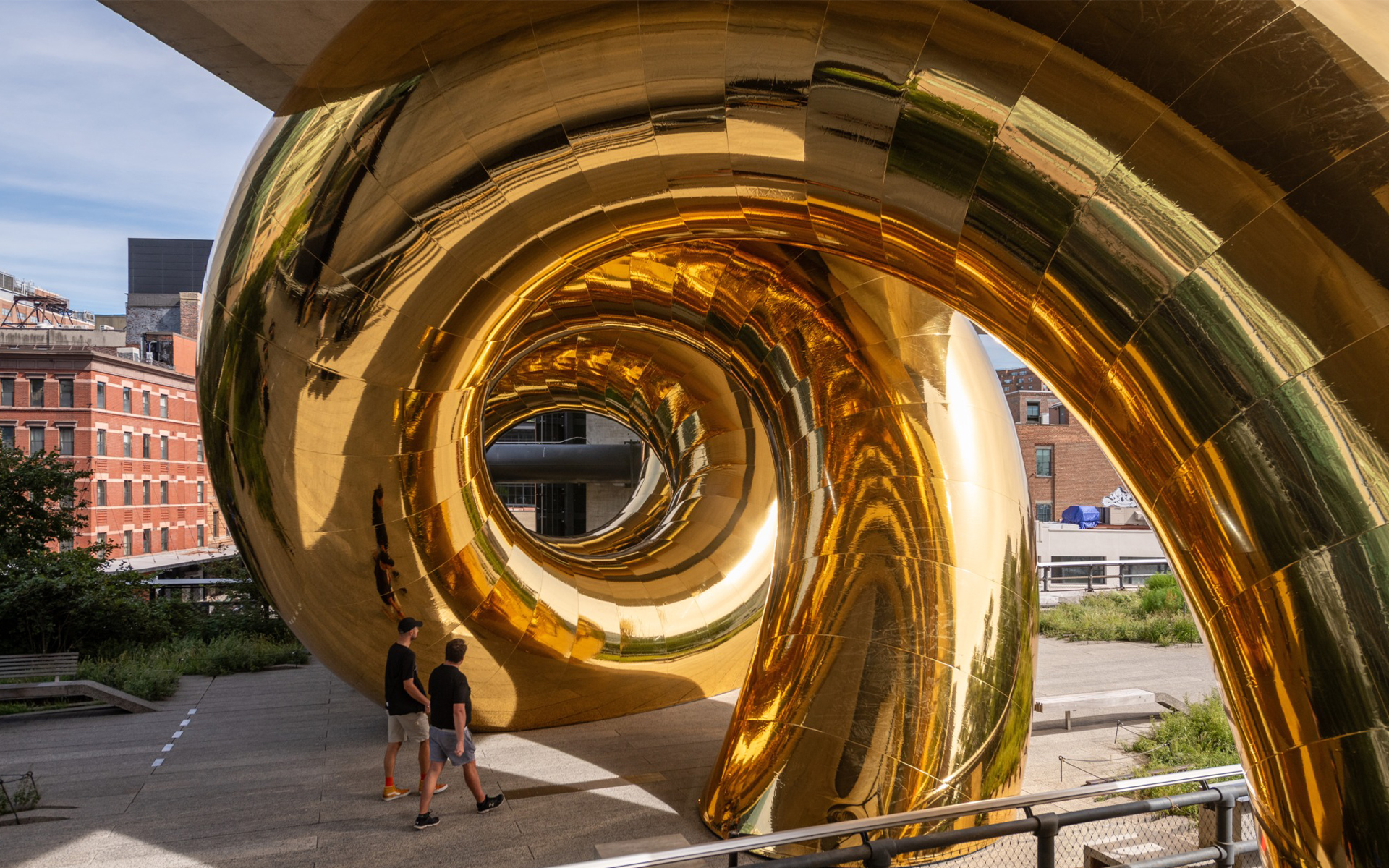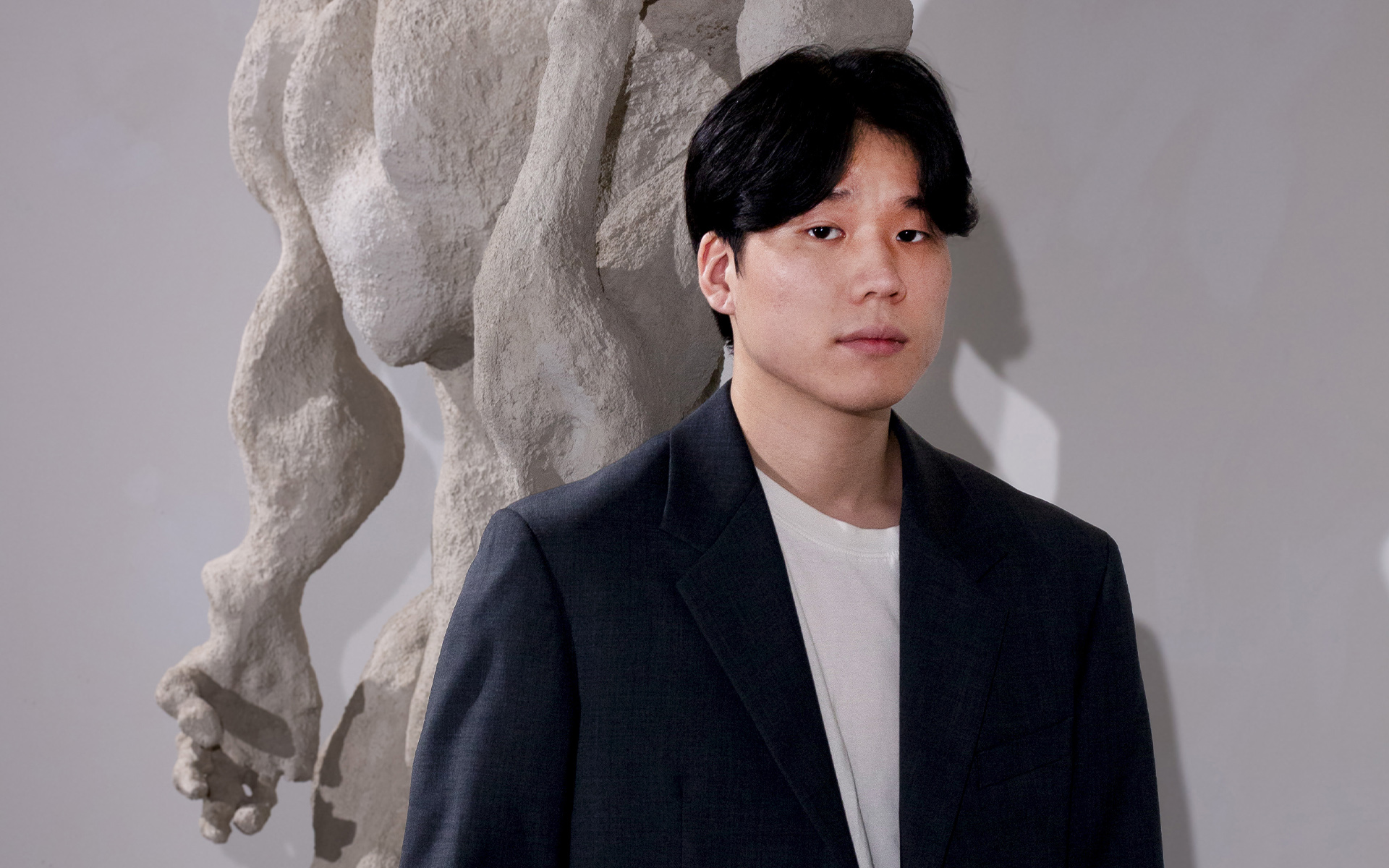
A sculptor turned furniture designer, Heechan Kim dreams like an artist and plans like an engineer. Kim’s work considers form and function in equal measure. The two-pronged approach has yielded some truly singular results: a recent project saw Kim transform an elephant trunk into a chair — metaphorically, of course.
“While studying sculpture, I became interested in the process of translating an emotion or idea into physical form,” Kim explains. “I enjoyed thinking about how an idea could be constructed, engineered, and communicated through form. That led me to furniture. It exists at a human scale, can be directly used, and has the ability to influence how a space feels.”
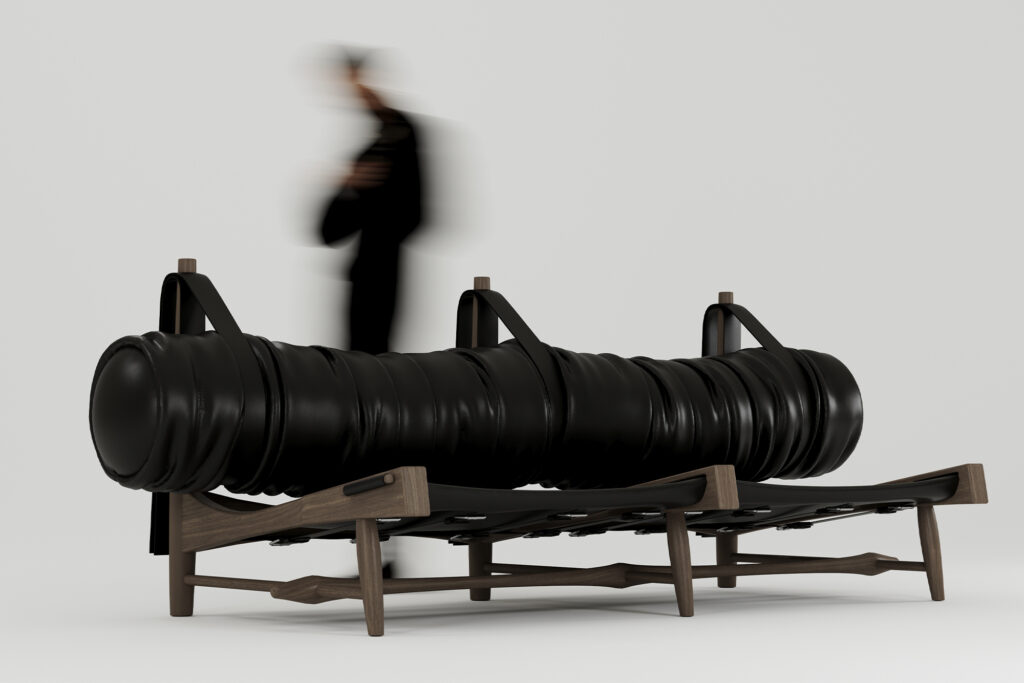
Driven by this duality, Kim created one of his most well-known works: the LOXO Chair. Described as a “sculptural lounge chair,” the LOXO Chair takes inspiration from the imposing elephant trunk of Maurizio Cattelan’s “Not Afraid of Love.”
“I felt that translating that image too literally could make the chair feel unfamiliar,” Kim explains. “So, I looked at leather bags as a more recognizable reference, studying how leather wraps, folds, gathers, and creates volume.” The cushion sports a faux leather covering, with careful folds that evoke an elephant’s wrinkles. To preserve the unique texture, the faux leather exterior is hand-stitched to a base fabric.
The LOXO Chair embodies Kim’s creative philosophy: cerebral concepts packed into sound structures. “My process usually begins with the concept and feeling I want the piece to communicate,” Kim explains. “From there, I develop the form, material, colour, and texture, then work through the structure and production methods needed to make that idea functional and realistic.”
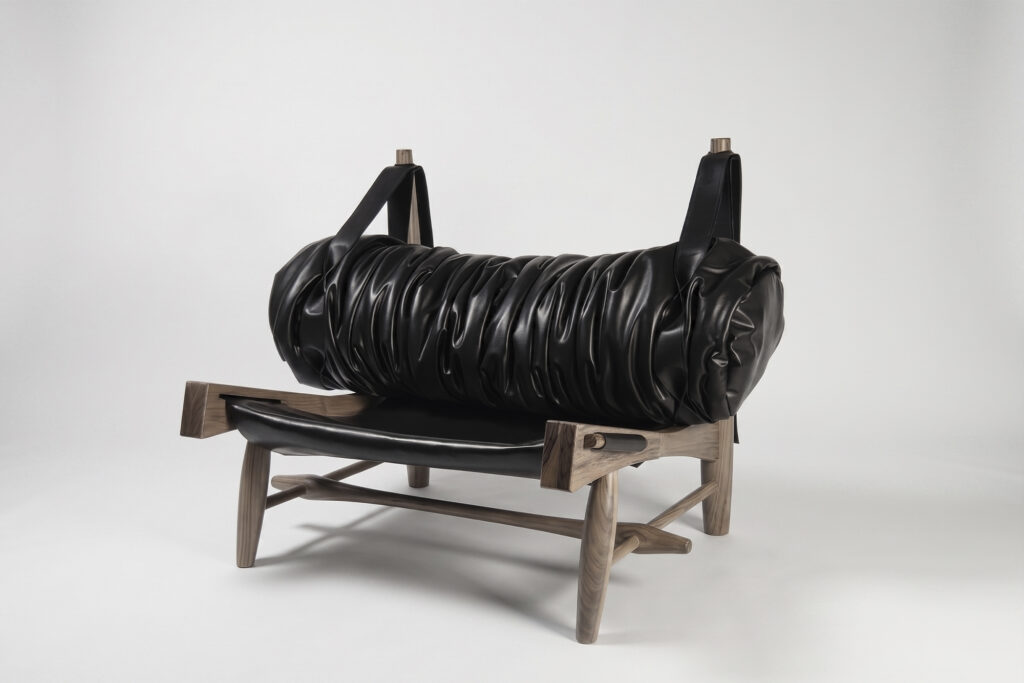
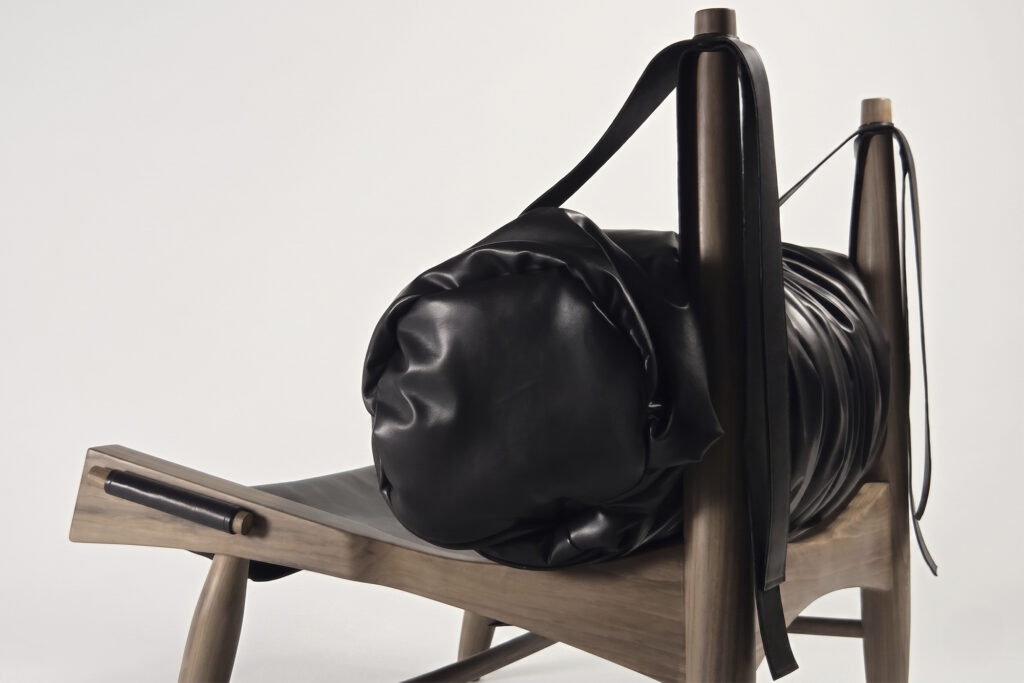
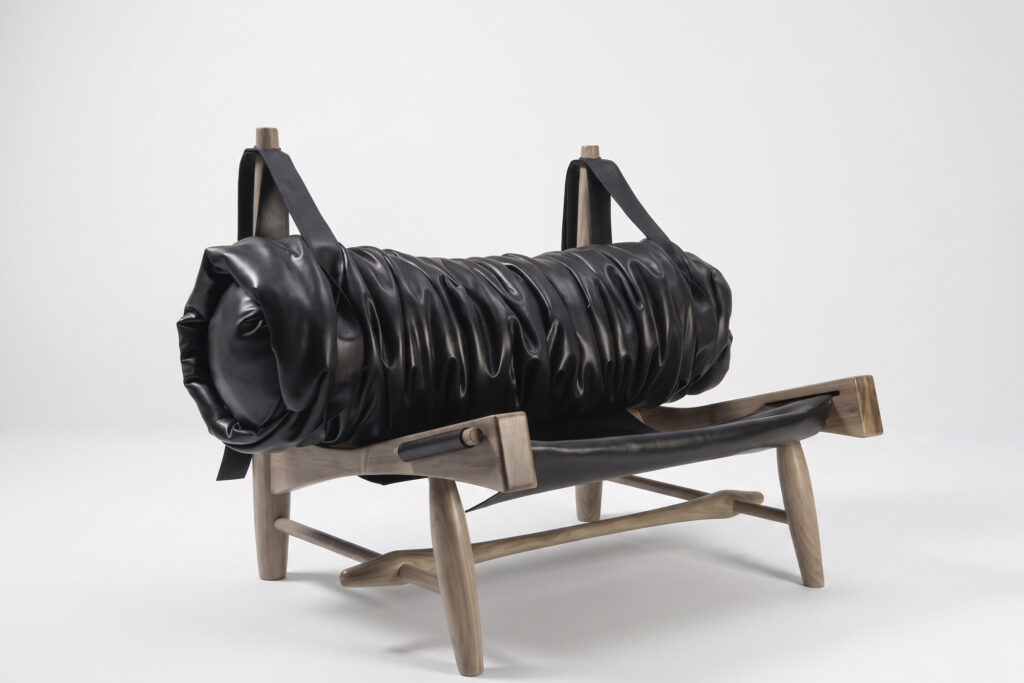
While furniture has historically been associated with architecture, Kim sees his work in conversation with other creative disciplines: fashion, music, and fine art, to name a few. “I see it as a field that expresses emotion, attitude, and mood through functional objects. Because it responds so quickly to changes in culture and human emotion, there is much more room for constant experimentation,” says the artist. “That freedom is something I find very inspiring.”
That said, Kim notes that logistics provide a crucial service: constraints. “Aesthetics often become the starting point, while function and production refine it,” Kim says. “The goal is to introduce a new aesthetic while grounding it in values that have already proven to last.” If his portfolio is any indication, Kim has found a winning formula.