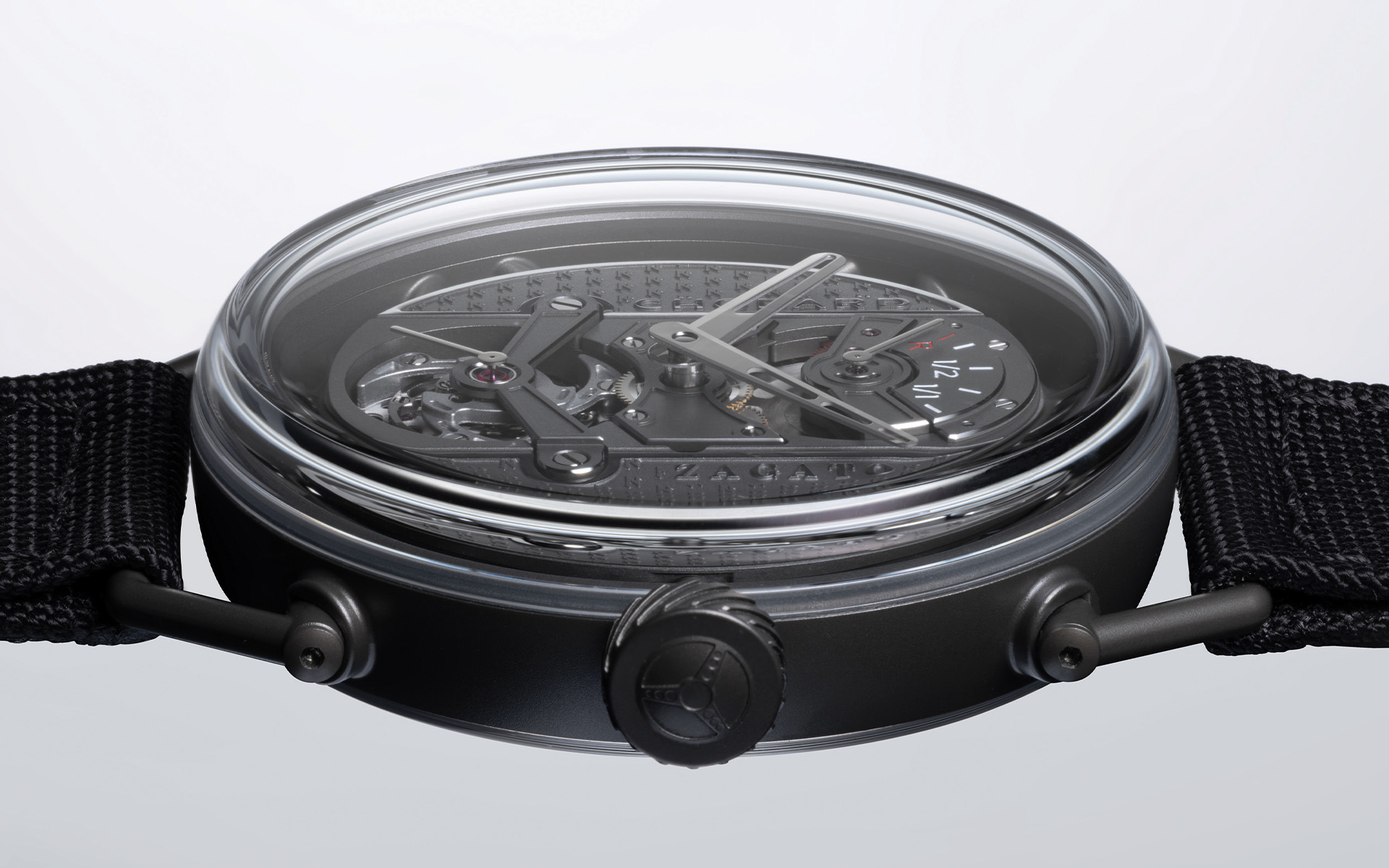
With its ceramicized titanium case, a high-performance tourbillon movement protected by a shock-absorbing system, and a tubular architecture that keeps its weight to just over 43 grams, including the strap, the Chopard Zagato Lab One Concept’s description reads like the specs of a cutting-edge supercar. This is no coincidence. A collaboration between Swiss luxury watchmaker Chopard and legendary Italian coach-builder Zagato, the watch represents the culmination of decades of combined expertise in high-end watchmaking and sports car design.
To Chopard co-president Karl-Friedrich Scheufele, however, it’s also the latest payoff in a three-decade, high-stakes gamble.
“There’s no recipe for this. It’s not taught in schools. It was all about integrating, one by one, all these different activities into a single manufacture.”Chopard co-president Karl-Friedrich Scheufele
In the early 1990s, Chopard was a respected watch brand with an uncertain future. The transition from traditional mechanical watchmaking to battery-powered quartz technology in the 1970s and 1980s had spelled doom for many Swiss watch brands, and the ones that survived needed big ideas and fresh thinking to ensure their future success. “I realized that if we wanted to be authentic, credible, and sustainable about our approach to watchmaking, the best way to go about it was to re-establish our own manufacture for mechanical movements,” says Scheufele, whose father purchased the company from founder Louis-Ulysse Chopard’s grandson in the early 1960s. “So I decided to launch a project in which we would conceive and produce our first automatic movement in our own premises.”
That project would take the form of the Chopard L.U.C Manufacture in Fleurier, which opened its doors in 1996. Starting a watch manufacture is no small task, even for the owner of a major watch brand. “I’m not sure if I would advise anyone to go about that, unless he or she is extremely motivated, extremely patient, and brings a lot of energy — and also financial means — to the table,” Scheufele says. “It has been a really interesting but also very tough journey to get where we are today.”
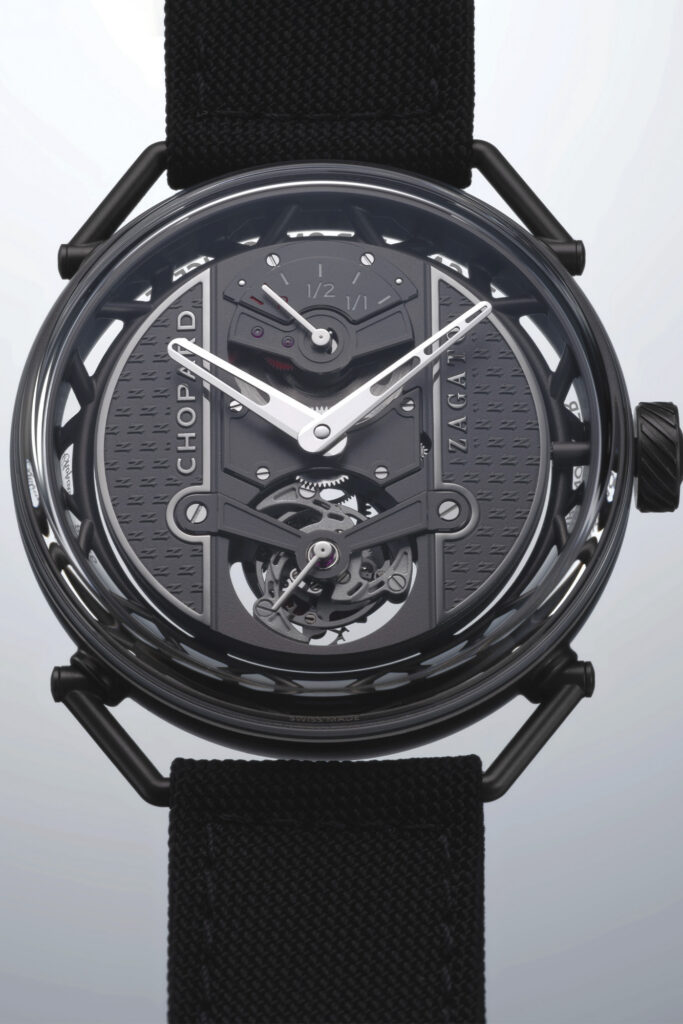
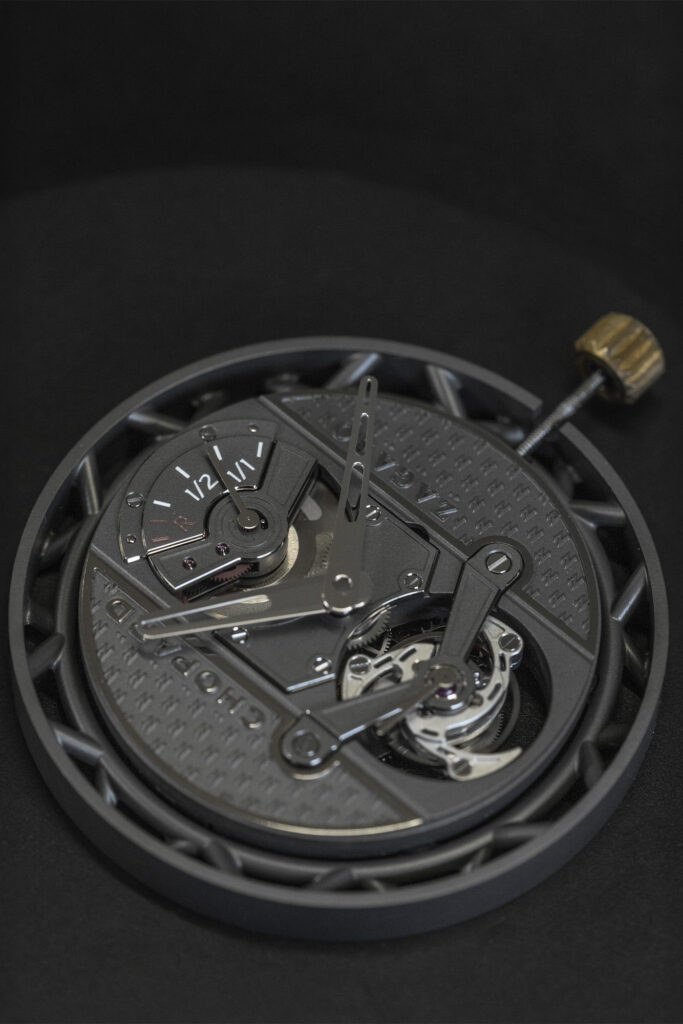
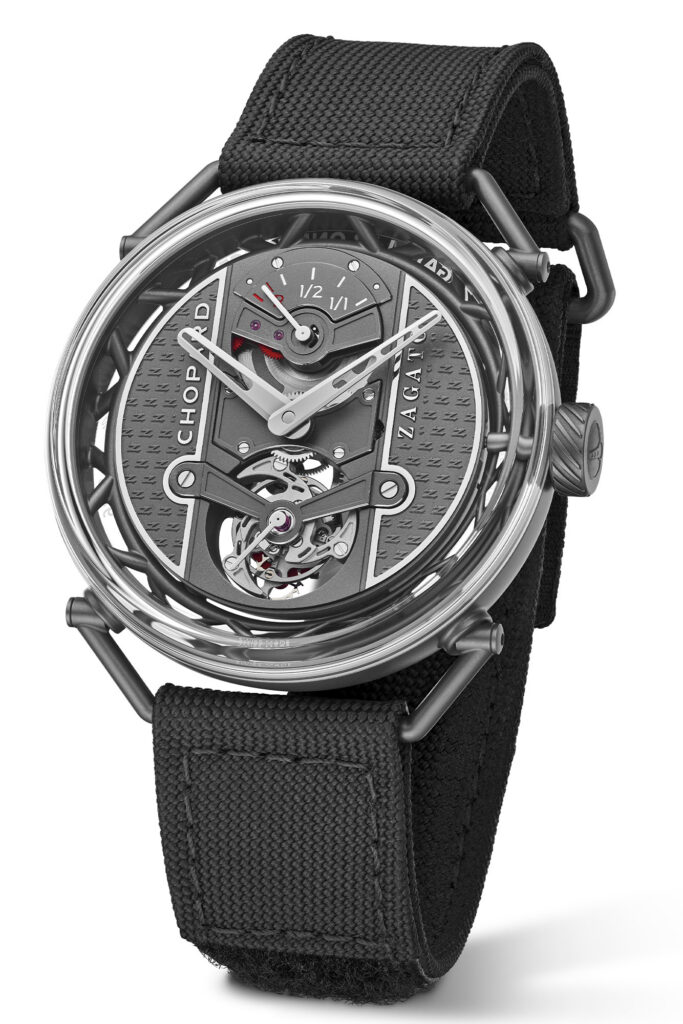
Thirty years later, Chopard’s Fleurier Manufacture has earned a reputation for creating advanced and beautiful mechanical timepieces on par with the best in the world. These include an award-winning series of highly complex chiming watches with sapphire-crystal gongs, a spectacular collection of handcrafted Métiers d’Art editions, and the futuristic Zagato Lab One Concept. “We don’t follow the traditional, conservative path of watchmaking, which turns out beautiful pieces, but also where the finish is conventional. Here we’re looking at something completely out-of-the-box,” Scheufele says of the collaboration. “I think it illustrates very well that the manufacture is capable of producing something traditional and beautifully finished, but also something very innovative, very cool, and contemporary.”
Deciding to partner with Zagato, a family-run business founded in 1919, was a natural decision for Scheufele. “We’re on the same wavelength,” he says. “Zagato’s work is based on very traditional crafts, but it turns out very contemporary shapes. There’s a lot of similarity to our approach, in which we respect the traditional crafts and are very much involved in keeping them alive.” A lifelong motorsports fan, Scheufele is also a longtime backer of — and participant in — the famed Mille Miglia, an annual Italian road race featuring a field of vintage Bugattis, Maseratis, Lancias, Ferraris, and Aston Martins. Scheufele has personally participated in the race since 1989, partnering with six-time Le Mans winner Jacky Ickx as his navigator on more than a dozen occasions. “It’s probably the most exciting road event in the world,” he says, adding that he intends to compete with his son this year behind the wheel of the family’s cherished 1950s Mercedes-Benz 300 SL Gullwing.
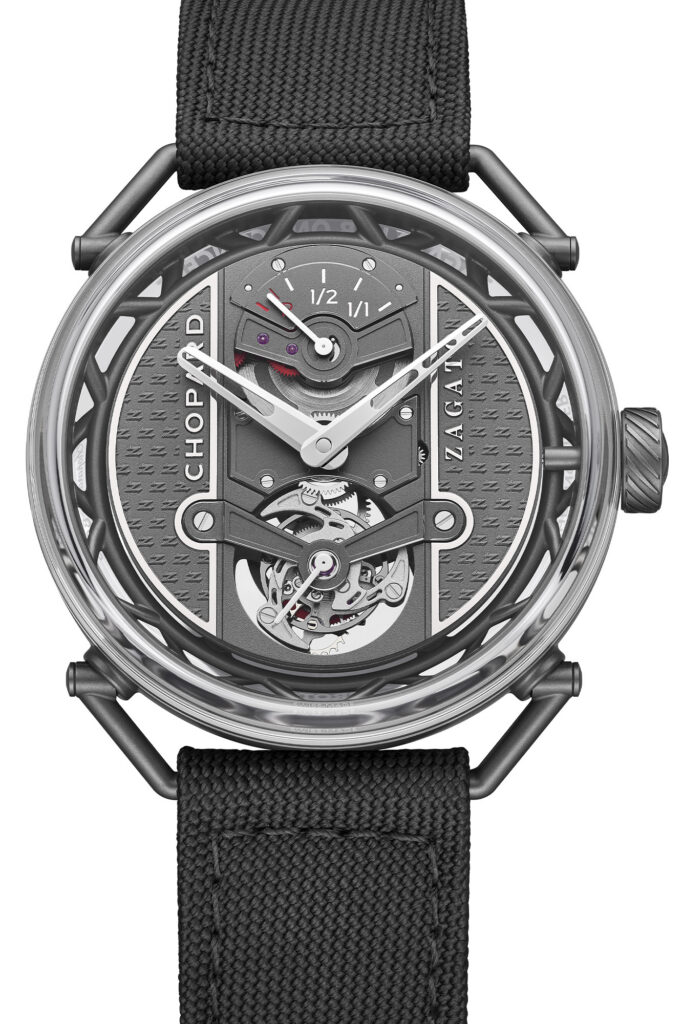
Conceiving and producing a movement at the level of the Zagato Lab One Concept presented countless challenges and required close collaboration between skilled teams of engineers, craftsmen, and watchmakers. Fortunately, this is exactly the kind of project the Fleurier Manufacture was set up to tackle. In the early 1990s, when many believed traditional mechanical watchmaking was a thing of the past, Scheufele went all-in to bring it back at the highest level. Judging by the Zagato Lab One Concept, among many other pieces in the Chopard L.U.C collection, it has more than paid off.
“There’s no recipe for this. It’s not taught in schools. It was all about integrating, one by one, all these different activities into a single manufacture,” he says. “Looking back, it always makes you ask yourself: how did we do that?”
FEATURE PHOTO COURTESY OF CHOPARD.