Whenever Swiss watchmaker Hublot releases a new collaboration watch, they always make sure that it is a major cause for celebration. That was never more true than on Wednesday evening, September 16th in New York City, when the brand unveiled four new watches as a part of its new partnership with world-renowned American artist Jeff Koons. The event took place at Studio 525 in Chelsea where Hublot CEO Julien Tornare was joined by Koons as well as a host of celebrities, press, and friends, including Pamela Anderson, Olivia Jade, Future, and others.
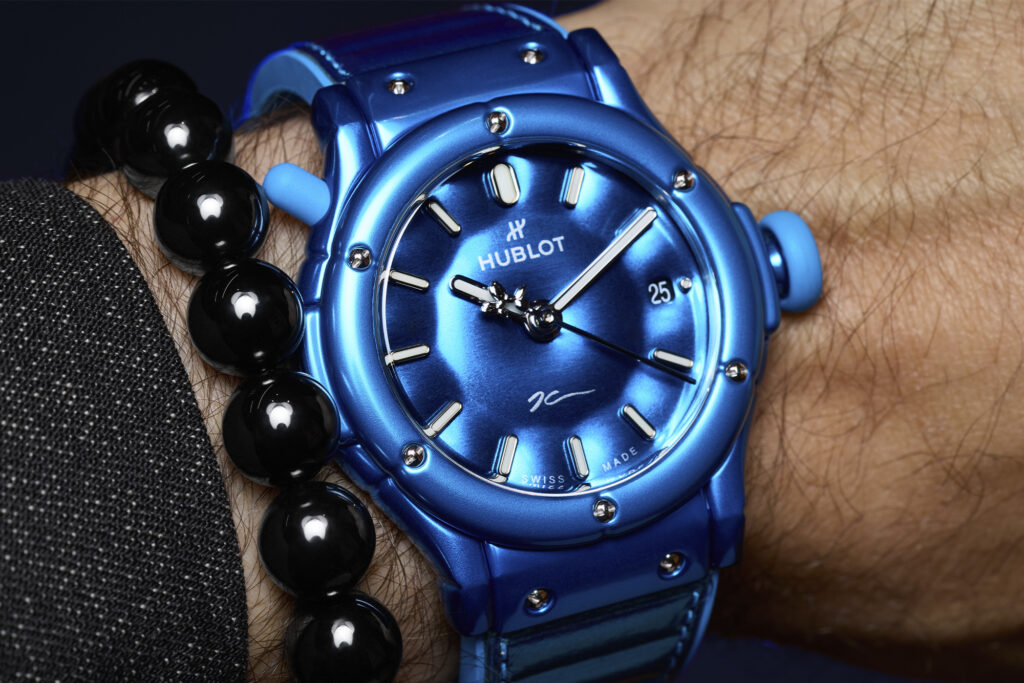
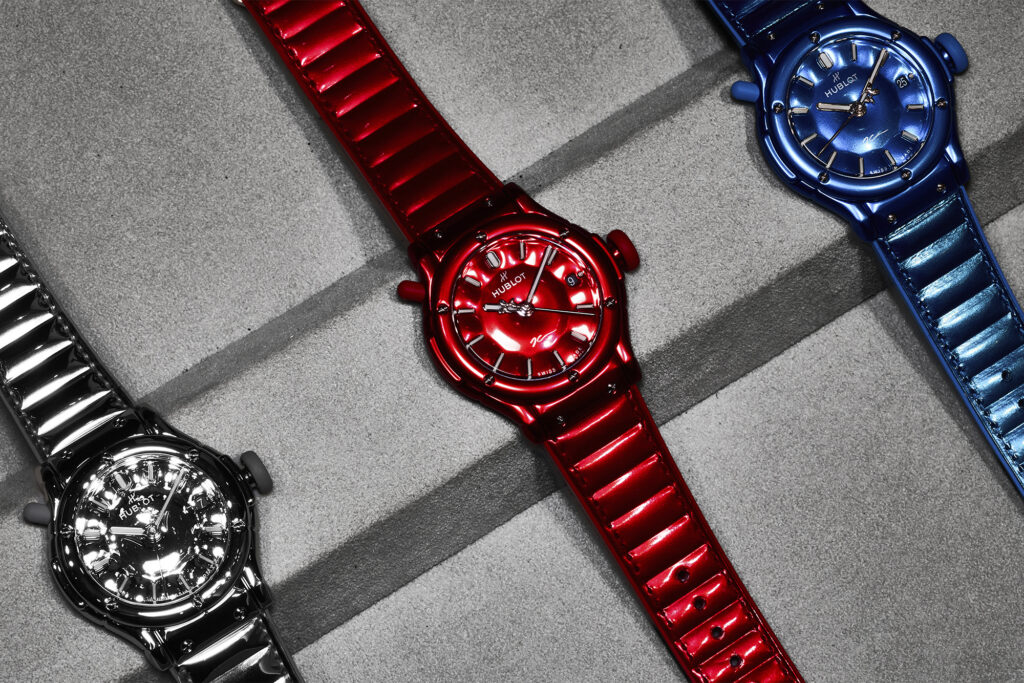
While the release may have come as a surprise to fans of both Hublot and Koons’ work, the collaboration has been in the works for quite some time. As Koons recalls, “We started this project together a little over two years ago. I was informed that Hublot would be interested in doing a special project. I went to Nyon (Hublot’s headquarters in Switzerland) and met with Julien Tornare and some of the team — the designers, the engineering department, material science, the people who set the stones and build the cases. I was so impressed — impressed by the clarity of their commitment to making things as fine as they can be.”
The connection was immediate, with both parties realizing they were similarly motivated to create something that was distinct, being defined by a similar design philosophy and approach to expressive objects. Thus, Koons went straight to work conceptualizing a translation of his most iconic piece, Balloon Dog, into the form of a watch. From Hublot’s side, it was essential to give as much creative freedom as possible, endeavouring to minimize the technical limitations of watchmaking on the artistic process. For Koons’ part, the scope of reference was wide – drawing on everything from his Celebration series, to the concept of skin as a physical membrane separating the wearer from the world, and even utilizing AI in the design process.
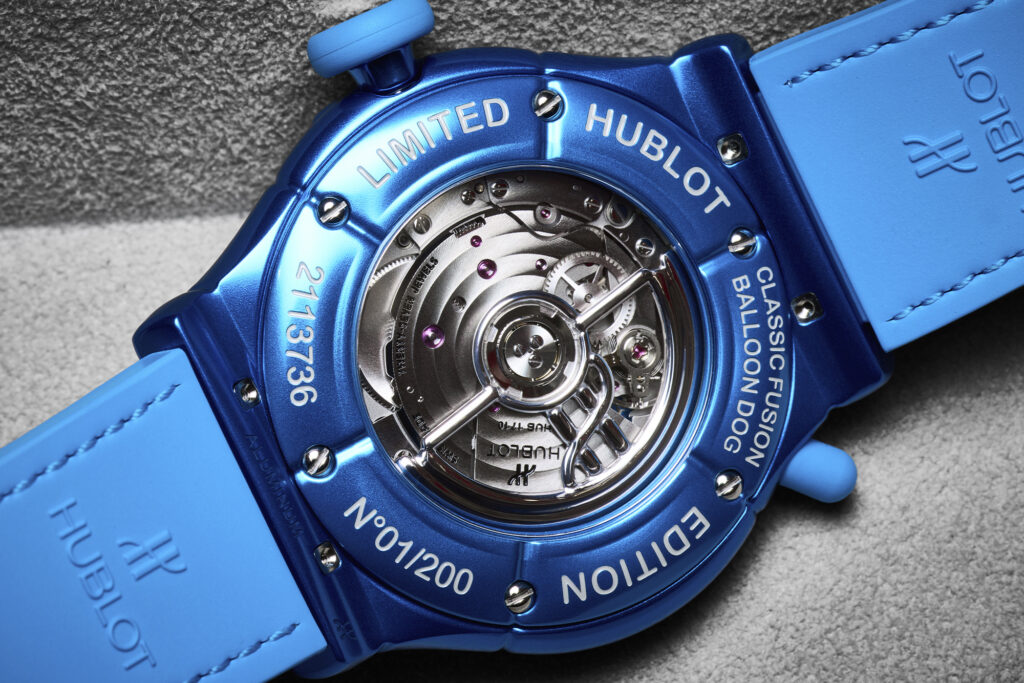
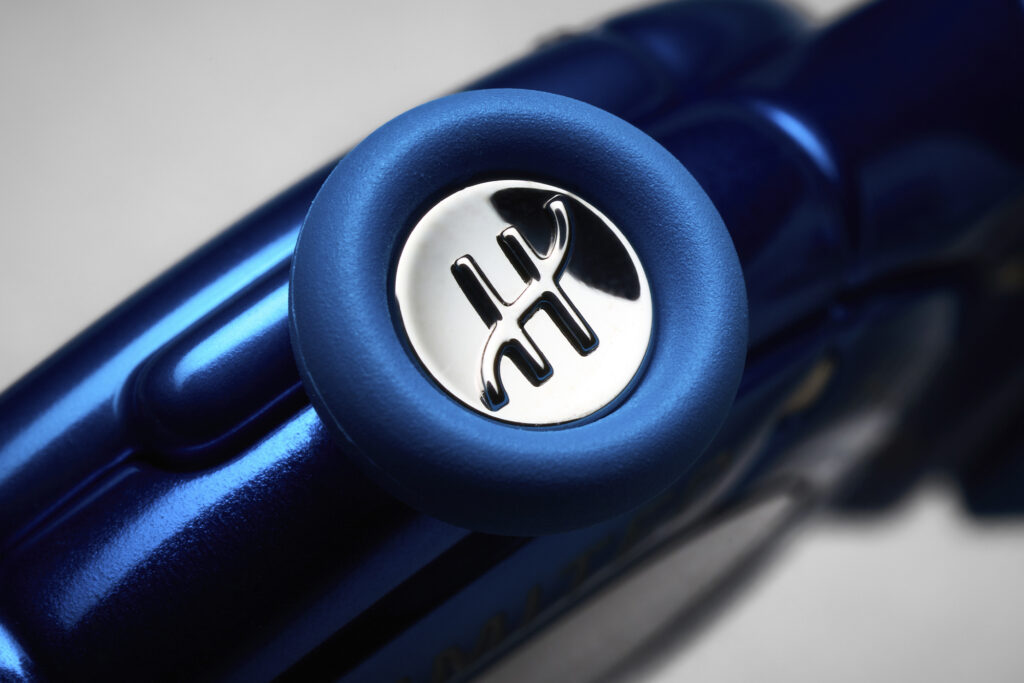
While both Hublot and Koons are known for subversive, even polarizing work throughout their respective histories, both Tornare and Koons say that such an inclination was not a driving force behind their design choices. As Koons’ puts it, “If somebody just tries to make something shocking, it doesn’t succeed — it has to come naturally, from curiosity, from interest in everything. I like dislocating images; I like to celebrate, because it can create a kind of third element. But it’s not for shock. The most shocking thing is honesty.” To which Tornare added, “I agree — being shocking or disruptive as a purpose isn’t right. You have to be who you are, you have to be authentic… When you wear a Hublot watch, you know it’s not like any other brand — that’s how it’s been since day one.”
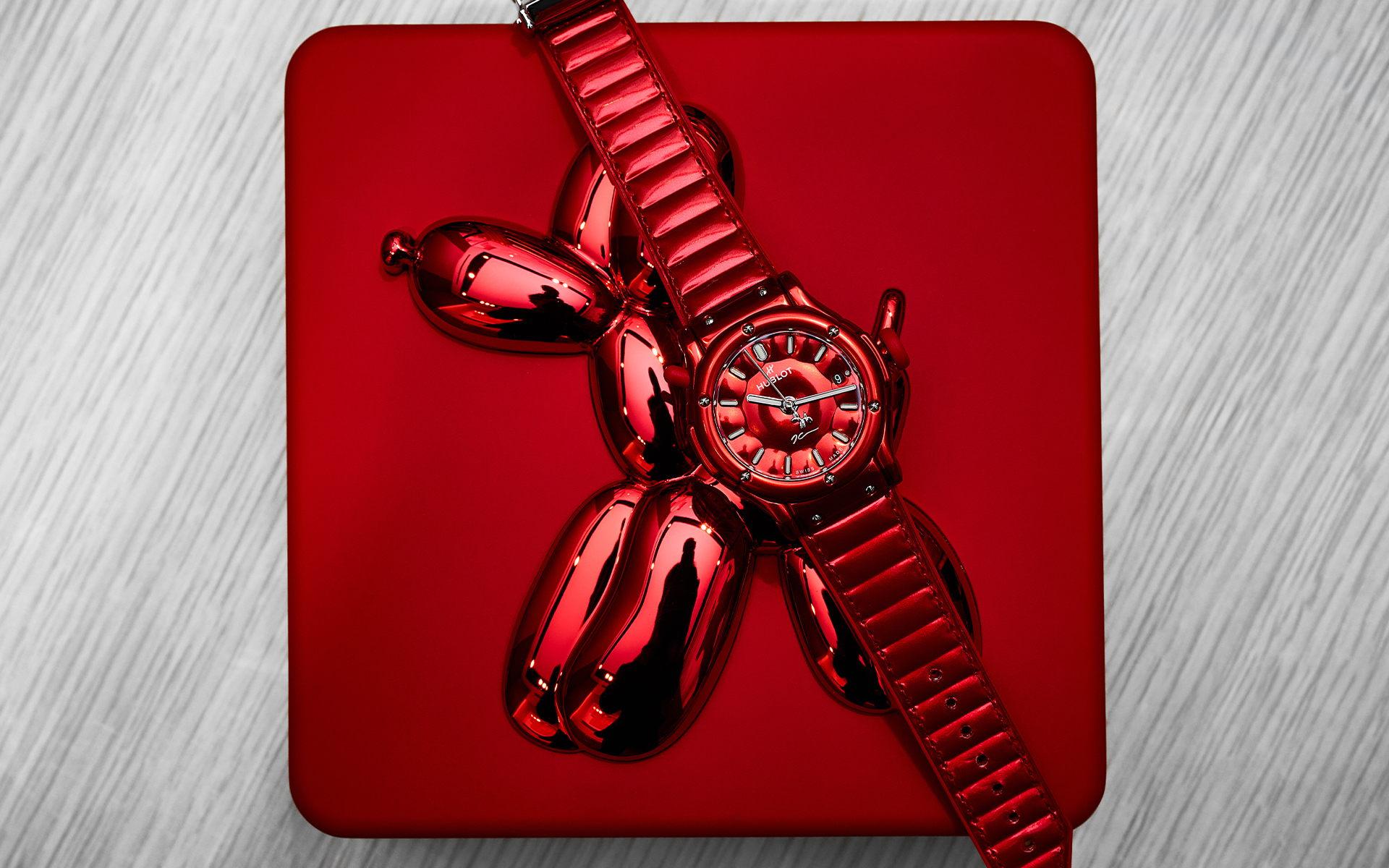
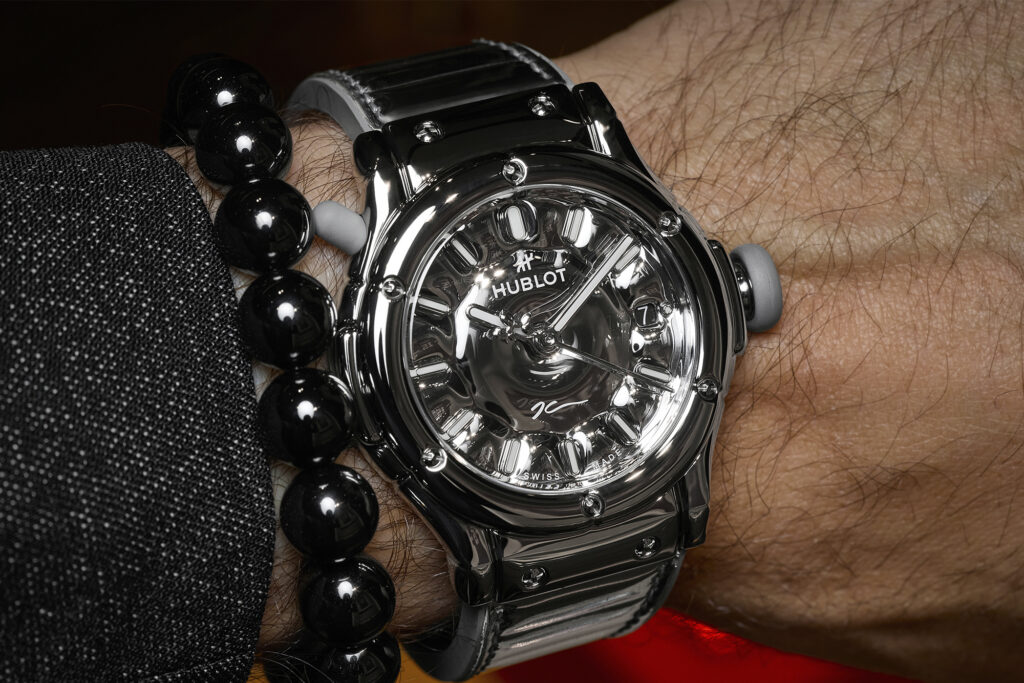
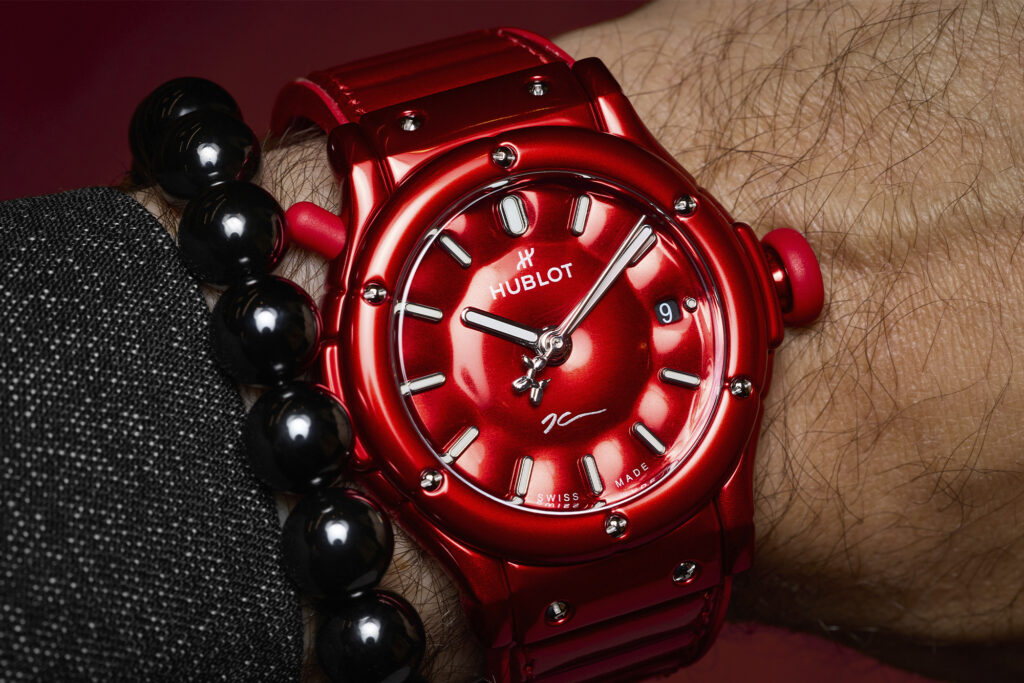
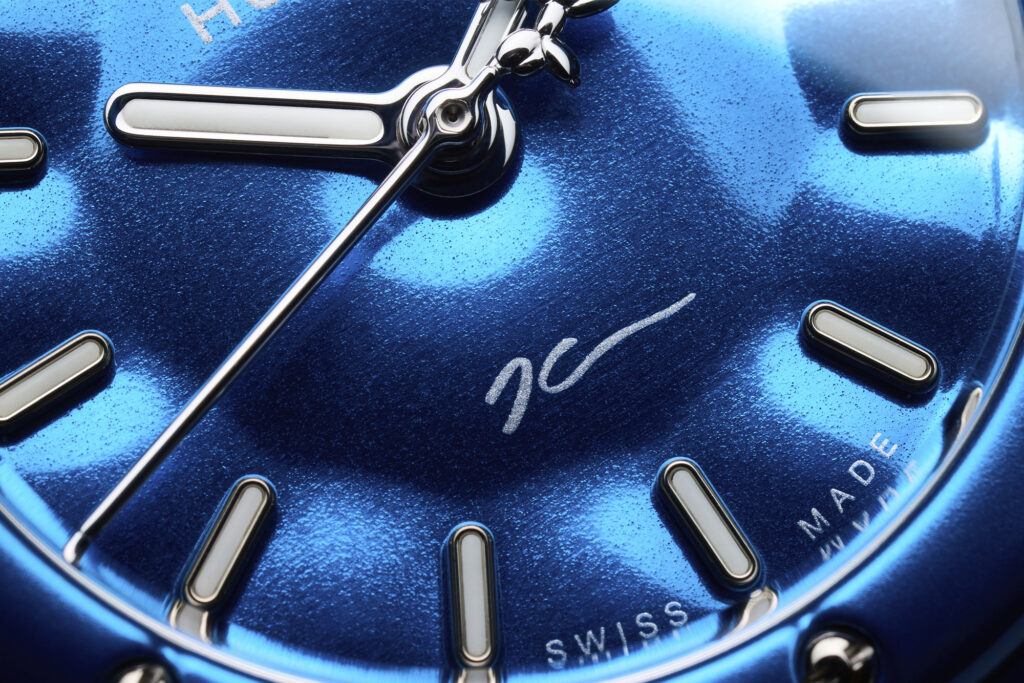
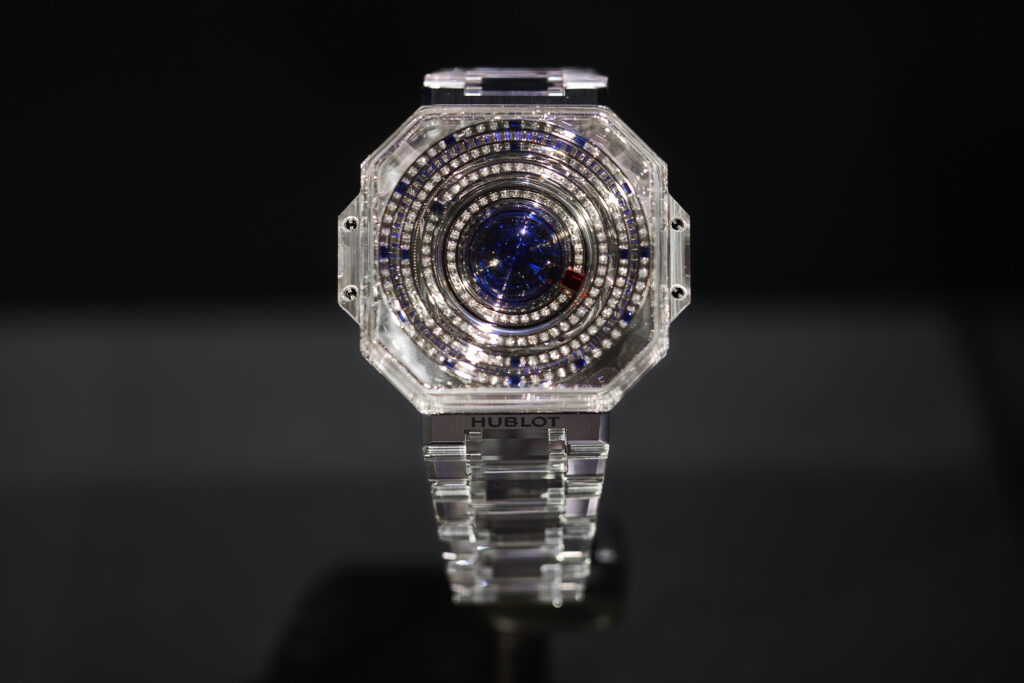
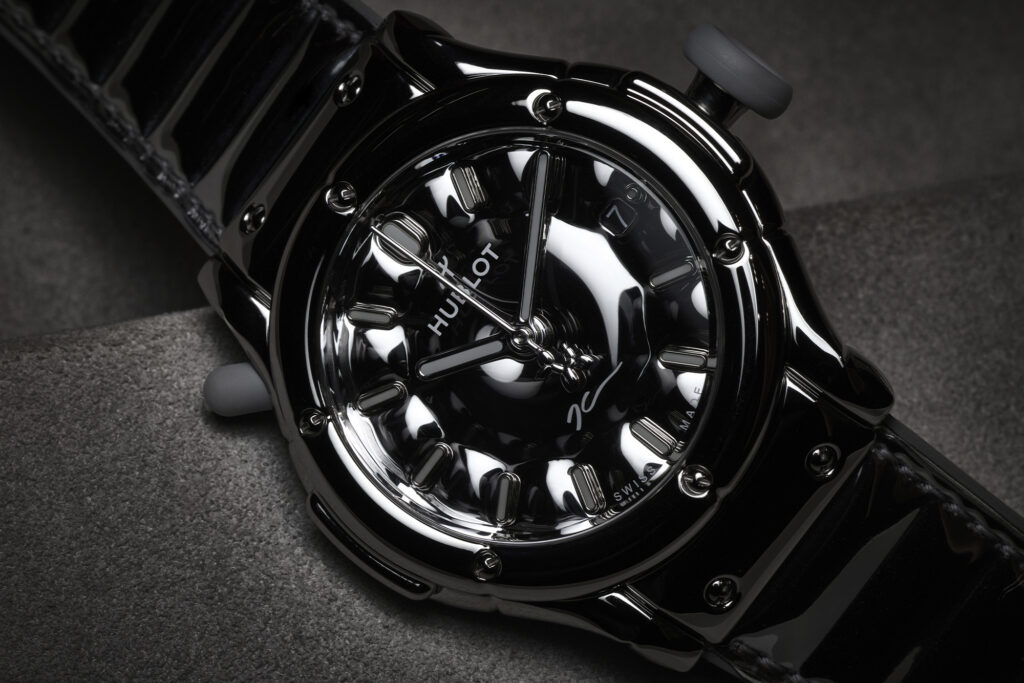
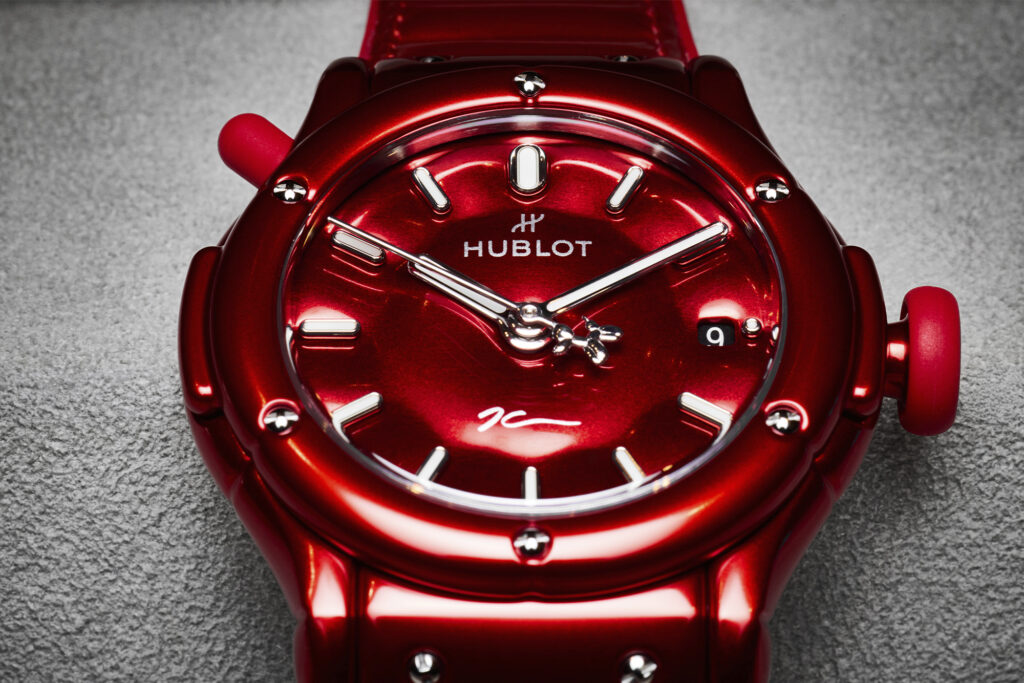
The watches themselves, though entirely unique, somehow make perfect sense in the broader reference of Hublot’s catalogue. The watches are bright, bold, even garish to some, but entirely devoid of concern for conventional horological aesthetic. The first three pieces, Classic Fusion Balloon Dog by Jeff Koons, are available in 42mm Red or Blue aluminium cases, or silver in stainless steel. They will be limited to 200 pieces each, and are priced at $25,100 USD. The fourth timepiece is the MP-14 Origin by Jeff Koons Sapphire Titanium, a dazzling, cosmic-inspired tourbillon constructed in a 44mm octagonal sapphire and titanium case which will be limited to just 30 pieces and priced at $488,000 USD.
Over the past 10 years, watches have undeniably followed a similar path to that of the art world, where pieces are bought and sold with less of a focus on their form or function, and more on their speculative value as commodities. Despite that trend and nearly unavoidable market reaction, both Koons and Tornare say that the thought wasn’t really a factor throughout the collaboration. “We really haven’t talked about it that much,” Tornare said. Regardless of the broader response to the design, its rarity, hype, or the luxury market at large, the true commodity that Koons focuses on is time itself. “What’s really relevant isn’t the object itself. I believe we’ve been able to use this timepiece as a way to have a more profound dialogue that’s truly important — celebrating, by all means, the tremendous development and transcendence of humankind — being able to create timelines, come up with engineering, make observations, develop science. But this isn’t for the object. It’s for us. The commodity I care about is us, the human individual, and the respect for the opportunity we have in life. That’s why time is so important — it makes us more aware of our past, where we are now, and how we can use our time to achieve the things we want to do.”
FEATURE PHOTO BY TROY BARMORE.