Two decades ago, I drove a Bugatti Veyron and thought I had experienced something I would probably never experience again. The acceleration was so gut-wrenchingly powerful and the car incomprehensibly expensive; sadly, I figured I’d never experience it again. Surely this was the outer edge of what a road car could do. An extraordinary engineering achievement, available to an extraordinarily small number of people.
I did experience the Veyron once again and it was everything I remembered and more. On tight winding roads the Veyron is nimble and lithe, despite its considerable mass. It’s beautiful, in its gilded bolide sort of way, and it’s just very special. But, after this second encounter, I knew I’d likely never experience anything like it again.
But, here we are. And it has four doors. And a trunk.
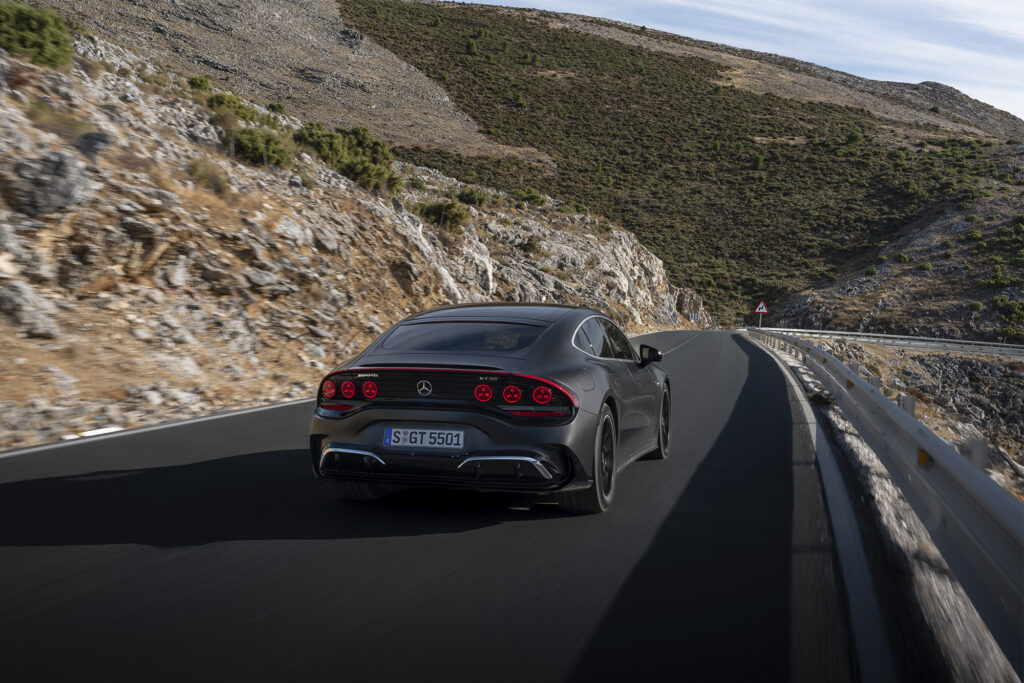
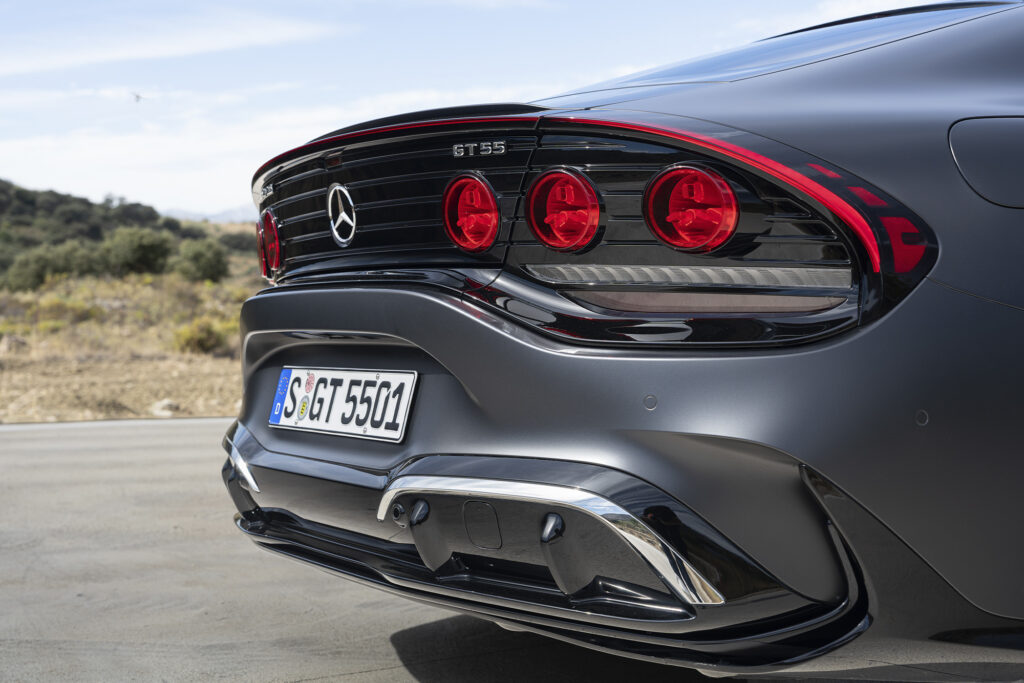
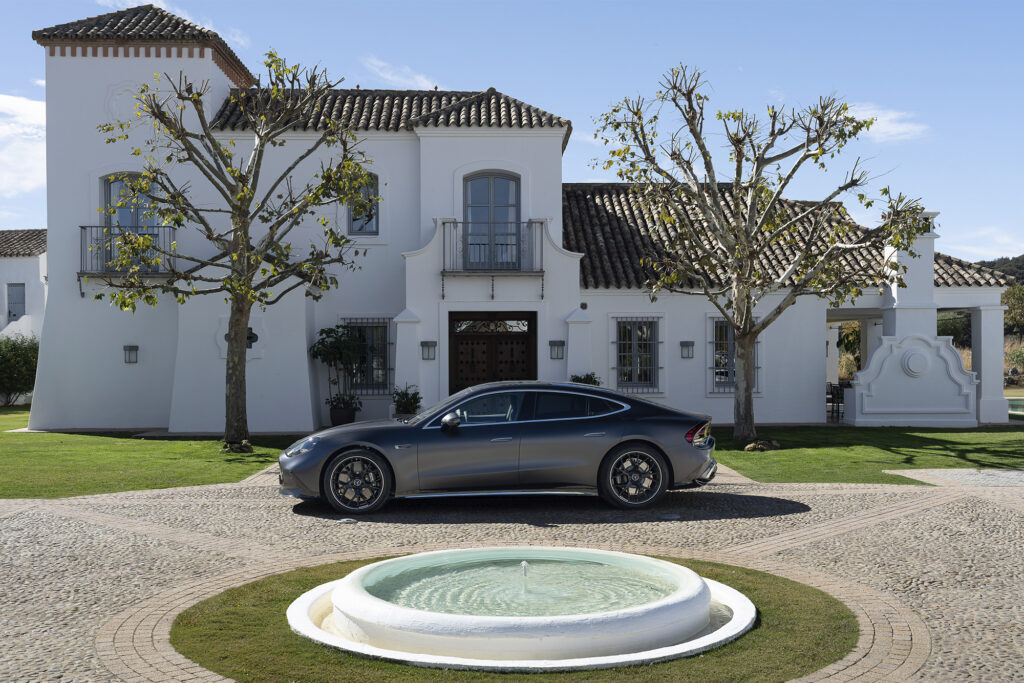
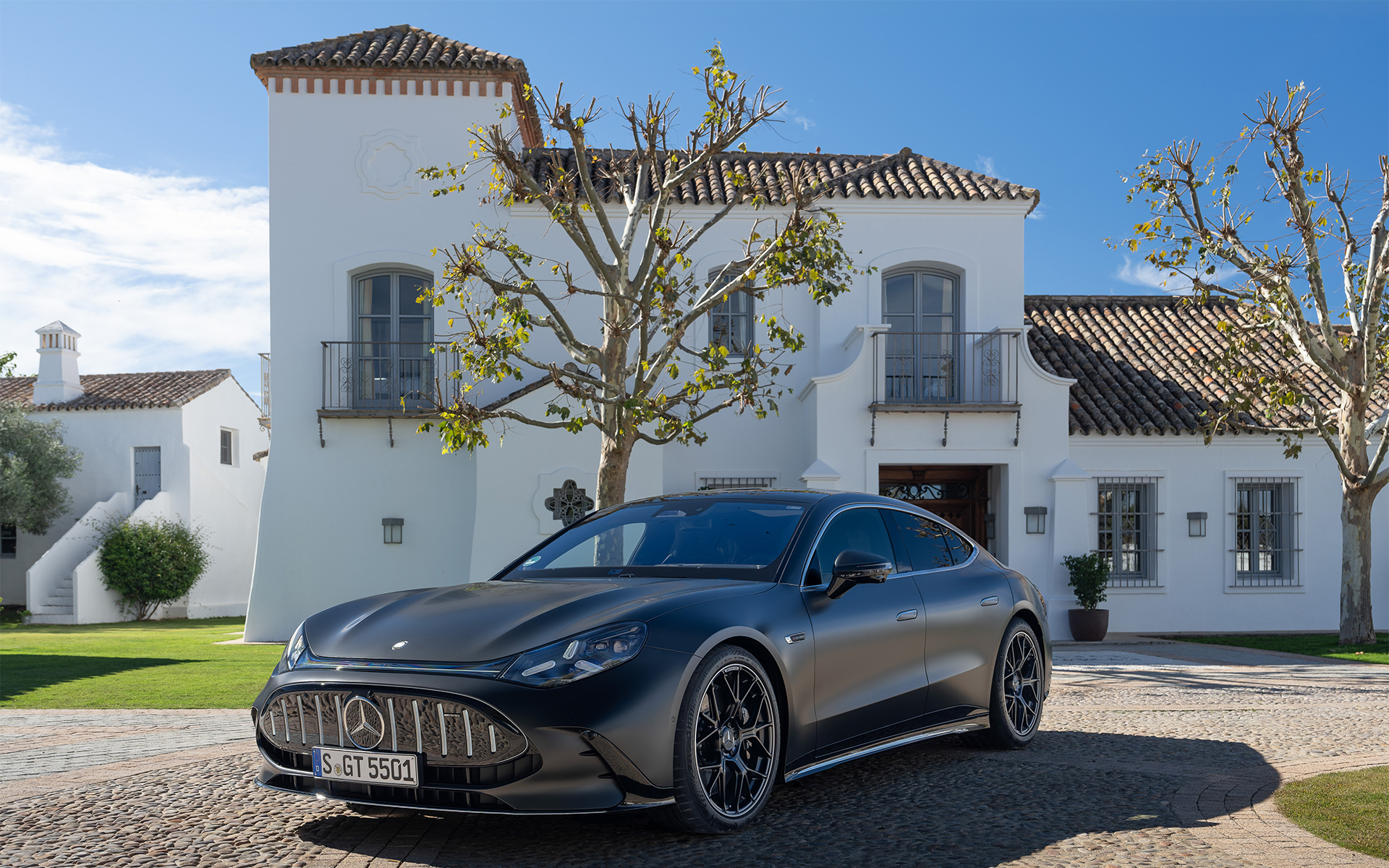
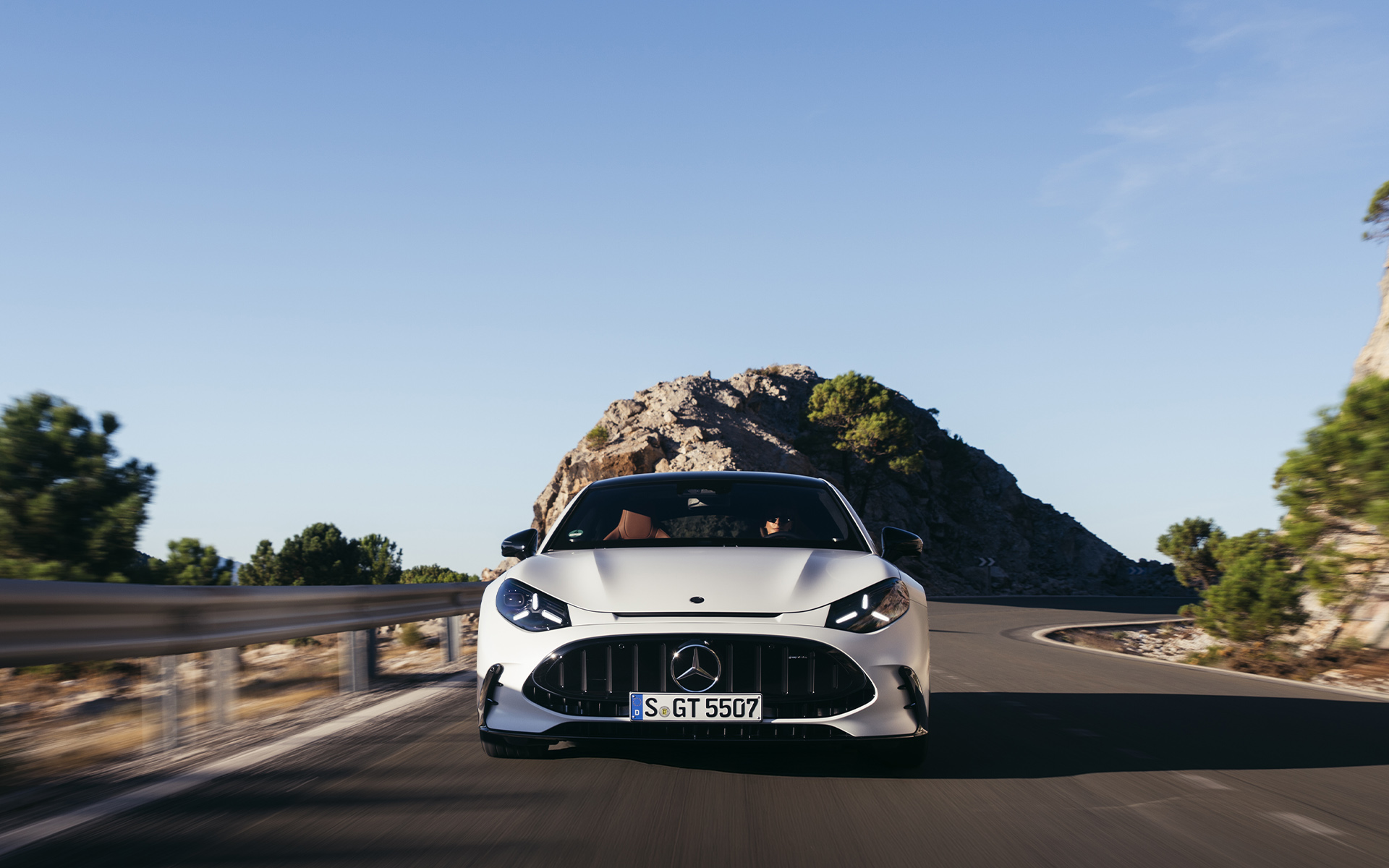
The new, all-electric Mercedes-AMG GT 4-Door Coupe delivers the kind of acceleration that once required a Bugatti badge, a vast fortune, and a willingness to organize your life around an exceptional automobile of absurd servicing costs that often included wheel replacements if you drove it enough… Now, you can bring passengers. Properly. With luggage. The democratization of extreme performance has reached a rather entertaining stage.
Of course, the AMG GT55 and 63 aren’t the first sedans or EVs to offer Veyron-level acceleration. That’s a party trick more than a few EVs are good at. But it is the first in my experience to offer that acceleration combined with the steering, braking and cornering characteristics of a supercar and not a very, very, heavy fast sedan.
It’s still a very heavy sedan but you can’t tell from the driver’s seat because it’s been engineered from the ground-up to do exactly what it does. Democratization is relative, of course. This remains an AMG, with all the expectations of luxury, craftsmanship, and expense that entails. But the distance between a very desirable luxury sedan and the once-inaccessible world of hypercar performance has collapsed. What previously required membership in the smallest imaginable club is becoming something you could drive every day.
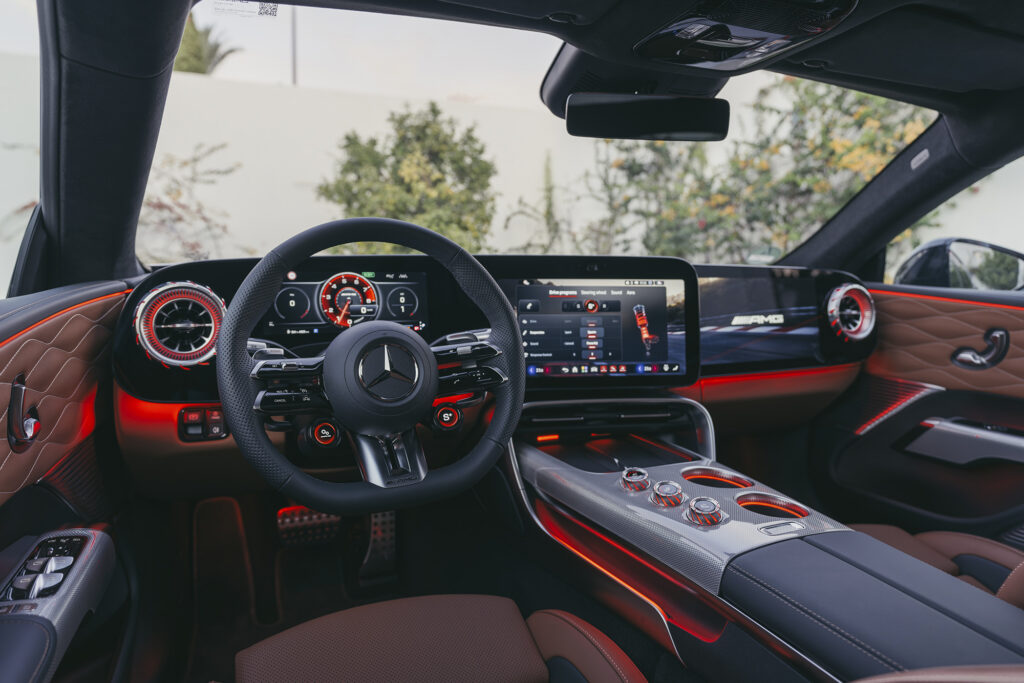
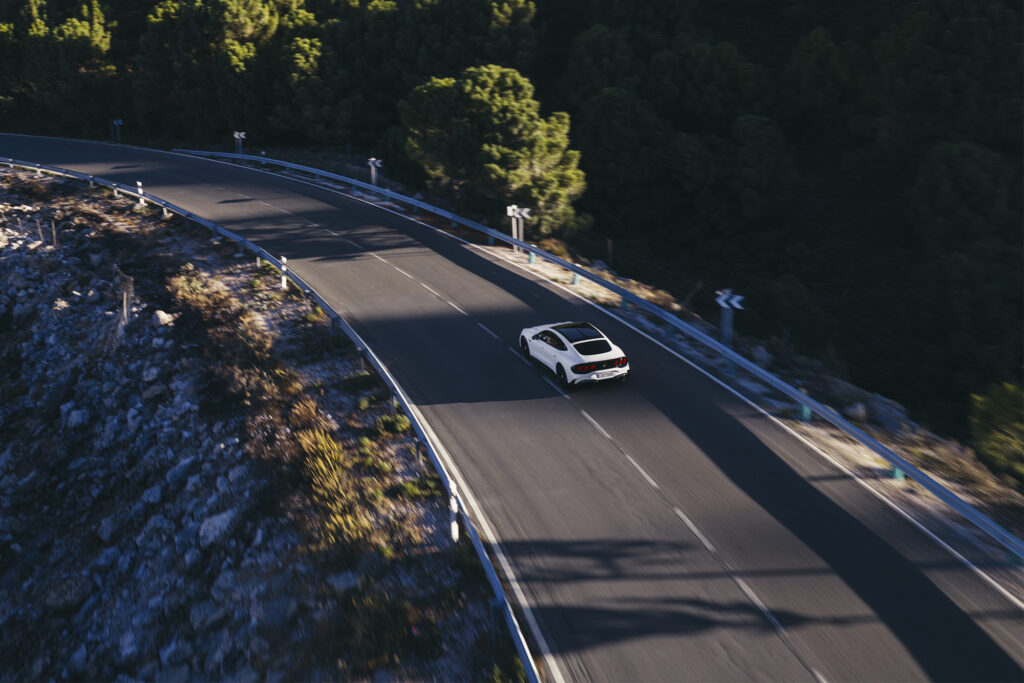
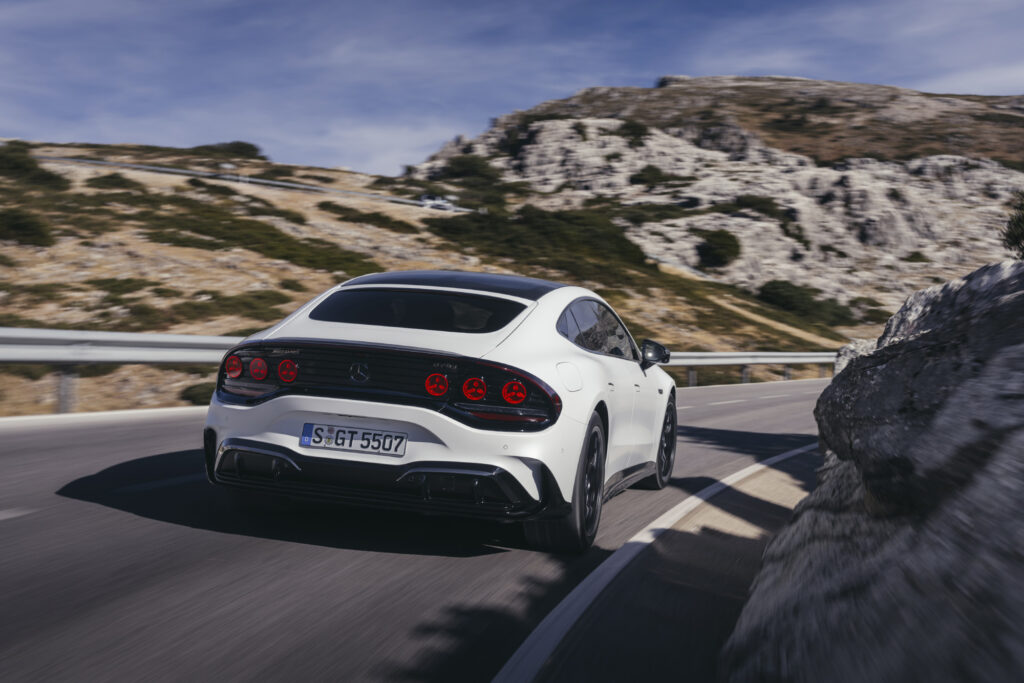
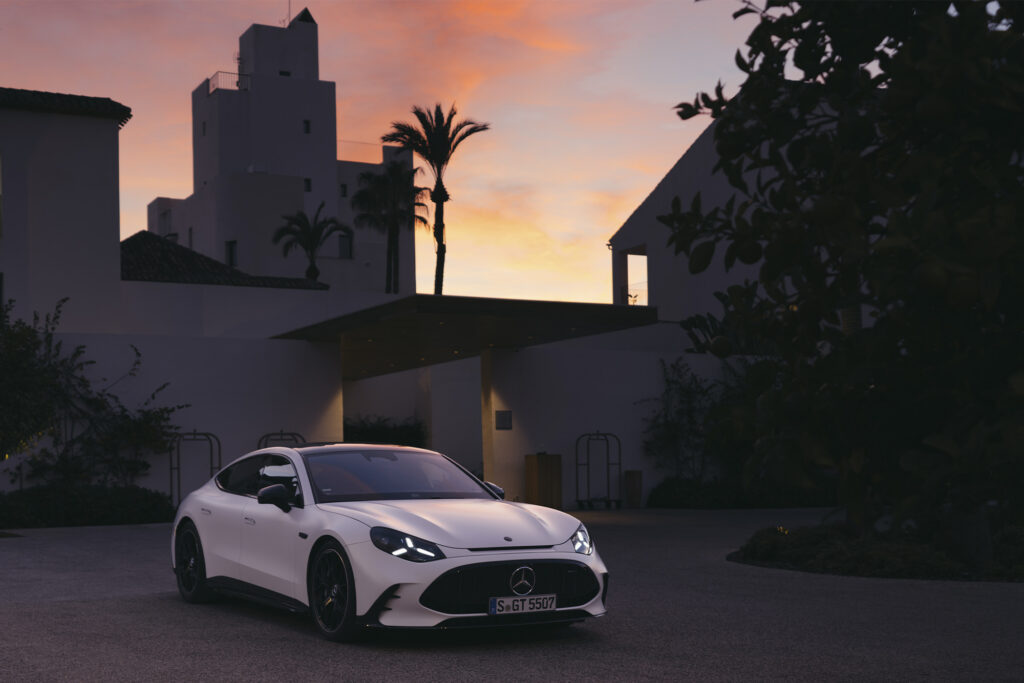
Mercedes has understood, however, that acceleration alone is no longer enough. Electric cars have made startling straight-line speed increasingly commonplace. The challenge is to make a car this fast feel equally extraordinary when the road turns. Here, AMG has done something much more consequential than install more kilowatts.
The foundation is AMG.EA, a dedicated electric architecture developed by AMG. That distinction matters. Start with the requirements of a performance car and you can engineer the battery, cooling, drivetrain, and chassis to work together from the outset. Packaging becomes an opportunity. So does software. Everything serves the same purpose. You’ll never see a Mercedes-Benz low-power iteration of this car. It’s pure AMG.
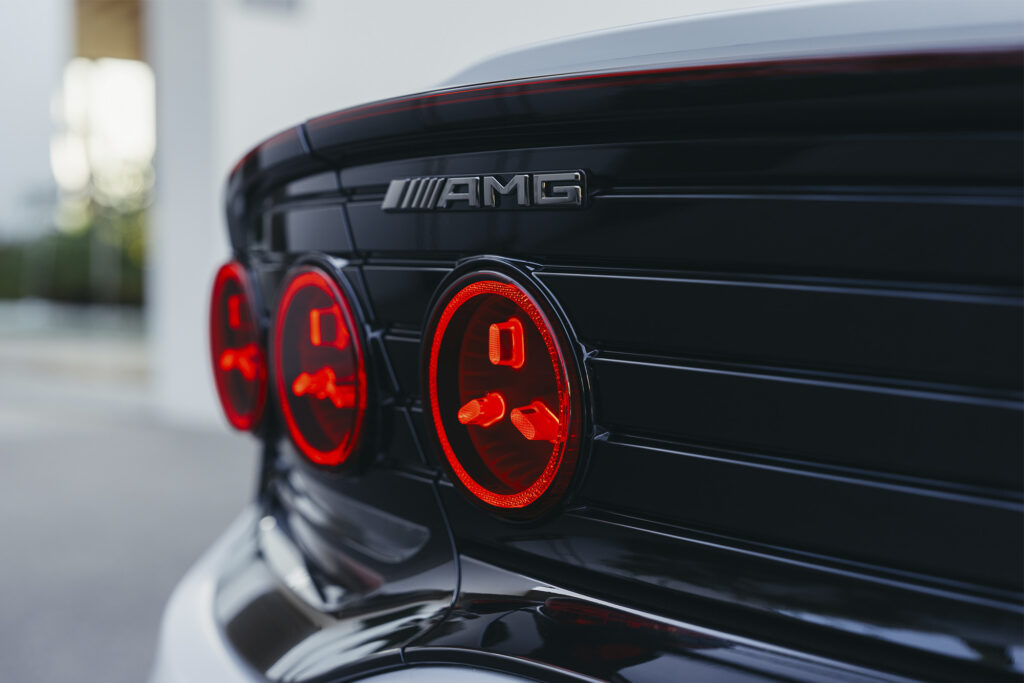
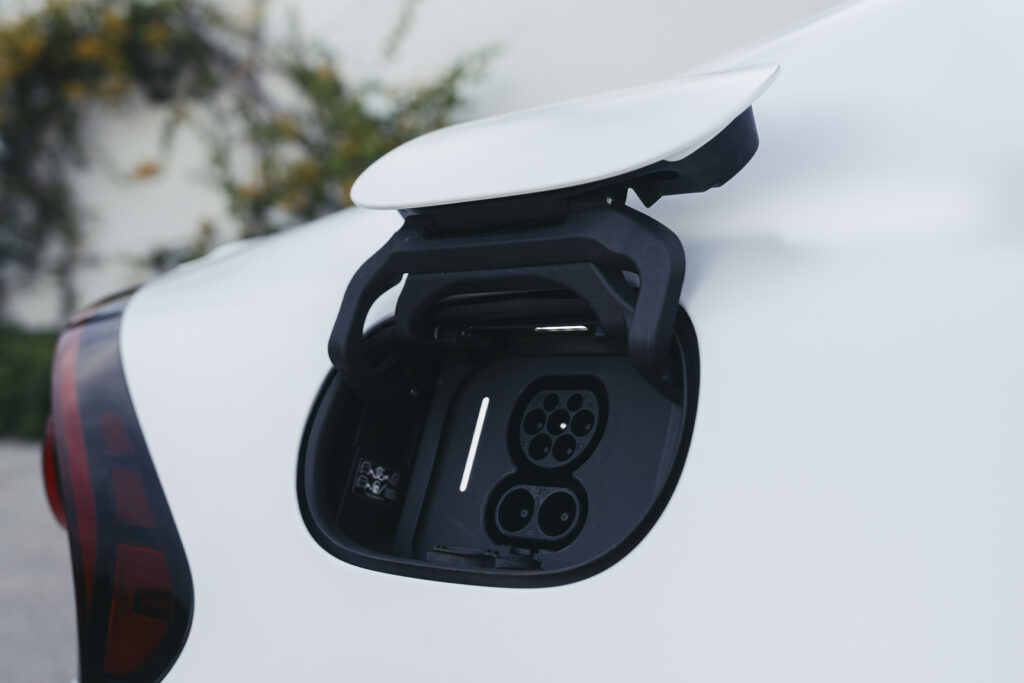
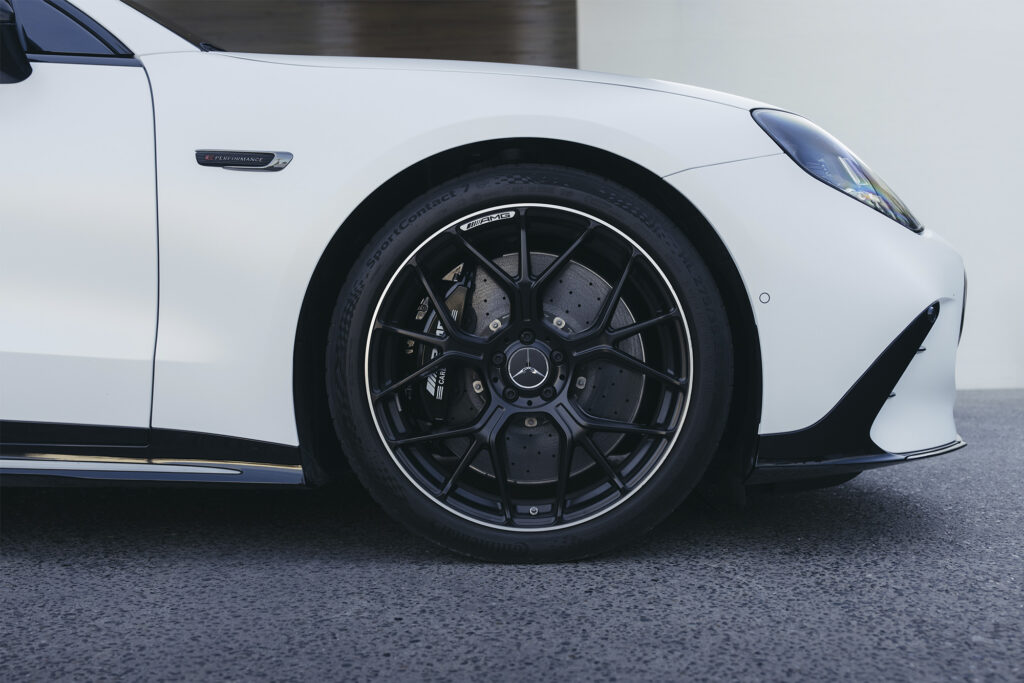
Both the GT 55 and GT 63 use three compact (about two inches thick) axial-flux motors: one at the front and two at the rear. Having a motor for each rear wheel allows the car to distribute torque between them with exceptional precision. Rather than simply managing excess power, the drivetrain becomes an active participant in getting the car around a corner. Which we learned on the track but more on that later.
The GT 55 delivers up to 805 horsepower. Mercedes claims 0–100 km/h in 2.8 seconds. Pause there. This is the less powerful of the two cars, yet its acceleration would have been a defining achievement for a supercar not very long ago.
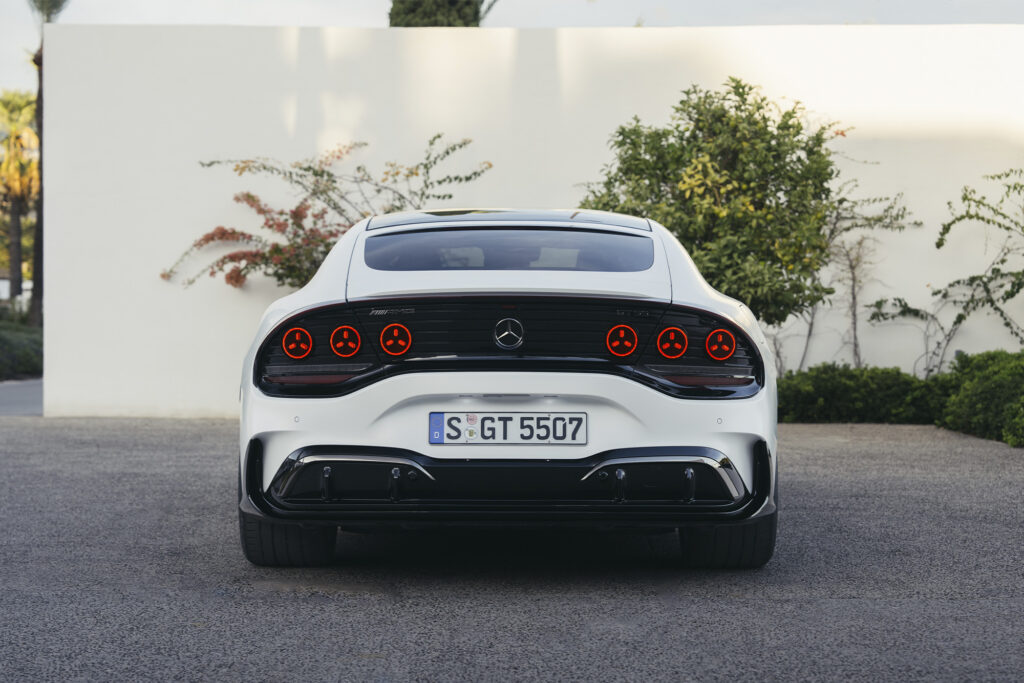
Yet the GT 63 takes matters considerably further: up to 1,153 horsepower and 1,475 lb-ft of torque. Its claimed 0–100 km/h time is 2.4 seconds; 200 km/h arrives in 6.8 seconds. That is Veyron territory for acceleration, delivered in a sedan. My younger self would have found the proposition difficult to believe.
There is theatre, too. Pull both steering-wheel paddles to summon the overboost function, with boost lasting 55 seconds in the GT 55 and 63 seconds in the GT 63. Why the time limit? I don’t know, because you can pull them again immediately and repeat it over and over. The directly cooled battery is engineered for repeated hard use.
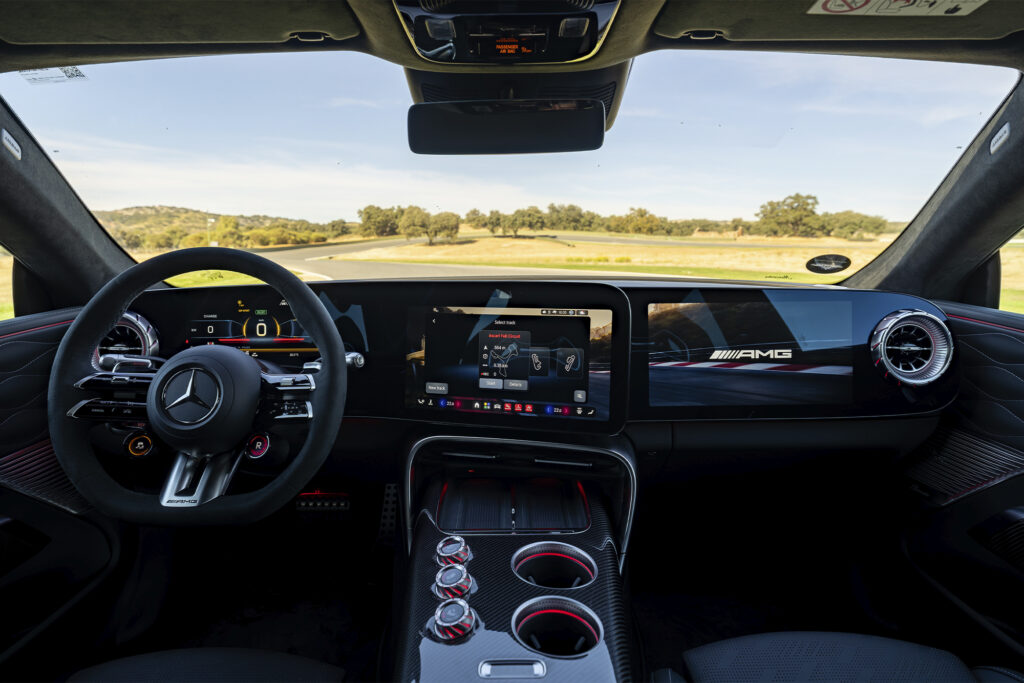
What stays with me, though, is the steering and handling. There is the precision and confidence I associate with a Porsche 911 Carrera, and the immediacy and compliance that make a McLaren so compelling. Credit the absolutely insane front suspension with its castings and forgings that look simply otherworldly, giving the steering the solidity and precision unlike that of any other sedan.
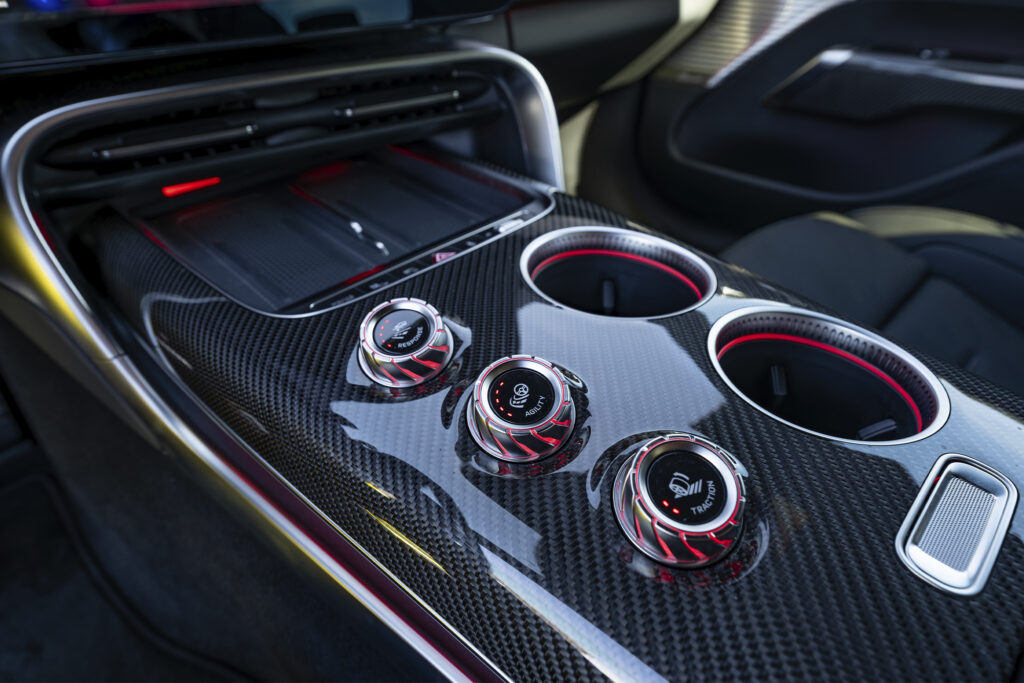
AMG’s “Race Engineer” gives all this unusual depth despite the gimmicky name. Three physical rotary controls adjust Response, Agility, and Traction and while two more on the steering wheel handle modes and stability settings. Response changes accelerator behaviour. Agility varies the car’s willingness to rotate through torque distribution, creating the impression of a shorter or longer wheelbase. Traction offers nine intervention settings, allowing progressively more slip. Agility and traction adjustments require a sporting drive mode and the stability control to be switched off.
It’s a lot. I failed high school finite, so I can’t tell you how many possible combinations there are but it’s a lot. So many, in fact, that it took many laps of a race track to try a meaningful variety of them and they legitimately change the driving experience.
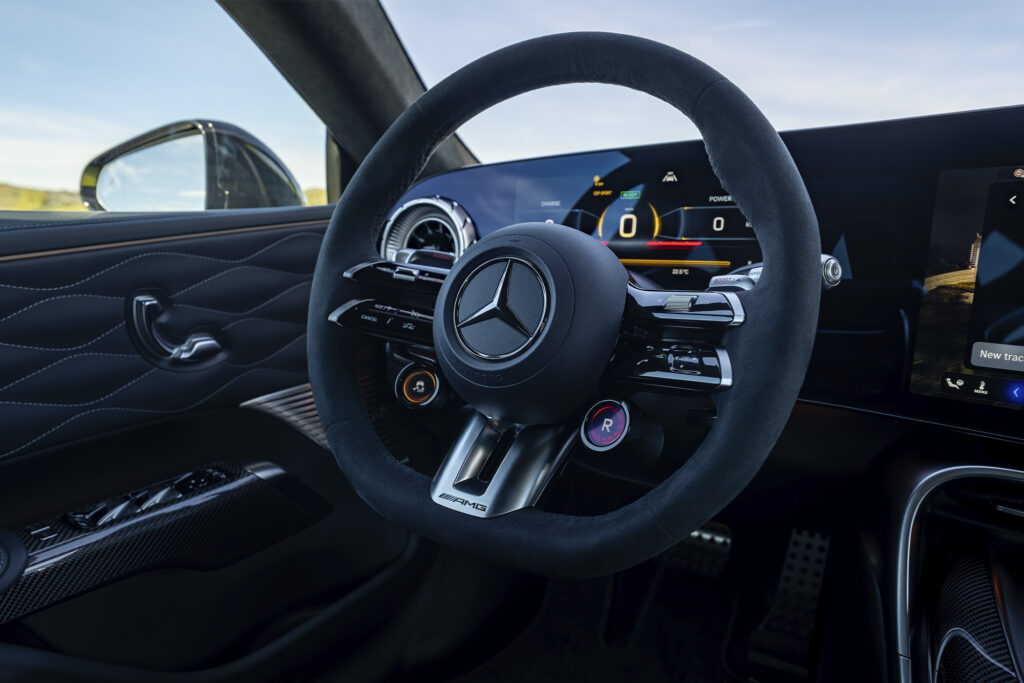
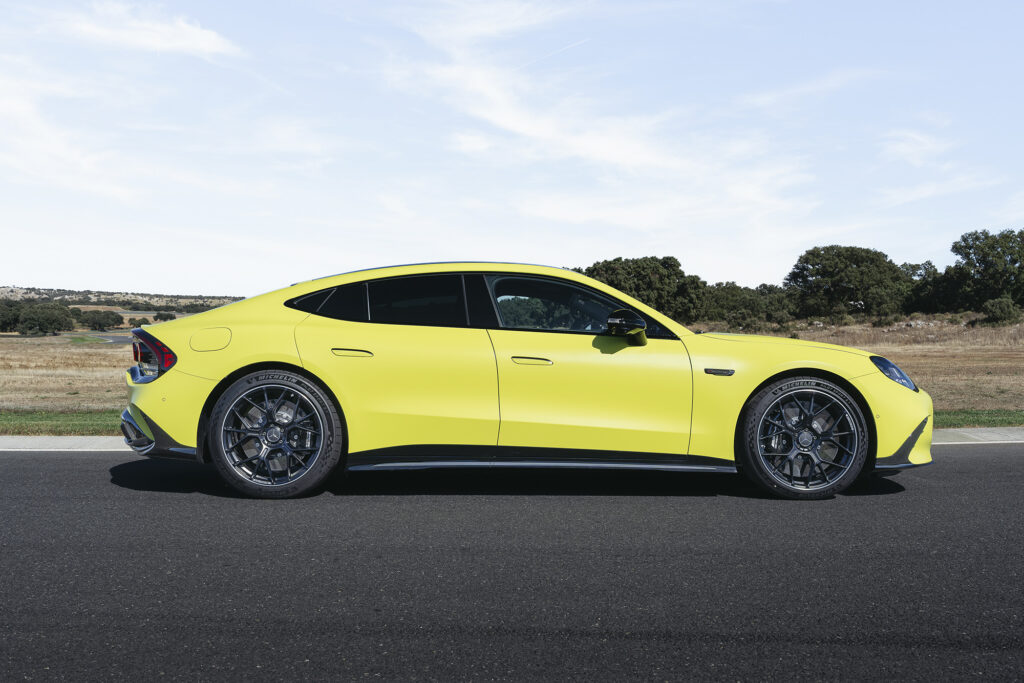
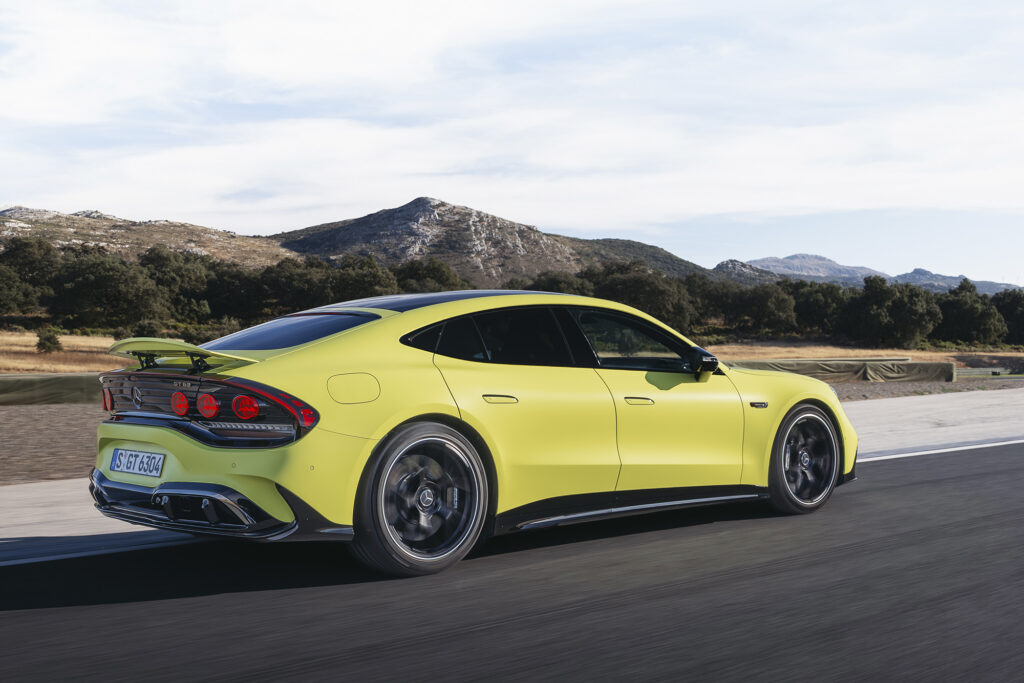
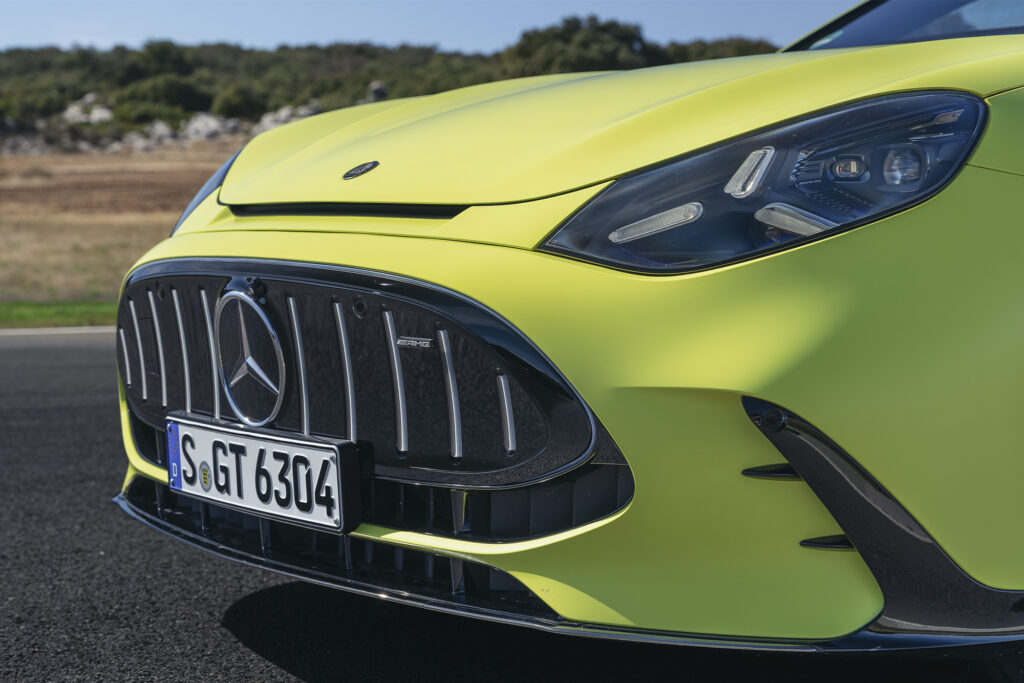
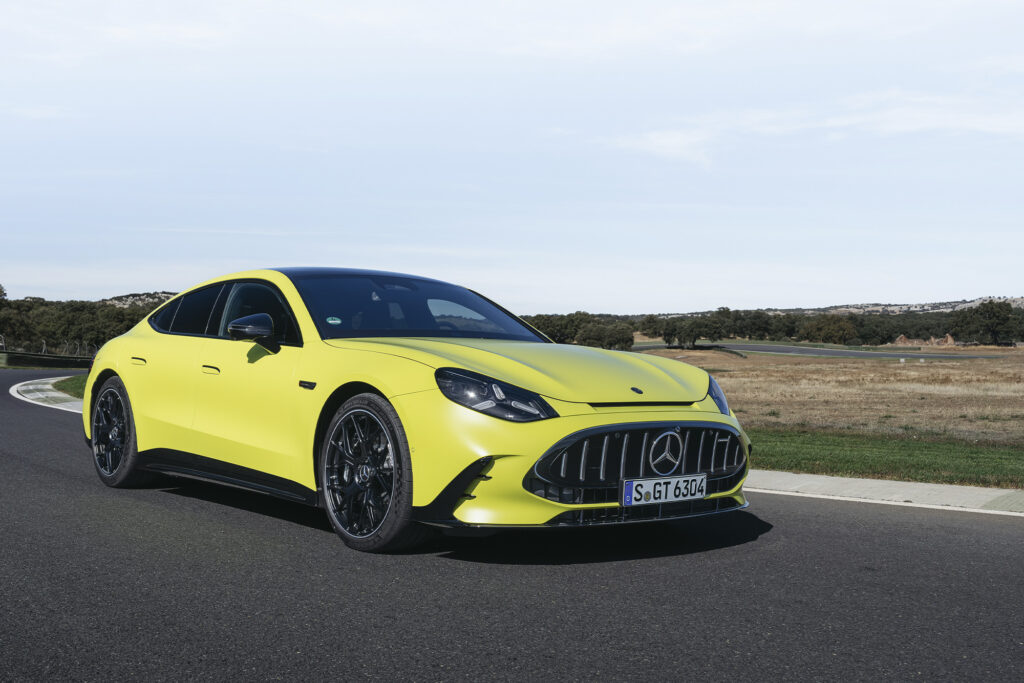
The appeal extends beyond the ability to make impressive adjustments. You can shape the car around how you like to drive, and explore its character as your confidence develops. There is something wonderfully engaging about having such direct access to decisions normally buried within a manufacturer’s calibration. And while I’ve historically been more of a “set it once and forget it” type of driver, I can see the appeal of this customizability depending on driving situation.
The simulated gear changes of Sport really did make for a fun drive on winding roads and on the track. Race just melts your face with full power, no overboost needed. It’s hard to convey the speed this car is capable of. It’s the first car I’ve ever driven on track where I made myself sick at the wheel. The forces are just incredible but it’s also on its toes, responsive and rewarding to drive fast. On track and on road it feels about 1,000kg lighter than it is. It’s remarkable.
Active rear steering and hydraulically interconnected suspension help reconcile agility with the comfort expected of a grand tourer. That breadth is essential. A four-door car earns its place by making ordinary journeys rewarding, too. Once again, the bespoke architecture has allowed AMG to tailor the car to expectations and, for interior comfort, move battery cells around to deepen the rear footwells.
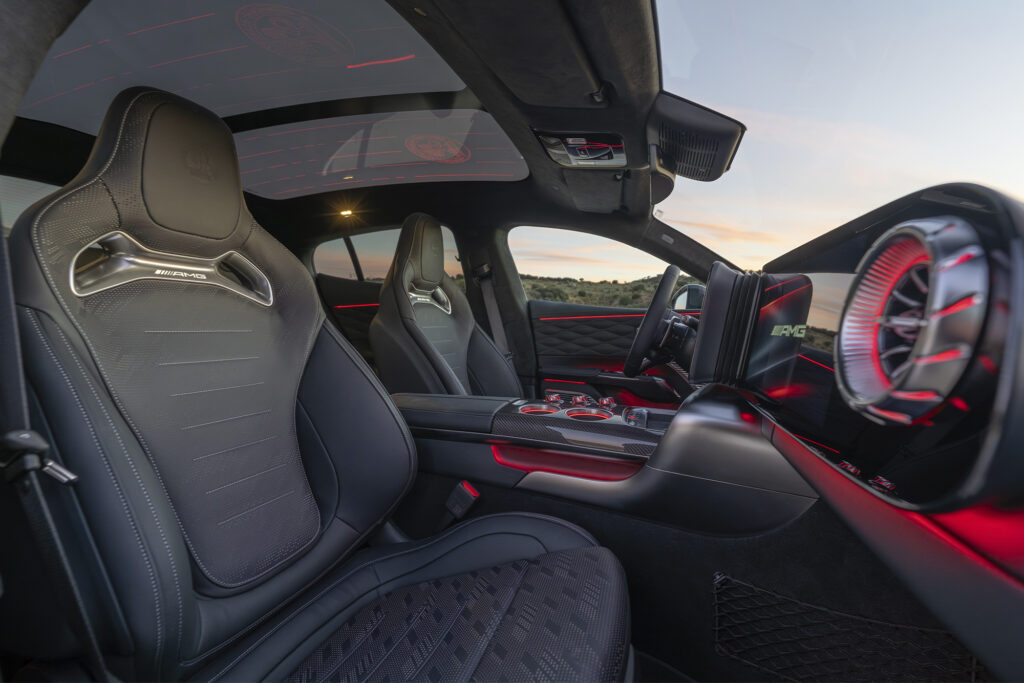
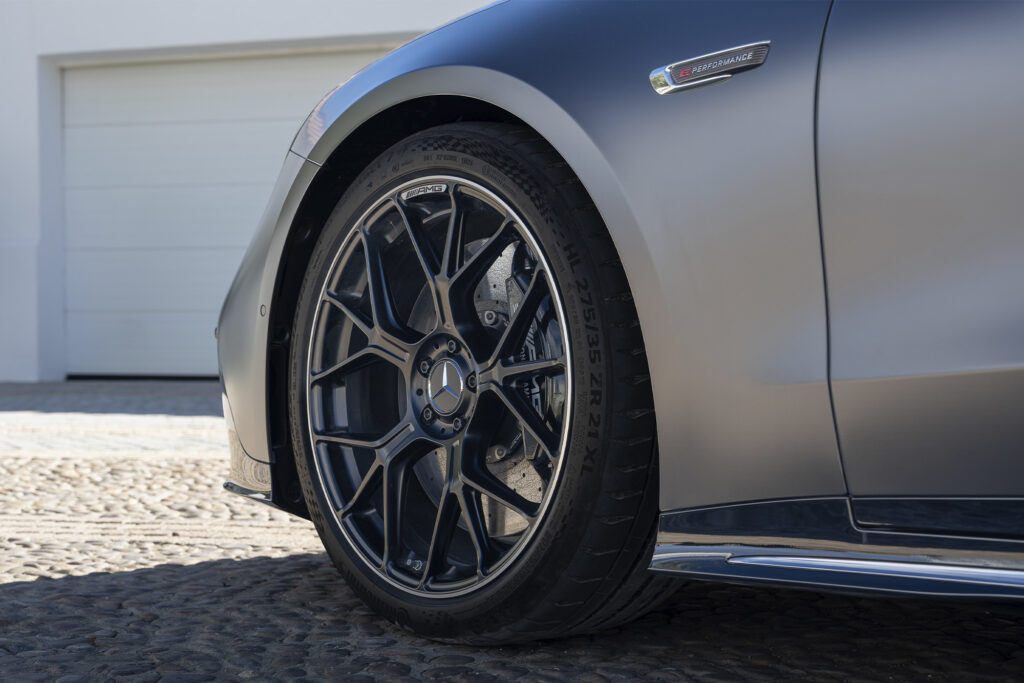
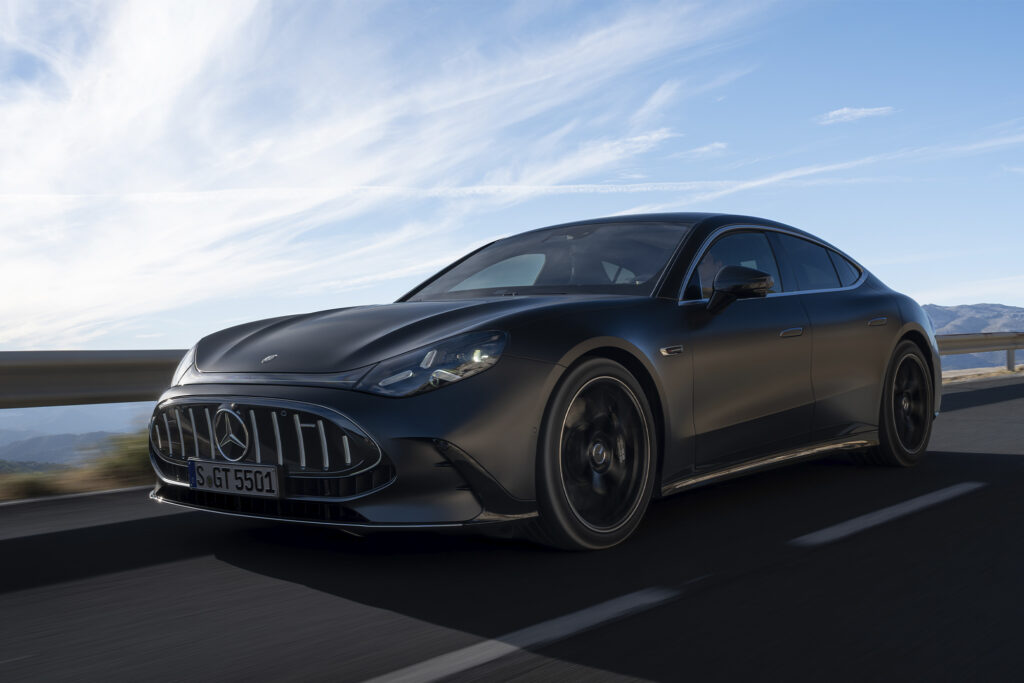
The Veyron made extreme performance feel like a singular event. EVs democratized speed, and the AMG GT is the first EV we’ve driven that makes it possible for an everyday-drivable sedan to also possess the chassis precision and confidence of the world’s most impressive sports cars. The achievement is that the experience still invites your attention, still rewards your participation, still makes you want to take the interesting road home. Twenty years ago, I thought I had both experienced and lost something. With the AMG GT, I can see that thrill is finally within reach.