Next time you head to the pharmacy, take a closer look at the deodorant aisle. As you scan the shelves, you’re bound to notice that even the branding carries a binary. Merchandise marked “for women” carries delicate descriptors: “English lavender,” “vanilla and argan oil,” or “sweet nectarine.” Antiperspirants geared toward men, meanwhile, gesture towards the wilderness with an enthusiasm that borders on parody (see “Arctic Freeze” and “Bearglove”). Marketing teams are careful to couch men’s cosmetics with an assurance of masculinity. The suggestion, conscious or not, is that men’s self-care should come with camouflage — but today’s generation is dropping the disguise.
“Younger generations are comfortable with self-care and understand that lifestyle impacts the body, including the face,” says Thomas Tullo, massage therapist and founder of Aman Spa. “Skincare is viewed as hygiene and long-term maintenance rather than vanity.”
“Instead of focusing on ‘looking better,’ we focus on how the face functions. […] Many men connect to that because they already understand training and recovery when it comes to the body.”Thomas Tullo
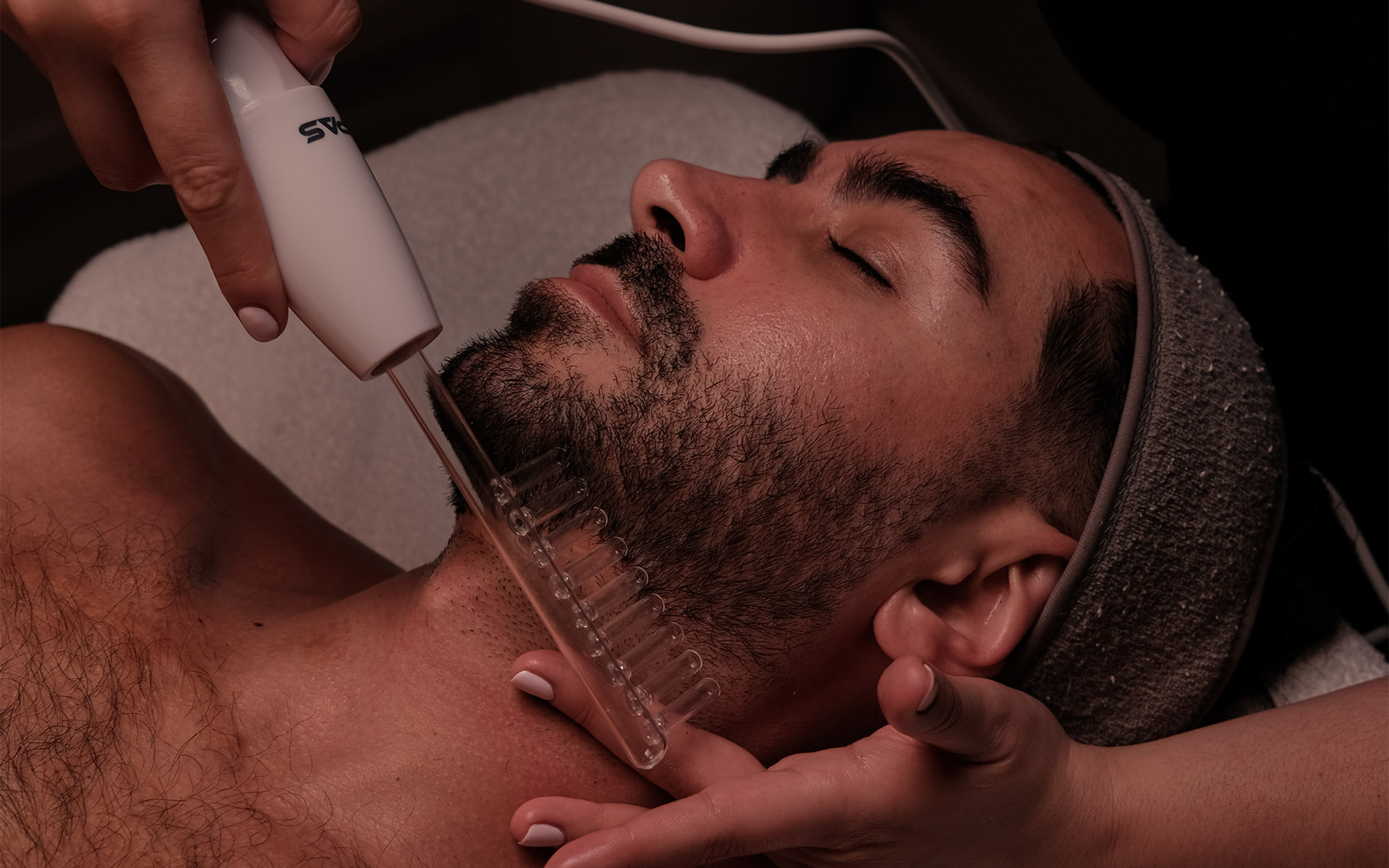
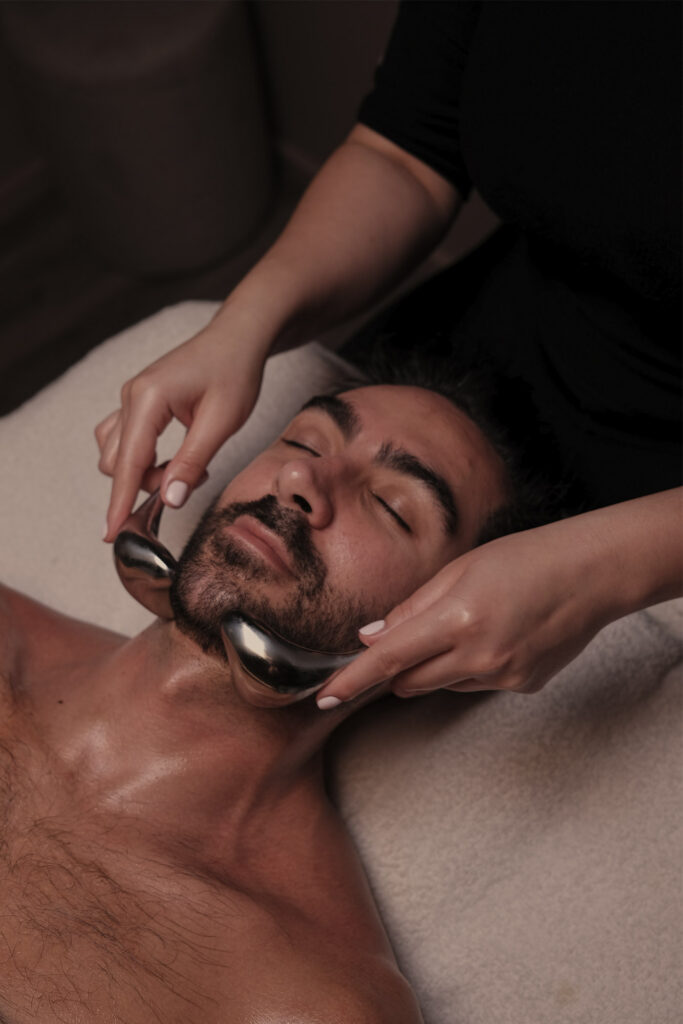
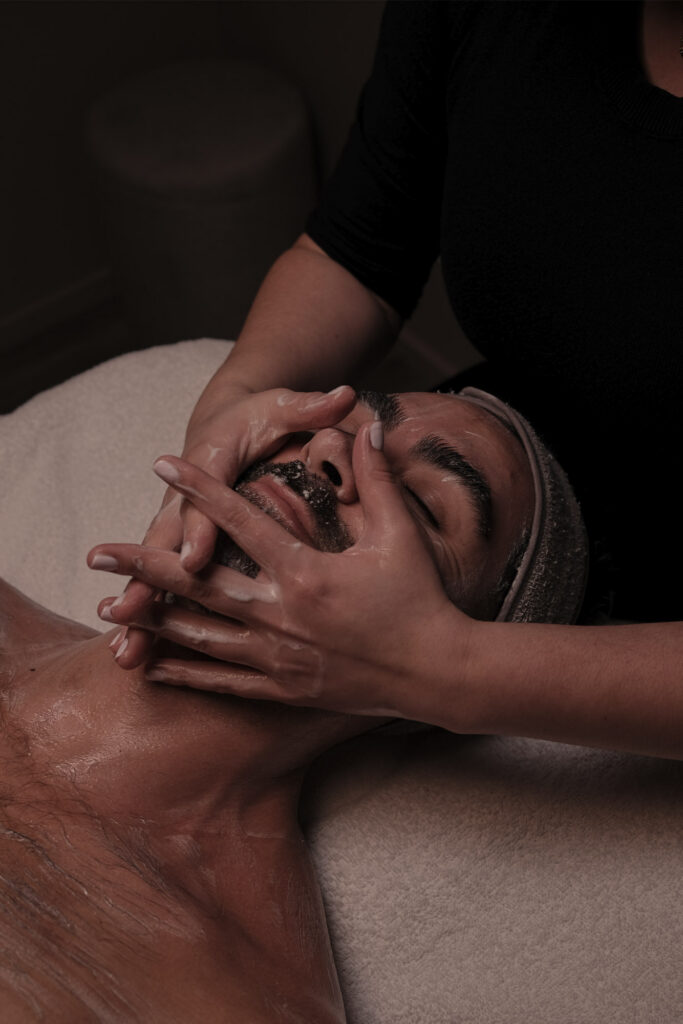
Tullo’s signature technique, an eight-step RMT massage dubbed “Face Pilates™, synthesizes familiar practices like gua sha with EMS (Electrical Muscle Stimulation) and cryotherapy. Likening Face Pilates to physical therapy, Tullo notes that men resonate with a more operational approach to self-care. “Instead of focusing on ‘looking better,’ we focus on how the face functions — muscle tension, circulation, lymphatic flow, posture, and stress patterns,” Tullo explains. “Many men connect to that because they already understand training and recovery when it comes to the body.”
Yet the rise in men’s cosmetics goes beyond self-optimization. Raphael Gaspard, founder of Gaspard Premier — a Montreal-based botanical skincare and fragrance brand — describes the shift. “Gen Z men are now entering grooming through skincare rather than shaving,” Gaspard says. “They’re building routines around hydration, barrier support, and prevention, treating skin as maintenance for wellbeing.”
Dr. Trevor Born, a cosmetic surgeon based in Toronto, notes that the category extends well past basic skincare. “Men are now using everything from injectables and lasers to hair restoration, body contouring, and facelifts. It’s becoming more common every year,” Dr. Born says.
“Men don’t want to look ‘done’. That means being careful not to overcorrect things like the brows and eyelids, and focusing instead on balance.”Dr. Trevor Born
Global data backs this up: per Statista, men made up 16.1% of all surgical cosmetic procedures worldwide in 2024, compared with just 13.8% in 2022. That’s a subtle increase, but it’s indicative of a larger trend. Consider Mintel’s 2024 report that more than half of American men use facial skincare products — a whopping 68% increase from 2022 — and the sentiment is hard to ignore: more and more men are looking in the mirror.
Of course, that doesn’t mean men are flocking to the filler-heavy “Mar-a-Lago face.” In Dr. Born’s experience, male clients tend to pursue a natural look. Common requests include a sharper jawline, smoother skin texture, and fewer acne scars. “Men almost always want subtle improvement, not a dramatic change,” he says. “When it’s done properly, people notice you look better, but they can’t pinpoint why.”
A masculine look comes down to minutiae. “Men don’t want to look ‘done,’” explains the surgeon. “That means being careful not to overcorrect things like the brows and eyelids, and focusing instead on balance: the jawline, neck, and overall facial structure.”
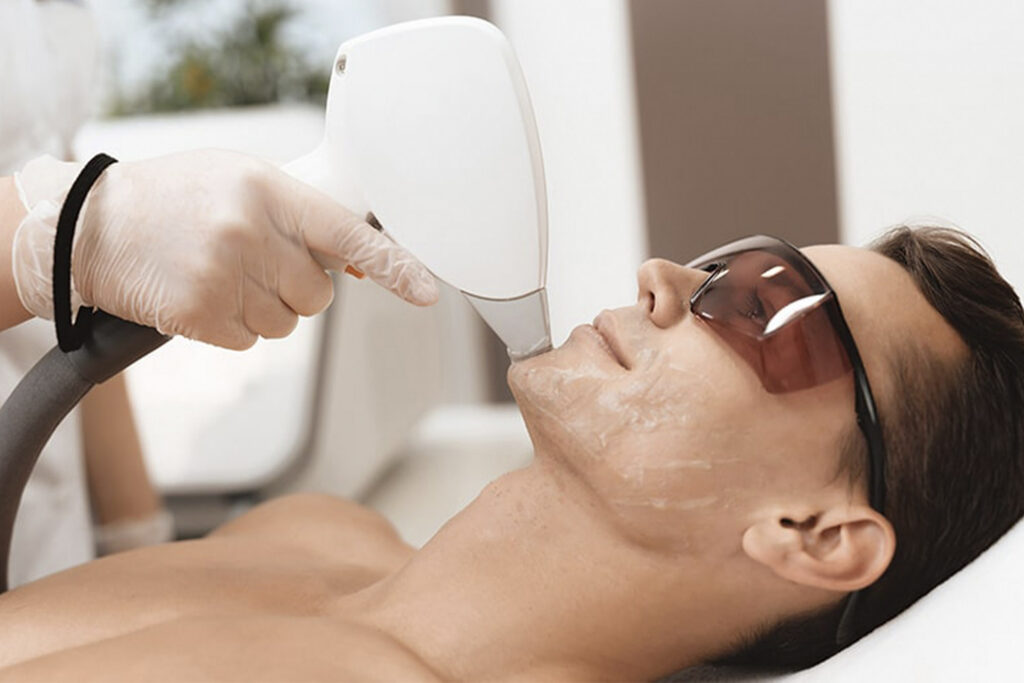
The role of technology is twofold. While social media platforms de-mystify skincare routines, new, non-surgical innovations — like laser treatments, Botox, and fillers — require little-to-no downtime, which renders cosmetic care more accessible than ever. “They’re effective and fit into a busy lifestyle,” Dr. Born says of these non-surgical treatments. “Younger men are more informed. They see results online, they understand skincare, and they’re comfortable investing in themselves.”
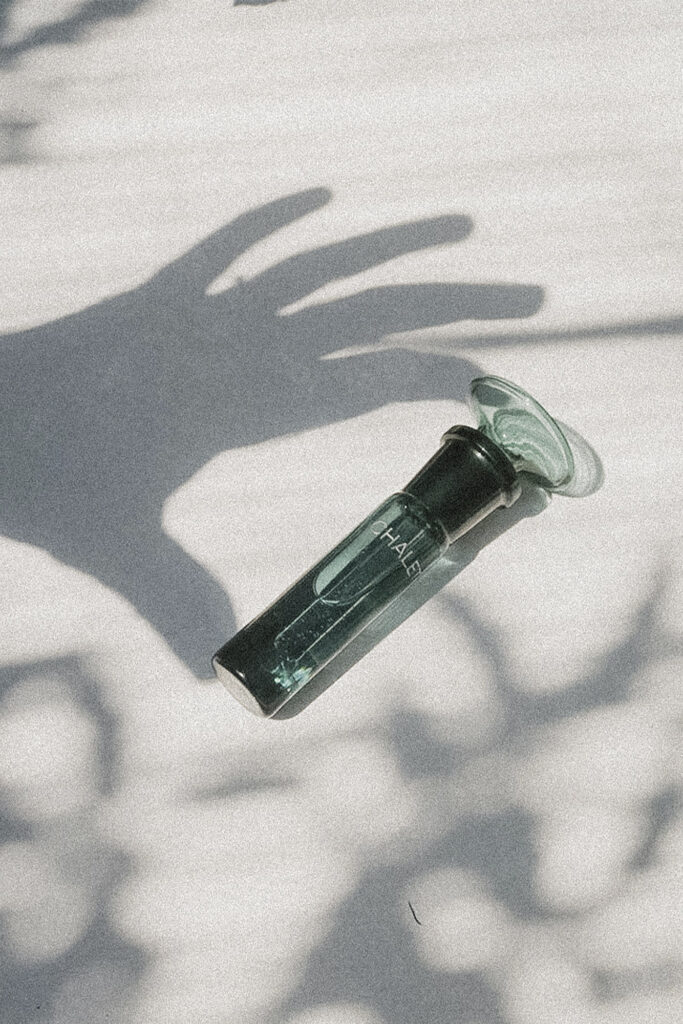
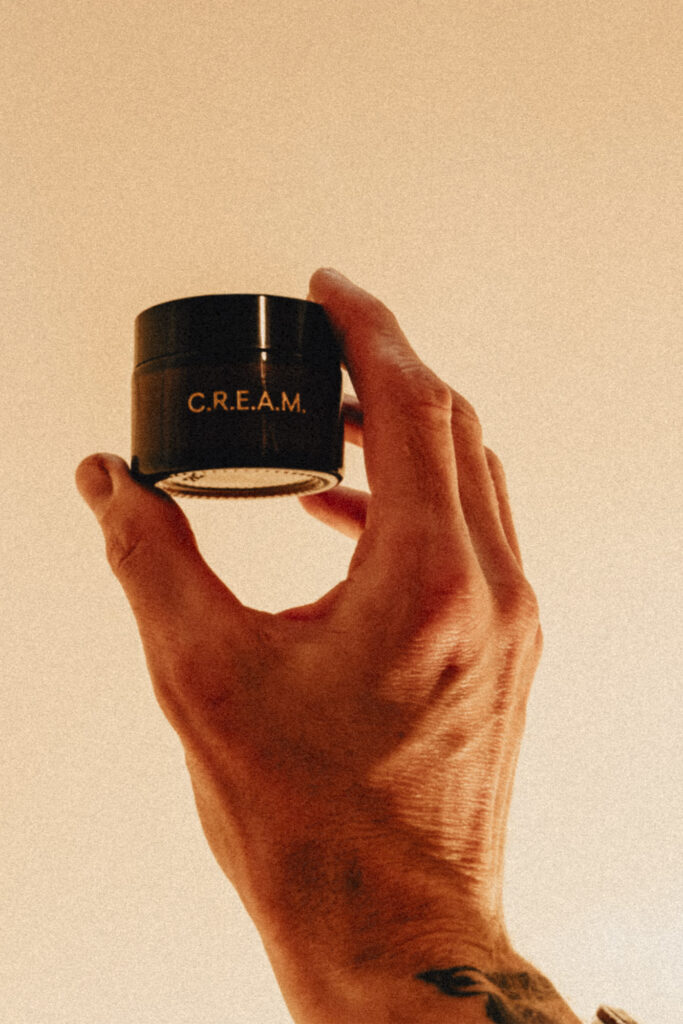
RIGHT: C.R.E.A.M., PHOTO COURTESY OF GASPARD PREMIER.
Beauty products offer more than aesthetic improvement, however. For today’s men, grooming regimens are an avenue for self-expression. “Grooming is now about ritual, identity, and wellness,” says Gaspard.
So, has self-care finally shaken the stigma? Without a crystal ball, it’s hard to be certain. But, if the market keeps moving the way it has, then we’re inclined to say the days of dreadfully-named deodorants and surreptitiously packaged serums are firmly in the rearview.
FEATURE IMAGE: BROFACE MEN’S FACIAL, PHOTO COURTESY OF THOMAS TULLO.