When I told my brother I would be interviewing “Slevin,” he smirked, taking a moment to decide whether I was pulling his leg. As one of the stars of his all-time favourite films, Lucky Number Slevin, Josh Hartnett has achieved legendary status in our household, so joking about landing an interview with him would have been nothing short of unforgivable. Fortunately for both of us, I was as serious as I was excited.
Hartnett made his name playing Hollywood heroes in films like Black Hawk Down and Pearl Harbor. Two decades later, though he seems hardly to have aged, Hartnett has long since outgrown Hollywood’s archetypal young hero. Instead, he has been sought out for more layered, morally complex characters, roles that allow him to explore greater depth and nuance as a performer. With that evolution has come something equally valuable: the confidence and trust of revered filmmakers who recognize his willingness to take risks and push his artistry in new directions.
“I like characters that have a complexity of motivations — not necessarily straight heroic characters, but characters with shades of grey.”Josh Hartnett
As Hartnett continues along his creative journey, he takes on one of his most compelling roles yet: Calvin Penney in the upcoming thriller, Below. The miniseries makes its world premiere at this year’s Toronto International Film Festival before arriving on Netflix this October.
Filmed in St. John’s, Newfoundland, Below presents Hartnett in a new light. He plays a hardworking fisherman and devoted father haunted by loss and the unexplained dangers beneath his coastal community’s waters. Hartnett further showcases his remarkable range by flawlessly mastering the distinctive Newfoundland accent, delivering one of his most immersive performances, one that feels entirely authentic to the province’s culture and character.
Having screened the first two episodes ahead of its premiere, I can say this: Below is gripping, beyond entertaining and will keep you on the edge of your seat.
What was the moment you knew Below was something you wanted to be a part of?
It was the script, and speaking to Jesse McKeown for the first time really let me in on the ideas that he wanted to push to the front of this show. He wanted to write a story that surrounded this group of people who’d been marginalized for a long time, pushed around by the government, pushed around by the larger corporations in the fishing world that have kind of sidelined not only this group of people, but this whole way of life that existed up in Newfoundland for hundreds of years. And his wife is from there, his father-in-law, mother-in-law, and whole extended family are up there.
He fell in love with that culture. And you could tell from the writing. He had written very full characters that had flaws — interesting flaws, unusual flaws, things that you didn’t really find in your average script, but also a kind of dark, ironic sense of humour that’s a little bit off-kilter, and just a way of looking at the world that is very singular. When you find something that’s unique, you just go, “Oh, wow. I want to be a part of this because it’s something special. It’s something new.”
Newfoundland itself becomes a character in the series.
Jesse very specifically wanted to write something for the Newfoundland fishing community. That specificity is what makes the show so unique because most of the actors are from Newfoundland. Most of the people who worked on it, beyond the acting side of it, were from the local area as well. We had this real sense of being immersed in the culture.
That’s a wonderful thing to have happen when you’re shooting on location and you’re given the gift of being brought in as a member of the community. They show you how to live that life without even having to really show it to you.
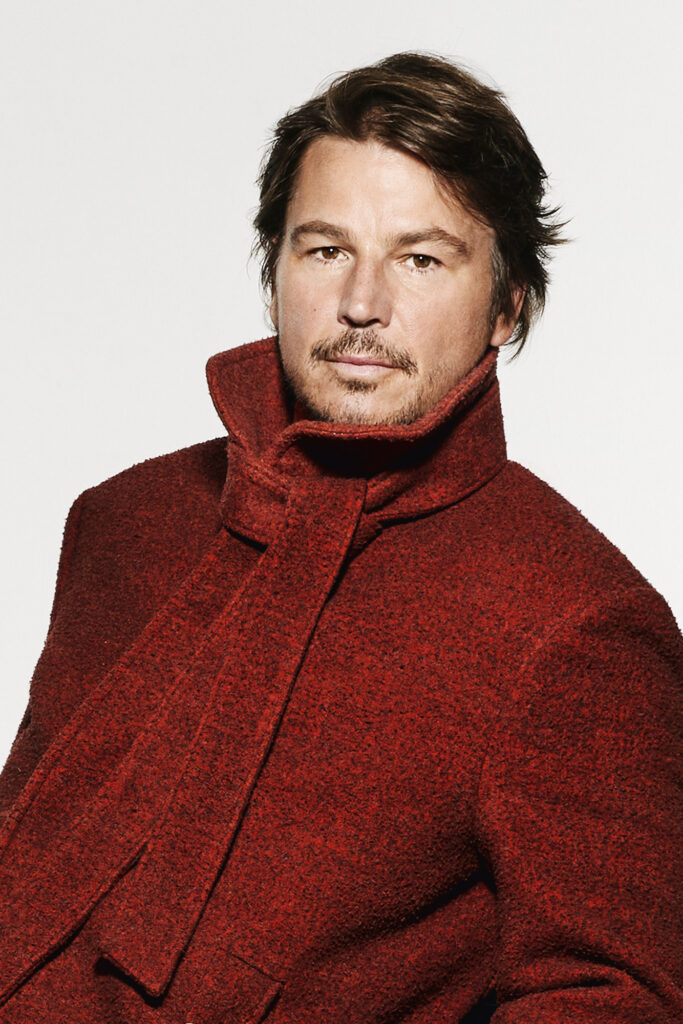
How would you describe the camaraderie you shared with your co-stars?
We all brought out the best in each other. Only one member of the Penney family was from Newfoundland, so the rest of us had to learn the accent, and we were terrified of it because we wanted to get it right. We all wanted to sound like we were from the same place.
We started working on the accent together as a group, and I think that was really bonding because we saw not only ourselves, but each other at our worst while we were just starting out. We had to encourage one another because we knew we had this date where we’d start shooting in two weeks, and we had to work through everyone’s sounds to make sure we all felt like we were from the same family.
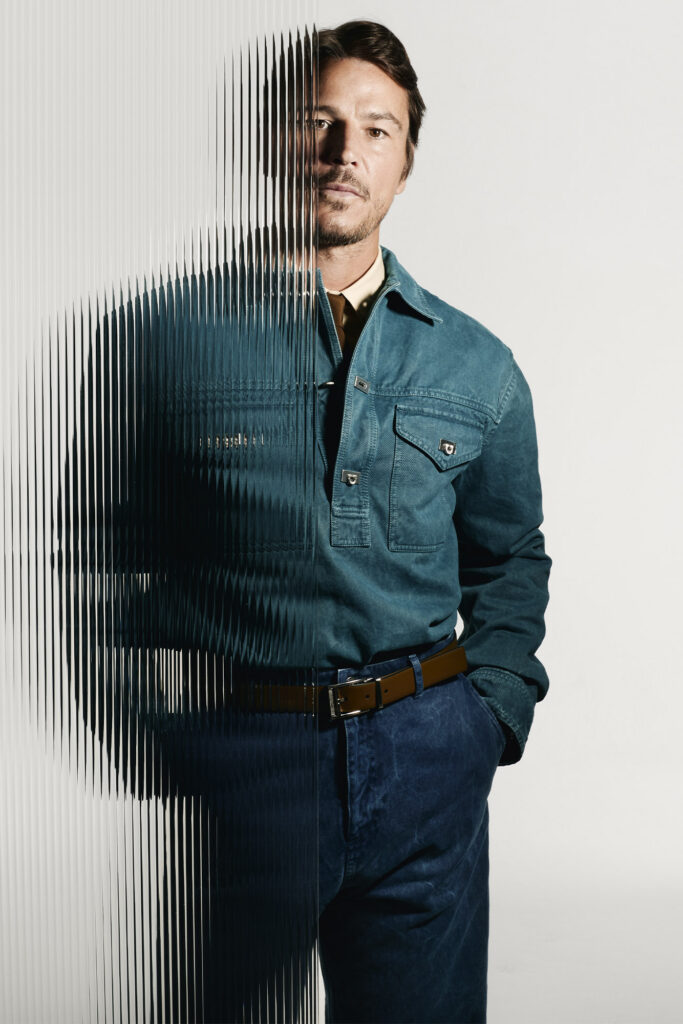
When you reflect on those roles, what makes Calvin Penney particularly special?
I like characters with duality. I like characters that have a complexity of motivations — not necessarily straight heroic characters, but characters with shades of grey. What I responded to about Calvin initially was that he’s a hard person to get to know. In this village, they don’t like him or trust him. His son doesn’t really like him very much at the beginning either because Calvin has been holding him back.
But all of that is motivated by a very well-thought-out and clear psychology that Jesse has created for the character. It’s all understandable once you watch the whole show. At the beginning, though, I love that he’s not the easiest character in the world to like. You must get to a point where you understand him more than you like him.

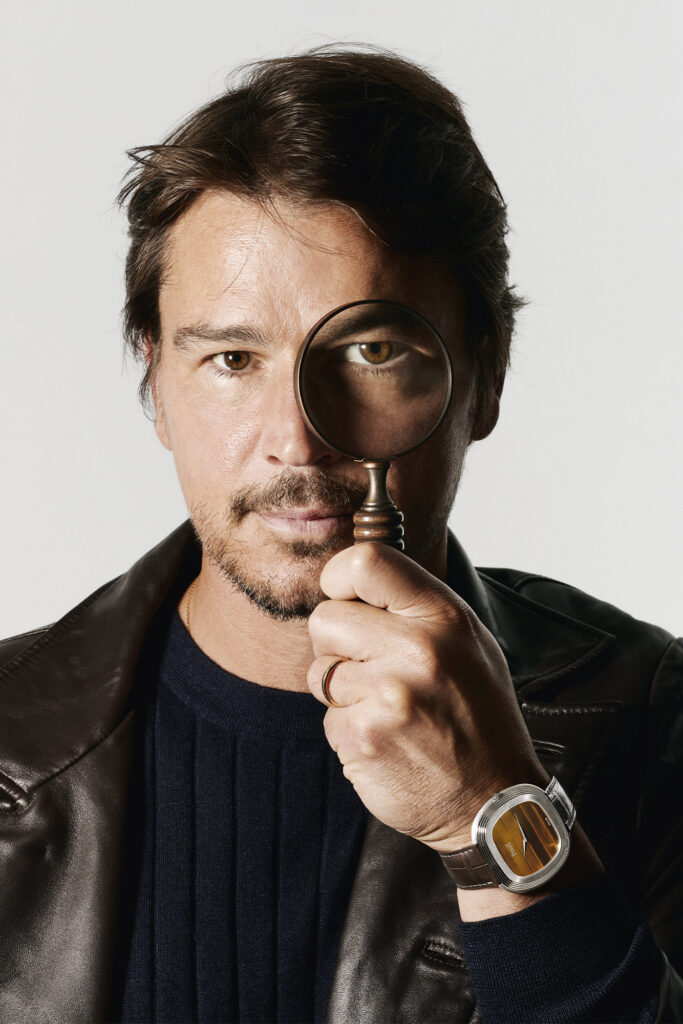
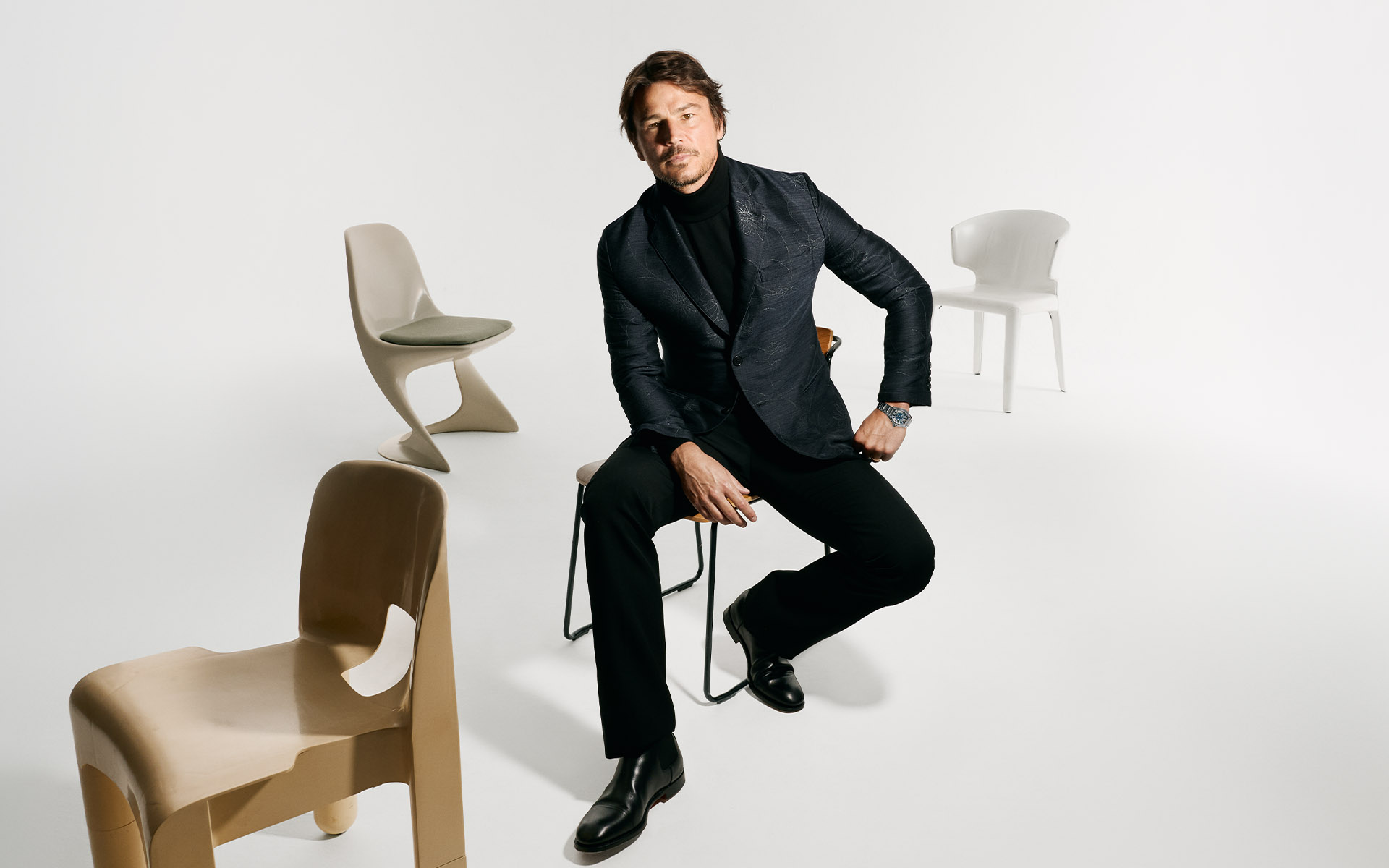
RIGHT: FULL LOOK BY BRUNELLO CUCINELLI; WATCH BY PIAGET.
What draws you to projects today that perhaps you wouldn’t have been interested in 20 years ago?
Well, people aren’t asking me to play the 17-year-old anymore. That might be a surprise to you, but it’s not to me. There was a period in Hollywood films and in my career, specifically, when people wanted me to play straightforward heroic characters. The layers weren’t necessarily there on the page, nor were they being sought by the studio or the directors for me to flesh those characters out. That’s changed. I’ve gotten older and become more experienced, and people trust me a little bit more with characters that are more complex. I’ve made sure I’ve found characters with that complexity and played them to the best of my ability and hopefully created some entertaining work in the meantime. As I’ve gotten older, I’ve really been able to stretch my wings as an actor.
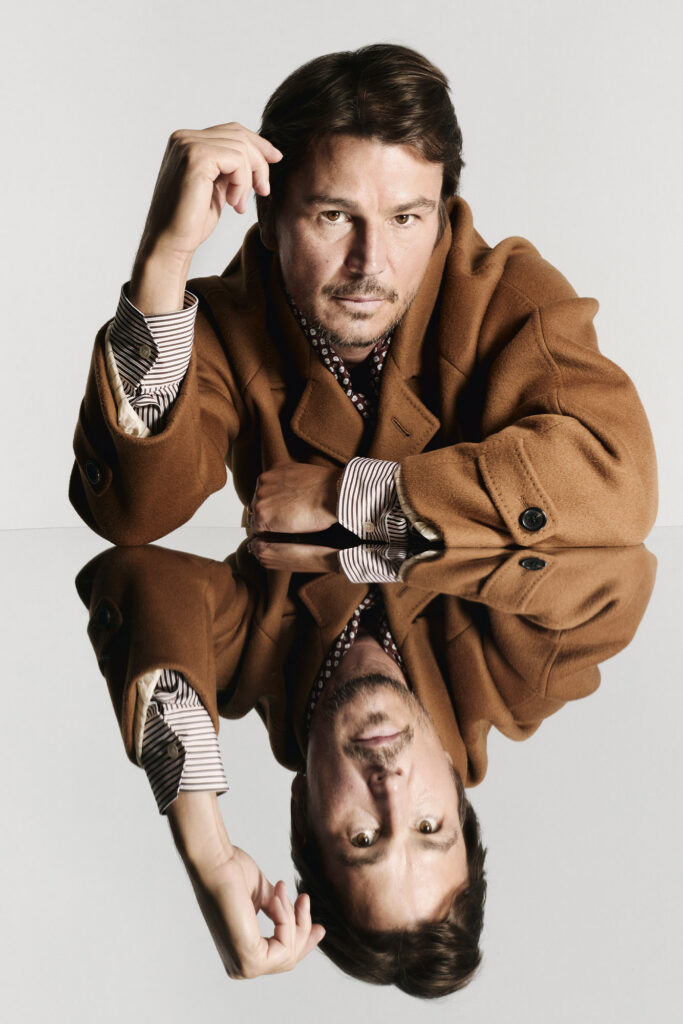
As you take on those different characters and commit yourself so deeply to a role, how do you find the balance between fully immersing yourself in the character while still maintaining your own sense of self?
Well, I’m not a method actor, whatever that is. I just came off a job that was very difficult to let go of because the person I was playing was also the director and writer. I’d just finished this Oliver Stone film. It’s a loosely autobiographical look at a certain aspect of his life, fictionalized, of course, but having a director who’s that in tune with every choice you’re making, constantly pushing you to go a little further or not do exactly what you wanted to do, really keeps you off balance.
I had to make time to speak to my kids at night and spend time with my wife, but it was difficult to let the work go because I was always thinking about what Oliver wanted from me. But with most films, if you’ve done your homework, you get to the set and deliver everything you’ve got, knowing this is the only opportunity you’ll ever have to create that scene. Once it’s done, it’s gone. It’s totally ephemeral. You take a breath, move on, enjoy a few moments with your family, then prepare for the next day’s work.
“If anybody is looking back at my career, I hope they see that I was always trying to push the boundaries of my own abilities and understanding.”Josh Hartnett
This was also the first time you served as an executive producer on a television miniseries. What was it like wearing both hats?
It was really relieving. It was great because I was able to insert my two cents after the work had been done. On most acting jobs, once you’ve wrapped, it’s basically: “Don’t let the door hit you on the way out. We’ll let you know when to show up for the premiere and start promoting it.”
That’s terrifying because they have complete control over the work you’ve done. Eventually you develop a thick skin about it and learn to let it go. But in this instance, and on a few films I’ve worked on, I was able to be involved in post-production as well, and that’s fantastic. I was able to help with casting, work through the scripts, and discuss ideas. Just being able to weigh in on those things and offer suggestions before we got to shooting was a really relieving process.
What’s life like in the UK?
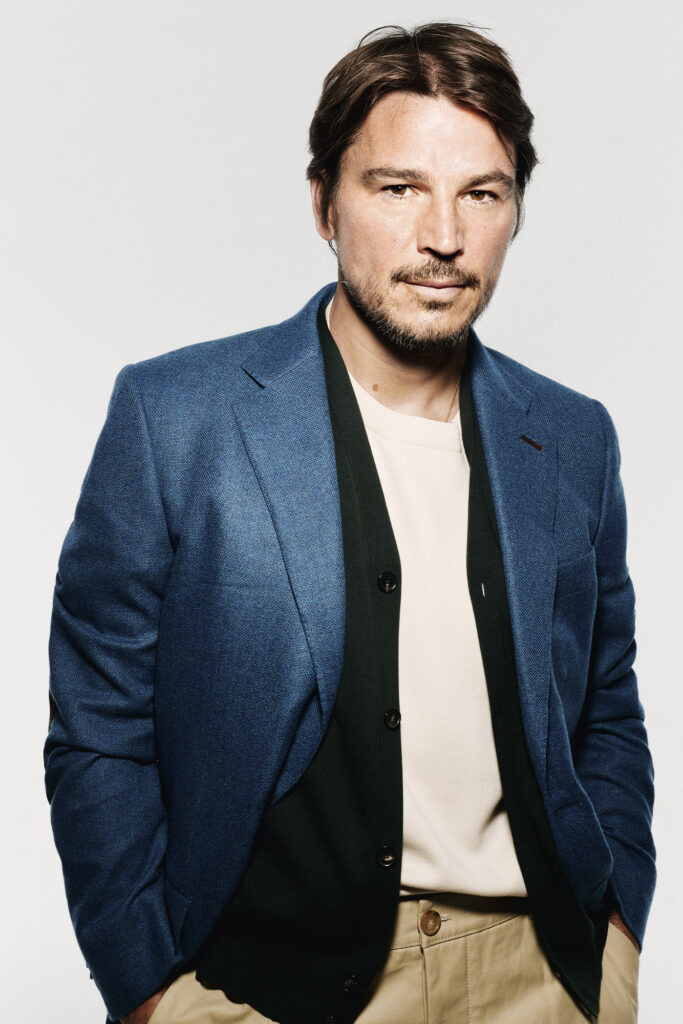
It’s very busy. We’ve got a tiny farm, but it’s filled with little animals. It’s more like a petting zoo than a farm. My kids love them. We travel a lot because I travel for work quite a bit, and the kids have a great school. They go to an arts school, and they absolutely love it. They’re all very artistic kids, and we try to keep life loose and fun.
When you look back on your career, what do you hope it says about the kind of storyteller you are and the storyteller you’ve become?
Oh, man. If anybody is looking back at my career, I hope they see that I was always trying to push the boundaries of my own abilities and understanding. I hope they see that I was always trying to do things that were outside the box, things you couldn’t get anywhere else.
I’ve been very lucky to find collaborators like Jesse on Below who want to push that same mantle forward. I hope people recognize that has always been my goal. I want people to come along for the ride with these films and these shows because I genuinely think they’re interesting, fun, and entertaining. I feel incredibly lucky to be able to make them and then share them with audiences.
What’s the one thing you want to tell the audience before they press play on Below?
Leave your expectations at the door. You don’t know what’s coming.
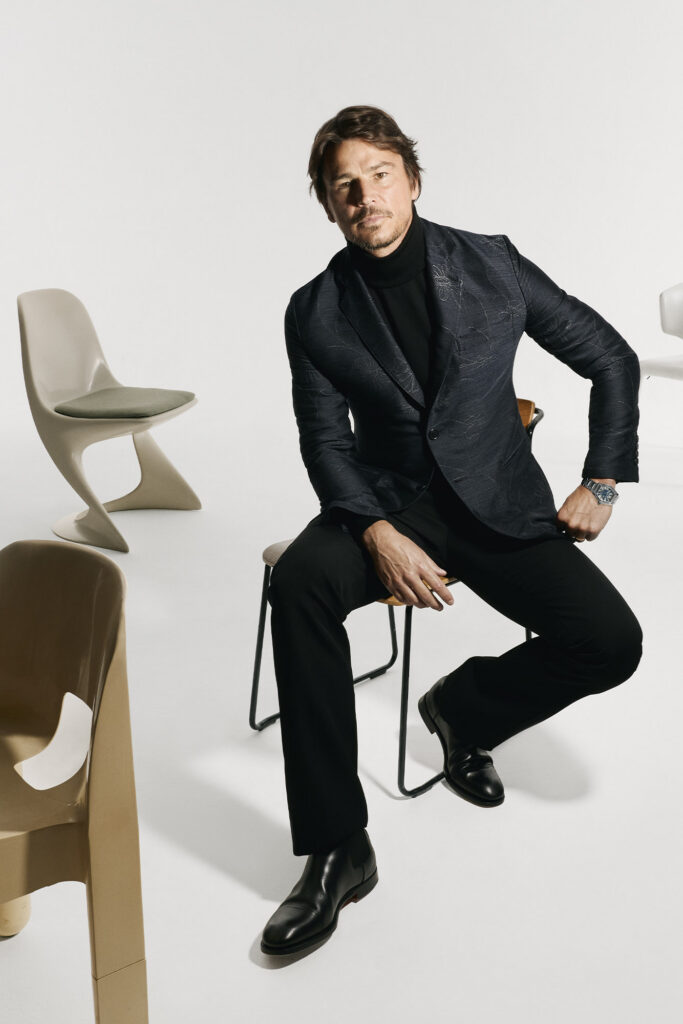
PHOTOGRAPHY: RANKIN
SET DESIGN AND PROPS: ELLIOTT ROONEY
PROP ASSISTANT: JIM CHARLES
STYLIST ASSISTANT: MARNI SEABRIGHT
STYLING: DOLLY PRATT LANVIN (FORWARD ARTISTS)
GROOMING: CHARLEY MCEWEN (THE ONLY AGENCY)
PHOTO ASSISTANTS: CHARLIE CUMMINGS, OLLY DUNDAS PRODUCTION BY HYPERION LA