With Jonathan Anderson at the helm of Dior, history will not be something to preserve behind glass. It is something to pick up, turn over and make your own. At Dior, the designer’s second menswear show, and his first Fall collection for the House, following his Spring/Summer debut, continues his fascination with bringing disparate references together. This time, the starting point was quite literally beneath his feet.
Outside Dior’s flagship at 30 Avenue Montaigne, a small commemorative plaque embedded in the pavement honours Paul Poiret, the pioneering couturier whose House once stood just steps away. Founded in 1903, when Poiret was just 23 years of age, the coincidence is hard to ignore: Anderson was only a year older when he established JW Anderson in 2008. More than a historical footnote, the discovery becomes a fitting entry point into a collection concerned with the conversation between generations and ideas.
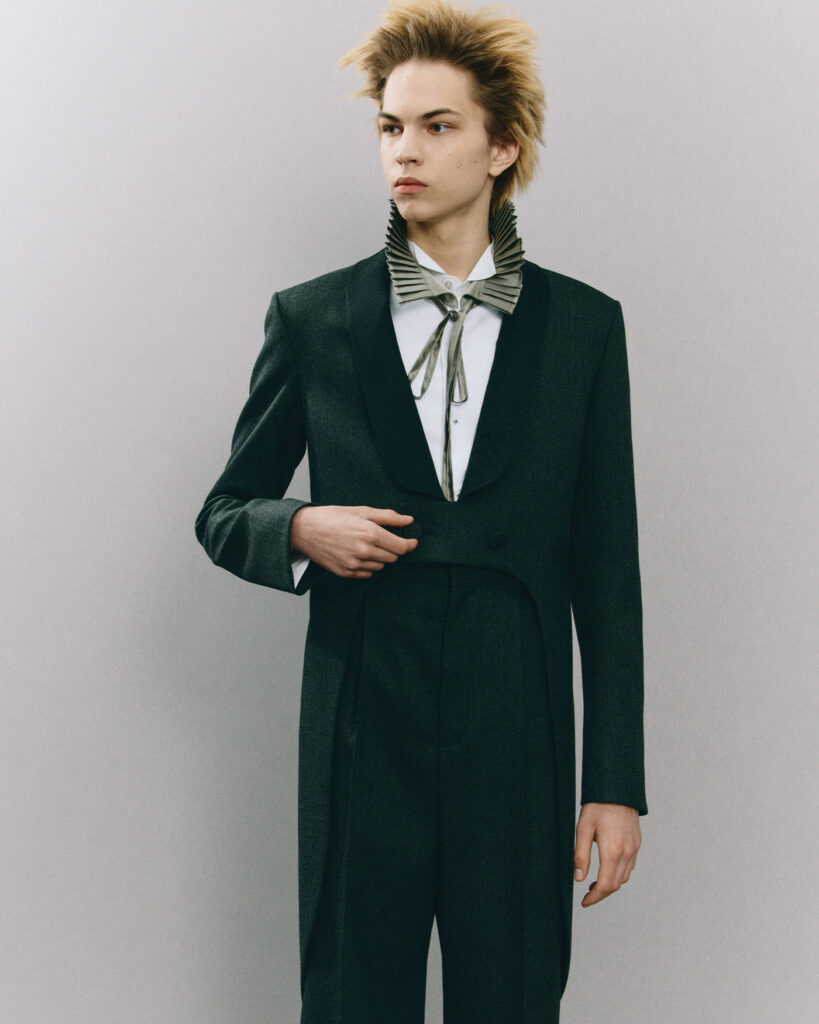
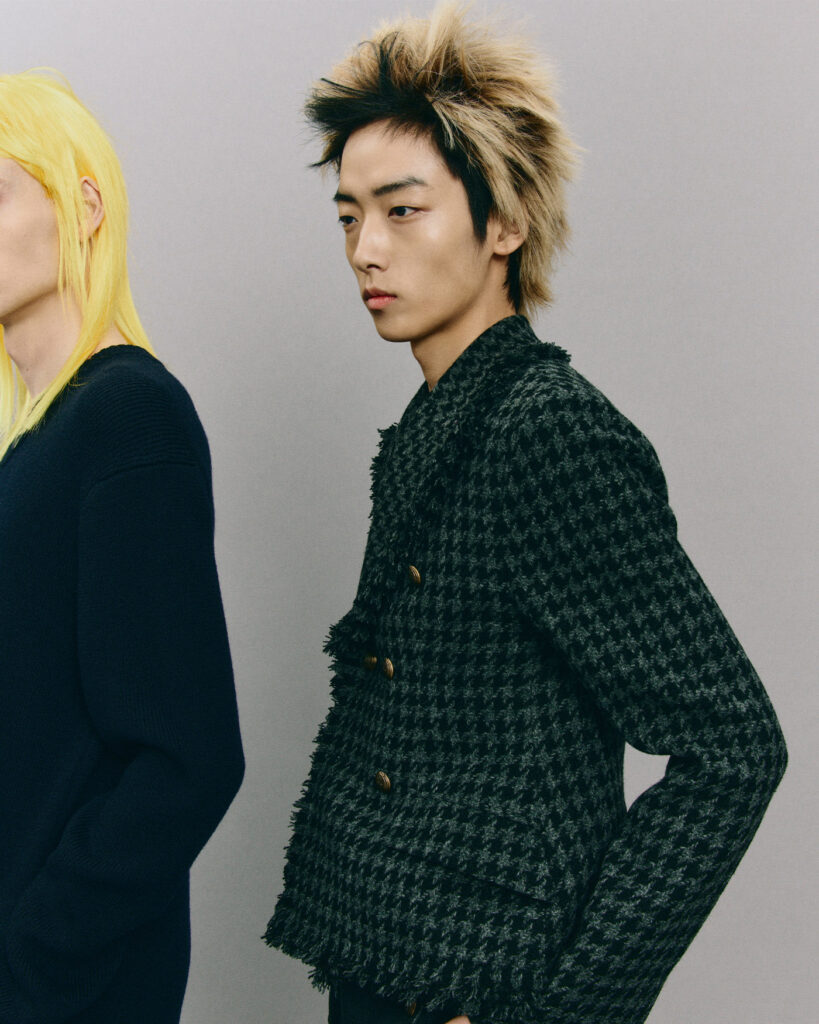
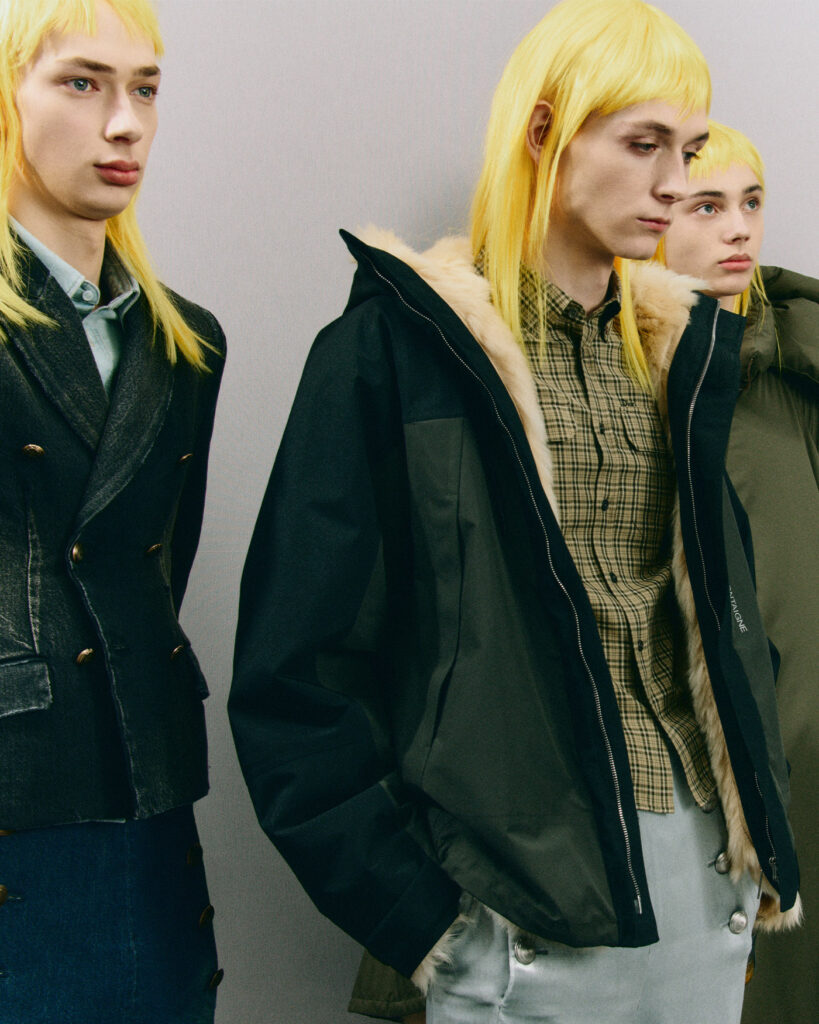
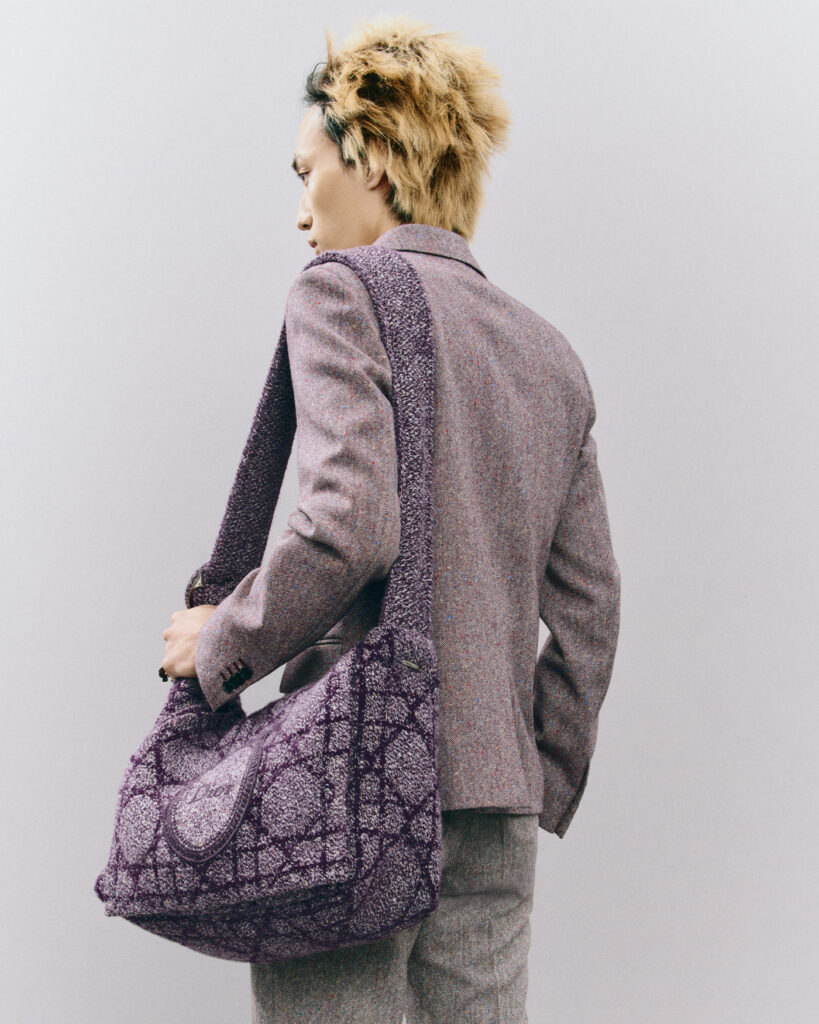
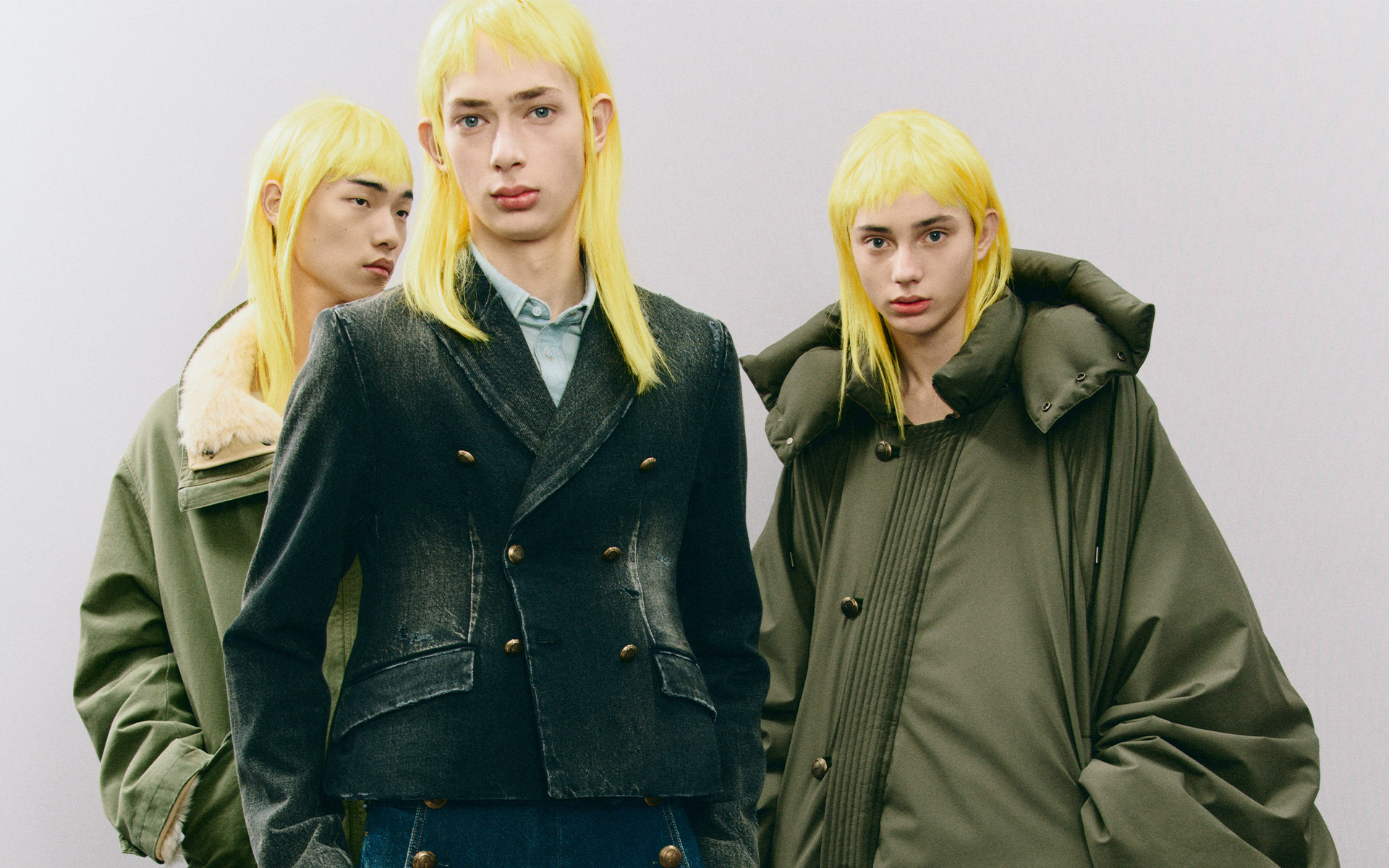
Anderson assembles his own unconventional cast of characters, each one looking as though they have wandered in from a different chapter of Parisian life. The styling is deliberately eccentric, spiky yellow wigs, crafted by legendary hairstylist Guido Palau, sit alongside ornate details and exaggerated silhouettes. Ruff collars appear throughout the collection, modelled in such a way it becomes a playful extension of the show itself. Supplied with the invitation, they blurred the line between spectator and participant, turning the room itself into part of Anderson’s imagined world.
At the centre of it all is a considered tension between the masculine and feminine. Jackets are elongated and sharply tailored, while blazers are dramatically shrunken. Dior’s iconic Bar jacket is cropped, creating a precise silhouette when paired with narrow, lean trousers. The effect is polished but never rigid, a balance Anderson has returned to throughout his work, where traditional menswear is constantly pulled apart and reconstructed.
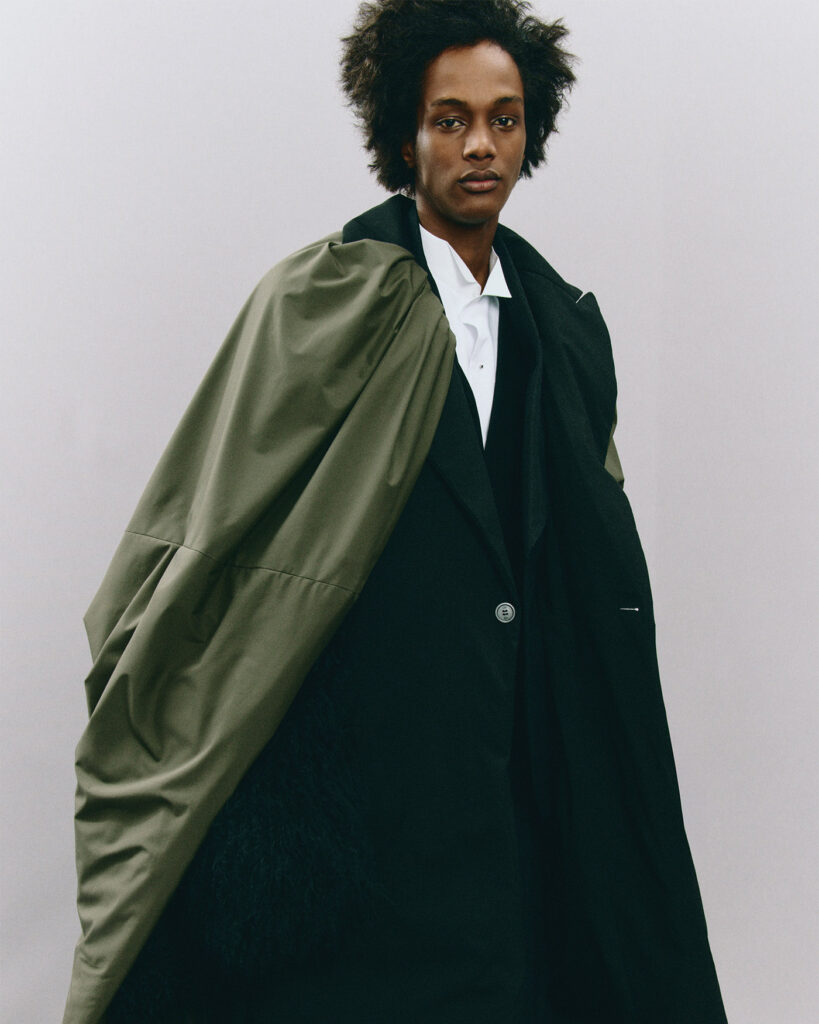
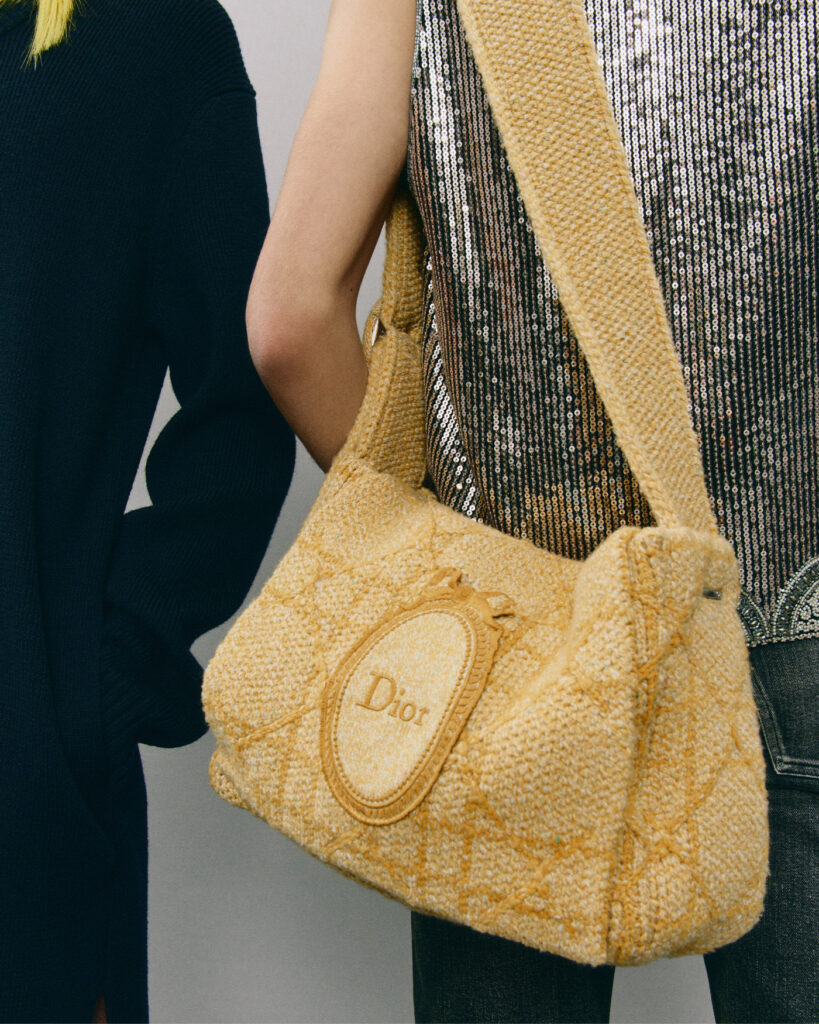
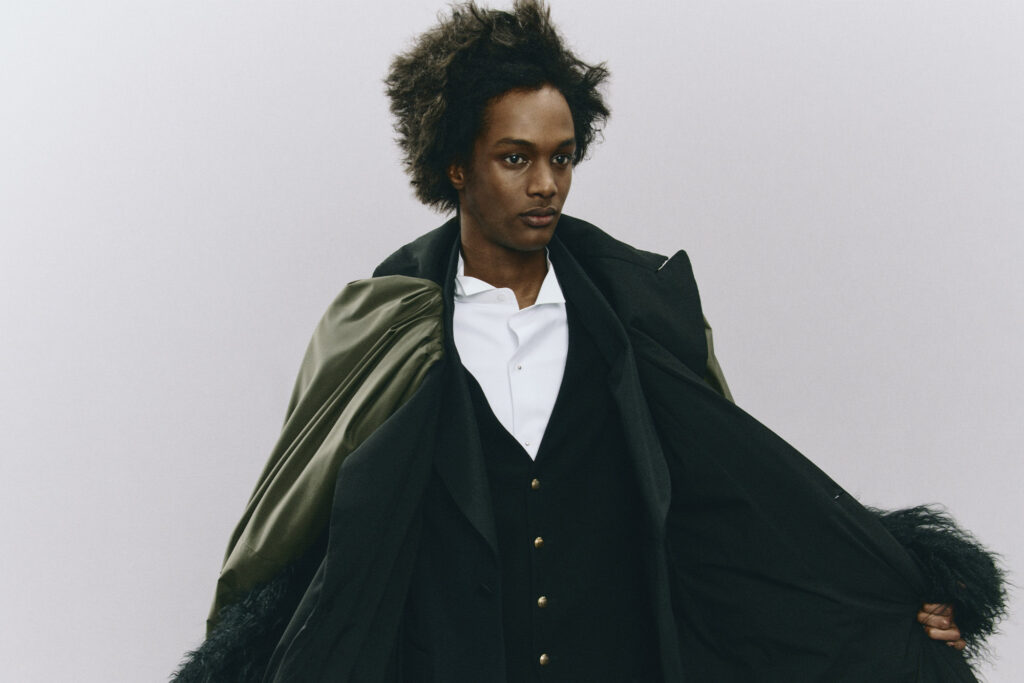
That same push and pull define the rest of the collection. Formal tailoring meets denim, refined suiting sits beside practical parkas, rich brocade and velvet encounter technical outerwear. A bomber can become a cape, a field jacket takes on sculptural volume, and a cocooning coat turns a practical winter layer into something theatrical. Nothing feels quite as expected as it should. The references may be rooted in the past, but their arrangement is anything but nostalgic.
The collection’s accessories follow the same logic. The new Dior Bolt bag introduces a more relaxed expression of the House’s codes, pairing the familiar Cannage motif with structured lines, graphic hardware and practical proportions. Available as a crossbody or softer duffle, it is designed for mobility, an apt companion for Anderson’s modern-day flâneur.
Anderson does not attempt to neatly reconcile Dior’s history with his own perspective, instead, he lets the two coexist, adding unexpected characters, textures and references to the mix. The result is less a strict interpretation of heritage than a collage of ideas, one that makes a convincing case for looking backwards only to move forward.
FEATURE PHOTO BY YANN FAUCHER.